Pasta, bread and doughs
Pasta shapes are not decoration, they are sauce engineering. And bread changes from province to province more than any other food, because it follows the wheat that grew there.
The line that divides pasta Italy is the egg. In the north you roll a sheet of soft wheat and eggs: tagliatelle, tortellini, agnolotti, pizzoccheri. In the south you mix durum semolina with water and nothing else: orecchiette, malloreddus, pici, trofie. This is not taste, it is agronomy: durum wheat wants heat and drought.
Every shape solves a problem. The hole in bucatini lets the strand be thick without staying raw in the middle. Ridges hold fatty sauces. Orecchiette work as a spoon for turnip tops. Paccheri collapse around seafood ragù. When a shape looks arbitrary, it usually means the sauce that justified it is no longer made.
Bread is even more local. Tuscan bread has no salt, Altamura bread keeps for a week, Sardinian carasau is dry because it had to follow shepherds for months. Each loaf tells you how long it had to last and how far it had to travel.
Italian pasta and bread: worth the money, cooked right
Two bags of spaghetti on the same shelf, one at a pound and one at four, and the expensive one says bronze die and slow dried. Neither bag tells you what that physically changes, so this page does.
The second half is about cooking, because most of the gap between pasta in Italy and pasta at your house is not the pasta. It is the water, the salt, the last two minutes, and the habit of tipping the cloudy water down the sink.
Then bread, which travels badly and is easier to judge than you think. An Italian loaf is engineered around how long it had to keep, and once you know that you can read one in any bakery, in any country, without tasting it.
One substance ties the page together: starch. What drying does to it, how much dissolves in your pot, whether you keep that cloudy water, and how it recrystallises in a loaf overnight.
Bronze die or teflon: is it worth the money
The die is the last hole the dough is pushed through. Bronze drags on the dough and leaves the surface rough and porous; Teflon lets it slide and leaves it smooth and glossy. That much has been measured. That the rough surface holds more sauce is the most repeated selling point, but none of the studies we found measured sauce retention by die type.
You can spot it through the packaging. Bronze-drawn pasta is pale and chalky, does not catch the light, and leaves semolina dust in the bottom of the bag; the cut ends look slightly torn. Teflon pasta is a brighter, glossier yellow, and the bag stays clean.
The lab work is specific. In a 2008 comparison, bronze-die spaghetti was more porous and, once dry, broke under 20 to 30 per cent less force: more fragile, not sturdier. A 2013 study of five die materials found that bronze gave the roughest surface, the slowest extrusion and the least dense pasta; in the first minute in boiling water the rougher pasta took up more water, while the gelatinisation temperature did not change.
The only sauce measurement we found concerns drying, not the die: in a 2015 study, pasta dried at 50C held less of a simulated sauce than pasta dried at 70 or 85C, and the high-temperature pasta came out rougher. Roughness, in other words, does not come from bronze alone.
Drying is the other variable, and Italian law does not define slow drying. Industrial lines work hot and finish in a few hours; many small makers go cooler and slower. Where the rules are written down, as in the Pasta di Gragnano PGI specification, drying has run from 40 to 85C for 4 to 60 hours since 2020. At high temperature the proteins set fast and hold the starch in, so the pasta stands up better in the pot, even from weaker semolina, and Maillard reactions add a toasted note. Slow driers claim a clearer smell of wheat, but they need strong semolina to start with.
That is why the protein line is worth reading on an imported box: 13-14 g per 100 g means strong semolina and a bite that survives a distracted cook, while under 12 g the pasta tends to give up early.
Dried, fresh and egg: three products, and dried is not the cheap one
Unlearn the hierarchy the supermarket implies. Dried pasta is durum semolina and water, and Italian law allows nothing else in semolina pasta. It is the correct product for oil, tomato, seafood and pulses, because only durum still has a bite after ten minutes in boiling water.
Egg pasta is a different object, not a better one: fresh sheets are soft wheat and eggs, rolled rather than extruded, while dried boxed egg pasta, tagliatelle included, has to be durum semolina by law. The legal floor is 200 g of whole egg per kilo of semolina, about four eggs, while a home cook in Emilia uses one egg per 100 g. It cooks in one to three minutes and wants fat: butter, broth, slow meat ragu.
The third is fresh semolina pasta with no egg, orecchiette, trofie and malloreddus, chewy on purpose and able to take loud sauces. The chilled packs are a fourth thing whatever the label says: the rules only require fresh pasta to hold 24 per cent moisture, and almost all of it is extruded, pasteurised and gas-flushed, closer to rehydrated dried pasta than to a rolled sheet. Good dried pasta beats it at half the price.
The numbers are worth carrying around. An Emilian sheet at one egg per 100 g of flour comes to about ten eggs and roughly 500 g of whole egg per kilo, two and a half times the legal floor. Chilled supermarket pasta is pasteurised instead, a heat step that part-cooks the starch, which is exactly why it is done in two to four minutes against eight to fourteen for dried and six to twelve for fresh semolina shapes.
That changes how much you buy, and these are guidelines rather than rules. Dried pasta absorbs about its own weight and roughly doubles, so 80-100 g a head fills a plate. Rolled egg pasta starts out wet and gains far less, so go 120-150 g. Fresh semolina shapes sit between, 100-120 g. In broth, go lighter: 80-130 g of filled pasta per person, depending on whether it opens the meal or is the meal.
Water, salt and the last two minutes
The working guideline is about one litre of water and 10 g of salt per 100 g of pasta. You will read that the water should be as salty as the sea: it should not, because seawater is around 35 g per litre, roughly three times too much. You can drop to 700 ml for starchier water if you stir early.
Salt goes in once the water boils, but not to speed anything up: 10 g per litre lifts the boiling point by less than two tenths of a degree, around 0.2C. You wait because undissolved grains pit the hot base of a stainless pan over the years. Little of it reaches the food: pasta absorbs roughly its own weight in water, about a gram of salt per portion, which is why unsalted pasta cannot be fixed at the table.
The cloudy water is the ingredient you have been throwing away: suspended starch plus salt, the thickener that makes a sauce coat. Keep a mugful, drain one to two minutes early, then finish pasta and sauce together in the pan with a ladle of it, moving, for thirty to sixty seconds until the liquid turns glossy and grabs. Cheese and raw egg go in off the heat, because above 65-70C cheese seizes and egg scrambles. Al dente is the thin white line in the core.
There is a real threshold under all that boiling. In plenty of water, durum starch granules start taking on water and gelatinising as low as 52-60C and are essentially done between 66 and 75C (on durum spaghetti the peak falls between 62.6 and 66.9C), while the 85C figure belongs to water-limited conditions like a bread dough. Below that window the starch stays raw however long you wait. A full boil is not impatience: it is how the core of the strand crosses that line while the surface is still intact. Undersize the pot and the water stalls near 80C, and the outside breaks down waiting for the middle.
The pan stage runs on the same physics. Shaking breaks the fat into droplets, and the dissolved starch thickens the water around them so they cannot merge back; both are needed, which is why sauce ladled over a still bowl splits and the same sauce tossed in a hot pan does not. To use all of that starch, cook risotto-style: nearly raw pasta into the pan, then ladles of boiling water or stock. It suits beans, seafood and thick shapes; salt at the end, because the pan reduces.
Which shapes to buy, and what each one is for
Three variables do most of the work: exposed surface sets how much sauce stays on as a film, geometry sets how much is captured, thickness sets bite. Buy one long shape, one short ridged shape and one small soup shape and you can cook nearly the whole repertoire.
Long and smooth is for thin sauces with nothing solid in them, like garlic and oil or clams, where the sauce works as a film and ridges add nothing. Cacio e pepe is the exception: it wants a thick strand, spaghettoni or square tonnarelli, which sheds starch and stays rigid under the cream instead of collapsing.
Hollow and ridged is for anything fatty, because the fat needs somewhere to sit while the fork lifts: bucatini with amatriciana, rigatoni with meat ragu. Then match the shape to the size of the lumps: paccheri collapse around seafood ragu, orecchiette cup greens and breadcrumbs, while in Liguria pesto goes on trofie, trenette and linguine alike. For broth and beans go small: ditalini in pasta e fagioli, tortellini in broth and nothing else.
One number sits under all three: specific surface, how much pasta is exposed per 100 g. It follows thickness rather than size: in a tube it is the wall that counts, so a thin-walled pacchero carries more of it than a thick rigatone. Shapes with plenty of it, thin strands and ridges and fine-walled hollows, hold a lot of sauce per gram and want a sauce that runs and coats them as a film. Size decides something else, the cavity: a big concave shape traps, so it wants solids that wedge rather than slide.
Seen that way the classic pairings stop being folklore. Shelled clams are solids, but the bulk of that sauce is brine emulsified with oil, so a round strand holding a film is most of what it needs and a cavity would add little. Meat ragu comes in lumps of 2-5 mm and the bore of a rigatone is 8-16 mm: the lumps go in with room to spare, and it is that room that keeps them inside instead of letting them slide back out. Pesto is a stiff paste that does not run, and the Ligurian tradition gives it to trofie but equally to trenette and linguine, which are smooth: that pairing is custom, not mechanics.
Bread: how to judge a loaf, and what to do with the hard end
Italian loaves answer one question: how long did this have to keep. Altamura bread is durum semolina, sourdough, 2 per cent sea salt and little water: the rules call for about 60 litres per 100 kg of semolina, so roughly 60 per cent hydration, with a crust required to be at least 3 mm thick. It lasts a week. Tuscan bread has no salt and dries fast on purpose, to be eaten with salty things or turned into soup. Carasau is rolled paper-thin, puffed, split and baked again, and keeps for months, which is why it is one of the few Italian breads you can buy abroad. A michetta is nearly all crust and air, perfect at eight and cardboard by six.
Judge a loaf without tasting it. It should feel heavier than it looks, the crust should be dark and crackle under your thumb rather than bend, and the base should sound hollow. Ignore the rule that big irregular holes mean quality: they signal high hydration in wheat breads, but a proper durum loaf is mixed at barely 60 per cent water and so has a fine, even, yellow crumb. The bad sign is the opposite, tiny identical bubbles under a soft crust.
Stale is not dry. Bread stales because starch recrystallises, fastest just above freezing, which makes the fridge the worst place for a loaf and the freezer a full stop. Cut side down on a board for two days, slice and freeze beyond that, and revive it by wetting the crust and giving it five to eight minutes at 200C. After that it is an ingredient: panzanella, ribollita, dumplings, meatballs, breadcrumbs toasted in oil.
Three things happen in the oven. Past 60C the starch gelatinises and the gluten sets, fixing the structure: the crumb goes from batter to solid. At the surface the water boils off, the temperature climbs past 140C and the Maillard reaction begins, producing the colour and most of the aroma: bread smells of bread in the crust, not in the crumb. The crust then works as a barrier against moisture leaving, which is the physical reason Altamura's mandatory 3 mm is not decoration.
Staling is the sequel, and it is not drying out, at least while the loaf is wrapped or covered. The water stays in the bread and migrates from crumb to crust, so the crust softens while the crumb hardens, as amylopectin slowly recrystallises. Leave a loaf bare on the board and some water does go to the room as well, and the two add up. Recrystallisation runs fastest between 0 and 8C, so a day in the fridge costs you about six on the counter. Crumb structure, meanwhile, is mostly hydration: 60-65 per cent water gives the fine even crumb that slices and holds a topping, Altamura's band exactly, which is why its crumb comes out that way; above 75, the big glossy holes that let oil run straight through.
How to choose
- 1Turn the bag over first. The ingredients should read durum wheat semolina and water and nothing more. A third item means no die and no front-of-pack story will save it.
- 2If you want the rougher surface, look for bronze die, bronze-drawn or trafilata al bronzo, then confirm with your eyes: pale, matte, no shine, semolina dust in the bottom of the bag.
- 3Check the protein line: around 13-14 g per 100 g means strong semolina that holds its bite, while under 12 g softens fast and clouds the water.
- 4Slow drying has no legal definition, so the words alone tell you little: look for hours and a temperature on the pack. And slower is not firmer: high-temperature drying usually gives pasta that holds up better in the pot.
- 5Ignore the flag, the family surname and the sepia farmhouse. None of them is regulated. The ingredients, the die and the protein figure are the only informative things on the box.
- 6Buy three workhorse shapes instead of a shelf of novelties, and skip chilled fresh pasta unless it comes from a real pasta shop.
What almost everyone gets wrong
Add oil to the water so the pasta does not stick.
Oil floats and barely touches the pasta, and the little that clings coats it in a film that makes sauce slide off later. What stops sticking is enough water, a real rolling boil, and stirring in the first two minutes.
Snap the spaghetti in half so it fits in the pot.
Spaghetti are about 25 cm because they are built to be turned on a fork; halved, they behave like a worse shape and the sauce ends up stranded at the bottom. Stand them in the water and they bend in on their own in ten seconds.
Rinse the pasta after draining so it does not clump.
Rinsing washes off the surface starch, the glue that holds the sauce, and drops the temperature halfway through the step that makes the dish. The only exception is pasta for a cold salad, dressed with oil straight away.
Pour the cooking water down the sink.
That cloudy water is suspended starch and salt: not an emulsifier but the ready-made thickener that holds fat and cheese in a sauce that coats instead of pooling. Save a mug and add it a splash at a time as the pasta finishes in the pan.
Fresh pasta is always better than dried.
They are different products with different jobs. Rolled egg pasta belongs with butter, broth and slow ragu; dried durum pasta is right for oil, tomato, seafood and beans because it keeps a firm bite. Supermarket chilled pasta is neither.
Where to start
The pages worth opening first.
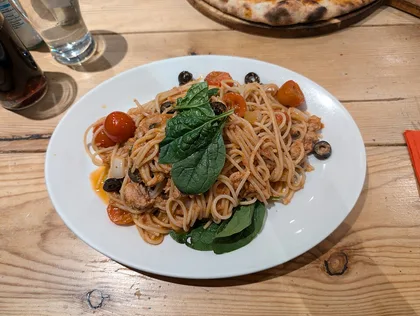 Read the pageSpaghettiThe shape that tests everything else: with a plain garlic and oil sauce there is nothing to hide behind, so this is where you learn whether the expensive bag earned it.
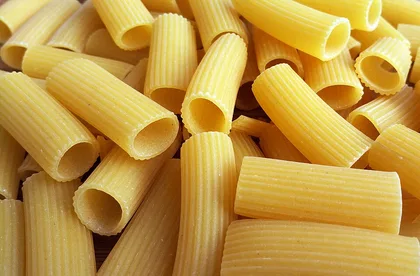 Read the pageRigatoniThe forgiving short shape: thick walls that resist overcooking, ridges and a hollow that hold meat sauce and survive the oven.
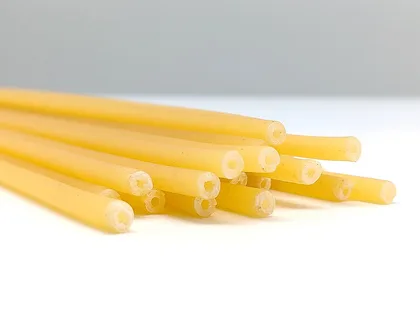 Read the pageBucatiniA thick strand with a hole through it, so it cooks evenly and fills with sauce. It needs something fatty; with a thin sauce it eats like rubber tubing.
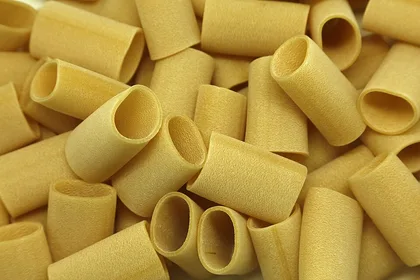 Read the pagePaccheriWide tubes that collapse around chunks, built for seafood ragu and slow onion sauces. Easy to find abroad and hard to ruin.
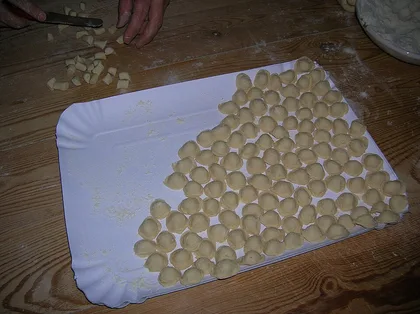 Read the pageOrecchietteSemolina and water, no egg, shaped into a cup that catches greens, oil and breadcrumbs: a shape doing mechanical work rather than looking pretty.
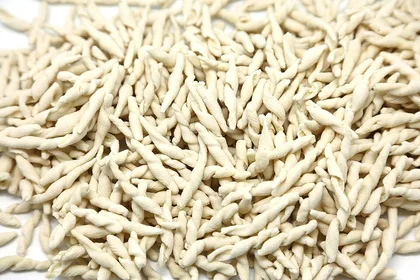 Read the pageTrofieThe Ligurian shape for pesto, alongside trenette and linguine. Buy these instead of spaghetti next time and you plate the pairing the sauce grew up with.
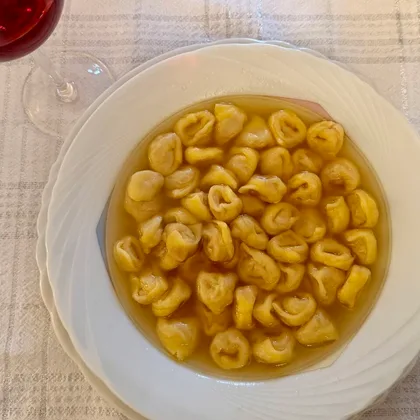 Read the pageTortelliniWorth buying only from a pasta shop, since supermarket versions are thick pasta around breadcrumb filling. Served in broth, never with cream.
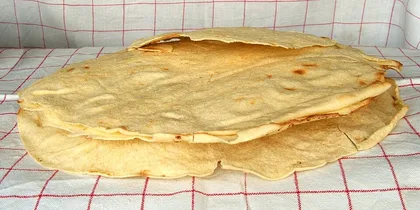 Read the pagePane carasauSardinian sheets baked twice until bone dry, so they keep for months and survive shipping: the most exportable Italian bread there is.
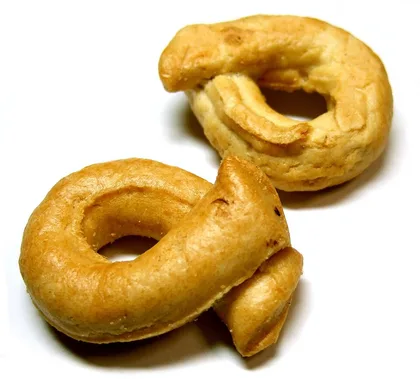 Read the pageTaralliBoiled, then baked, which is why they keep for weeks and travel intact. A neat lesson in how Italian baking solved shelf life before packaging did.
Frequently asked
Is bronze-die pasta actually worth the extra money?
It depends on what you want. Bronze gives a rougher, more porous surface, and that has been measured; that it holds more sauce has not, in the studies we found. The higher price also reflects slower extrusion and the choice of semolina, so read the protein line too.
How salty should the water be? People say as salty as the sea.
The sea is around 35 g of salt per litre, about three times too much. The guideline is roughly 10 g per litre with about a litre per 100 g of pasta. Only about a gram ends up in each portion.
How much dried pasta per person?
80-100 g dried as a main course, closer to 120 g for big appetites, and 120-150 g for fresh egg pasta because it weighs more for the same volume. Dried pasta roughly doubles in weight as it cooks.
Why does my sauce slide off and pool at the bottom?
Two usual causes: draining every last drop so nothing can emulsify, and spooning sauce on top instead of finishing pasta and sauce together in the pan with a splash of cooking water.
Should I buy the chilled fresh pasta in the supermarket?
Usually not. Most of it is extruded and pasteurised rather than rolled, which puts it closer to rehydrated dried pasta than to a real sheet, and it costs more. Buy good dried pasta and cook it properly.
How do I stop Italian bread going hard in a day?
Never in the fridge, the temperature where staling runs fastest. Cut side down on a board under a cloth for a couple of days, slice and freeze for longer, and revive it by wetting the crust and baking five to eight minutes at 200C.
Sources
Where to check what you just read.
- 1
Whether Gragnano, Altamura or Napoletana on a package is a registered name or a marketing word, and which scheme (PDO, PGI or TSG) it sits under.
- 2
The full specification behind the TSG, proof that a TSG locks the method and not the place: flour strength, rising times and the wood-fired oven at 485 °C.
- 3
The source for the claims that sound like folklore: semolina pasta may contain nothing but durum and water, and boxed egg pasta has a legal egg minimum.
- 4
Why a US box can be legally called macaroni without being durum: the federal standard permits semolina, durum flour, farina or plain flour.
- 5
What an EU pack must carry and in what order, so you know which numbers on an imported box are regulated and which are the brand talking.
- 6
When a pack that evokes Italy must state that the wheat came from somewhere else: the line to look for under the brand name.
- 7
The deposited specification for Pasta di Gragnano PGI and the other protected shapes: die, drying regime and the area production must stay inside.
- 8ReferenceLucisano, Pagani, Mariotti, Locatelli, Teflon and bronze dies, Food Research International 2008
Porosity and breaking strength of spaghetti by die material; sauce retention is not measured.
- 9
Roughness, extrusion speed, density and water taken up in the first minute across five die materials.
- 10ReferenceOgawa, Chuma, Aimoto, Adachi, drying temperature and sauce retention, Journal of Food Science 2015
The only sauce-retention measurement we found, and it concerns drying, not the die.
Every pasta and bread page
49LazioBucatiniBucatini are thick spaghetti with a hole running through the middle.VenetoGnocchiGnocchi are small boiled dumplings, in their modern form made of potato bound with a little flour.LiguriaFocacciaTwo centimetres tall, dimpled with the fingertips, flooded with a brine of water, salt and olive…Emilia-RomagnaTortelliniTortellini are tiny ring-shaped egg pasta parcels filled with pork, prosciutto, mortadella and…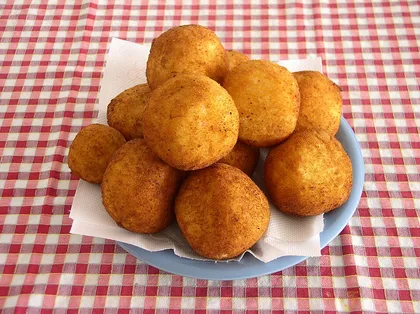 PATAranciniArancini are deep-fried Sicilian rice balls: saffron rice moulded around a filling of meat ragù and…CampaniaSpaghettiA solid round strand of durum semolina and water, 1.7 to 2.0mm across. It looks like the most…ApuliaOrecchietteOrecchiette are Puglia's handmade pasta: semolina and water, no egg, dragged with a knife and…
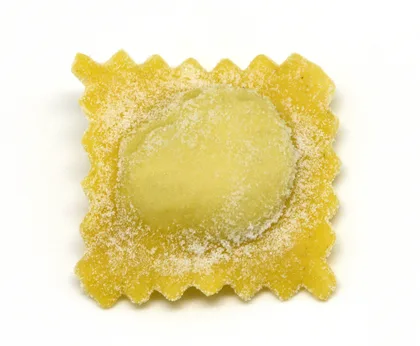 PATAgnolottiAgnolotti are Piedmont's stuffed pasta: thin egg dough around a filling of roasted meat, not…
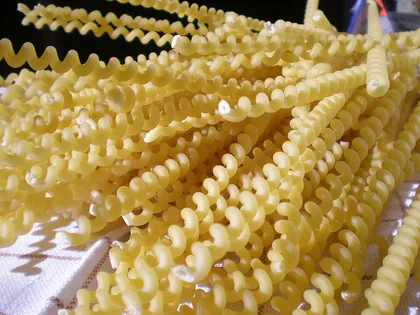 CampaniaFusilliTwo different pastas share this name. The industrial spiral is solid and holds sauce on its outside…CampaniaPaccheriPaccheri are large smooth tubes of durum wheat pasta from Campania: 4-5 cm long, 3-4 cm across…LazioRigatoniWide ridged tubes of durum semolina, cut straight across. The ridges and the square cut are…
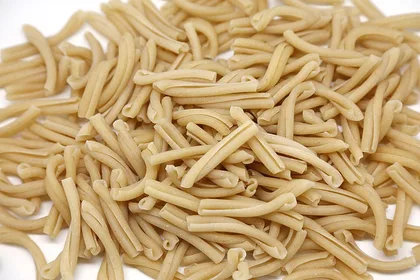 Emilia-RomagnaStrozzapretiStrozzapreti are hand-rolled Romagnolo pasta: strips of semolina-and-water dough twisted between…
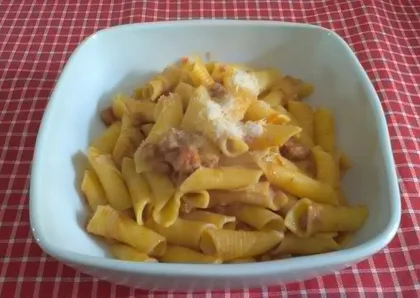 CampaniaMaccheroniThe most misunderstood name in Italian pasta. In Naples it means dried semolina pasta in general…
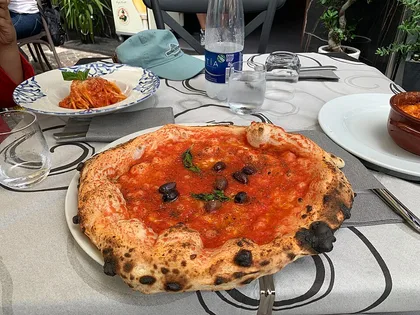 STGNeapolitan PizzaNeapolitan pizza has been an EU-registered Traditional Speciality Guaranteed since 2010: four…
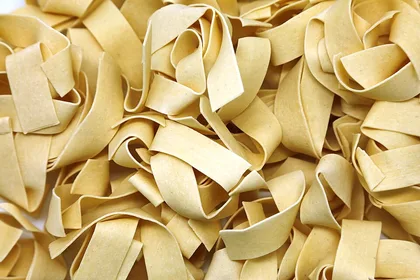 TuscanyPappardelleRibbons of egg pasta two to three centimetres wide, the widest pasta you still eat twirled on a…
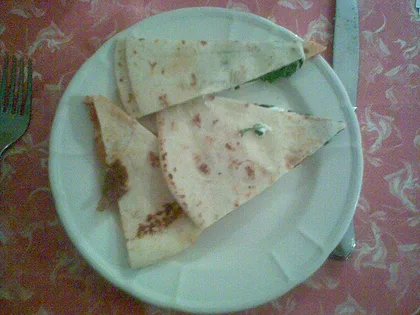 IGPPiadina RomagnolaNo yeast and no waiting: flour, water, salt and lard, rolled thin and cooked dry on a hot plate for…
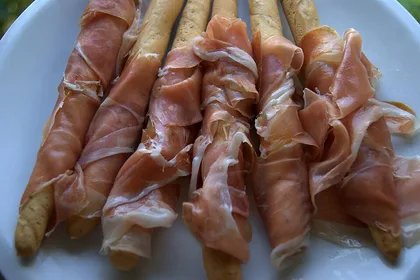 PiedmontGrissiniGrissini are Turin's breadsticks: bread reduced to almost pure crust, dried in the oven until it…
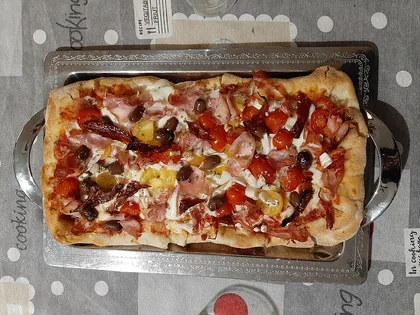 LazioPinsa RomanaIt is not pizza, and the difference starts with the flour: wheat, rice and soy blended together…ApuliaTaralliTaralli are small, crunchy savoury rings from Puglia in southern Italy, made from just flour, dry…
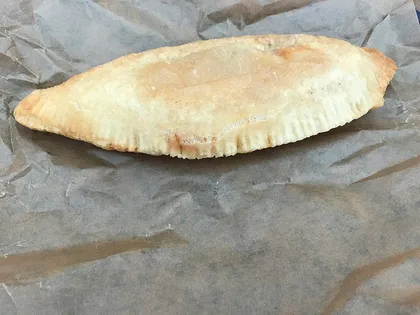 ApuliaPanzerottiThe oven never comes into it. A hand-sized half-moon of pizza dough, tomato and mozzarella sealed…
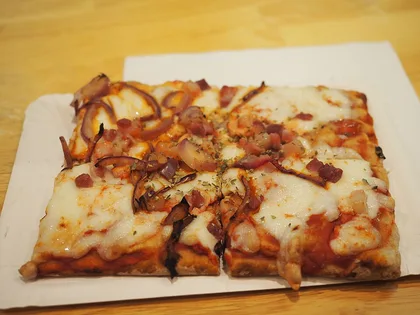 LazioPizza al TaglioPizza al taglio is Roman pizza by the slab: a very wet dough baked in an oiled rectangular pan…
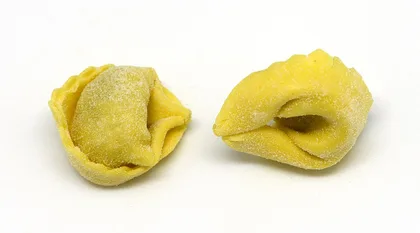 Emilia-RomagnaTortelloniSeven-centimetre squares of egg pasta filled with ricotta and parsley, folded into a little hat.
 Emilia-RomagnaCappellettiCappelletti are Emilia-Romagna's filled egg pasta, folded into the shape of a little hat and served…LiguriaTrofieTrofie are the pasta that pesto was made for: short, tapered twists of flour and water, rolled one…
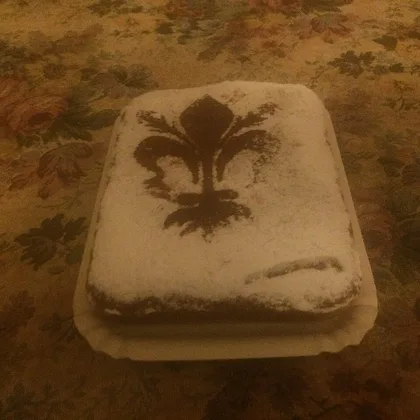 TuscanySchiacciataThe name is the gesture: schiacciare means to squash, which is what the baker's fingertips do to…
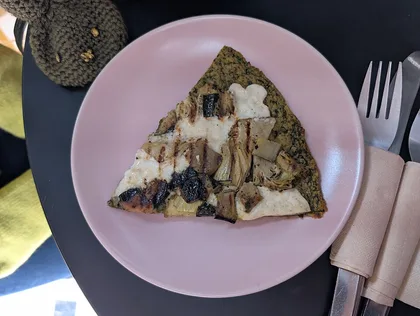 LiguriaFarinataFarinata is a paper-thin chickpea flour pancake baked in a copper pan in a blistering wood oven.
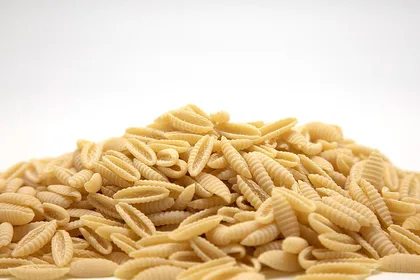 SardiniaMalloreddusThe ridges are not decoration: they hold sauce on a shape that would otherwise be smooth and…
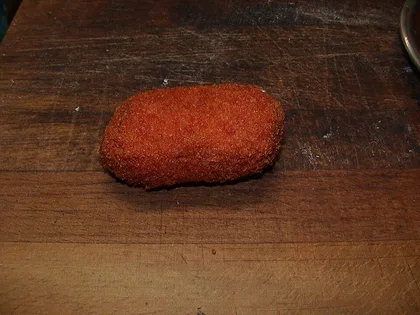 LazioSupplìSupplì are Rome's fried rice croquettes: rice cooked in tomato sauce, moulded around a plug of…
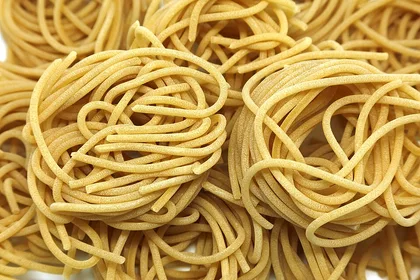 TuscanyPiciPici are fat, hand-rolled spaghetti from southern Tuscany, made from nothing but flour and water.
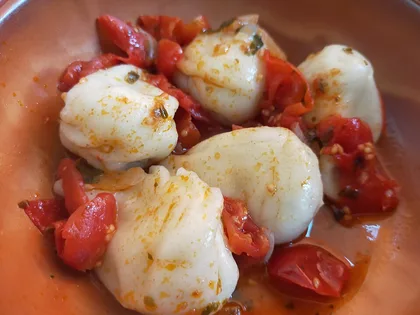 IGPCulurgionesCulurgiones are Sardinian filled pasta: potato, pecorino and mint sealed inside a semolina wrapper…SardiniaPane carasauBaked twice because it had to survive months in a shepherd's saddlebag: a paper-thin disc of durum…
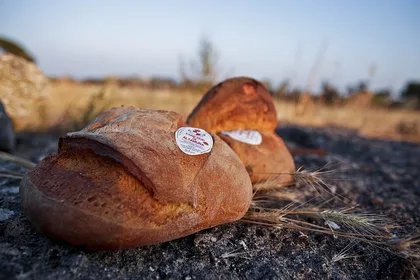 DOPPane di AltamuraPane di Altamura is a durum-wheat sourdough from the Murgia plateau in Puglia, and in 2003 it…
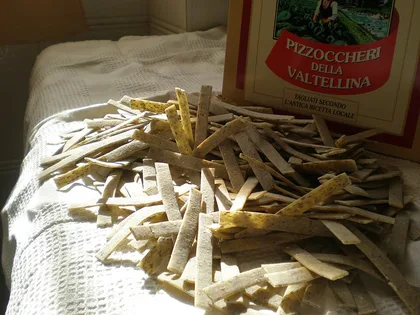 IGPPizzoccheriBuckwheat rather than wheat, which is where the dark colour and the nutty taste come from.
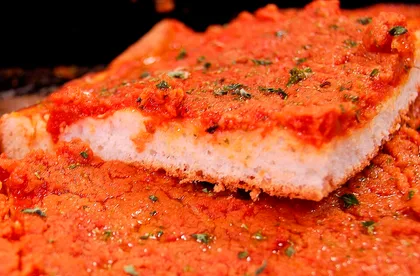 SicilySfincioneSfincione is Palermo's thick, spongy street focaccia: slow-cooked onion and tomato sauce, anchovies…
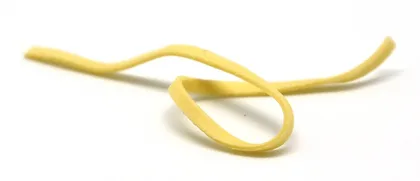 PiedmontTajarinTajarin are the Piedmontese answer to tagliolini: hand-cut egg noodles barely a millimetre and a…
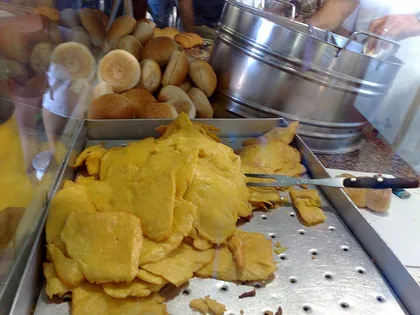 SicilyPanelle (Sicilian Chickpea Fritters)Panelle are Sicilian chickpea fritters: a chickpea-flour batter cooked like polenta, spread…
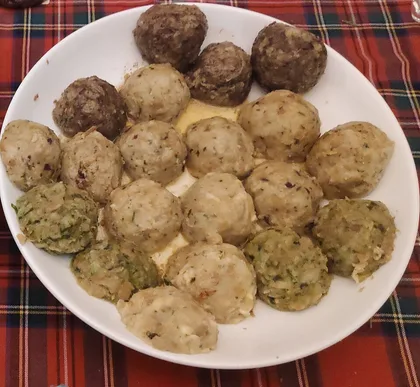 Trentino-South TyrolCanederliIn the mountains nobody ever threw bread away, and canederli are the proof: stale white bread…
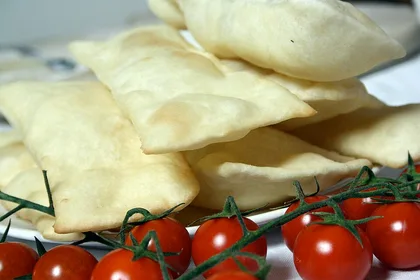 Emilia-RomagnaGnocco FrittoEat it within a minute of the pan, because once it deflates it is over: a diamond of leavened dough…
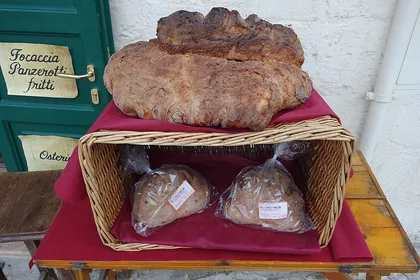 IGPPane di MateraPane di Matera is a durum-wheat sourdough from Basilicata, IGP since 2008, leavened with a mother…LombardyPolenta TaragnaPolenta taragna is the dark alpine polenta of Lombardy: cornmeal cut with buckwheat flour, stirred…
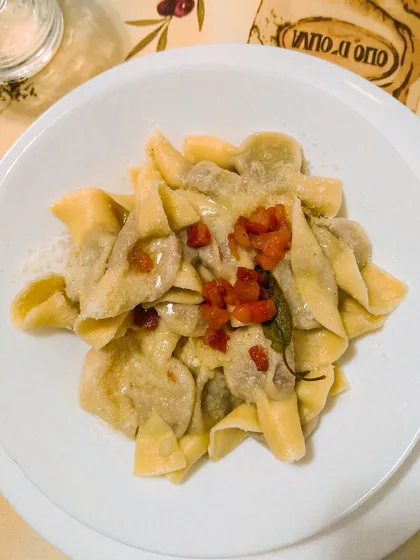 LombardyCasoncelliCasoncelli are Bergamo's stuffed pasta: beef and salami filling laced with crushed amaretti and…
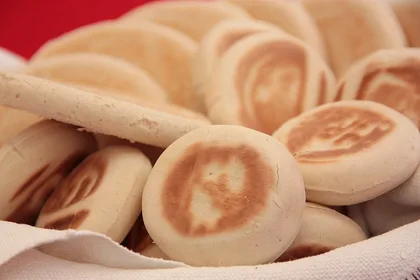 Emilia-RomagnaTigelleTigelle are small round breads from the Modena Apennines, cooked between two hot plates and served…
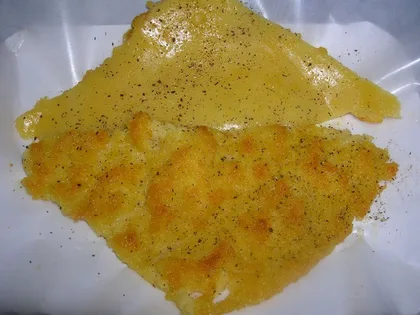 TuscanyTorta di Ceci (Cecina)Chickpea flour, water, olive oil and salt, baked in a wide copper pan in a fierce wood oven.LombardyMichetta (Rosetta Roll)The michetta is Milan's hollow bread roll: five petals around a small central dome, and nothing at…ApuliaPuccia SalentinaPuccia is the round wood-fired bread of Salento, in the heel of Italy: a flat, soft loaf about the…
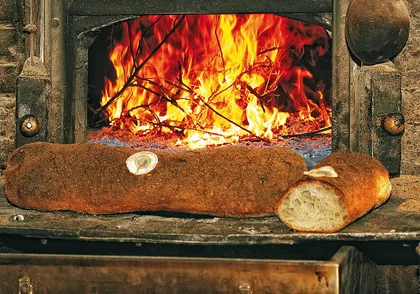 IGPPane di Genzano (Genzano Bread)Pane di Genzano is a sourdough loaf from the Alban Hills south of Rome, baked in a wood oven on a…
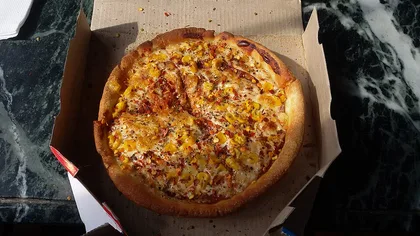 CampaniaPizza di Scarola (Neapolitan Escarole Pie)Pizza di scarola is Naples's Christmas Eve pie: bread dough wrapped around escarole stewed with…
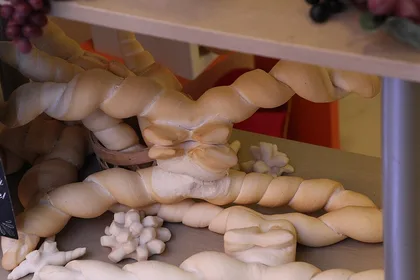 IGPCoppia FerrareseCoppia ferrarese is a twisted, four-horned bread from Ferrara made with lard in the dough.MarcheCrescia Sfogliata (Urbino Layered Flatbread)Crescia sfogliata is the layered griddle flatbread of Urbino, in the Marche hills.