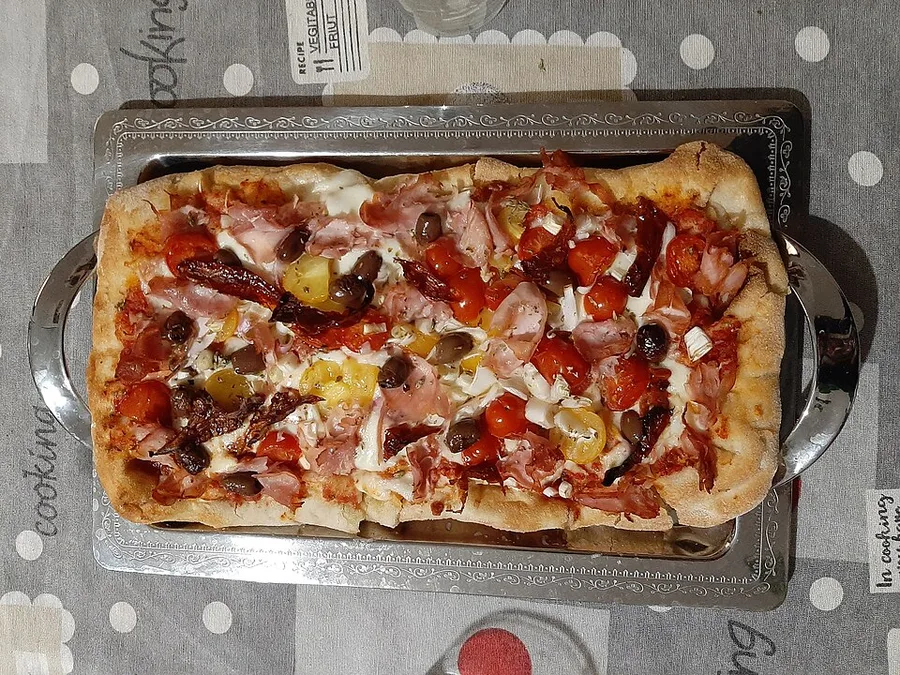
What is Pinsa Romana?
Pinsa is a pizza-shaped base with a raised, irregular rim and a thin centre: crisp underneath, open and airy inside. You top it like a pizza and eat it like a pizza, but the dough follows different rules: hydration often above eighty per cent, a mixed flour blend, and twenty-four to seventy-two hours of cold fermentation.
On its origins it is worth being blunt, because a great deal of marketing has been built on the opposite claim. The flour blend that defines pinsa is a commercial formulation developed near Rome in the early 2000s and registered as a trademark. The story linking it to the Latin verb pinsere, to press, and to the flatbreads of ancient Rome was written afterwards, around a modern product.
None of which makes it a fraud. It is a genuinely well-engineered base that solved a restaurant problem: light, crisp, pre-baked, ready to be topped and finished in four minutes.
What does it taste like?
Neutral and bready, with a crackle on the bottom crust and a light, almost cottony crumb inside. The rice flour makes the base drier and crisper than pizza dough; the soy flour helps it brown. On its own it tastes mild: the point of pinsa is texture, not flavour.
Against a Neapolitan pizza it is much less chewy and much less charred: no leopard-spotting, no soft folding slice, no wet centre. Against Roman pizza al taglio it is lighter and less oily.
A good pinsa makes an audible sound when you press the rim. If it bends limply under the toppings, the base was reheated badly or the toppings went on too wet.
How to use it
Top it the way you would a pizza, with one adjustment: wet ingredients go on late. A high-hydration base loses its crispness quickly, so mozzarella, tomatoes and watery vegetables belong in the last few minutes or after the oven.
Starting from a pre-baked base at home, use a 250 °C oven, put the base directly on a rack or a hot stone for two to three minutes, then add toppings and give it another three or four. Never start it in a cold tray.
The combinations that work best play crisp base against cool toppings: mortadella and pistachio, burrata and anchovies, prosciutto and figs. Leftovers revive in a covered frying pan over medium heat, never in a microwave.
How long it keeps
Pre baked bases are sold frozen or chilled and the pack date is the one that counts. Frozen bases go straight into the freezer and stay usable for the months printed on the box, typically six to twelve; once a pack is opened, seal the spare base in a freezer bag with the air pressed out, because an exposed base picks up freezer smells and dries at the edges. Chilled bases carry a short date, a week or two, and belong in the fridge in their sealed film.
A finished, topped pinsa does not keep its point. The crumb reabsorbs moisture from the toppings within an hour and the shell goes from crisp to leathery, which is why the whole style is built around eating it immediately. Refrigerating a topped one accelerates staling: starch retrogrades fastest just above freezing, so the base turns dense and dry overnight. Reheating dry in a covered pan or a hot oven drives moisture back out and restores some crispness, though never all of it. Raw dough left to ferment past its window slackens, smells sharply of alcohol and no longer holds gas.
Spot the real thing
Start with the shape: pinsa is oval and hand stretched, longer than it is wide, with an irregular edge and a visibly dimpled surface. A round base is a pizza, a rectangular one baked in a tray is pizza al taglio, and a thick oil rich slab is focaccia. Broken open, the crumb should be extremely open, with large uneven holes and thin, almost papery walls, under a shell that crackles. The colour is pale gold rather than deep brown, because the dough carries less sugar than a standard pizza dough.
The ingredient list settles the rest. A genuine blend lists wheat flour with rice flour and soy flour, plus sourdough or a starter; a base made from plain wheat flour alone is an oval pizza using the name. Pinsa Romana has no DOP or IGP protection, so the word on a menu guarantees nothing, and abroad it is applied loosely. Pre baked bases sold frozen or chilled are the normal way to buy it outside Italy, usually two to a pack at $6 to $10, and the pack should state a fermentation of at least twenty four hours.
How to pronounce Pinsa Romana
PEEN-sah
Two syllables, stress on the first. The 's' is a clean, unvoiced 's' as in 'sun', not a 'z' sound. So PEEN-sah, never 'PIN-zah' and never 'PEEN-tsah'. The full name is pinsa romana, roh-MAH-nah.
Pinsa Romana compared
vsPizza napoletana
The clearest contrast in Italian flatbread. Neapolitan pizza is a protected traditional speciality with a written rulebook (wheat flour, water, salt, yeast, nothing else) while pinsa is a modern flour blend with no protected status at all.
| This | Pizza napoletana | |
|---|---|---|
| Flour | Wheat, rice and soy blend | Soft wheat flour only |
| Hydration | 75-85% | About 60% |
| Fermentation | 24-72 hours, refrigerated | 8-24 hours, room temperature |
| Shape | Oval, hand-pressed | Round, 22-35 cm |
| Bake | About 300 °C, often pre-baked then finished | 430-480 °C wood oven, 60-90 seconds |
| Texture | Crisp bottom, dry, light | Soft, foldable, charred, wet centre |
| Protection | None: a trademark, not a designation | STG since 2010, with a legal specification |
| Age | Early 2000s | Nineteenth century |
vsPizza al taglio (Roman by-the-slice)
Rome's other high-hydration flatbread, and the pinsa's real local rival. Pizza al taglio is baked in long metal trays, sold by weight and cut with scissors; pinsa is a single personal base served on a plate.
| This | Pizza al taglio (Roman by-the-slice) | |
|---|---|---|
| Format | Individual oval, 250-300 g | Long tray, sold by weight |
| Ordering | Whole, at a table | Cut to the length you point at |
| Crumb | Dry, crisp, light | Open, moist, chewier |
| Oil | Little in the dough | Generous, in the dough and the pan |
| Eaten | Dinner, sit-down, with beer | Standing, any time, wrapped in paper |
| Age of the format | Early 2000s | Mid-twentieth century |
vsFocaccia
Both are flat, both are oil and flour, but focaccia is bread and pinsa is a pizza base. Focaccia is seasoned and eaten as it comes; pinsa exists to carry a topping.
| This | Focaccia | |
|---|---|---|
| Purpose | Base for toppings | Bread, eaten plain |
| Flour | Wheat, rice, soy | Wheat only |
| Fat | Minimal in the dough | Olive oil in the dough and on top |
| Height | Thin centre, raised rim | Even, 15-20 mm |
| Served | Hot, immediately | Warm or at room temperature |
Pinsa Romana substitutes
- Home-blended pinsa flour
The blend is easy to reproduce: strong bread flour, rice flour and soy flour, mixed with water at eighty per cent, a pinch of yeast and a day or two in the fridge.
80% wheat : 10% rice : 10% soy - Frozen pinsa bases
Now stocked by large US and UK retailers and by Italian importers. Reheat straight from frozen on a hot stone or grate: thawing first makes them soggy.
1 base per person - High-hydration pizza dough
Push a normal pizza dough to seventy-five per cent hydration and give it forty-eight hours in the fridge. You get most of the lightness without the rice-flour crackle.
1:1 by dough weight - Ciabatta split lengthways
A decent shortcut for a pinsa-style base at home: split, brush with oil, crisp it in a hot oven, then top. Chewier, but the same crisp-bottom effect.
One 250 g ciabatta per portion - Gluten-free pizza base
Necessary if you were reaching for pinsa because you thought it was gluten-free. It is not: the blend is mostly wheat. A dedicated gluten-free base is the only safe option for coeliacs.
- Soy-free version
Soy is an allergen and it is in most commercial blends. Replace it with the same weight of chickpea flour: similar browning, slightly nuttier flavour.
10% chickpea flour instead of soy
Where to buy it
In the US, frozen pinsa bases have gone mainstream: warehouse clubs, larger supermarkets and Italian importers all carry them, typically 8 to 13 dollars for a pack of two to four. In the UK, Italian delis and online retailers sell them at roughly 3 to 6 pounds for two.
The flour blend itself is sold to home bakers by several Italian mills, at 2.50 to 4 euro per kilo in Italy and around double that once exported. A kilo makes five or six bases.
Read the ingredients. A legitimate blend lists wheat, rice and soy flour, and must declare soy as an allergen. If a pack claims gluten-free pinsa, it is either a different product entirely or mislabelled.
Where to eat it in Italy
Rome, where the format was invented and where competition is hardest. Pinserie are everywhere, from the eastern neighbourhoods of Pigneto and Centocelle to Prati and Testaccio. The fair test of any of them is to order a plain white pinsa with oil and salt and judge the base alone.
Worth doing on the same trip: eat a pinsa, a slice of pizza al taglio and a round Roman pizza within a couple of days. They are three different answers to flour, water and heat in one city.
Outside Rome, pinsa has spread across Italy and abroad, but very often on bases bought in from suppliers. That is not a scandal, since it is how the product was designed, but it does mean the difference between venues lies in the topping and the reheat.
Recipes with it
Frequently asked questions
Is pinsa really an ancient Roman food?
No. The flour blend that defines it was developed commercially in Rome in the early 2000s and registered as a trademark. The link to the Latin pinsere and to ancient Roman flatbreads is a marketing story attached to a modern product.
What is the difference between pinsa and pizza?
The flour blend (wheat, rice and soy instead of wheat alone) plus much higher hydration and a long cold fermentation. In practice pinsa also usually starts from a pre-baked base, which pizza does not.
Is pinsa healthier than pizza?
There is no clinical evidence that it is easier to digest. It holds more water, so it has fewer calories for the same weight, and the long fermentation helps the dough structure. Topped with cheese and cured meat, it is as substantial as any pizza.
Is pinsa gluten-free?
No. The base of the blend is wheat flour, so it is unsafe for coeliacs. It also contains soy, a declarable allergen.
How do you pronounce pinsa?
PEEN-sah, stress on the first syllable, with a clean 's' sound rather than a 'z'.
Related foods
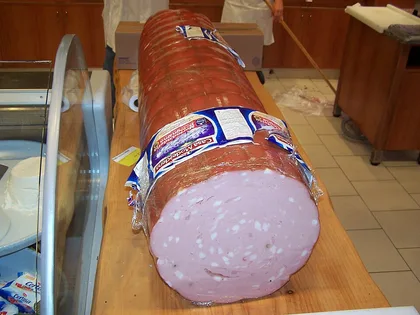 Cured meatsMortadellaThe white cubes are not just any fat: they are jowl, the firmest part of the pig, and they stay whole…
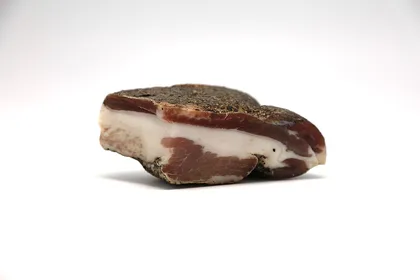 Cured meatsGuancialeGuanciale is cured pork jowl: unsmoked, rubbed with salt and pepper, aged for one to three months.
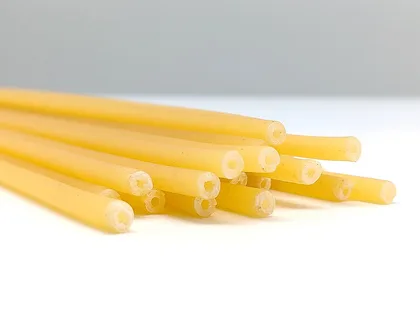 Pasta and breadBucatiniBucatini are thick spaghetti with a hole running through the middle.
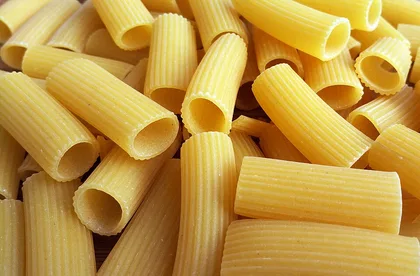 Pasta and breadRigatoniWide ridged tubes of durum semolina, cut straight across. The ridges and the square cut are engineering, not…
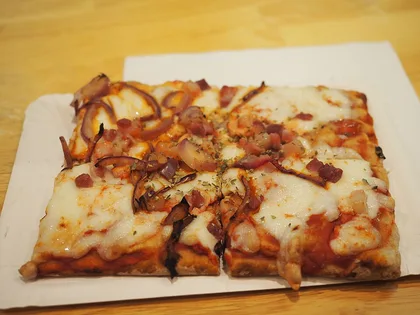 Pasta and breadPizza al TaglioPizza al taglio is Roman pizza by the slab: a very wet dough baked in an oiled rectangular pan, sold by…
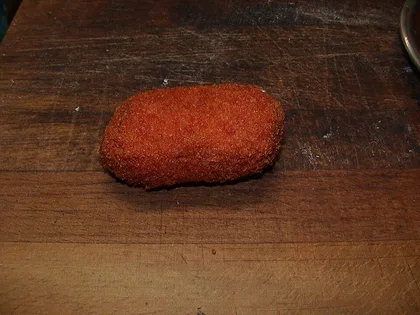 Pasta and breadSupplìSupplì are Rome's fried rice croquettes: rice cooked in tomato sauce, moulded around a plug of mozzarella…
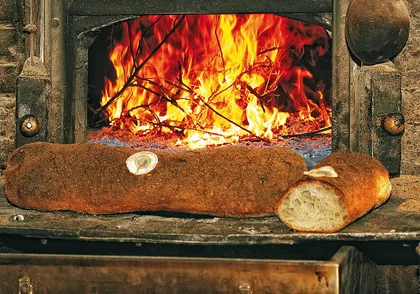 Pasta and breadPane di Genzano (Genzano Bread)Pane di Genzano is a sourdough loaf from the Alban Hills south of Rome, baked in a wood oven on a bed of bran…
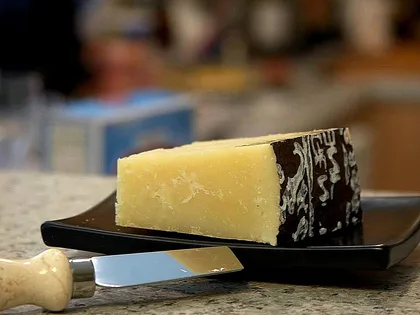 CheesePecorino RomanoPecorino Romano DOP is a hard, dry-salted sheep's milk cheese aged at least five months, made in Sardinia…