What is Burrata?
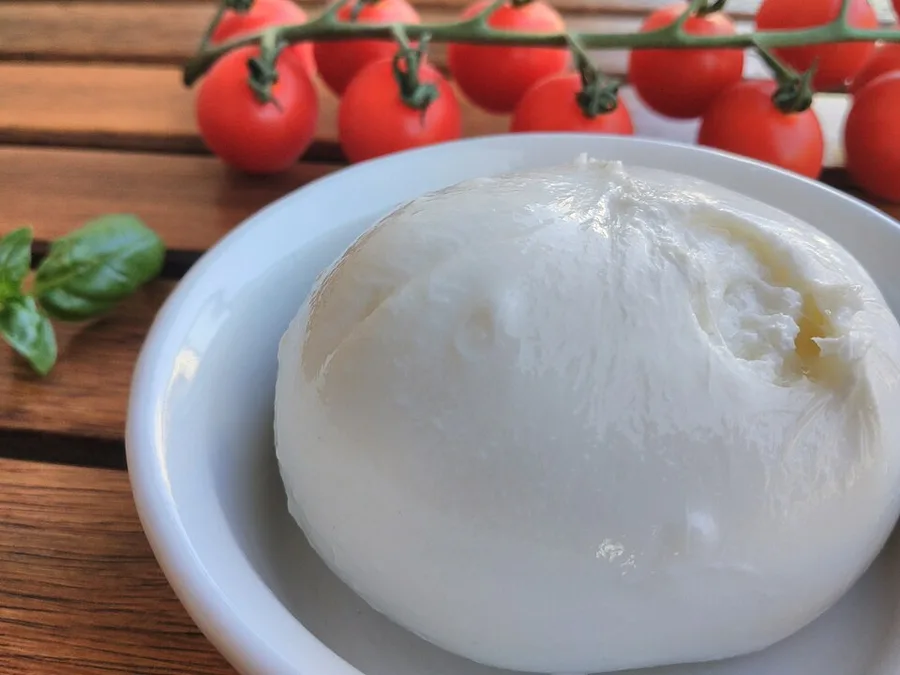
Burrata is two cheeses in one. The outside is fresh cow's-milk mozzarella, stretched by hand into a thin pouch and tied off at the top with a knot. The inside is stracciatella: ragged strands of that same stretched curd, torn by hand and steeped in fresh cream.
That construction is the whole point. The shell is springy and lightly salted, the filling is sweet, rich and barely holding together. A good burrata collapses when you cut it. If the centre stays firm or scoops like ricotta, it is either old or industrially stabilised.
Since 2016 there has been a protected designation, Burrata di Andria IGP, which requires Italian cow's milk and production within Puglia. Outside that scheme the word is unregulated, which is why burrata is now made in California, Wisconsin, Australia and half of Europe, sometimes very well, but it is not the same object.
What does it taste like?
Very mild, very milky, and much sweeter than you expect from a cheese. The shell tastes like good fresh mozzarella: clean, faintly salty, with a squeak to it. Then the centre arrives and the register changes completely: thick cream with a light lactic tang, closer to crème fraîche than to cheese.
There is no sharpness, no funk and almost no salt. What burrata delivers is texture and fat, which is why it is nearly always served with something acidic, bitter or salty next to it. On its own, with nothing but oil and pepper, it can read as bland; with tomatoes, anchovies or chilli, it turns into the best thing on the table.
It is also emphatically a fresh-cheese flavour: if what you are eating tastes tangy, sour or yoghurty, it has gone past its window.
How to use it
Take it out of the fridge 30 to 45 minutes before serving. This is the single thing that most changes the result: cold burrata tastes of almost nothing because the fat is locked up.
Serve it whole and cut it at the table with a cross on top, letting the centre spill out. It needs very little around it: a good extra virgin olive oil, flaky salt, cracked black pepper. Beyond that, reach for contrast rather than more richness: ripe tomatoes, Cantabrian anchovies, grilled peaches, sautéed bitter greens, a spoonful of 'nduja melting over the top, prosciutto, roasted red peppers.
With pasta, tear it over the top off the heat rather than stirring it into a hot pan. On pizza, add it after the pizza is out of the oven and on the plate. Never bake it, never grill it, never put it under a broiler: the emulsion breaks and you get a greasy puddle.
What is left in the tub is not waste. The whey and stray cream are good stirred into a soup or used to enrich mashed potatoes.
How long it keeps
Unopened, keep the sealed tub in the coldest part of the fridge, around 4°C (39°F), and go by the date the producer printed on the lid. Artisan burrata is normally dated a few days out; heat-treated supermarket versions carry weeks. Once the tub is opened the useful window is short, counted in hours rather than days, and the ball needs to stay fully submerged. Move it to a lidded container and top the liquid up with whole milk or lightly salted water if there is not enough to cover it. Left uncovered on a plate the outer skin dries and stiffens within a couple of hours and the sheen goes flat.
What changes physically: from the second day the cream in the centre loses sweetness and picks up a lactic tang, the shell tightens, and the liquid clouds as fine curd settles out. Freezing does not extend it usefully, because ice crystals break the cream emulsion and the filling separates into fat and watery whey on thawing, so it pours rather than spills. For anything to do with the date itself, the packaging and the producer are the reference.
Spot the real thing
A burrata is a pouch, not a ball. There should be a visible knot or twist at the top where the curd was gathered and tied, and the surface should read porcelain white and glossy rather than matte or faintly yellow. It sits loose in liquid in a sealed tub. Pressed gently through the packaging it gives and springs back; one that stays dented feels slack. The smell at opening is milk and fresh cream with a faint lactic edge.
The thing most often mistaken for it abroad is plain fresh mozzarella, sold in the same round tubs on the same shelf: the knot is the tell, and mozzarella cuts uniform all the way through while burrata releases a loose centre. Stracciatella sold on its own is the filling without the shell. A tub marked burrata with three or four weeks of shelf life has a stabilised filling and cuts firm. On price, expect roughly $8 to $14 for 8 oz domestically in the US, $16 to $22 flown in, and £3 to £5 per 150g in the UK; well below that is usually the long-life type.
How to pronounce Burrata
boo-RAH-tah
Three syllables, stress on the middle one. The 'u' is 'oo' as in 'boot', never the 'er' of 'burr'. The double 'r' is rolled and held slightly longer than an English r. The final 'a' is a full open vowel: 'tah', not the swallowed 'uh' of 'burrata' as most English speakers say it. The two commonest errors are 'burr-AH-tuh' (English 'burr' plus a mumbled ending) and stressing the first syllable, 'BOO-rah-tah'.
Burrata compared
vsFresh mozzarella
Burrata is built out of mozzarella, so the comparison is between a finished cheese and a construction. Mozzarella is uniform, firm enough to slice and mild; burrata is a mozzarella shell around cream, roughly twice as rich, and impossible to slice cleanly. Use mozzarella where the cheese has to hold its shape or go in the oven, burrata where it can be the centrepiece.
| This | Fresh mozzarella | |
|---|---|---|
| Structure | Pouch with a liquid cream centre | Solid, uniform throughout |
| Fat content | Roughly 20-25% (cream filling) | Roughly 16-18% |
| Texture | Springy outside, molten inside | Firm, springy, sliceable |
| Flavour | Sweet, creamy, richer | Clean, milky, lightly salted |
| Cooking | Never, heat breaks the filling | Melts well, made for pizza |
| Shelf life | 24-48 hours at best | 5-7 days |
| Price (US) | $8-14 per 8 oz ball | $5-8 per 8 oz ball |
| Best use | Served whole, torn over hot pasta | Pizza, caprese, baking, sandwiches |
vsStracciatella
Stracciatella is the filling of burrata, sold on its own in a tub. Same flavour, same cream, none of the shell and none of the theatre. If you are going to tear the burrata apart anyway (over pasta, on toast, under prosciutto) stracciatella is the cheaper and more practical buy. Note that in Italy the word also means a Roman egg-drop soup and a chocolate-chip gelato, which causes constant confusion.
| This | Stracciatella | |
|---|---|---|
| What it is | Mozzarella pouch + stracciatella inside | The filling alone, in a tub |
| Mozzarella shell | Yes | No |
| Presentation | Whole ball, cut at the table | Spooned straight from the tub |
| Flavour | Two textures, shell is firmer | Uniformly soft and creamy |
| Price per pound | Higher, hand-formed | Lower, no shaping labour |
| Best use | Centrepiece plating | Spreading, folding into pasta, toast |
vsMozzarella di bufala
Two different animals and two different regions. Buffalo mozzarella is from Campania and Lazio and is made with water buffalo milk: tangier, more mineral, wetter. Burrata is cow's milk from Puglia: sweeter, rounder, and richer because of the cream. Buffalo mozzarella is the more interesting cheese on its own; burrata is the more indulgent one.
| This | Mozzarella di bufala | |
|---|---|---|
| Milk | Cow | Water buffalo |
| Region | Puglia (Andria) | Campania, southern Lazio |
| Protection | IGP (Burrata di Andria) | DOP (Mozzarella di Bufala Campana) |
| Flavour | Sweet, creamy, mild | Tangy, mineral, more assertive |
| Texture | Firm shell, liquid centre | Yielding, wet, uniform |
| Serve at | Room temperature, 30-45 min out | Room temperature, in its whey |
| Price (US) | $8-14 per 8 oz | $9-15 per 8 oz |
Burrata substitutes
- Stracciatella
The nearest thing by a long way, because it is literally the inside of burrata. You lose the shell and the drama of cutting it open; you keep every bit of the flavour. Widely sold in Italian delis and increasingly in supermarkets.
1:1 by weight - Fresh mozzarella torn and dressed with cream
The standard home workaround and a surprisingly good one. Tear a ball of fresh mozzarella into rough strands, add two tablespoons of heavy cream per 8 oz, a pinch of salt, and let it sit for ten minutes before serving.
8 oz mozzarella + 2 tbsp heavy cream = 1 burrata - Whole-milk ricotta whipped with cream
Different texture, grainier and without strands, but it hits the same sweet, milky, rich note. Whip it briefly so it lightens. Best where the cheese is being spread rather than displayed.
1:1, thinned with 1 tbsp cream per 4 oz - Crescenza or stracchino
Soft northern Italian cows'-milk cheeses that spread like thick cream and share burrata's sweetness. Slightly more lactic and less sweet. Excellent on pizza after baking or on grilled bread.
1:1 - Vegan cashew burrata
Commercial versions from Miyoko's and several Italian producers use a cultured cashew shell around a cashew-cream centre. The shell is softer than the real thing and the flavour is nuttier, but the plating and the texture contrast survive. Serve cold-ish, not room temperature, or it slumps.
1:1 - Vegetarian and halal note: check the rennet
Most traditional burrata is made with animal rennet, so it is neither vegetarian nor halal. Several Pugliese and US producers make microbial-rennet versions specifically for those markets, so look for 'caglio microbico', 'vegetarian rennet' or a halal certification mark on the tub rather than assuming.
Where to buy it
In the US, the best domestic burrata comes from Di Stefano in California, BelGioioso in Wisconsin and Maplebrook Farm in Vermont, and all three are sold at Whole Foods, and Trader Joe's carries its own version at around $5 for two small balls. For Italian imports, Eataly and Murray's Cheese fly it in weekly, and specialist shippers like Gustiamo and Formaggio Kitchen handle Andria producers. Expect $8 to $14 for an 8 oz ball domestically and $16 to $22 for a flown-in Pugliese one.
In the UK, Waitrose, Ocado, M&S and Sainsbury's all stock burrata year-round at roughly £3 to £5 for 150g, which works out to £20 to £30 per kilo. Natoora supplies restaurant-grade Pugliese burrata to shops and direct; La Latteria in London makes it fresh; Italian importers such as Vallebona and Ham & Cheese Co. ship nationwide.
Whatever the source, buy on production date rather than expiry date. Anything with more than a week of shelf life left has been stabilised and will not behave like the real thing.
Where to eat it in Italy
Andria, in the province of Barletta-Andria-Trani, is where it was invented and where the dairies sell over the counter from six in the morning. Eating one within a few hours of production is a genuinely different experience and worth planning a morning around. Corato, Ruvo di Puglia and Gravina in Puglia have equally serious production and fewer visitors.
The Valle d'Itria (Martina Franca, Cisternino, Locorotondo, Alberobello) has dairies that make it on site each morning, many with the stretching visible from the shop floor. Bari's old town and covered market handle it properly, and across the Salento around Lecce most working masserie serve it with local tomatoes and their own oil.
Outside Italy it travels badly, so the rule is to eat it where the turnover is high: busy Italian restaurants that go through a case a night, not places where it sits in a display fridge.
Further reading
 InvestigationProtected names vs common names: PDO and PGIEuropean protection attaches to a name in full, and that name is almost always longer than the one used at…
 InvestigationItalian raw milk cheeses: the full listWe counted: 19 of 43 declare raw milk, and 16 of those 19 carry a protected designation.
 InvestigationWhich Italian cheeses are vegetarianWe counted what rennet the 43 cheeses in our atlas declare: 35 out of 43 say animal, none say otherwise.
Frequently asked questions
What is burrata, exactly?
A pouch of fresh cow's-milk mozzarella filled with stracciatella, shredded curd soaked in fresh cream. The outside is firm and springy, the inside is liquid. It comes from Andria in Puglia and was invented in the 1920s to use up leftover curd and cream.
Is burrata just mozzarella with cream inside?
Essentially yes, but the filling is not plain cream: it is torn strands of the same stretched curd steeped in cream, which gives it body and a slight chew. That is what separates real stracciatella from a shell full of double cream.
How do you pronounce burrata?
boo-RAH-tah, with the stress on the middle syllable. The first syllable is 'boo' as in 'boot', not 'burr', and the final 'a' is fully pronounced.
Can you cook with burrata?
Not really. Heat splits the cream filling and it turns oily. Add it to pizza after the pizza leaves the oven, and tear it over pasta off the heat. If you want a cheese that melts, use fresh mozzarella instead.
How long does burrata last, and can you freeze it?
Two days at the absolute outside, and it is noticeably better on day one. Keep it submerged in its liquid at fridge temperature. Do not freeze it: thawing splits the cream and the filling separates into fat and whey.
Sources
Where to check what you just read.
- 1
L'atto del 21 novembre 2016 che ha protetto «Burrata di Andria» come IGP: conferma che la tutela riguarda quel nome e non la burrata in quanto tale.
- 2
Il PDF del disciplinare vigente, dove si verificano peso ammesso, spessore dell'involucro, composizione del cuore e area di lavorazione.
- 3InstitutionRegione Puglia — Burrata di Andria IGP
La scheda regionale con il disciplinare allegato: qui si legge che la zona ammessa è l'intera Puglia e che il latte deve essere esclusivamente vaccino.
- 4Consortium · interested partyConsorzio della Burrata di Andria IGP
Chi sono i caseifici consorziati e quali iniziative di tutela sono in corso: utile per distinguere le aziende dentro la IGP dalle altre.
Related foods
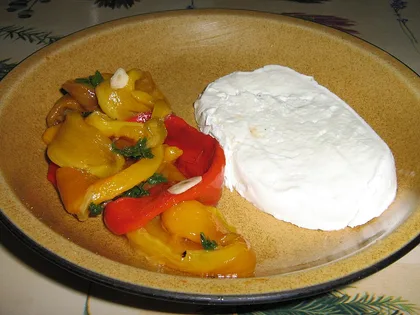 CheeseBuffalo MozzarellaMozzarella di Bufala Campana DOP is made from the whole raw milk of Italian Mediterranean water buffalo…
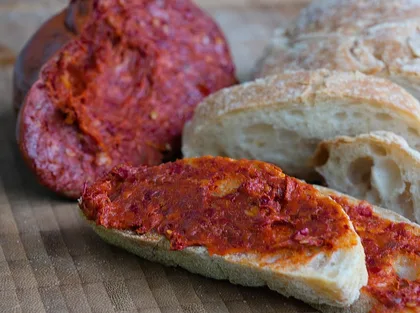 Cured meats'Nduja'Nduja is a soft, spreadable Calabrian pork salume that is up to 40% chilli.
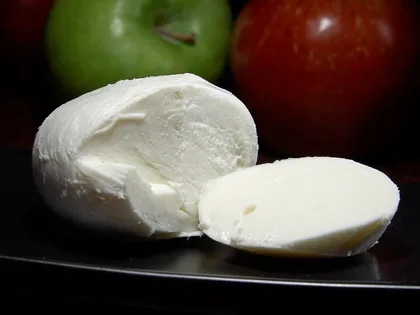 CheeseMozzarellaThe name is a verb before it is a cheese: mozzare means to lop off, which is what the cheesemaker does by…
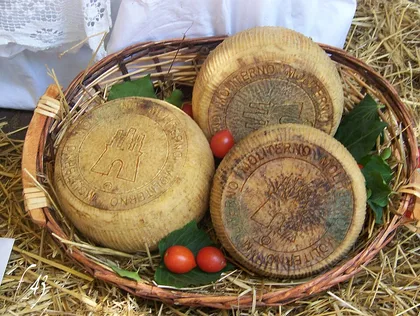 CheeseCanestrato PuglieseCanestrato Pugliese DOP is a hard sheep's milk cheese from the Tavoliere plain of northern Puglia, pressed…
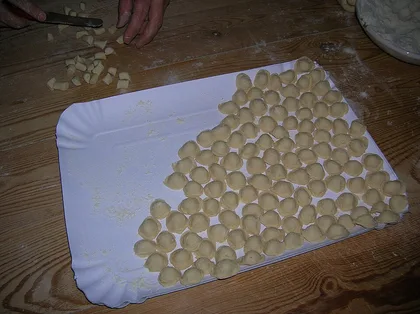 Pasta and breadOrecchietteOrecchiette are Puglia's handmade pasta: semolina and water, no egg, dragged with a knife and flipped over a…
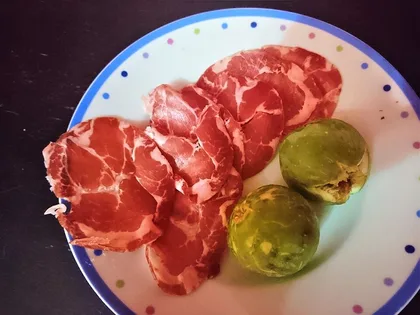 Cured meatsCapocolloCapocollo is the pork neck muscle, salted whole and aged in casing.
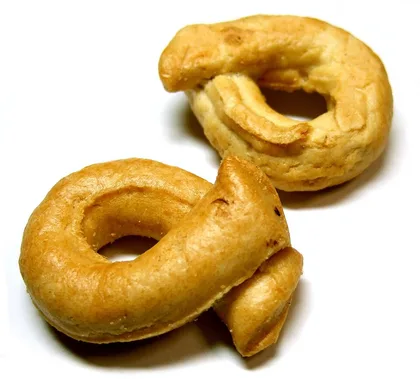 Pasta and breadTaralliTaralli are small, crunchy savoury rings from Puglia in southern Italy, made from just flour, dry white wine…
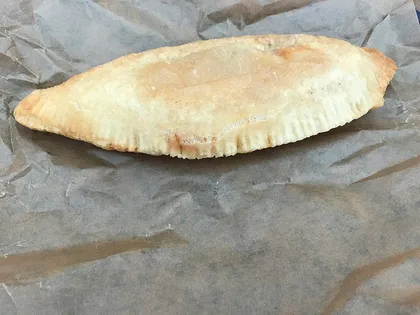 Pasta and breadPanzerottiThe oven never comes into it. A hand-sized half-moon of pizza dough, tomato and mozzarella sealed inside…