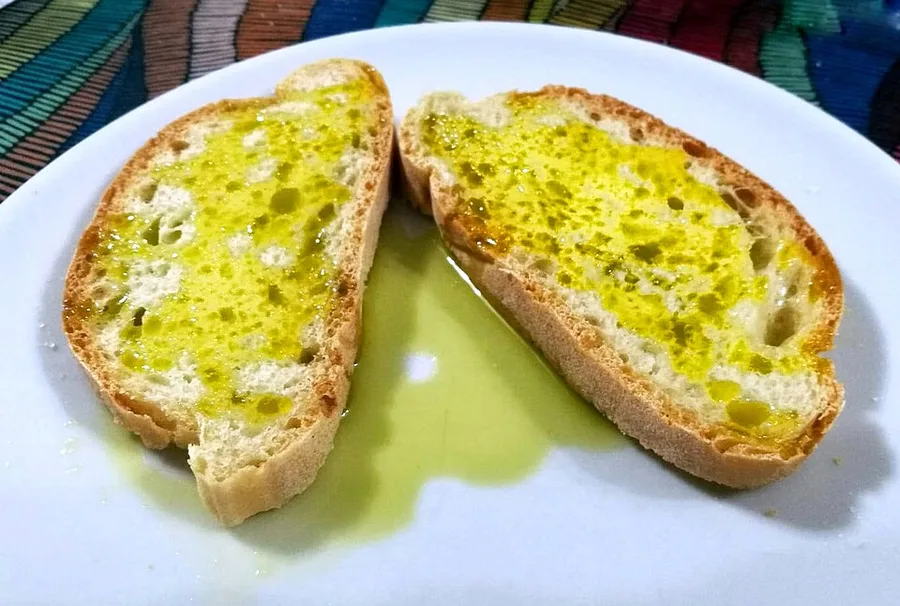
What is Extra Virgin Olive Oil?
Extra virgin olive oil is fruit juice, pressed. That is the technical definition, not a slogan: it is extracted from olives by mechanical means alone (crushing, malaxation, centrifugation) with no solvents, no refining and no significant heat. No other edible fat on the shelf is made that way.
It is also a legal grade with two simultaneous conditions under EU law. Free acidity, expressed as oleic acid, must be at or below 0.8% by weight; and a trained sensory panel must find no defect at all, a defect median of zero, plus at least a trace of fruitiness. Fail either test and the oil drops a grade: it becomes virgin olive oil, or lampante, and lampante cannot legally be sold to consumers until it has been refined.
You cannot taste acidity: an oil at 0.7 and one at 0.2 are indistinguishable on the palate, and free acidity has nothing to do with sour flavour. It is a proxy for the condition of the fruit at milling. Italy produces 200,000 to 300,000 tonnes a year and consumes more than it makes, arithmetic worth remembering at the supermarket shelf.
What does it taste like?
Good Italian extra virgin tastes green. Cut grass, artichoke, green tomato leaf, sometimes green almond, sometimes a herbal note people describe as basil or rocket. Then bitterness arrives across the middle of the tongue, and a few seconds later a peppery sting catches the back of the throat and makes you cough.
That cough is the point. It comes from oleocanthal, the compound with documented anti-inflammatory activity, and professional tasters count how many coughs an oil produces. If an oil gives you nothing, no bitterness and no sting, just a soft oily sweetness, it is low in polyphenols and will not last.
Regional character is real. Tuscan oils are grassy, sharply bitter and lean; Pugliese Coratina is enormous, almost aggressive, with tomato and rocket; Ligurian Taggiasca is gentle and almond-like. What it should never taste of: cardboard, old walnuts, wine vinegar, damp cellar, or nothing at all.
How to use it
Buy two bottles and use them for two different jobs: an everyday extra virgin for the pan, and a good single-region or single-cultivar bottle used raw, poured at the end, off the heat. Heat drives off aroma within seconds, so finishing oil goes on after cooking, never during.
Match intensity to the dish. Robust, bitter oils (Coratina from Puglia, Moraiolo from Tuscany) belong on bean and chickpea soups, grilled steak, bitter greens, artichokes and mushrooms. Medium fruity oils suit pasta, cooked vegetables and fresh cheese. Delicate oils go with raw fish, shellfish, mayonnaise and, genuinely, cakes: olive oil cake is better with a mild oil than with butter.
You can cook with it, and you can fry with it. A quality extra virgin smokes between 190 and 210°C, higher than several seed oils, and its antioxidant load makes it more stable than most alternatives. The reason home cooks avoid deep-frying in it is the bill, not the chemistry.
The simplest test of any bottle: sliced ripe tomato, salt, oil, nothing else.
How long it keeps
Olive oil has three enemies and all of them are in a normal kitchen: light, heat and air. Keep the bottle closed, upright, in a dark cupboard at around 14 to 18 °C, and specifically not next to the hob, where every cooking session cycles it warm. Never decant into a clear cruet left on the counter. Unopened, a bottle is at its best within twelve to eighteen months of the harvest date; once opened, count on one to three months, because the headspace of air above the oil grows with every pour.
What happens is oxidation, and it is one directional. The bitterness and the throat pepper go first, then the green, grassy aromas flatten, and the oil drifts towards a waxy, crayon or putty smell. A five litre tin is good value only if you decant into a small dark bottle and keep the tin sealed. In a cold kitchen or the fridge the oil clouds and forms white waxy solids; that is the natural waxes crystallising and it reverses at room temperature. Buy in quantities you will finish in a season, and go by the harvest date.
Spot the real thing
The harvest date is the single most useful thing on a bottle, more than any medal, and a producer who has one prints it. A best before date two years out tells you nothing about when the olives were picked. Beyond that: dark glass or tin, never clear plastic; a stated origin and ideally a named estate or mill; the cultivar, if there is one, such as Coratina, Moraiolo or Taggiasca. Wording like packed in Italy or blend of EU and non EU oils describes bottling, not growing.
Taste is the real check and it surprises people: fresh extra virgin is bitter and peppery, and the pepper arrives at the back of the throat a second or two after swallowing, sometimes sharply enough to make you cough. That sting is polyphenol content, not a fault. Flat, greasy or waxy oil that tastes of nothing has lost it. Colour tells you nothing at all, which is why professional tasters use blue glasses, and the freezer test is folklore. Price sets a floor: below roughly $15 a litre the maths of harvesting and milling stops working.
How to pronounce Extra Virgin Olive Oil
OH-lyoh ek-strah-VEHR-jee-neh dee oh-LEE-vah
Olio is two syllables, OH-lyoh, not 'oh-lee-oh'. In extravergine the 'g' is soft, as in 'gee', the stress falls on VER, and the final 'e' is always pronounced.
Extra Virgin Olive Oil compared
vsVirgin and plain 'olive oil'
These are legal grades, not house styles. Extra virgin is mechanically extracted, under 0.8% acidity, with zero sensory defects. Virgin is the same process but up to 2% acidity and a small tolerance for defects. Plain 'olive oil', sometimes labelled pure or light, is refined oil, chemically stripped of flavour and colour, blended with a little virgin to give it some taste back. Light refers to flavour, never to calories.
| This | Virgin and plain 'olive oil' | |
|---|---|---|
| Extraction | Mechanical only, no solvents | Virgin: mechanical. Olive oil: refined with heat and solvents |
| Max free acidity | 0.8% | Virgin 2.0%; refined blend up to 1.0% |
| Sensory panel | Zero defects, fruitiness required | Virgin: minor defects tolerated. Refined: nothing to judge |
| Polyphenols | High: 200 to 700+ mg/kg | Virgin: moderate. Refined blend: close to none |
| Taste | Grassy, bitter, peppery | Virgin: milder. Olive oil: near-neutral |
| Typical UK price | GBP 18-35 per litre | GBP 6-10 per litre |
vs'Bottled in Italy' with imported olives
Italy consumes more olive oil than it grows, so a great deal of what leaves Italian bottling plants started as Spanish, Greek, Tunisian or Turkish olives. This is entirely legal and the oil is often decent, but the EU origin declaration is mandatory, printed small on the back, and it is the only sentence on the bottle that tells you where the fruit came from.
| This | 'Bottled in Italy' with imported olives | |
|---|---|---|
| Label wording | Italia: olives grown and milled in Italy | European Union / non-EU / blend of EU and non-EU oils |
| What happened in Italy | Growing, harvest, milling, bottling | Blending and bottling only |
| Front-of-bottle cues | Often plain; DOP or IGP seal | Tricolour graphics, Tuscan landscapes |
| Traceability | Region, estate, sometimes single grove | Multiple countries, blended by lot |
| Price per litre | EUR 12-22 (EUR 25-35 for DOP) | EUR 4-7 |
vsNew unfiltered oil vs filtered oil
Cloudy new oil, olio nuovo, is the star of the November milling season and a poor choice for a cupboard in May. The haze is suspended water and fruit solids: they smell wonderful for a few weeks, then ferment and generate exactly the defects a panel would penalise. Filtering costs a little aroma up front and buys many months of stability.
| This | New unfiltered oil vs filtered oil | |
|---|---|---|
| Appearance | Cloudy, bright green, sediment settles | Clear and stable |
| Peak window | First 4 to 8 weeks after milling | 12 to 18 months from harvest |
| Aroma | Louder, sweeter, more vegetal | Quieter at first, then steadier |
| Risk | Solids ferment and turn muddy | Standard oxidation only |
| Best for | Bruschetta and soups, right now | Everyday cooking and keeping |
Extra Virgin Olive Oil substitutes
- Spanish Picual or Hojiblanca extra virgin
The most available alternative worldwide and often excellent value. Riper and rounder than Tuscan oil, with fig and tomato-leaf character and very high stability, so it is the better everyday cooking oil.
1:1 - Greek Koroneiki extra virgin
Herbal, grassy and peppery: the closest match to a young Tuscan blend for finishing raw dishes. Check the harvest date; Greek oils are frequently sold late.
1:1 - Australian or Californian extra virgin
Australia harvests in the opposite hemisphere season, so in the northern spring its oil is fresher than any European bottle on the shelf.
1:1 - Refined or light olive oil
For deep frying, high-heat roasting and cakes where the flavour of the oil is not wanted. It contributes almost nothing to taste, so never use it where the oil is the seasoning.
1:1 in cooking; not a substitute raw - Cold-pressed rapeseed oil
Useful in mayonnaise, delicate fish dishes and baking, where extra virgin can dominate. It oxidises faster despite the milder taste.
1:1 in baking; 0.8:1 in dressings, with added lemon
Where to buy it
Buy from importers and specialists rather than from supermarket shelves under fluorescent light. In the US, Gustiamo, Eataly and Olive Oil Lovers carry Italian estate oils with harvest dates; in the UK, Sous Chef and Italian delicatessens do the same. Many Tuscan and Pugliese estates ship internationally themselves.
Check four things and ignore the front label. First, harvest date, not best-before: oil is at its best within twelve to eighteen months of milling, and a bottle with a distant expiry may hold oil from two harvests ago. Second, the origin declaration on the back. Third, dark glass or tin. Fourth, price: below about 9 euros a litre the sums do not work for genuine estate oil.
Expect 12 to 22 euros a litre in Italy, 25 to 45 dollars for a 500 ml bottle in the US (roughly 22 to 40 dollars per pound) and 18 to 35 pounds a litre in the UK.
Where to eat it in Italy
Tuscany from October to December, when the frantoi run and estates across Chianti Classico, the Colline Lucchesi and Seggiano on the flank of Monte Amiata open for tastings while the mill is working. The ritual is bruschetta with oil straight from the decanter: cloudy, violently green, six weeks a year.
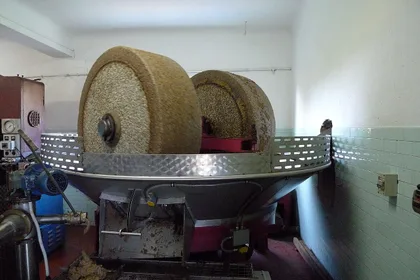
Puglia produces about half of all Italian oil and is the more remarkable landscape: monumental olive trees between Bitonto, Corato and Andria, hollow trunks the size of small rooms, underground rock-cut mills, and masserie in the Valle d'Itria that combine tastings with rooms. Bari is the natural base.
The Salento, between Ostuni and Otranto, is worth seeing for a harder reason: Xylella fastidiosa has killed millions of trees there since 2013. It explains, better than any label, why real oil costs what it costs.
Further reading
Frequently asked questions
Is bitter, peppery olive oil a sign of poor quality?
The opposite. Bitterness and the peppery sting at the back of the throat come from polyphenols, especially oleocanthal. They indicate a fresh, antioxidant-rich oil that will keep well. An oil with no bitterness and no sting is usually low in polyphenols or past its best.
What does 0.2% acidity actually mean?
That the olives were healthy and milled quickly. Free acidity is a laboratory measure and cannot be tasted: it has nothing to do with sourness. The legal ceiling for extra virgin is 0.8%. A low number is a good sign but says nothing about aroma or freshness on its own.
How do I tell if an oil is really Italian?
Read the origin declaration on the back label. Only the word Italia means the olives were grown and milled in Italy. European Union, non-EU, or a blend of both means imported olives bottled in Italy: legal and disclosed, but different from what the Tuscan landscape on the front implies.
Should I look at the best-before date?
Look for the harvest date instead. Best-before is typically eighteen months from bottling and tells you nothing about when the fruit was picked; oil can sit in tanks for a year first. Producers who print the harvest campaign are giving you the only date that matters.
Can you cook and fry with extra virgin olive oil?
Yes. Its smoke point of roughly 190 to 210°C exceeds several refined seed oils, and its antioxidants make it unusually stable under heat. Use an everyday bottle for the pan and the expensive one for finishing raw.
Related foods
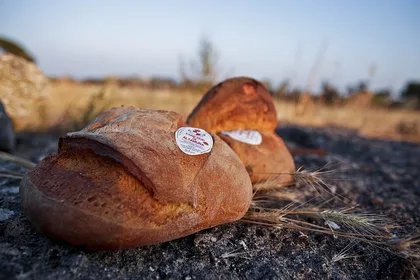 Pasta and breadPane di AltamuraPane di Altamura is a durum-wheat sourdough from the Murgia plateau in Puglia, and in 2003 it became the…
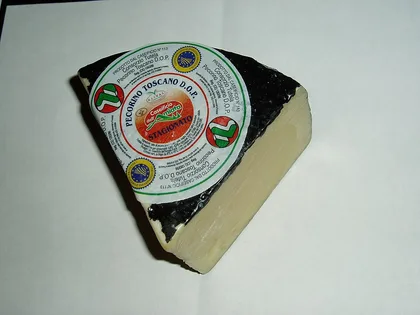 CheesePecorino ToscanoPecorino Toscano DOP is the mild one. Whole sheep's milk, calf rennet, a brief salting: soft-paste wheels…
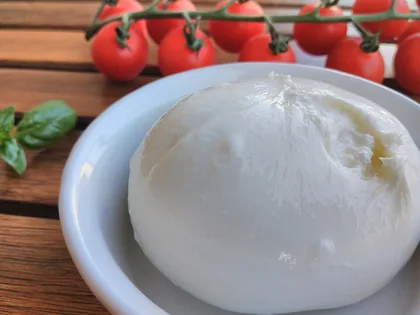 CheeseBurrataIt began as a way of using offcuts: leftover shreds of pasta filata, drowned in cream and sealed inside a…
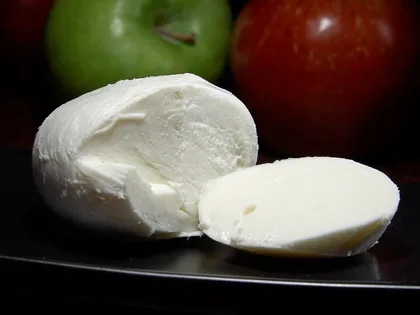 CheeseMozzarellaThe name is a verb before it is a cheese: mozzare means to lop off, which is what the cheesemaker does by…
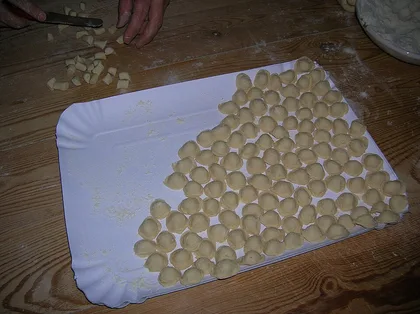 Pasta and breadOrecchietteOrecchiette are Puglia's handmade pasta: semolina and water, no egg, dragged with a knife and flipped over a…
 WineChianti ClassicoChianti Classico is the Black Rooster wine: at least 80 per cent Sangiovese from nine communes between…
 WineBrunello di MontalcinoBrunello di Montalcino is pure Sangiovese aged five years, at least two of them in oak, made only in the…
 Cured meatsCapocolloCapocollo is the pork neck muscle, salted whole and aged in casing.