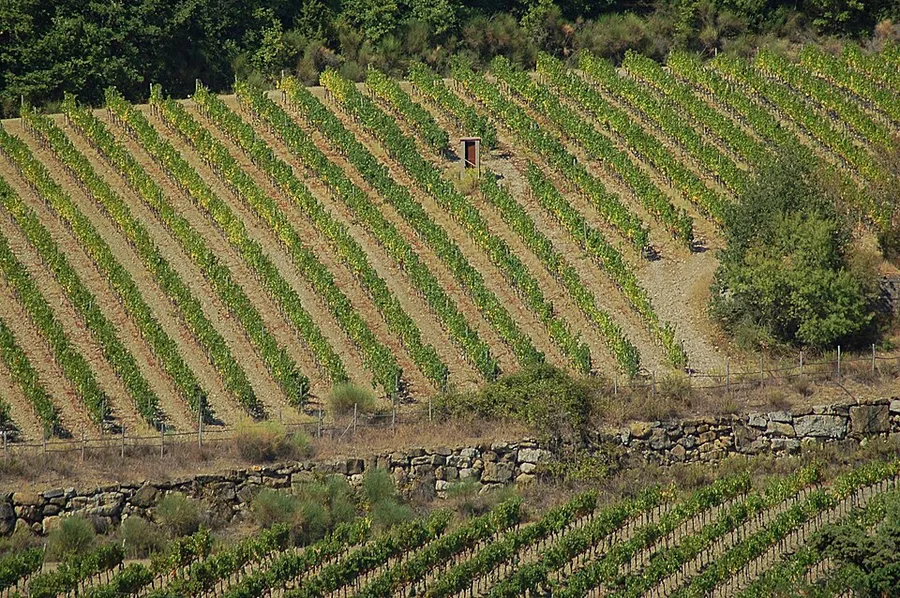
What is Chianti Classico?
Chianti Classico is a Tuscan DOCG made from a minimum of 80 per cent Sangiovese. The remaining fifth may be filled with permitted red grapes: Canaiolo Nero, Colorino, Malvasia Nera, or the international varieties Cabernet Sauvignon and Merlot. White grapes have been banned since 2006, ending the nineteenth-century formula devised by Baron Bettino Ricasoli, which included Trebbiano and Malvasia.
The seal is the Gallo Nero, the black rooster, originally the emblem of the medieval Lega del Chianti and now the mark of the Consorzio Vino Chianti Classico, founded in 1924.
There are three tiers, defined by ageing. Annata is released after at least 12 months, no earlier than 1 October of the year following harvest, at 12 per cent minimum alcohol. Riserva requires 24 months including 3 in bottle, at 12.5 per cent. Gran Selezione, created in 2013 with the 2010 vintage, requires 30 months including 3 in bottle, 13 per cent alcohol, and fruit grown exclusively on the estate's own vineyards. From 2023 it also requires at least 90 per cent Sangiovese with only native varieties in the balance, so no more Cabernet or Merlot at the top of the pyramid.
In 2021 the Consorzio approved eleven Unità Geografiche Aggiuntive, or UGA, on labels from 2023 and only on Gran Selezione: San Casciano, Montefioralle, Panzano, Greve, Lamole, Radda, Gaiole, Castellina, Vagliagli, San Donato in Poggio and Castelnuovo Berardenga.
What does it taste like?
Sour cherry first, the tart red kind and not black fruit, then dried herbs, violet, tomato leaf and a faintly bloody iron note that Tuscans call sanguigna. With age it moves towards dried orange peel, leather and tobacco.
Structurally it is medium-bodied with high acidity and dry, gripping tannin. It is not plush, not sweet-fruited and not heavy, which is why it works so well with food and why it can taste austere on its own, particularly to palates trained on New World reds. Alcohol usually lands between 13 and 14 per cent, and the finish is savoury rather than fruity.
The colour is ruby, turning garnet at the rim within three or four years, and never opaque. A very dark, soft, vanilla-scented Chianti Classico almost always means a large share of Merlot and a lot of new oak: a legitimate choice, but one that tastes of the cellar rather than the place.
How to use it
Serve at 16-18°C in a medium to large glass. Warmer than that and the alcohol pushes forward; served at room temperature in a hot kitchen it tastes flabby. Thirty minutes in the fridge in summer is the fix.
Annata needs no decanting: open it half an hour ahead. A young Riserva or Gran Selezione benefits from forty minutes in a decanter. Bottles over fifteen years old throw sediment and should be poured gently straight from the bottle.
At the table this is a wine built to cut fat and to survive tomato. Bistecca alla fiorentina is the canonical match: rare Chianina beef, where the tannin scours the fat and the acidity resets the palate. Sausage, pork loin, wild boar ragù with pappardelle, pici with garlic sauce, ribollita and chicken liver crostini all work for the same reason. It is also one of the very few serious reds that genuinely works with a margherita pizza and with plain tomato pasta, because most reds go flat next to acidity and this one does not.
In the kitchen it goes into peposo, the Impruneta stew of beef shin, whole peppercorns, garlic and wine cooked for three or four hours. Use an ordinary bottle, not a Gran Selezione.
Avoid delicate fish, sweet-and-sour dishes and chocolate. Cantucci at the end of the meal belong with Vin Santo del Chianti Classico, not with the red.
How long it keeps
Unopened, the bottle wants to lie down at 12 to 15 C, in the dark, at around 70 percent humidity, away from vibration and from swings in temperature, which cost more than a steadily warm cellar. How long it holds depends on the tier: an Annata drinks between two and six years from the harvest, a Riserva between four and twelve, a Gran Selezione from a strong vintage can run to twenty. Sangiovese has the acidity to age, but waiting is not automatically rewarded, and an Annata loses its fruit before it gains complexity.
Once open, recork it and put it in the fridge; two days is the working window, and past that the fruit flattens and a sharp vinegary edge builds as the wine takes up oxygen. Over years in bottle the colour moves from ruby to garnet to brick at the rim, the tannin softens and the cherry gives way to dried flowers, leather and tea. Bottles past fifteen years carry sediment: stand them upright a day and pour slowly rather than decanting. Serve at 16 to 18 C, in summer after half an hour in the fridge.
Spot the real thing
The mark to look for is the Gallo Nero, a black rooster on a gold ground, printed on the label or on the band round the neck. It has been compulsory on certified bottles since 2005. The other word that counts is Classico itself: Chianti DOCG and Chianti Classico DOCG are separate denominations with different rules and different land, so a Chianti Colli Senesi or a Chianti Rufina is not a demoted Classico but another wine. On foreign shelves the cheapest bottles, and anything in a straw-wrapped fiasco, are almost always plain Chianti.
Under the name you may find Riserva or Gran Selezione, and on a Gran Selezione one of the eleven UGA place names. Neither word means Annata, the base bottling, which in the right hands is often the most representative wine of the zone and usually the best value. In the glass: ruby with garnet at the rim by three or four years, never opaque; sour cherry, violet, dried grass, tomato leaf and the iron note Tuscans call sanguigna; high acidity, dry tannin, medium body. Very dark, sweet, vanilla-heavy bottles usually mean plenty of Merlot and new oak.
How to pronounce Chianti Classico
kee-AHN-tee KLAH-see-koh
The Italian ch is always a hard k, so it is kee-AHN-tee, never chee-AHN-tee or shee-AN-tee. Classico stresses the first syllable: KLAH-see-koh. Sangiovese is san-joh-VEH-zeh with a soft g, and Gaiole is gah-YOH-leh.
Chianti Classico compared
vsChianti DOCG
The confusion that costs drinkers the most money. These are separate denominations with separate rulebooks, consortia and territories. Chianti DOCG covers a vast swathe of Tuscany across six provinces, with seven sub-zones including Rufina and Colli Senesi; Chianti Classico covers only the historic zone delimited in 1716. Neither is a version of the other, and a Chianti Classico may never be sold as plain Chianti.
| This | Chianti DOCG | |
|---|---|---|
| Zone | 9 communes, Florence to Siena | Much of central Tuscany, 6 provinces |
| Vineyard area | About 7,000 ha | About 15,000 ha |
| Minimum Sangiovese | 80% | 70% |
| White grapes | Banned since 2006 | Still permitted up to 10% |
| Label mark | Black Rooster seal | No rooster |
| Typical price | USD 18-28 entry | USD 9-15 entry |
vsRosso di Montalcino
Both are Sangiovese-driven Tuscan reds at a similar price, from different places, and they taste it. Rosso di Montalcino is 100 per cent Sangiovese Grosso from a warmer, drier zone 70 km south, aged one year and released young: rounder and riper, where Chianti Classico is higher-acid and more savoury.
| This | Rosso di Montalcino | |
|---|---|---|
| Grape | Min 80% Sangiovese | 100% Sangiovese Grosso |
| Zone | Florence-Siena hills, 250-600 m | Montalcino commune only |
| Climate | Cooler, wetter | Warmer, drier |
| Profile | Sour cherry, herbs, iron | Riper cherry, plum, softer |
| Price | USD 18-28 | USD 22-35 |
vsAnnata vs Riserva vs Gran Selezione
Three tiers of one denomination, distinguished by ageing and, for Gran Selezione, by fruit sourcing. What they are not is a straight quality ranking: a well-made Annata from a serious grower is frequently more precise than an over-oaked Gran Selezione costing three times as much.
| This | Annata vs Riserva vs Gran Selezione | |
|---|---|---|
| Minimum ageing | Annata: 12 months | Riserva 24, Gran Selezione 30 |
| Minimum alcohol | 12% | 12.5% / 13% |
| Fruit source | Any within the zone | Gran Selezione: estate-owned only |
| Sangiovese minimum | 80% | Gran Selezione: 90% since 2023 |
| Drink at | 2-6 years | 4-12 / 5-20 years |
Chianti Classico substitutes
- Chianti Rufina
The best of the non-Classico Chianti sub-zones, in the cool hills east of Florence. High-acid, long-lived, close in structure and cheaper. USD 15-25, GBP 12-20.
- Rosso di Montalcino
Pure Sangiovese from a warmer zone: rounder and riper, released young. The obvious swap when you want the grape with a softer edge. USD 22-35, GBP 18-28.
- Morellino di Scansano
Sangiovese from the Maremma coast: warmer, fruitier, lower acidity, softer tannin. The easiest Tuscan red to drink without food. USD 15-25, GBP 12-20.
- Carmignano
A tiny denomination west of Florence where Cabernet has been in the blend since the eighteenth century. Sangiovese-led but rounder, and a useful bridge for Bordeaux drinkers. USD 25-40, GBP 20-32.
- Montefalco Rosso (Umbria)
Sangiovese with 10-25 per cent Sagrantino for grip. Similar acidity, more tannin, from a region that costs less. USD 18-28, GBP 15-22.
- Barbera d'Asti or cru Beaujolais
If you want the high-acid, food-friendly character rather than Sangiovese itself, either does the same job at the table. USD 16-30, GBP 13-24.
Where to buy it
Chianti Classico is one of the most widely distributed Italian wines in the US and the UK, and most supermarkets with a decent wine aisle carry a bottle. Italian importers and independent merchants are where the small growers appear.
Check for the Black Rooster on the label or neck seal. It has been compulsory on certified bottles since 2005, and its absence means the wine is not Chianti Classico, whatever else the label says.
In the US, Annata sits at USD 18-28, Riserva at USD 30-50, Gran Selezione at USD 50-100. In the UK, GBP 14-22, GBP 22-38 and GBP 40-80. A bottle marked Chianti at USD 9 is a different denomination, not a bargain version of the same wine.
The advice that saves money: the Annata from a grower you trust is usually the best value in the denomination and the most honest read on the vintage. Move up to Riserva when you want more weight for roast meat, and treat Gran Selezione as a category defined by ageing and estate-grown fruit rather than a guaranteed quality ladder. Recent vintages worth seeking out are 2016, 2019 and 2021; 2017 and 2022 were hot and should be drunk sooner.
Where to eat it in Italy
The spine of the zone is the SR222, the Chiantigiana, running sixty kilometres from Florence to Siena. It takes an hour to drive and deserves two days.
Greve in Chianti has a triangular arcaded square with a statue of the navigator Giovanni da Verrazzano and, under the arcades, the Antica Macelleria Falorni, trading since 1729. Just above sits Montefioralle, a circular medieval hamlet that is now one of the eleven UGA.
Panzano in Chianti sits on a ridge above the Conca d'Oro, the amphitheatre of vineyards below the village, and is the territory of the butcher Dario Cecchini. Lamole, at 600 metres above Greve, has the highest terraced vineyards in the zone and makes the most cutting wines.
Radda and Gaiole are the coolest and most wooded communes. Gaiole holds the eleventh-century Badia a Coltibuono, a Vallombrosan abbey with a cellar and restaurant, and the Ricasoli family's Castello di Brolio, where the historic blend was formulated. Every October the Eroica sets off from Gaiole, a vintage-bicycle ride along the white gravel roads.
Castellina in Chianti has the Via delle Volte, a covered medieval walkway inside the walls, and Castelnuovo Berardenga closes the zone to the south-east, where the landscape starts to resemble the Crete Senesi. In February the Consorzio runs the Chianti Classico Collection in Florence: two days and several hundred wines in one room.
Further reading
Frequently asked questions
What is the difference between Chianti and Chianti Classico?
Two separate denominations, not two grades of one wine. Chianti Classico comes only from the nine historic communes between Florence and Siena, requires at least 80 per cent Sangiovese and carries the Black Rooster seal. Chianti DOCG covers a far larger area with seven sub-zones such as Rufina and Colli Senesi, allows 70 per cent Sangiovese and still permits white grapes. Chianti Classico is not a sub-zone of Chianti.
What does Gran Selezione mean?
The top tier, created in 2013: at least 30 months of ageing, 13 per cent alcohol, and fruit exclusively from the producer's own vineyards. Since 2023 it also requires 90 per cent Sangiovese and native grapes only. It is the only category allowed to name one of the eleven UGA on the label.
Should you age Chianti Classico?
Only up to a point. Annata drinks best between two and six years from the vintage, Riserva between four and twelve, a Gran Selezione from a strong year up to twenty. Sangiovese has the acidity to last, but entry-level bottles lose their fruit before they gain complexity.
Why is Chianti Classico lighter in colour than other reds?
Sangiovese has thin skins and unstable pigments, so the wine is ruby rather than opaque and shows garnet at the rim early. In this grape colour says nothing about quality: a very dark Chianti Classico usually means a big share of Merlot or Cabernet.
Sources
Where to check what you just read.
- 1
La modifica approvata nel 2023: Sangiovese dal 90 al 100 % nella Gran Selezione e le undici unità geografiche aggiuntive ammesse in etichetta.
- 2
Gli elenchi ufficiali e i disciplinari dei vini raccolti per lettera: qui si verifica che Chianti e Chianti Classico siano due denominazioni distinte.
- 3Consortium · interested partyConsorzio Vino Chianti Classico
Il consorzio del Gallo Nero, nato nel 1924: i confini dei comuni della zona e le differenze fra Annata, Riserva e Gran Selezione.
Related foods
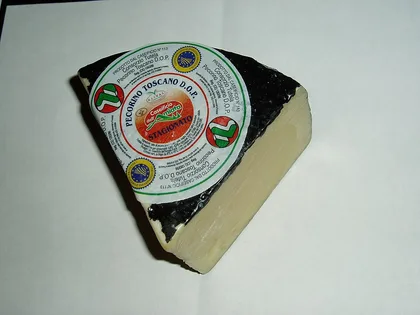 CheesePecorino ToscanoPecorino Toscano DOP is the mild one. Whole sheep's milk, calf rennet, a brief salting: soft-paste wheels…
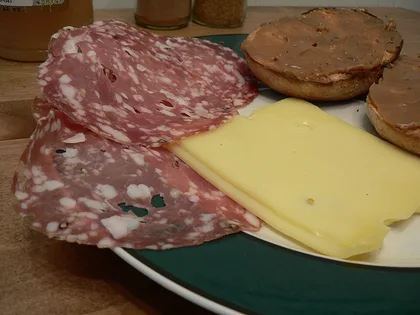 Cured meatsFinocchionaFinocchiona is Tuscany's fennel salami: coarsely ground pork seasoned with wild fennel seeds and flowers…
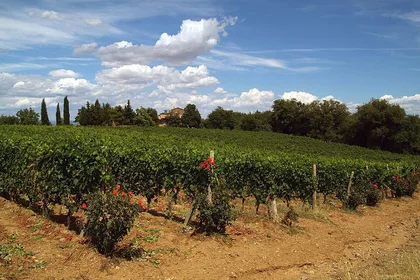 WineBrunello di MontalcinoBrunello di Montalcino is pure Sangiovese aged five years, at least two of them in oak, made only in the…WineVino Nobile di MontepulcianoVino Nobile di Montepulciano is a Tuscan red made from at least 70 per cent Sangiovese, known locally as…
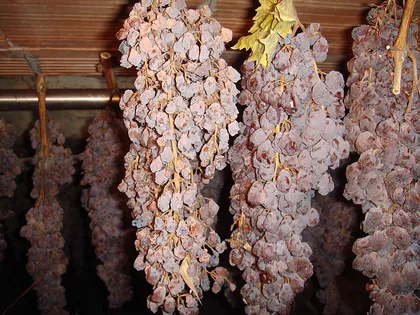 WineVin SantoVin Santo is Tuscany's dried-grape wine: Trebbiano and Malvasia laid on reed mats or hung from the rafters…
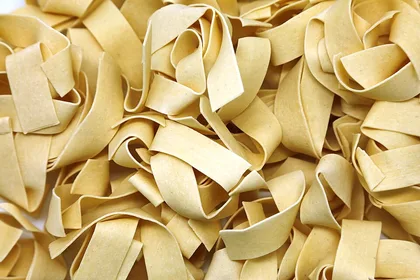 Pasta and breadPappardelleRibbons of egg pasta two to three centimetres wide, the widest pasta you still eat twirled on a fork.
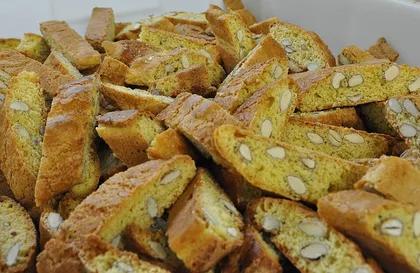 SweetsCantucciCantucci are hard, twice-baked Tuscan almond biscuits. A log of dough is baked, sliced on the diagonal while…Vegetables and fruitChestnutsFor a thousand years the Apennines made bread from them rather than dessert: Castanea sativa was the tree…