What is italian sounding actually worth? Nobody knows, and the numbers prove it
Sixty billion, then a hundred, then a hundred and twenty, then forty-two. We lined up the estimates repeated by newspapers for a decade and they do not agree. The one independent measurement says four.
By the Agrofood.it editorial team · 7 September 2026 · 4 min read · 5 sources
What it is, and why it is nearly always legal
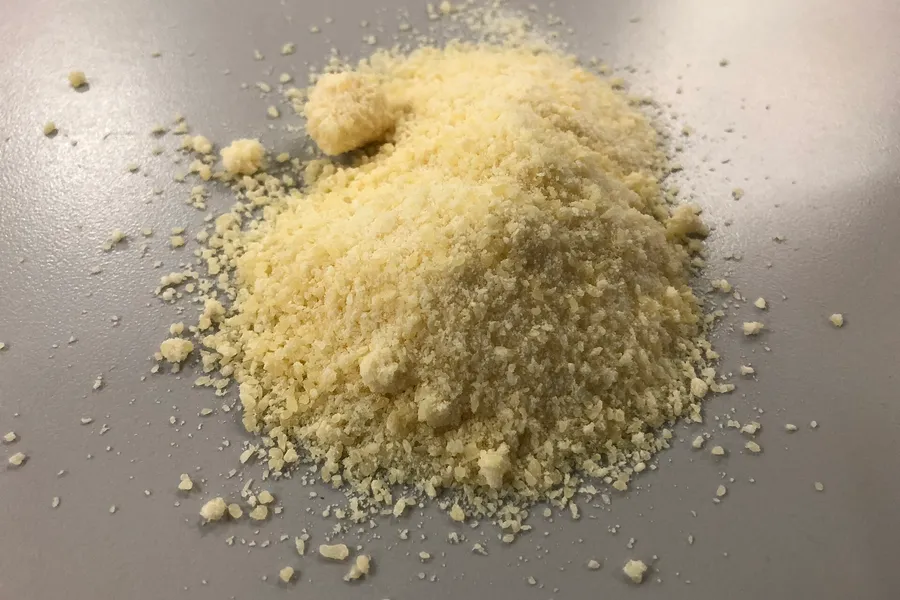
Italian sounding is the pasta box with a tricolour made in Turkey, the Wisconsin «parmesan», the Danish «mozzarella», the «San Marzano style» tomato grown in California. Products that evoke Italy without being Italian.
The key word is evoke. In the great majority of cases there is no imitated trademark, no falsified label, no offence: there is a name that local law treats as generic, used legitimately. «San Marzano» is a cultivar name, and anyone may plant it anywhere. In the United States «parmesan» is a generic term with its own federal standard of identity.
Which is why counterfeiting and italian sounding are two distinct phenomena, and confusing them is the first cause of the numbers that do not add up. Counterfeiting is an offence and is counted through seizures. Italian sounding is a legal market, and to count it you first have to decide what goes in.
The figures everyone repeats, lined up
Anyone who has read an article on italian sounding in the past decade has met a figure in billions. The problem is that there are many, and they are not the same one.
Federalimentare said 54 billion in 2012 and 90 in 2018. Coldiretti said 60 in 2015, 100 in 2021, then 120, and in 2026 forty-two. Confartigianato said 54 across all sectors in 2017. In 2021 Ismea and Assocamerestero did the most rigorous thing: they measured a basket of eleven products in ten markets, found 10.4 billion, and extrapolated a global estimate of 79.2.
Set in a column, these figures do not describe a phenomenon growing or shrinking. They describe different measurements of different things. Between the 42 billion of 2026 and the 120 of shortly before there is a factor of three, and no market event explains a jump like that in that direction.
| Source and year | Figure claimed |
|---|---|
| Federalimentare, 2012 | €54 billion |
| Coldiretti, 2015 | €60 billion |
| Confartigianato, 2017 (all sectors) | €54 billion |
| OECD, 2018 (actual food counterfeiting) | €4 billion |
| Federalimentare, 2018 | €90 billion |
| Coldiretti, 2021 | €100 billion |
| Ismea and Assocamerestero, 2021 (extrapolation) | €79.2 billion, from a measured sample of €10.4 billion |
| Coldiretti, most recent estimate | €120 billion |
| Coldiretti, 2026 | €42 billion |
The problem is not the figure, it is that it cannot be checked
In 2021 the Italian fact-checking outlet Pagella Politica did the obvious thing: it went looking for the method. It contacted the organisations publishing those estimates and asked what sources and criteria sat behind the numbers.
The conclusion is blunt and worth more than any figure: none of the organisations discloses the sources and methodology used, and the requests produced no answers explaining them.
Without a stated method, an estimate cannot be verified. That does not mean it was invented: it means it cannot be checked, cannot be reproduced and cannot be compared with another. It is exactly why two organisations can publish 90 and 100 billion in the same period with nobody able to say which is right.
A scope problem sits on top. Some estimates cover every sector, others only food and farming. Some count the turnover of evocative products, others the earnings Italy is said to forgo, which is a different and harder quantity.
The number nobody quotes: four
In 2018 the OECD published a measurement of food counterfeiting, with a stated method and based on customs data. The result for food products is around 4 billion euro.
Between that number and the 100 billion in circulation there is a factor of twenty-five, and the difference is not an error: they are measuring two different things. The OECD counts counterfeiting, which is to say the offence. The italian sounding estimates count a largely legal market of evocative products.
This does not make the phenomenon irrelevant, and takes nothing away from the fact that it removes market share from Italian producers. It does make one thing clear: when a newspaper writes that «fake Made in Italy is worth a hundred billion», it is bundling a crime and a legal market into a single phrase, and the reader has no way of separating them.
What can be stated with certainty instead
The phenomenon exists, and describing it does not require a contested figure. What can be said, and checked, concerns names.
Inside the European Union the protection works: in 2008 the Court of Justice held that «parmesan» constitutes an evocation of the Parmigiano Reggiano designation and cannot be used for other cheeses. Outside the Union the same word changes status: in the United States it is a generic name with a federal standard, and in Canada CETA protected several Italian designations while leaving «parmesan» free.
The same pattern governs raw materials. «San Marzano» is a cultivar, growable anywhere; what is protected is the long name, «Pomodoro San Marzano dell'Agro Sarnese-Nocerino DOP», which in 2024 covered 350 hectares.
It is the same distinction we found looking at twenty Italian products: protection attaches to a name in full, and the generic term stays free. Italian sounding is nothing more than the international version of that mechanism.
What to look at, if the number does not help
For anyone shopping, the macroeconomic figure is useless. What helps is being able to read a package, and that is a skill you acquire in two minutes.
A tricolour on a box means nothing and nobody forbids it. The full name of a designation, by contrast, is checkable: if it reads «Parmigiano Reggiano DOP» or «Pomodoro San Marzano dell'Agro Sarnese-Nocerino DOP», that product sits inside a written specification. If it reads «parmesan», «type», «style» or «Italian-style», it does not.
The second check is the origin of the raw material, which labels are required to state on several categories. A product processed in Italy from foreign raw material is perfectly legal, but it is a different thing from an Italian product, and the difference is written down.
The third is the European logo with the name of the certifying body. It is not an ornament: somebody behind it is checking.
The short of it
- Italian sounding is nearly always legal, and is a different thing from counterfeiting.
- Estimates of its value run from 42 to 120 billion euro depending on source and year.
- None of the organisations publishing them discloses sources or method: the figures cannot be verified.
- The one measurement with a stated method, the OECD's 2018 figure for food counterfeiting, gives around 4 billion.
- The factor of twenty-five between them exists because they measure different things: an offence and a legal market.
- What can be checked is the name: protection attaches to the designation in full, not to the generic term.
Frequently asked questions
Is italian sounding illegal?
In the great majority of cases, no. Using a name that local law treats as generic, such as «parmesan» in the United States or «San Marzano» as a cultivar name, is legitimate. It becomes unlawful when it takes a protected designation or imitates its logo.
What is fake Made in Italy worth?
We do not know precisely. Published estimates run from 42 to 120 billion euro depending on source and year, and none of the organisations circulating them has disclosed the calculation. The one measurement with a stated method, from the OECD in 2018, covers food counterfeiting only and gives around 4 billion.
What is the difference between italian sounding and counterfeiting?
Counterfeiting is an offence: an imitated trademark, a falsified label, a usurped designation. Italian sounding is evocation of Italy through names, colours and symbols that local law does not protect. Conflating them is the first cause of the incompatible numbers in circulation.
Why do the estimates vary so much?
Two reasons. The scope shifts: some cover every sector, others only food and farming. And the quantity shifts: the turnover of evocative products is not the same thing as earnings Italy is said to forgo.
How do I recognise a genuinely Italian product?
A tricolour on the packaging says nothing. What does say something is the full name of the designation, the European logo with the certifying body's number, and the stated origin of the raw material, which is compulsory on several categories.
Is a product processed in Italy from foreign raw material italian sounding?
It is a legal and correctly labelled product, provided the origin is declared. It does fall inside some of the estimates cited and outside others, which is one reason those figures are not comparable.
Sources
Where to check what you just read.
- 1
La verifica che ha chiesto conto del metodo alle organizzazioni che pubblicano le stime, senza ottenere risposte che lo spiegassero. Da qui vengono le cifre in tabella fino al 2021 e il confronto con il dato OCSE.
- 2
La sentenza che riconosce «parmesan» come evocazione della denominazione protetta all'interno dell'Unione europea.
- 3
Il regolamento applicabile dal 13 maggio 2024, che ha sostituito il 1151/2012: stabilisce cosa protegge una denominazione registrata e contro quali usi, compresa l'evocazione.
- 4
La cornice che impone, su diverse categorie, di dichiarare l'origine della materia prima: è il controllo pratico suggerito qui.
- 5
Dove verificare se una denominazione letta su una confezione esiste davvero, e con quale nome esatto.
The foods behind this
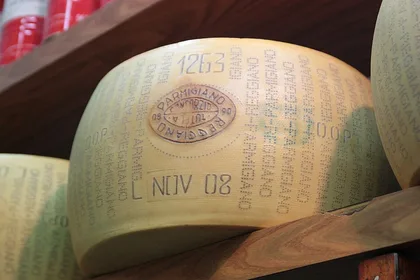 CheeseParmigiano ReggianoThree ingredients and no additives of any kind are permitted: raw cow's milk, salt and calf rennet, from five…
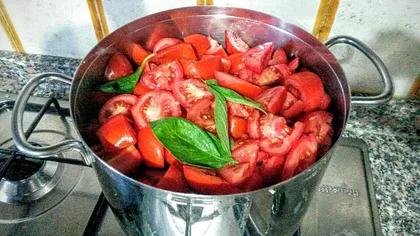 Vegetables and fruitSan Marzano TomatoesSan Marzano is a long, thin-skinned plum tomato grown in the volcanic plain between Naples and Salerno, and…
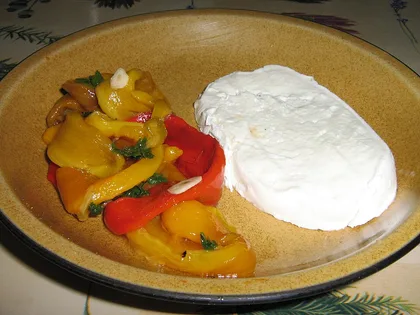 CheeseBuffalo MozzarellaMozzarella di Bufala Campana DOP is made from the whole raw milk of Italian Mediterranean water buffalo…
 Cured meatsProsciutto di ParmaProsciutto di Parma DOP is Italian ham made from three things only: pork, sea salt and at least 400 days.