Which Italian cheeses are made with raw milk, and why almost all of them are PDO
We counted: 19 of 43 declare raw milk, and 16 of those 19 carry a protected designation. That is not a coincidence, and the reason is written into the specifications.
By the Agrofood.it editorial team · 26 August 2026 · 4 min read · 5 sources
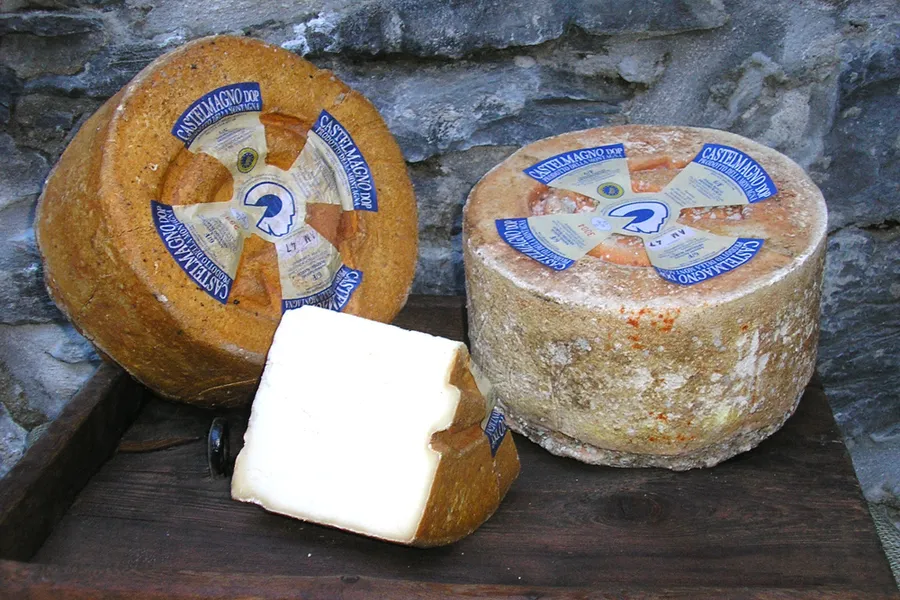
What raw milk means, technically
Raw milk means one thing only: it has not been taken to a temperature that kills microorganisms. The two treatments that rule it out are pasteurisation, most commonly 72 °C for around fifteen seconds, and thermisation, a gentler treatment around 60 to 65 °C.
What survives in raw milk is not only what people worry about. It is also the local lactic flora, which shifts with the pasture, the season, the barn, even between the morning and the evening milking. That population starts the fermentation and gives the cheese an aromatic profile that pasteurised milk, restarted from zero with selected cultures, cannot reproduce.
Put differently: raw milk carries geographical information into the vat. That is precisely why specifications call for it.
The count, across the 43 cheeses we have read
We looked at what each cheese in the atlas declares in the description of how it is produced, rather than anywhere else on the page. The distinction matters: a page may mention pasteurisation while discussing a similar industrial product, without that applying to the cheese itself.
Nineteen of forty-three declare raw milk. Ten declare pasteurised or thermised milk. The remaining fourteen do not specify, and most of those are fresh cheeses or products without a designation, where the choice belongs to the individual dairy.
The striking figure is a different one: of the nineteen raw-milk cheeses, sixteen are PDO. That proportion is too high to be chance.
| Cheese | Designation |
|---|---|
| Bitto | PDO |
| Caciocavallo Silano | PDO |
| Caciocavallo Podolico | none |
| Castelmagno | PDO |
| Fiore Sardo | PDO |
| Fontina | PDO |
| Formai de Mut dell'Alta Valle Brembana | PDO |
| Grana Padano | PDO |
| Parmigiano Reggiano | PDO |
| Pecorino Crotonese | PDO |
| Piacentinu Ennese | PDO |
| Provola dei Nebrodi | none |
| Puzzone di Moena | PDO |
| Ragusano | PDO |
| Raschera | PDO |
| Robiola | none |
| Strachitunt | PDO |
| Toma Piemontese | PDO |
| Vastedda della valle del Belìce | PDO |
Why nearly all of them carry a designation
A production specification describes a historic product and fixes the method for obtaining it. When that product comes from a valley where milk was worked as soon as it was drawn, because there was no other way, the specification photographs that practice and makes it mandatory.
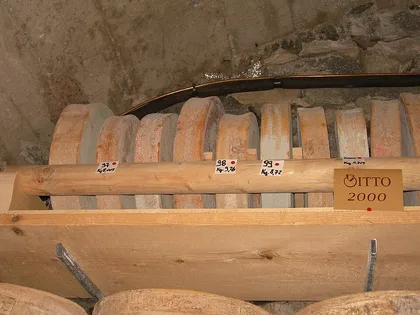
So raw milk, which in mass retail would be a complication, becomes a legal requirement for anyone wanting to use the name. Parmigiano Reggiano and Grana Padano both work raw milk, and they are the two best-selling Italian cheeses in the world. Fontina is made from a single milking, still warm. Bitto is produced up on the summer pasture, where the milk has no time to cool.
At the other end sit designations that permit or require treated milk: Gorgonzola PDO is made with pasteurised cow's milk, and the same holds for several pasta filata cheeses. This is not a hierarchy of quality. It is a description of how each product has always been made.
How to read the label
European hygiene rules for products of animal origin require cheeses made from raw milk to say so clearly. In practice the packaging carries the wording «raw milk», and at a served counter the same information has to be available.
It is a useful obligation in both directions: anyone looking for that kind of cheese can find it, and anyone who for whatever reason prefers to avoid it can do that too. If the wording is absent, the milk was treated.
We stop here, at facts about processing. Whether any individual person should eat a raw-milk cheese is not a question a food atlas can answer: guidance for people in particular circumstances is published by health authorities, and they are the reference.
The American sixty-day wall
Anyone hunting for Italian raw-milk cheese in the United States quickly discovers that a lot of it is simply not there. The reason is a federal rule that turns seventy-six this year.
Since 1950 the Food and Drug Administration has allowed the sale of raw-milk cheese only where it has been aged at least sixty days at a temperature above 35 °F, just under two degrees Celsius. The rule sits in title 21 of the Code of Federal Regulations, part 133. Importers whose cheese falls short end up on the import alert list and the shipment is refused.
The consequence is sharp and explains many gaps on American shelves. Long agings pass, which is why Parmigiano Reggiano, Grana Padano, Fontina and aged pecorini are easy to find. What stays out is young raw-milk cheese, the kind eaten in Italy within weeks.
Worth knowing: the sixty-day rule has been argued over inside the United States for years, and studies on various cheeses have shown that the threshold alone does not guarantee the elimination of every pathogen. It remains the rule in force, and it is what decides what reaches the shop.
What actually changes in the mouth
You can taste the difference, and it is not about intensity but about complexity. A raw-milk cheese tends to have a profile that moves across the tasting and that varies between one wheel and the next from the same dairy, because the starting flora is never identical.
It is also why the same PDO can give you two different experiences six months apart: the pasture changes, the milk changes, the cheese changes. A product from pasteurised milk with selected cultures is by construction more consistent, and for some uses that consistency is a virtue.
One practical point to close on: raw-milk variability compounds with ageing. A thirty-month Parmigiano and a twelve-month one are not the same cheese grown older. They are two products with different structure and different aromatics.
The short of it
- Raw milk means neither pasteurised nor thermised: the local bacterial flora reaches the vat intact.
- Of the 43 cheeses in the atlas, 19 declare raw milk and 16 of those are PDO.
- That is no accident: specifications photograph a historic practice and make it compulsory.
- Gorgonzola PDO, by contrast, is made with pasteurised milk. This is not a quality hierarchy.
- Labels must declare raw milk: if the wording is missing, the milk was treated.
- In the United States an FDA rule from 1950 admits raw-milk cheese only when aged at least sixty days.
Frequently asked questions
Is Parmigiano Reggiano made with raw milk?
Yes. The specification requires raw cow's milk, drawn within the production zone and worked without pasteurisation. The same applies to Grana Padano, which uses partly skimmed raw milk.
Which famous Italian cheeses are NOT raw milk?
Gorgonzola PDO is made from pasteurised whole cow's milk, as are several pasta filata cheeses and most industrial fresh cheeses. That is a choice written into the specification, not a shortcut by the producer.
How can I tell whether a cheese is raw milk?
The label has to say so: European hygiene rules for products of animal origin require it. If the words «raw milk» do not appear, the milk was pasteurised or thermised.
Why can I not find certain Italian cheeses in the United States?
Because of an FDA rule in force since 1950: raw-milk cheeses are admitted only when aged at least sixty days above 35 °F. Long agings clear it, young ones do not.
Does raw milk mean better cheese?
It means more variable cheese. The starting flora shifts with pasture and season, so the aromatic profile is more complex and less predictable. Pasteurised milk with selected cultures gives a more consistent product, and for some uses consistency matters more than complexity.
Is thermisation the same as pasteurisation?
It is a gentler heat treatment, around 60 to 65 °C against the 72 °C of common pasteurisation. It reduces the microbial load without eliminating it, but a cheese from thermised milk cannot be declared raw milk.
Sources
Where to check what you just read.
- 1
Definisce il latte crudo e fissa gli obblighi di etichettatura per i prodotti che lo impiegano senza trattamento termico.
- 2
La regola americana dei sessanta giorni sopra i 35 gradi Fahrenheit, in vigore dal 1950: è quella che decide quali formaggi italiani a latte crudo arrivano negli Stati Uniti.
- 3
Il registro da cui risalire ai disciplinari dei formaggi citati, dove il latte crudo è prescritto o escluso.
- 4
L'atto che ha iscritto gran parte delle DOP citate qui, dal Parmigiano Reggiano alla Fontina.
- 5InstitutionEFSA, sicurezza alimentare
Il riferimento per le valutazioni di rischio, che questa pagina non fa e non sostituisce.
The foods behind this
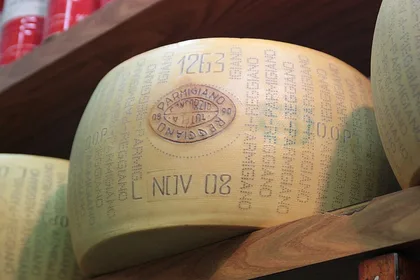 CheeseParmigiano ReggianoThree ingredients and no additives of any kind are permitted: raw cow's milk, salt and calf rennet, from five…
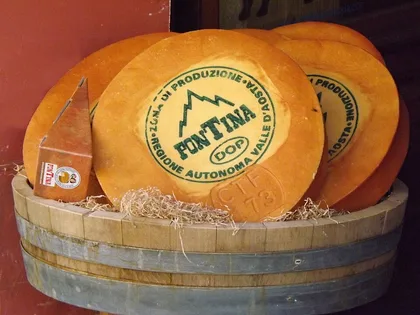 CheeseFontinaFontina is the DOP mountain cheese of Italy's Aosta Valley: raw whole milk from a single milking, wheels of…CheeseCastelmagnoCastelmagno DOP is a crumbly, sharp alpine cheese made in just three villages of the Valle Grana in Piedmont.
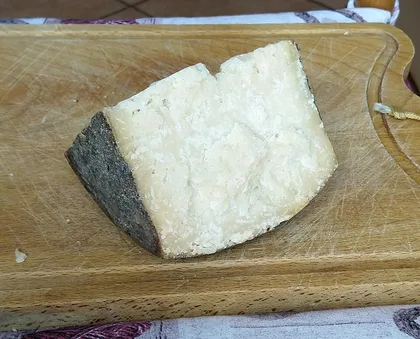 CheeseFiore SardoFiore Sardo DOP is the shepherd's pecorino of Sardinia: raw sheep's milk, lamb rennet paste, an uncooked…CheeseRagusanoRagusano is a ten-to-sixteen-kilo rectangular block of raw-milk pasta filata cheese from the Iblei plateau in…
 CheeseBittoBitto DOP can only be made between 1 June and 30 September, on high summer pasture, in a dismantlable stone…