What is Castelmagno?
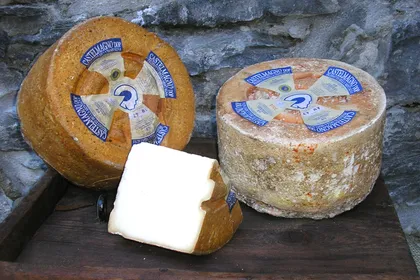
Castelmagno is a semi-hard raw cow's-milk cheese, with small permitted additions of sheep's or goat's milk, made in cylindrical wheels of twelve to twenty kilos. The rind starts a reddish yellow and darkens to earthy brown with age; the paste starts ivory and firm and ends ochre and crumbling.
What sets it apart is a step almost no other cheese uses. After the curd is drained in a linen cloth for eighteen to twenty-four hours, the resulting mass, called tuma, is left to acidify on its own for two to four days before it is broken up, salted and pressed. That deliberate souring is what produces the granular, fracturing texture.
Blue veining develops in older wheels, but it is never inoculated. The moulds come from the ageing caves themselves, which means veining is unpredictable: two wheels from the same batch can look completely different. Absence of blue is not a fault.
Total production is a few hundred tonnes a year from a handful of dairies. It is one of the smallest DOP cheeses in Italy, and one of the hardest to find outside Piedmont.
What does it taste like?
Salty, savoury and increasingly sharp with age. A young wheel of four months tastes of butter, hay and cooked milk, with a lactic tang at the finish. Past eight months it turns properly assertive: a peppery bite at the back of the palate, notes of damp cellar and forest floor, and a mineral, almost metallic edge that is characteristic rather than a flaw.
Where blue veining has developed, it adds a sharpness closer to Roquefort than to Gorgonzola, piercing rather than creamy, but it is a background note, not the dominant flavour.
The texture is the surprise. It does not slice cleanly and it does not stretch. It shatters into irregular flakes under the knife, dry to the touch and gritty on the tongue at first, then dissolving. Anyone expecting the melting quality of a Fontina or the creaminess of a Gorgonzola will be caught off guard.
How to use it
The signature dish is gnocchi al Castelmagno: potato gnocchi tossed in a sauce made by melting the cheese into a little cream or milk, finished with coarsely chopped toasted Piedmont hazelnuts. Portions are small; the sauce is very rich.
Heat is the thing to get right. Castelmagno splits if you push it. Crumble or grate it, take the pan off the heat, and stir it into hot cream, hot pasta water or a warm base until it forms a smooth sauce. Never let it boil.
Young wheels melt into a Piedmontese fonduta; older ones are better left alone entirely. Serve them in irregular shards with chestnut or rhododendron honey, a red onion compote, or pears poached in red wine.
Beyond that: grated over a leek risotto, melted onto coarse polenta, crumbled into a chestnut soup at the last moment, or shaved over raw beef tartare with hazelnuts.
Bring it to room temperature at least an hour before serving. Cold from the fridge it reads as salt and very little else.
How long it keeps
A wedge belongs in the fridge between 4 and 8°C, wrapped in waxed cheese paper or baking paper with a loose sheet of foil over it, and it holds two to four weeks that way. The rind needs to breathe a little, so cling film pressed against it traps moisture underneath and the surface starts to sweat and turn ammoniacal. Whole wheels keep for months in a cool humid cellar and are turned as they age. A cut face left uncovered crusts over and darkens to amber within a couple of days.
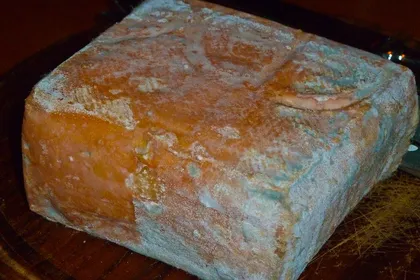
The direction of travel is always drier and more crumbly. As the weeks pass the paste flakes more readily, the natural veining in the cracks spreads, the rind deepens in colour and puts out surface moulds, and the flavour concentrates and sharpens. A wheel that shatters rather than slices is behaving as an aged Castelmagno does, not falling apart. Freezing breaks it down further and only suits cheese headed for a fonduta or a sauce, and grated it dries within days. The wheel stamp and producer date are the reference.
Spot the real thing
The wheel is a tall cylinder, 15 to 25 centimetres high and weighing two to seven kilos, with a thin wrinkled rind that runs from reddish yellow on a young one to grey brown and rough with age. The paste is the real signature: white and firm when young, ochre and flaking when old, and it breaks in layers rather than cutting clean, a structure that comes from ripening the curd in whey before pressing. Older wheels carry natural blue green veining in their fissures, which arrives on its own rather than being injected. The flat face is stamped Castelmagno DOP, and mountain wheels add Prodotto della Montagna.
Abroad it gets shelved with the blues, but Gorgonzola is inoculated, creamy and evenly veined, and Stilton is another animal entirely. The nearer Piedmontese relatives, Bra, Raschera and Toma, are smoother and milder. It is moister and far more crumbly than a grating cheese. Reckon on 25 to 40 euro a kilo in Piedmont and more for summer alpeggio wheels, against £8 to £12 for 200g or $30 to $45 a pound abroad.
How to pronounce Castelmagno
kah-stel-MAH-nyoh
Four syllables, stress on the third. The 'gn' is a single sound, like the 'ny' in 'canyon' or the 'ñ' in 'señor', never a hard g followed by an n, so not 'kastel-MAG-no'. The final 'o' is a clean short vowel, not the drawn-out 'oh-w' of English. The stressed 'a' is open, as in 'father'.
Castelmagno compared
vsGorgonzola
Both are Italian, both can be blue, and they have almost nothing else in common. Gorgonzola is deliberately inoculated with Penicillium and pierced with needles to grow veins; Castelmagno's veining is accidental and secondary. Gorgonzola is creamy and spreadable, Castelmagno is dry and crumbly.
| This | Gorgonzola | |
|---|---|---|
| Blue veining | Spontaneous, variable, often absent | Inoculated and needled, always present |
| Texture | Crumbly, granular, fractures | Soft to creamy, spreadable |
| Milk | Raw cow, small sheep/goat additions allowed | Pasteurised cow |
| Ageing | 60 days minimum, best at 6–24 months | 50–150 days |
| Production zone | Three villages in one valley | Large areas of Piedmont and Lombardy |
| Annual output | A few hundred tonnes | Around 50,000 tonnes |
| Best use | Melted into gnocchi, eaten in shards | Spread, sauced, stirred into risotto |
vsStilton
The closest thing in the British cheese cabinet, and a genuinely useful reference point. Both are crumbly, both are salty, both come from a legally tiny production zone. Stilton is wetter, sweeter and reliably blue; Castelmagno is drier, sharper and blue only sometimes.
| This | Stilton | |
|---|---|---|
| Texture | Dry, shattering | Crumbly but moister, buttery |
| Blue | Spontaneous, may be absent | Inoculated, always present |
| Flavour | Mineral, tangy, sharp | Sweeter, nuttier, mellower |
| Rennet | Animal, always | Usually vegetarian, check the label |
| Zone | 3 comuni, Valle Grana | 3 counties in England |
| Classic pairing | Chestnut honey, hazelnuts, Barolo | Port, pears, oatcakes |
vsParmigiano Reggiano
People reach for Parmigiano when a recipe calls for Castelmagno, because both are hard, salty and granular. The comparison breaks down fast: Parmigiano is a cooked-curd cheese aged for years with crystalline crunch and nutty sweetness, Castelmagno is uncooked, sour-tangy and far more pungent.
| This | Parmigiano Reggiano | |
|---|---|---|
| Curd | Uncooked, deliberately acidified | Cooked, pressed, brined |
| Minimum age | 60 days | 12 months |
| Crystals | None | Tyrosine crystals throughout |
| Flavour | Sour, pungent, sometimes blue | Nutty, sweet, umami |
| Melting | Splits easily, needs gentle heat | Melts smoothly into sauces |
| Grated on pasta | Overpowers most sauces | The default |
Castelmagno substitutes
- Stilton
The best all-round stand-in, especially in the UK. It is sweeter and moister, so use slightly less and add a squeeze of lemon or a splash of white wine to recover Castelmagno's acidity. Most Stilton is made with vegetarian rennet, which Castelmagno never is.
0.8:1 by weight - Gorgonzola piccante plus aged pecorino
A blend that gets closer than either cheese alone: the Gorgonzola supplies the blue pungency, the pecorino the salt and the granular bite. This is the practical substitute for gnocchi al Castelmagno.
2 parts Gorgonzola piccante to 1 part aged pecorino - Aged Asiago d'Allevo or Piave Vecchio
If you want the texture and the sharpness without any blue, these northern Italian cheeses are the nearest. They are sweeter, so season the dish more aggressively.
1:1 - Roquefort
Sharper and saltier than Castelmagno and made from sheep's milk, so use a lighter hand. Good where the cheese is a seasoning rather than the body of a dish.
0.6:1 - Crumbly Lancashire with a little blue
For British cooks who want the texture right. Tasty Lancashire has exactly the shattering, acidic quality of young Castelmagno; crumble in a small amount of any blue for depth.
4 parts Lancashire to 1 part blue - Vegetarian option
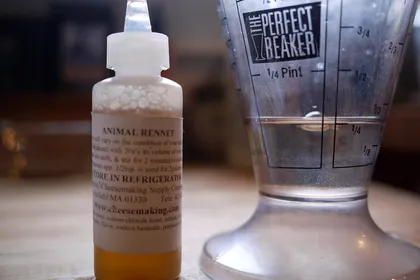
Castelmagno itself is never vegetarian: the DOP rules require calf rennet, with no microbial-rennet version permitted. Vegetarians wanting the same role in a dish should use a vegetarian-rennet Stilton or a vegetarian blue such as Cropwell Bishop, checking the label.
1:1 with Stilton
Where to buy it
In the US, Castelmagno is a special-order cheese. Serious cheesemongers in New York, San Francisco, Chicago and Boston can get it, and importers like Forever Cheese bring in wheels seasonally. Expect 32 to 55 dollars per pound, more for alpeggio. It is worth asking when the wheel was opened, because a cut face that has been sitting for two weeks will have dried and dulled.
In the UK, London cheesemongers such as the Italian specialists in Soho and Borough Market list it occasionally, at roughly 45 to 70 pounds per kilo. Online Italian importers ship it, usually in 300 g to 1 kg pieces.
Look for the DOP mark stamped on the side of the wheel and the words Castelmagno DOP, ideally with 'di Alpeggio' if you want the summer mountain version. Anything sold as Castelmagno below about 20 euros per kilo in Italy is either not DOP or has been sold far too young.
Buy from a wheel rather than pre-wrapped where you can. Vacuum packing suits it poorly: it needs to breathe, and plastic-contact flavours develop within days.
Where to eat it in Italy
The Valle Grana, in the province of Cuneo. The three DOP villages (Castelmagno, Pradleves and Monterosso Grana) sit along one road that climbs to the sanctuary of San Magno at 1,761 metres. Dairies sell at the door, several summer alpine huts welcome visitors, and the refuges along the way serve the cheese melted over polenta.
Cuneo itself, forty minutes down the valley, has the Tuesday market and a handful of shops that stock several ages side by side. Tasting a four-month wheel next to a two-year one is the fastest way to understand the cheese.
The Castelmagno festival, held in the village each summer, gathers nearly every producer in one place: the only day of the year you can taste ten versions in an afternoon.
In Turin, the historic cheese shops and the stalls at Porta Palazzo market almost always have it, and often carry alpeggio wheels that sell out immediately in the valley. Turin restaurants serving traditional Piedmontese food will have gnocchi al Castelmagno on the menu in autumn and winter.
Further reading
 InvestigationItalian raw milk cheeses: the full listWe counted: 19 of 43 declare raw milk, and 16 of those 19 carry a protected designation.
 InvestigationWhich Italian cheeses are vegetarianWe counted what rennet the 43 cheeses in our atlas declare: 35 out of 43 say animal, none say otherwise.
 GuideCan you eat cheese rind?On some wheels the rind is the same paste, dried out. On others it is paraffin.
Frequently asked questions
What does Castelmagno taste like?
Salty, tangy and sharp, with notes of butter, hay and damp cellar, and a peppery bite that grows with age. Where blue veining has developed it adds a piercing sharpness. The texture is dry and crumbly rather than creamy.
How do you pronounce Castelmagno?
kah-stel-MAH-nyoh, with the stress on the third syllable. The 'gn' is one sound, like the 'ny' in canyon, not a hard g.
Is Castelmagno a blue cheese?
Not by design. Some aged wheels develop blue-green veining from moulds naturally present in the ageing caves, but no mould is ever added and no wheel is needled. Veining varies from wheel to wheel and its absence is normal.
Is Castelmagno suitable for vegetarians?
No. The DOP rules require animal rennet, and there is no certified vegetarian version. A vegetarian-rennet Stilton is the closest substitute in both texture and role.
Why is Castelmagno so expensive?
The production zone is three small mountain villages, the number of producers is in the dozens, and the process requires the curd to acidify for days before it is even pressed. Total annual output is a few hundred tonnes, less than a large lowland dairy makes in a month.
Sources
Where to check what you just read.
- 1
L'atto europeo del 1996 che completa l'allegato del Reg. 1107/96 e iscrive Castelmagno fra i formaggi DOP italiani.
- 2
Il PDF del disciplinare vigente, dove si verificano la percentuale di latte ovino o caprino ammessa, la stagionatura minima e i tre soli comuni della zona.
- 3Consortium · interested partyConsorzio per la Tutela del Formaggio Castelmagno
La descrizione della lavorazione e del territorio della Valle Grana da parte dell'ente di tutela: utile per capire cosa distingue le forme d'alpeggio da quelle di fondovalle.
Related foods
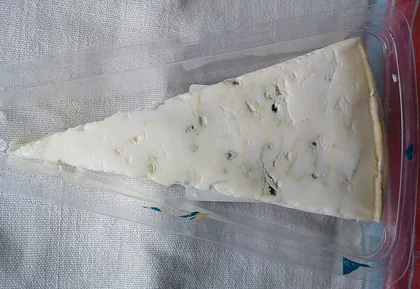 CheeseGorgonzolaThe green veining is the product, not a flaw anyone tolerates: it grows from a mould added to the milk and…
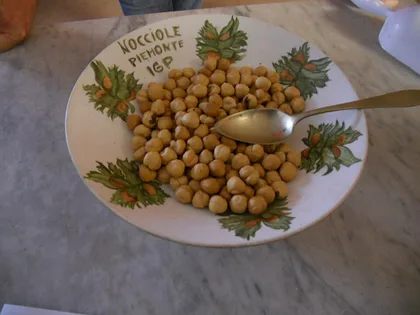 Vegetables and fruitPiedmont HazelnutNocciola Piemonte IGP is a single cultivar, the Tonda Gentile Trilobata of the Langhe hills: round, yielding…
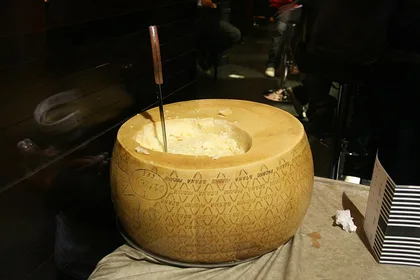 CheeseGrana PadanoNine months is the floor the specification sets before a wheel may carry the name.
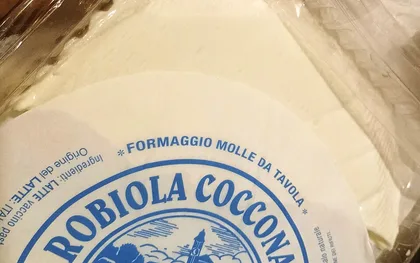 CheeseRobiolaRobiola is a family of soft young cheeses from north-west Italy rather than a single cheese.CheeseToma PiemonteseIn Piedmont, toma is not a cheese: it is a category. Dozens of different valley cheeses go by that name, and…
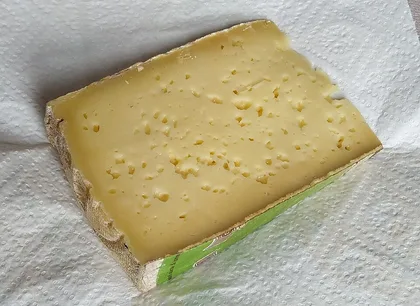 CheeseOssolanoOssolano DOP comes from the Ossola valleys, the most alpine corner of Piedmont, wedged between Switzerland…
 CheeseRascheraRaschera is one of very few Italian cheeses made in two shapes, square and round: the square one exists…
 Oil and preservesGiardinieraGiardiniera means two very different jars. In Italy it is a mild mix of vegetables pickled in wine vinegar…