What is Toma Piemontese?
Toma Piemontese DOP is a semi-cooked cow's milk cheese made in the provinces of Turin, Cuneo, Biella, Vercelli, Novara and Verbano-Cusio-Ossola, plus some communes of Asti and Alessandria. It has been protected since 1996.
The specification defines two types. Toma Piemontese from whole milk is richer, sweeter and softer. Toma Piemontese semigrassa is made from milk partly skimmed by leaving it to stand so the cream rises; the paste is drier and the flavour more assertive. Both are DOP, and they are best treated as two cheeses rather than two grades of one.
The shape is a cylinder with flat faces and slightly convex sides, 15 to 35 centimetres across, 6 to 12 tall, weighing from under two kilos up to nine. Minimum ageing runs from 15 days for small semi-skimmed wheels to 60 days for the large ones.
By volume it is one of Piedmont's biggest protected cheeses, and its role is that of the everyday table cheese: mild, versatile, on every deli counter in the region. The rennet is calf rennet.
What does it taste like?
Young whole-milk toma is soft, sweet and buttery, with a clean milky flavour and a springy paste that yields easily. It is deliberately unchallenging: a cheese for eating in slices with bread rather than for studying.
The semi-skimmed version tastes noticeably different: drier, firmer, more savoury, with a hint of sourness that the whole-milk one lacks. Aged four to six months it develops hazelnut and cellar notes and a mild peppery finish.
Alpine toma, made at altitude in summer from raw milk, is where the category gets serious. Wild herbs come through, the paste picks up a golden tint from grass carotene, and the finish lengthens considerably. A supermarket toma and a malga toma from the Lanzo valleys are recognisably the same idea and completely different eating.
Throughout, expect mildness rather than power. Toma is not trying to be Castelmagno, and a toma that tastes sharp and salty has usually been aged past its intent.
How to use it
Young toma is a slicing cheese: eat it at room temperature with bread and cognà, the Piedmontese preserve of grape must, pears, figs and hazelnuts. With chestnut honey and walnuts it closes a meal without further explanation.
It melts well and does not split, which makes it the cheese for gnocchi alla bava: toma melted with butter and a little milk becomes the entire sauce, and nothing else goes in. It also works over polenta, in vegetable tarts, in cardoon gratins and on hot crostini.
The aged semi-skimmed type can be grated over pasta and risotto and holds up in the oven. In the valleys it goes into agnolotti filling alongside leftover roast meat.
One peasant use worth reviving: diced toma melted into a rice and milk soup, or over crushed boiled potatoes. It costs nothing and it is what the Lanzo valleys have always done with the cheese that was not quite good enough to sell.
How long it keeps
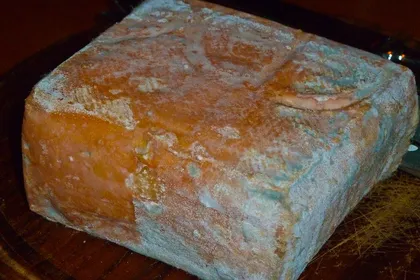
Buy it cut and keep the rind on: the rind is the wrapper the cheese made for itself. Wrap the wedge in waxed cheese paper or parchment, leave the cut faces covered and the rind able to breathe, and keep it in the salad drawer, the least cold and most humid part of the fridge. Cling film in contact with the paste makes the surface wet and slick within a day. A young toma holds a week to ten days; an aged wedge, three to four weeks.
What happens in the fridge is drying, mostly at the cut. A young toma loses its spring and the paste tightens; an aged one hardens further at the face and the flavour concentrates towards hazelnut and broth. The rind may darken and take on a damp, cellar smell, which is what rinds do. Take it out an hour before eating, because cold flattens a soft paste completely. Toma does not freeze well in a piece, since the fine eyes collapse and the texture turns crumbly on thawing. The date on the wrapping and the counter that cut it settle anything else.
Spot the real thing
Toma is a shape and a family, not one cheese: a low flat cylinder with straight sides, 1.8 to 9 kilos, with the DOP wheel carrying its mark stamped into the rind and the words Toma Piemontese DOP on the paper. The rind is thin, smooth and elastic, straw yellow on a young wheel and turning reddish brown with age. Cut, a young whole milk one is white to pale straw, soft and springy with fine scattered eyes; the semi skimmed aged version is firmer, drier and more granular.
Abroad the word gets used loosely, and French Tomme, especially Tomme de Savoie, sits next to it on most counters: that one has a thick grey mould rind and a mustier flavour, and it is a different cheese with a similar name. Within Piedmont, dozens of valley tome exist outside the DOP, sold as Toma di Lanzo, del Maccagno and so on, and they are legitimate but unprotected. If the shop cannot say which milk and how long, ask; the two DOP versions taste quite different. Prices sit at $16 to $28 a pound.
How to pronounce Toma Piemontese
TOH-mah pyeh-mon-TEH-zeh
Stress the first syllable of Toma: 'TOH-ma', not 'toe-MAH'. In Piemontese, 'pieh' is one sound, 'pyeh', and the stress lands on TEH. The final 'e' is pronounced. If you know the French tomme, note that the Italian word has one 'm' and an open final vowel; they are relatives, not twins.
Toma Piemontese compared
vsTomme de Savoie and other French tommes
The words share an ancestor: a pre-Roman Alpine term for cheese made in the mountains from one or two milkings, which survives on both sides of the border and even resurfaces in Sicily as tuma, the fresh curd. The cheeses diverged. Tomme de Savoie is almost always semi-skimmed and wears a thick, dusty grey bloomy rind that is central to its character; Toma Piemontese has a smooth, close rind, exists in a full-fat version, and is generally sweeter and less earthy. Cousins across a mountain range, not synonyms.
| This | Tomme de Savoie and other French tommes | |
|---|---|---|
| Rind | Smooth, straw to red-brown | Thick, grey, bloomy and dusty |
| Milk | Whole or semi-skimmed | Almost always semi-skimmed |
| Flavour | Sweet, milky, mild | Earthy, mushroomy, more rustic |
| Minimum ageing | 15-60 days by size and type | About 30 days, often longer |
| Fat content | Higher in the whole-milk type | Lower: the cream goes to butter |
| Protection | DOP since 1996 | IGP (Savoie), not AOP |
vsThe unprotected tome of Piedmont
The comparison that matters most in a Piedmontese shop. Toma di Lanzo, toma di Balme, Maccagno from the Biella hills, toma di Elva from the Maira valley, and the nameless summer wheels sold under the name of the alp that made them are all real, historic cheeses that fall outside the DOP's parameters of size, fat and ageing. Some are better than any certified wheel you will find; some are inconsistent. The mark certifies conformity to a standard, not superiority.
| This | The unprotected tome of Piedmont | |
|---|---|---|
| Legal status | DOP, defined and inspected | No protection, no standard |
| Consistency | Predictable across producers | Varies wheel by wheel |
| Milk | Whole or semi-skimmed, defined | Whatever the dairy has |
| Where to buy | Any Piedmontese shop, supermarkets | Valley markets, farm gates, fairs |
| Ceiling | Good to very good | Poor to exceptional |
vsAsiago, Montasio, Fontina
The other Italian alpine table cheeses, and the useful frame for anyone shopping outside Piedmont. Asiago pressato is the closest analogue to a young whole-milk toma; Montasio sits between toma and a grating cheese as it ages; Fontina is fattier, sweeter and made for melting. Toma's distinguishing feature within this group is its range: the same denomination covers a fifteen-day fresh wheel and a six-month semi-skimmed one, which none of the others attempt.
| This | Asiago, Montasio, Fontina | |
|---|---|---|
| Closest match | Whole-milk toma | Asiago pressato |
| Melting | Very good, does not split | Fontina is the best melter of the group |
| Ageing range | 15 days to 6 months plus | Montasio goes furthest, to 18 months |
| Fat | Two levels, both DOP | Single level in each denomination |
| Availability abroad | Moderate | Fontina and Asiago far easier to find |
Toma Piemontese substitutes
- Asiago pressato or Asiago mezzano
The easiest match on most counters. Pressato substitutes for young whole-milk toma almost exactly; mezzano covers the aged semi-skimmed version. Slightly saltier, so taste before seasoning a dish.
1:1 - Tomme de Savoie
The etymological cousin and a good stand-in for the semi-skimmed type, especially on a board. Earthier and mustier because of the bloomy rind, so trim the rind hard if you want to stay close to toma.
1:1 - Raschera DOP
Same region, same family, one province south. Firmer and saltier than toma with a distinctive grey-red rind, and it melts just as reliably. The right swap in any Piedmontese recipe.
1:1 - Fontina Val d'Aosta DOP
Use it when the dish is about melting: gnocchi alla bava, polenta, a gratin. Fontina is fattier and sweeter, so reduce the quantity slightly and add black pepper to keep the dish from turning cloying.
0.8:1 - Vegetarian: none within the DOP
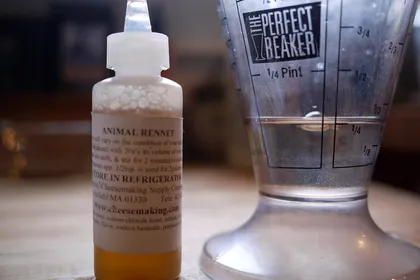
Toma Piemontese requires calf rennet, as does every protected Piedmontese cheese. Some small Piedmontese producers make unprotected tome with microbial rennet and label them clearly, but they cannot use the DOP name. Outside Italy, a vegetarian-rennet alpine-style cheese is the practical route.
Where to buy it
In Piedmont, 10 to 15 euros a kilo at the dairy and 13 to 18 in a shop. Alpine summer toma runs 18 to 28 euros and sells out quickly. Elsewhere in Italy, 16 to 24 euros a kilo.
In the US, Italian importers list it at roughly 14 to 26 dollars per pound; in the UK, 20 to 32 pounds per kilo. Availability is better than for most Piedmontese cheeses because production volumes are substantial.
Ask three questions at the counter, because they define very different cheeses: is it DOP, is it whole or semi-skimmed milk, and how many months old is it. A fifteen-day semi-skimmed wheel and a six-month whole-milk one share a name and little else.
And remember that the mark is not the whole story here. An uncertified summer wheel from a mountain dairy can be better than any DOP wheel in a supermarket, because the denomination defines a standard rather than a ceiling. In the Lanzo valleys, the Biellese and the Ossola, alps sell directly through the summer.
Where to eat it in Italy
The Lanzo valleys north-west of Turin are the classic ground: Usseglio, Balme and Ala di Stura, where an August show brings the summer's wheels down from the alps and the local toma gets its own weekend.
The Biella hills have their own tradition, with Maccagno and the cheeses of the Cervo valley; the Ossola and the Valsesia make high-altitude tome that rarely leave the province. In the Canavese and the Susa and Chisone valleys, village fairs from September to October are the most direct way to taste production that never reaches a shop.
In Turin, the historic markets are the place: Porta Palazzo, the largest open-air market in Europe, has stalls carrying five or six different tome and they will let you taste.
At Bra, in September of odd-numbered years, Slow Food's Cheese festival gathers producers from the whole alpine arc. Lining up a DOP toma, an unmarked malga toma and a French tomme in one afternoon explains this page faster than reading it does.
Further reading
 GuideCan you eat cheese rind?On some wheels the rind is the same paste, dried out. On others it is paraffin.
 ExplainerWhich Italian cheeses contain no lactoseItaly sets a legal threshold, and long-aged cheeses clear it on their own, with no treatment involved.
 InvestigationWhich Italian cheeses are vegetarianWe counted what rennet the 43 cheeses in our atlas declare: 35 out of 43 say animal, none say otherwise.
Frequently asked questions
What does toma mean?
It is an old alpine word for cheese made in the mountains from one or two milkings, a working term rather than a brand, shared across the western Alps. The French tomme comes from the same root, and so, surprisingly, does the Sicilian tuma, the fresh curd every island pecorino starts from.
Is every Piedmontese toma a DOP?
No, and most are not. The Toma Piemontese DOP fixes size, fat content, ageing and area; many historic cheeses (toma di Lanzo, di Balme, di Elva, Maccagno, unnamed alpine wheels) fall outside those parameters and are sold under the name of their valley or dairy. The mark certifies conformity to a standard, not superiority over everything else.
What is the difference between whole-milk and semigrassa toma?
The milk. The whole-milk type is richer, sweeter and softer. The semigrassa starts from milk partly skimmed by letting the cream rise (the cream goes to butter) so the paste is drier and the flavour sharper, especially with age. Both carry the DOP.
Is toma the same as French tomme?
Same word, same idea, different cheese. Both descend from an alpine term for mountain cheese, but Tomme de Savoie is almost always semi-skimmed with a thick grey bloomy rind, while Toma Piemontese has a smooth rind and exists in a full-fat version. They are border cousins.
Is Toma Piemontese vegetarian?
No. Calf rennet is required by the specification, as it is for every protected Piedmontese cheese. A few small producers make unprotected tome with microbial rennet and say so on the label, but they cannot use the DOP name.
Sources
Where to check what you just read.
- 1
L'atto del luglio 1996 che iscrive «Toma Piemontese» fra i formaggi DOP italiani.
- 2
Da qui si scarica il disciplinare della Toma Piemontese: percentuale di grasso delle due tipologie, province ammesse e stagionature minime per pezzatura.
Related foods
 CheeseRascheraRaschera is one of very few Italian cheeses made in two shapes, square and round: the square one exists…CheeseCastelmagnoCastelmagno DOP is a crumbly, sharp alpine cheese made in just three villages of the Valle Grana in Piedmont.
 CheeseRobiolaRobiola is a family of soft young cheeses from north-west Italy rather than a single cheese.
 CheeseGorgonzolaThe green veining is the product, not a flaw anyone tolerates: it grows from a mould added to the milk and…
 CheeseGrana PadanoNine months is the floor the specification sets before a wheel may carry the name.
 CheeseOssolanoOssolano DOP comes from the Ossola valleys, the most alpine corner of Piedmont, wedged between Switzerland…
 Oil and preservesGiardinieraGiardiniera means two very different jars. In Italy it is a mild mix of vegetables pickled in wine vinegar…
 Pasta and breadAgnolottiAgnolotti are Piedmont's stuffed pasta: thin egg dough around a filling of roasted meat, not ricotta.