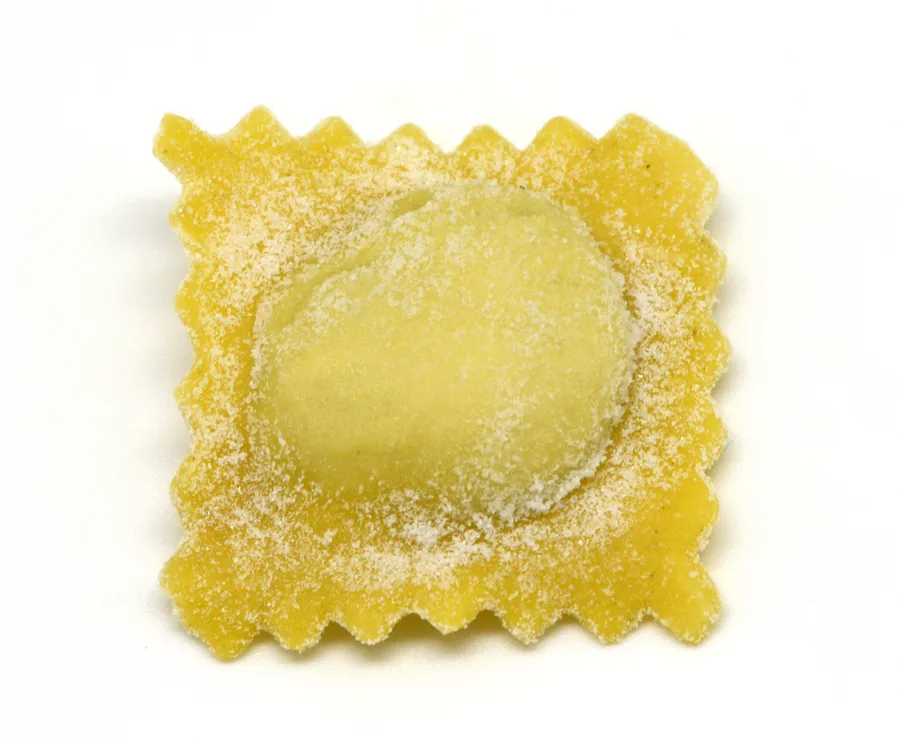
What is Agnolotti?
Agnolotti are the Piedmontese answer to stuffed pasta, and what defines them is the filling: cooked roast meat, usually a mix of beef, veal and pork braised with wine and vegetables, minced and bound with egg and grated Grana. Not ricotta, not spinach, not pumpkin.
There are two families. Classic agnolotti are square or rectangular, three to four centimetres across, and belong to the Monferrato hills. Agnolotti del plin are much smaller, two centimetres or less, and are sealed by pinching the dough between thumb and forefinger. Plin is Piedmontese dialect for pinch.
That pinch is functional, not decorative. It gives you a doubled edge and a paper-thin centre, and a ratio of filling to pasta that no stamped ravioli achieves. It is also why they are dressed with so little: any real sauce buries them.
The dish began as leftovers. Sunday's roast, minced on Monday, sealed in pasta on Tuesday: Piedmontese thrift in three moves.
What does it taste like?
Rich and meaty in a way that stuffed pasta rarely is. The filling tastes of browned roast meat and its pan juices, with the sweetness of slow-cooked onion and a savoury lift from the Grana; nutmeg sits underneath. There is no dairy softness because there is no ricotta.
The pasta itself is eggy and tender rather than chewy, because Piedmontese sfoglia carries more yolk than the Emilian version, and at plin size you get a burst of filling with each one rather than a mouthful of dough.
Dressed the traditional way, with roast juices or brown butter, the whole thing is intense but small-scale. Thirty tiny agnolotti add up to a rich plate, which is why portions look modest.
How to use it
Cook them in plenty of well-salted water for two to three minutes, until they float plus about thirty seconds, and lift them out with a slotted spoon rather than tipping them into a colander, which breaks them.
Then dress them with almost nothing. The classic is sugo d'arrosto: the degreased pan juices from the roast that went into the filling, loosened with a ladle of pasta water. Second best is butter browned gently with a few sage leaves. Third, and traditional, is nothing at all: agnolotti al tovagliolo are served drained on a folded napkin, which absorbs the last of the water.
In the Langhe people eat plin with their fingers, straight off the napkin, as a pre-dinner snack with a glass of Barbera. That is genuinely a local habit, not a restaurant conceit.
Between October and December, the Alba version arrives under shavings of white truffle over butter. In winter, agnolotti in beef broth are the Christmas and Boxing Day plate.
What not to do: tomato sauce, cream, heavy ragù or the oven. All of them bury a pasta that is already seasoned from the inside.
How long it keeps
Fresh agnolotti hold about two days in the fridge. Lay them in a single layer on a tray dusted with semolina, spaced apart, and cover them with a cloth rather than sealing them in a bag, where they give off moisture, soften at the contact points and stick together. Sealed shop packs carry their own printed date; once the pack is open, treat them as freshly made.
Freezing is the way to keep them longer, and it suits them. Spread them apart on a tray, freeze for an hour until firm, then transfer them to bags. They hold around two months, after which the edges of the pasta dry, crack and start to pick up freezer smells. Cook them straight from frozen, adding roughly a minute. Do not thaw first: the sheet releases water, the filling pulls away from it and they open in the pot.
Cooked and dressed they do not keep well. The next day they are better crisped in butter in a pan than put back into water.
Spot the real thing
In a serious pasta shop the plin look slightly irregular, because they are pinched shut by hand. Pieces that are all identical, with wide even borders, came out of a mould. The sheet should be a deep egg yellow and translucent enough that you can see the filling as a shadow when you hold one up to the light. Pale, opaque pasta means more white than yolk, or a semolina dough.
The filling is the real test. Break one open: it should be compact and brown, with the grain of the roasted meat still readable. A pale, smooth, paste-like filling has been bulked out with bread, potato or ricotta.
Abroad the name travels loosely. Refrigerated packs labelled agnolotti and filled with ricotta and spinach, or with four cheeses, are ravioli borrowing the word: the Piedmontese original is a meat pasta. Boxed dried agnolotti are a different product again. Expect fresh ones from an Italian pasta counter to cost several times what a supermarket tray does.
How to pronounce Agnolotti
ah-nyoh-LOT-tee (del plin: dell pleen)
Four syllables, stress on the third. The 'gn' is a single sound, like the 'ni' in 'onion' or the 'ñ' in 'señor', never a hard 'g' followed by an 'n', so 'ag-no-lotti' is wrong. Plin rhymes with 'seen'. The singular is agnolotto.
Agnolotti compared
vsRavioli
Ravioli is the general Italian word for stuffed pasta; agnolotti is a specific Piedmontese member of the family, defined by a roast-meat filling and by how it is closed. Every agnolotto is a raviolo in the loose sense; almost no ravioli are agnolotti.
| This | Ravioli | |
|---|---|---|
| Filling | Roasted beef, veal and pork with greens | Anything: ricotta and spinach most often |
| Region | Piedmont | All of Italy |
| Shape | Small rectangles, or pinched plin | Squares, rounds, half-moons |
| Dough | Egg yolk-rich, rolled very thin | Varies; often whole egg or eggless |
| Sauce | Roast juices, butter and sage, or nothing | Tomato, cream, ragù, butter |
| Size | 2 cm (plin) to 4 cm | 4–8 cm typically |
vsTortellini
Both are small stuffed pastas from northern Italy, but tortellini are Emilian, ring-shaped, filled with cured pork and Parmigiano, and belong in broth. Agnolotti are Piedmontese, flat, filled with roasted meat, and usually eaten dry.
| This | Tortellini | |
|---|---|---|
| Region | Piedmont | Emilia: Bologna and Modena |
| Shape | Flat rectangle, pinched or cut | Ring, wrapped around a fingertip |
| Filling | Roast meat, pan juices, greens | Pork loin, prosciutto, mortadella, Parmigiano |
| Filling cooked? | Yes, before filling | Partly raw, cooks in the pasta |
| Classic service | Roast gravy or butter, dry | In capon broth |
| Weight each | 3–4 g | 2–3 g |
vsAgnolotti quadrati (the square kind)
The same dish in two shapes, and Piedmontese people have strong opinions. The square Monferrato version is larger, made from two sheets or one folded sheet and cut with a fluted wheel; the plin is tiny, hand-pinched and irregular. The plin is more delicate and much slower to make.
| This | Agnolotti quadrati (the square kind) | |
|---|---|---|
| Size | 2 cm or less | 3–4 cm |
| Sealed by | Pinching with the fingers | Pressing and cutting with a wheel |
| Home area | Langhe and Roero | Monferrato, Alessandria |
| Uniformity | Irregular, and that is the sign of handwork | Regular |
| Best served | Butter, roast juices, or on a napkin | In broth, or with a heavier gravy |
| Cooking time | 2 minutes | 3–4 minutes |
Agnolotti substitutes
- Fresh meat ravioli or cappelletti
The nearest ready-made stand-in. Look for a meat filling rather than cheese, and dress it the Piedmontese way, with brown butter and sage or thinned roasting juices, rather than with tomato.
1:1 by weight, about 110 g per person - Homemade, using Sunday's roast
The authentic route and easier than it sounds, because the filling is leftovers. Mince 400 g of cooked roast meat with its pan juices, a handful of braised escarole or savoy cabbage, one egg and 60 g of grated Grana. Roll the dough thin enough to read through.
500 g flour and 8 yolks serves 5 - Wonton wrappers
A genuinely useful shortcut for the plin shape: they are thin, square and already the right size. Put a hazelnut of filling on each, fold, and press hard along the edges. The texture is softer and there is no bite, but the ratio works.
One wrapper per two plin if halved - Vegetarian filling
Piedmont's own answer is the ravioli di magro: braised escarole or savoy cabbage, ricotta, Grana, nutmeg and egg. For something closer to the meat version's depth, roast mushrooms hard, mince them, and add a spoonful of reduced vegetable stock.
Same weight of filling, about 12 g per agnolotto - Tortellini or cappelletti in broth
If you want the festive Piedmontese version, agnolotti in brodo, any small meat-filled pasta works in a good capon or beef broth. The broth matters more than the shape here.
20–25 pieces per bowl - Sauce substitute: roast juices
If you have no roast, the closest approximation is 150 ml of good beef stock reduced by half with a splash of red wine, finished with a knob of butter. Do not reach for jarred gravy; it is too sweet and too thick.
About 2 tablespoons per portion
Where to buy it
Fresh agnolotti travel badly, so outside Italy the practical options are a good Italian pasta shop or the freezer. In the US, Italian delis and fresh-pasta makers in most large cities carry meat-filled agnolotti at roughly $14–22 per pound; in the UK, Italian delicatessens and specialist online shops sell them frozen at £14–20 per kilo.
Read the filling on the pack. If it lists ricotta, spinach or breadcrumbs high up, it is a ravioli wearing the name. A proper filling reads beef, veal, pork, Grana or Parmigiano, egg, greens.
Frozen is usually better than 'fresh' packs with a long shelf life, which need stabilisers to get there. Cook them from frozen, adding a minute; do not thaw them first or they will burst.
The dough is worth judging by colour: deep yellow means yolks, pale means whites and water.
Where to eat it in Italy
The Langhe and the Roero, around Alba, Barolo, La Morra, Neive and Barbaresco, are plin country. Nearly every trattoria makes its own, and the difference between them is in the filling. Alba's international white truffle fair runs from October into December and puts plin al tartufo on every menu in town.
The Monferrato hills around Asti and Alessandria are where the square agnolotti live, often served in broth and still associated with holidays in towns like Nizza Monferrato and Canelli.
Turin is the easiest place to compare the two in one evening: the old piole of the Quadrilatero and San Salvario serve both year-round, at prices a little above the countryside.
Autumn is the season: truffles, new wine, and weather that makes stuffed pasta make sense.
Further reading
Frequently asked questions
What is the difference between agnolotti and ravioli?
Ravioli is the umbrella term for Italian stuffed pasta; agnolotti are the Piedmontese type, filled with roasted meat and its juices rather than ricotta or vegetables. Agnolotti are also usually smaller and dressed far more simply.
What does plin mean?
It is Piedmontese for 'pinch'. Agnolotti del plin are sealed by pinching the dough between thumb and forefinger over each mound of filling, which is why they are tiny and slightly irregular in shape.
How do you pronounce agnolotti?
ah-nyoh-LOT-tee, with the stress on the third syllable. The 'gn' is one sound, like the 'ni' in onion, not a hard g.
What sauce goes with agnolotti?
Roasting juices thinned with pasta water, or butter browned with sage, and in the Langhe often nothing at all, served drained on a napkin. Tomato sauce and cream are not part of the tradition and overwhelm the filling.
Can you freeze agnolotti?
Yes, and it is the best way to keep them. Freeze them spaced out on a tray, then bag them once solid; they keep two months. Cook them straight from frozen with an extra minute: thawing makes them stick and split.
Related foods
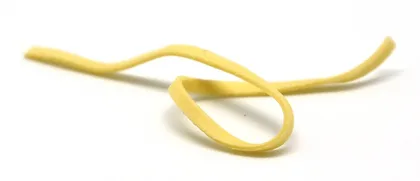 Pasta and breadTajarinTajarin are the Piedmontese answer to tagliolini: hand-cut egg noodles barely a millimetre and a half wide…
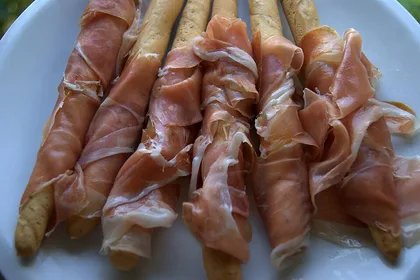 Pasta and breadGrissiniGrissini are Turin's breadsticks: bread reduced to almost pure crust, dried in the oven until it snaps.
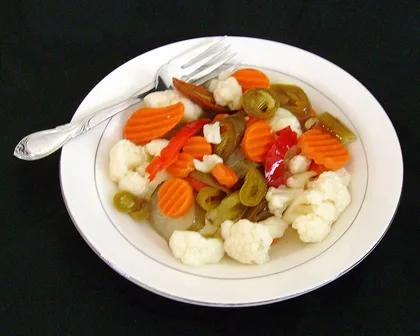 Oil and preservesGiardinieraGiardiniera means two very different jars. In Italy it is a mild mix of vegetables pickled in wine vinegar…
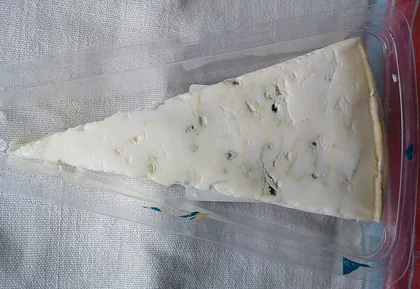 CheeseGorgonzolaThe green veining is the product, not a flaw anyone tolerates: it grows from a mould added to the milk and…
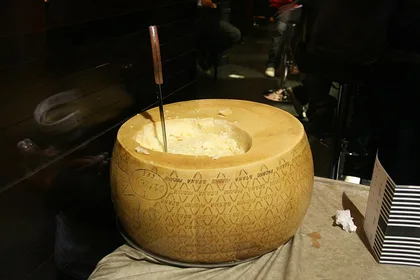 CheeseGrana PadanoNine months is the floor the specification sets before a wheel may carry the name.
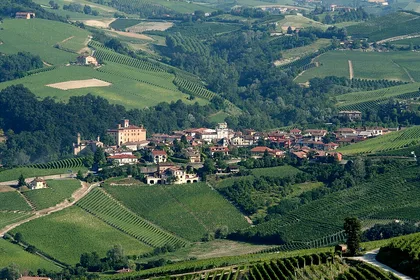 WineBaroloBarolo is one hundred per cent Nebbiolo from eleven villages in the Langhe hills of Piedmont, aged at least…
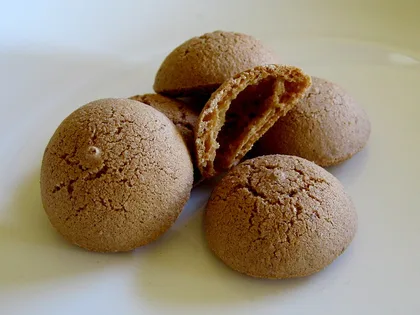 SweetsAmarettiAmaretti are flourless almond cookies whose bitter edge comes from apricot kernels, not almonds.
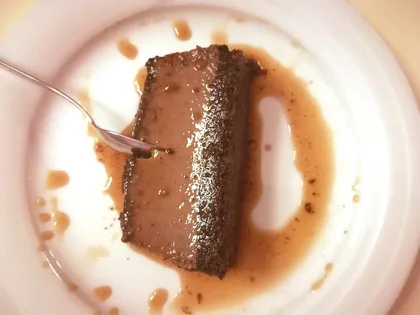 SweetsBonetBonet is the baked custard of Piedmont's Langhe hills: eggs, milk, bitter cocoa, crushed amaretti and rum…