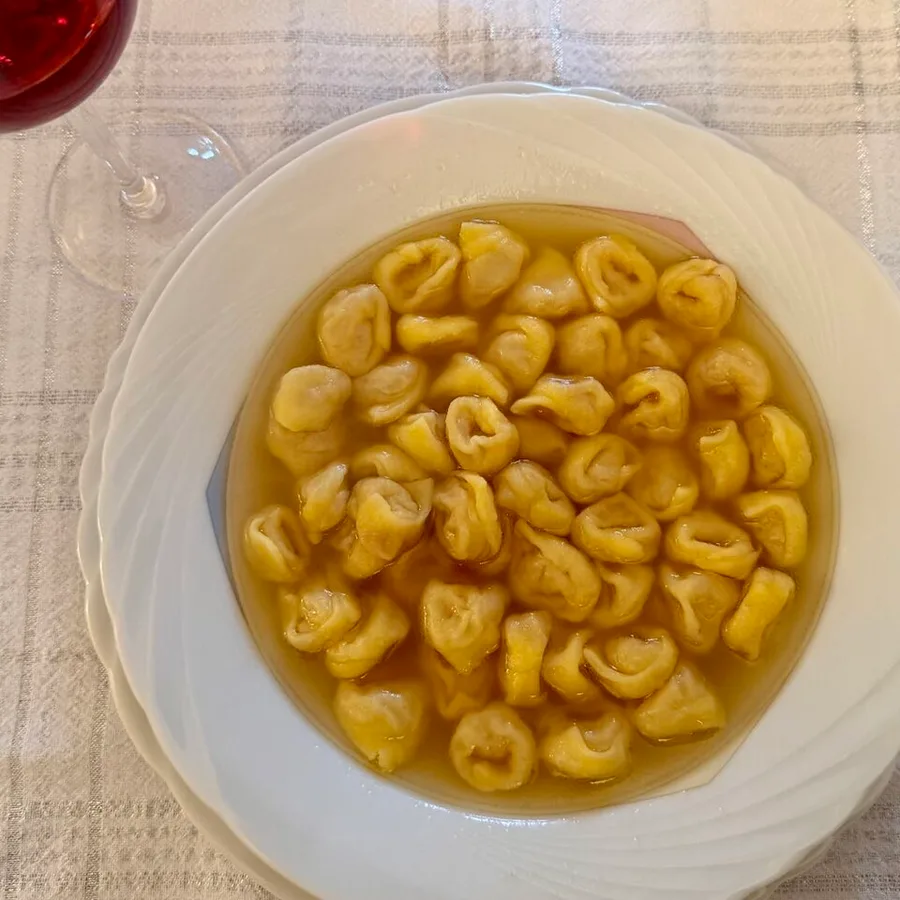
What is Tortellini?
A tortellino starts as a three-centimetre square of egg pasta with a hazelnut of filling in the middle. You fold it into a triangle, press the edges, turn the base up and wrap the whole thing around the tip of your index finger until the two points meet. The result is a small ring with a raised crest, and if there is no ring, it is not a tortellino.
Size is not a detail. A properly made tortellino weighs three or four grams, which means 250 to 350 of them in a kilo. The walnut-sized things sold in most supermarket chill cabinets are a different product; in Bologna they have a blunt name for them.
The filling is meat and cheese. Since 1974 the recipe has been lodged with Bologna's Chamber of Commerce by the Dotta Confraternita del Tortellino and the Italian Academy of Cuisine, and that document remains the reference point for the city: pork loin browned in butter, prosciutto crudo, mortadella di Bologna, Parmigiano Reggiano, eggs and nutmeg.
What does it taste like?
The first thing you taste is Parmigiano, which surprises people who expect meat. Parmigiano is the largest single ingredient in the registered filling (450 grams against 300 each of the three meats) so the flavour is nutty, salty and savoury before it is porky.
Then the cured meats arrive: the sweet-spiced note of mortadella, the deeper saltiness of prosciutto, the roasted richness of the pork loin. Nutmeg runs underneath everything, warm and just short of assertive.
In broth the texture matters as much as the flavour. Hand-rolled pasta is porous and slightly rough, so it holds the broth rather than sliding through it, and each tortellino delivers a small burst of hot filling into a clean, golden, faintly sweet capon stock. That combination of rich parcel and clear broth is the whole point, and it is why Bologna resists the cream sauces the dish acquired abroad.
How to use it
Cook them in broth, not water, and serve them in the same broth. That is the traditional method and the reason the dish exists. A good capon or chicken-and-beef stock, started from cold water with celery, carrot and onion, skimmed carefully and strained clear, takes three hours and is half the recipe.
Drop the tortellini into simmering broth (never a rolling boil, which tears them) and give them two to three minutes if fresh, four if frozen. Serve immediately in warmed bowls, with grated Parmigiano offered separately for those who want it.
Count forty to fifty pieces per person for a first course, about 150 grams of hand-made tortellini. If you are working with larger packaged ones, 100 grams is plenty.
The alternatives Emilians accept are few: tortellini asciutti, drained and tossed in melted butter with Parmigiano, and deep-fried tortellini as a party snack. Cream sauce is a 1970s export and is not served in Bologna. Ragù on tortellini is considered a waste of both.
How long it keeps
There are two situations and they behave differently. A vacuum pack carries a date, the maker's reference, and stays sealed at 2 to 4 C until you open it. Once open, the sheet begins losing water to the air within hours and the pieces stick to each other wherever they touch. Loose fresh tortellini go in the fridge on a floured tray under a cloth, spaced in a single layer, for about two days. Do not shut fresh ones in an airtight box: trapped moisture glues them together and the filling wets the pasta from the inside.
Freezing is what every household in Emilia does in December. Spread them apart on a tray until hard, then bag them: three months at minus 18 C, dropped into the broth still frozen and cooked in roughly four minutes. Thawing first is the mistake, because they slump and stick. Left long in the freezer the exposed pasta dries, the edges go pale and brittle and the filling darkens. Broth keeps three days in the fridge and freezes for months; skim it cold, once the fat has set into a solid layer.
Spot the real thing
Size settles it before anything else. A Bologna tortellino weighs two to five grams and vanishes in a spoon; anything heavier is a cappelletto under another name or an industrial shape. The seal should be crisp, the two points properly joined and the central fold standing up, with no filling showing through. The sheet is matt and slightly rough, never glossy or rubbery: shine means a machine sheet and a dough carrying too much water. Cooked, the filling reads as Parmigiano first and meat second, with nutmeg present but not leading.
Abroad the same word covers three different things. Dried boxed tortellini from the pasta aisle are a cheese or ricotta shape with nothing of Bologna in them; the chilled deli packs are closer; tortelloni are two or three times the size and usually ricotta and spinach. Read the filling list on any pack: if breadcrumb or chicken comes first you are a long way from Emilia, and cooked ham in place of prosciutto crudo marks the budget version. Fresh from an Italian deli costs several times the boxed price for the same weight.
How to pronounce Tortellini
tor-teh-LEE-nee
Four syllables, stress on LEE. Both E sounds are short and clear, as in 'bed', not 'tor-tuh-LEE-nee'. The singular is tortellino, so one is a tortellino and several are tortellini. Do not confuse it with tortelloni, 'tor-teh-LOH-nee', which is a much bigger, cheese-filled pasta.
Tortellini compared
vsCappelletti
Made with a similar wrapping gesture but bigger, and in Romagna filled with soft cheese instead of meat. The name means 'little hats' and the brim is the giveaway: cappelletti have a pronounced flared rim, tortellini have a tight ring.
| This | Cappelletti | |
|---|---|---|
| Size | 3 cm square, 3-4 g each | 4-6 cm square or disc, 6-10 g each |
| Filling | Pork loin, prosciutto, mortadella, Parmigiano | Romagna: soft cheese, ricotta, squacquerone. Reggio: meat |
| Shape | Closed ring, raised crest | Flared brim, taller profile |
| Home | Bologna and Modena | Romagna, Reggio Emilia, the Marche |
| Served | In capon broth | In broth, or with butter, or with ragù |
| Christmas dish? | Yes, in Emilia | Yes, in Romagna |
vsTortelloni
Same family, opposite scale and opposite filling. Tortelloni are two or three times the size and stuffed with ricotta and parsley or spinach: a vegetarian pasta served with butter and sage, never in broth. The names are almost identical and confusing them is the single most common Italian menu mistake.
| This | Tortelloni | |
|---|---|---|
| Size | 3-4 g each | 15-25 g each |
| Filling | Meat and Parmigiano | Ricotta and parsley, or ricotta and spinach |
| Meat-free? | No | Yes, traditionally |
| Served with | Capon broth | Melted butter and sage, or fresh tomato |
| Portion | 40-50 pieces per person | 6-8 pieces per person |
| Cooking time | 2-3 minutes | 4-5 minutes |
vsPackaged supermarket tortellini
Worth knowing what you are buying, since almost all tortellini sold in the US and UK are chilled or frozen industrial versions. They are a decent weeknight food and a poor guide to the original, mostly because of size and filling composition.
| This | Packaged supermarket tortellini | |
|---|---|---|
| Weight each | 3-4 g hand-rolled | 6-12 g, sometimes more |
| Pasta | Hand-rolled, porous, matte | Extruded or sheeted, smooth, glossy |
| Filling base | Parmigiano first, then three cured meats | Often breadcrumb, chicken or pork trimmings |
| Cooking time | 2-3 minutes | 5-9 minutes |
| Typical price | €22-40 per kg in Bologna | $12-18 per lb, £8-14 per kg |
| Best use | Broth | Butter, cream, tomato, pasta salad |
Tortellini substitutes
- Cappelletti
The closest relative and often easier to find in Italian delis. Larger, so count fewer per person; the meat-filled Reggio version is nearest to tortellini, the cheese-filled Romagna version is a different dish.
1:1 by weight, roughly half the count - Anolini (Parma and Piacenza)
Small round stuffed pasta from just up the Via Emilia, filled with braised beef, Parmigiano and breadcrumb. Served in broth exactly as tortellini are, and an excellent stand-in.
1:1 - Fresh meat-filled agnolotti
Piedmontese rather than Emilian, but small, meat-filled and comfortable in broth. Agnolotti del plin are the right size; the flavour skews roast-meat rather than cured-meat.
1:1 - Frozen tortellini from an Italian producer
Better than the chilled supermarket version nine times out of ten, because freezing suits filled pasta. Cook straight from frozen; do not thaw, or the pasta goes slack and splits.
1:1, add 1-2 minutes to cooking time - Vegetarian: cheese tortellini
Widely available in the US and UK and the standard vegetarian option. Note that Parmigiano Reggiano itself is made with calf rennet, so most 'cheese tortellini' containing real Parmigiano are not vegetarian: check for a vegetarian mark rather than assuming.
1:1 - For the broth: chicken plus beef
Capon is hard to find outside Italy and around Christmas. A broth made from a whole boiling fowl plus a piece of beef short rib, started in cold water with celery, carrot and onion, gets very close.
2 parts poultry to 1 part beef by weight
Where to buy it
In the US, fresh tortellini from Italian pasta shops and delis run 14 to 24 dollars per pound and are worth seeking out over the chilled supermarket versions; Eataly, Di Palo's in New York, and regional Italian markets in Philadelphia, Chicago and Boston all make or import them. Frozen imported tortellini from Emilian producers are stocked by Italian specialists online.
In the UK, Italian delicatessens and online importers such as Vorrei and Natoora carry fresh and frozen versions; supermarket own-brand fresh tortellini sit around £8 to £14 per kilo and are a different category of food.
What to check: the ingredient list. If the filling starts with breadcrumb, chicken or pork trimmings rather than named cured meats and Parmigiano Reggiano, expect a bland result. Size matters too: smaller is better, and anything over about eight grams a piece will not behave properly in broth. If you buy dried tortellini, treat them as a store-cupboard convenience rather than an approximation of the fresh original.
Where to eat it in Italy
Bologna is the obvious place, and tortellini in brodo is on trattoria menus year-round. The pasta shops of the Quadrilatero, the old market streets behind Piazza Maggiore, have sfogline rolling pasta by hand in the window: worth ten minutes of watching before you eat.
Modena claims the dish just as loudly, and the border town of Castelfranco Emilia, where the Venus legend is set, holds a tortellino festival every September. The Modenese filling leans a little more on mortadella.
Up in the Bolognese Apennines (Vergato, Loiano, Monghidoro) mountain trattorias serve richer broths and bigger portions at lower prices. And in Parma, an hour up the Via Emilia, the equivalent dish is anolini in broth: eating both in the same week is the fastest way to understand how specific Emilian pasta traditions are.
December is when the city takes it most seriously, since tortellini in brodo is the Emilian Christmas dish and families roll their own on the 24th.
Recipes with it
Frequently asked questions
What is in traditional tortellini filling?
The recipe registered in Bologna in 1974 specifies pork loin browned in butter, prosciutto crudo, mortadella di Bologna, Parmigiano Reggiano, eggs and nutmeg. Parmigiano is the largest component by weight, which is why the filling tastes of cheese first.
What is the difference between tortellini and tortelloni?
Size and filling. Tortellini are tiny, meat-filled and served in broth; tortelloni are three to five times bigger, filled with ricotta and parsley or spinach, and served with butter and sage. The similar names cause endless confusion on menus abroad.
Are tortellini served with cream sauce?
Not in Bologna. Tortellini alla panna is a commercial invention of the 1970s that took hold outside Emilia. The traditional serving is in capon broth; the only accepted alternative locally is drained and tossed in butter with Parmigiano.
Are tortellini vegetarian?
Traditional tortellini are not: the filling is built on three cured pork products. Cheese tortellini are widely sold as a vegetarian alternative, but Parmigiano Reggiano is made with calf rennet, so check for an explicit vegetarian mark.
How many tortellini per person?
In broth, forty to fifty hand-made pieces, or about 150 grams. With larger packaged tortellini, 100 grams per person is a generous first course.
Related foods
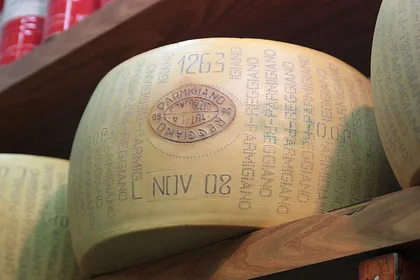 CheeseParmigiano ReggianoThree ingredients and no additives of any kind are permitted: raw cow's milk, salt and calf rennet, from five…
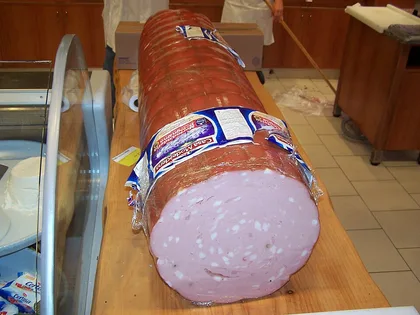 Cured meatsMortadellaThe white cubes are not just any fat: they are jowl, the firmest part of the pig, and they stay whole…
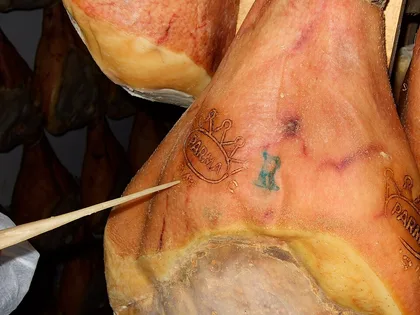 Cured meatsProsciutto di ParmaProsciutto di Parma DOP is Italian ham made from three things only: pork, sea salt and at least 400 days.
 Pasta and breadPiadina RomagnolaNo yeast and no waiting: flour, water, salt and lard, rolled thin and cooked dry on a hot plate for two…
 Pasta and breadStrozzapretiStrozzapreti are hand-rolled Romagnolo pasta: strips of semolina-and-water dough twisted between the palms…
 Pasta and breadTortelloniSeven-centimetre squares of egg pasta filled with ricotta and parsley, folded into a little hat.
 Pasta and breadCappellettiCappelletti are Emilia-Romagna's filled egg pasta, folded into the shape of a little hat and served in broth…
 Pasta and breadGnocco FrittoEat it within a minute of the pan, because once it deflates it is over: a diamond of leavened dough fried in…