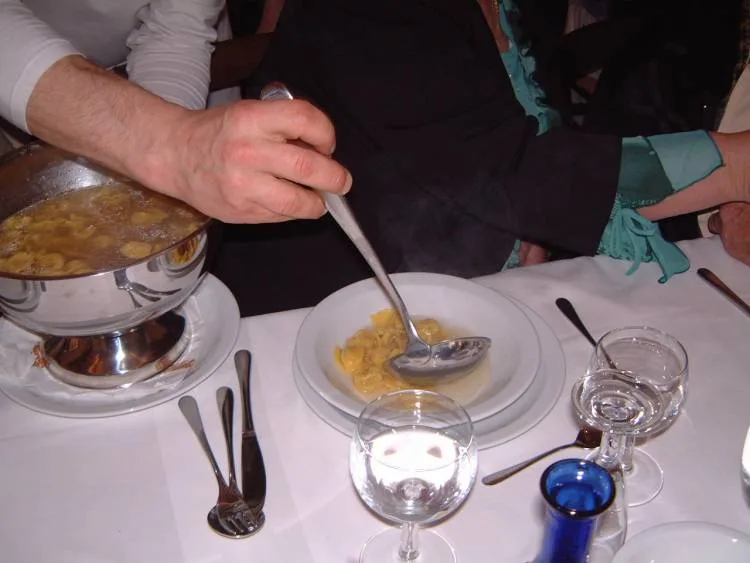
What is Cappelletti?
A cappelletto is a square of egg pasta with a nut of filling in the middle, folded into a triangle, wrapped around a fingertip and then finished by turning the top edge upward into a brim. That upturned brim is the defining feature and the reason for the name: cappello means hat.
Size is the second difference. A cappelletto weighs five to ten grams; a Bolognese tortellino weighs two to five. A bowl of broth holds forty tortellini or twenty cappelletti.
The filling splits along a geographic line. Romagna (Forlì, Cesena, Ravenna, Rimini) makes them 'di magro', meatless: ricotta or raviggiolo, the soft local squacquerone, parmesan, egg, nutmeg and lemon zest. Emilia (Reggio, Modena, Ferrara, Piacenza) fills them with meat, usually pork with cured meats, which brings them much closer to tortellini.
They are eaten in broth, and the broth matters: capon at Christmas, otherwise a three-meat brodo of beef, hen and sometimes pork, simmered for hours. Served dry with sauce, they are traditionally what you do with the leftovers on Boxing Day.
What does it taste like?
The Romagna version is delicate and slightly perfumed: fresh cheese, a savoury lift from parmesan, then nutmeg and lemon zest arriving at the end. The lemon is not subtle once you know to look for it, and it is what stops the filling from tasting flat. Against a clear capon broth the whole thing is clean, rich and surprisingly light.
The Emilian meat version is deeper and rounder (cured pork, nutmeg, parmesan), closer to a tortellino, but with a bigger mouthful of filling relative to pasta because of the size.
The pasta itself should be thin enough to be almost incidental: soft, eggy, faintly sweet. Industrial versions get this wrong, using a thicker sheet that survives machinery and packaging and eats like a rubber band around the filling.
How to use it
Cook them in the broth they will be served in. Bring the broth to a bare simmer, drop them in, and give them three to four minutes fresh or five to six from frozen. Boiling them separately in water and moving them across loses the starch that gives the finished bowl its body.
The broth is half the dish. Capon at Christmas; otherwise beef shin, half a hen, bones, celery, carrot and onion, four hours at the barest simmer, skimmed at the start, then strained and chilled so the fat can be lifted off.
Serve with grated parmesan and nothing else. No cream, no herbs, no drizzle.
Leftovers get eaten dry the next day, tossed in a pan with butter and sage until the edges catch and crisp. Modern restaurants also serve them dry with butter and parmesan or a light ragù, which is perfectly good and entirely beside the point of Christmas.
How long it keeps
Fresh cappelletti from a chilled counter carry a short date, usually three to seven days from packing, and once the pack is open the pieces belong in a single layer on a tray dusted with semolina, loosely covered, not stacked in a bag where they stick to each other. Dried boxed versions keep to the best before date, a year or more, in a dry cupboard. Frozen packs hold two to three months and go into the broth straight from frozen with an extra minute or two.
The failure mode of a filled pasta is moisture moving from the filling into the dough. Left in the fridge, the pasta at the seam turns grey and translucent, softens, and eventually tears when it hits hot broth; a cheese filling weeps and the pieces flatten. This is why Emilian households freeze rather than refrigerate: spread them on a floured tray, freeze until hard, then bag them, and nothing sticks or leaks. Dried cappelletti go the other way and simply become brittle over time. For a specific pack, the printed date and the producer are the reference.
Spot the real thing
The name means little hats and the shape has to earn it: a disc or square of thin egg pasta folded to a triangle, wrapped round a fingertip and sealed, so the finished piece has an upturned brim and a peak standing above it. Flat, pinched or purse shaped pieces are something else. Look at the pasta itself against the light: it should be thin enough that the filling shows through as a shadow, with a matt, floury surface rather than a slick one, and the sealed edge should be pressed, not crimped by machine.
Abroad the word is used loosely for almost any small stuffed pasta, so read the filling. Romagna cappelletti are cheese: soft fresh curd with Parmigiano and nutmeg, sometimes lemon zest. The Emilian ones towards Reggio and Parma carry meat. Tortellini, which they are constantly confused with, are smaller, built from squares, and filled with pork loin, prosciutto and mortadella; tortelloni are much larger with ricotta and spinach. A pack listing breadcrumbs, potato or vegetable protein high in the filling is an industrial version. Fresh artisanal packs run $9 to $16 for 250 grams.
How to pronounce Cappelletti
kap-pel-LET-tee
Four syllables, stress on the third. Both double consonants are held, which is what English speakers miss: 'cap-uh-LET-ee' is close but slack, and 'capa-letty' collapses it entirely. Hold the p and the t as if you were about to stop and then continue. One of them is a cappelletto (kap-pel-LET-toh).
Cappelletti compared
vsTortellini
The comparison everyone asks about, and the answer is not 'the same thing, different name'. Tortellini are smaller, closed with the edge flat, and filled to a recipe formally deposited with the Bologna Chamber of Commerce on 7 December 1974: pork loin browned in butter, prosciutto crudo, mortadella di Bologna, parmesan, egg and nutmeg. Cappelletti are larger, keep an upturned brim, and in Romagna are filled with fresh cheese and lemon zest instead of meat. Bologna and Modena have argued over the tortellino for centuries: the Venus's-navel legend conveniently places its invention in Castelfranco Emilia, exactly halfway between them. Romagna stays out of that fight and claims the cappelletto as an older, separate thing.
| This | Tortellini | |
|---|---|---|
| Home | Romagna, and Emilia in the meat version | Bologna and Modena |
| Weight each | 5-10 g | 2-5 g |
| Shape | Upturned brim, taller profile | Flat rim, tighter ring |
| Classic filling | Ricotta or raviggiolo, squacquerone, parmesan, nutmeg, lemon zest | Pork loin, prosciutto, mortadella, parmesan, nutmeg |
| Written record | Artusi, 1891, 'all'uso di Romagna' | Recipe deposited in Bologna, 1974 |
| Vegetarian possible | Yes, in the Romagna version | No: meat is the definition |
| Per bowl of broth | About 20 | About 40 |
vsAnolini
The third member of the family, from Parma and Piacenza, and the one outsiders never meet. Anolini are round rather than hat-shaped, stamped out with a fluted cutter, and filled with stracotto (beef braised for the best part of a day) bound with breadcrumbs and parmesan. In Piacenza some versions leave the meat out and use the braising juices in the breadcrumbs alone.
| This | Anolini | |
|---|---|---|
| Where | Romagna and eastern Emilia | Parma and Piacenza |
| Shape | Folded hat with a brim | Round or half-moon, stamped |
| Filling | Fresh cheese, or minced cured pork | Slow-braised beef and its juices, breadcrumbs, parmesan |
| Made with | Hands only | A stamp, which seals and cuts in one move |
| Broth | Capon or three-meat | Three-meat, traditionally including the stracotto's own |
| Season | Christmas | Christmas |
vsRavioli
Useful for anyone shopping abroad, where 'ravioli' is the default word for all filled pasta. Ravioli is a category, not a shape: two sheets of pasta with filling between them, sealed and cut, made across the whole of Italy in every size. Cappelletti are one specific fold from one region, made from a single square, and are built for broth rather than sauce.
| This | Ravioli | |
|---|---|---|
| Construction | One square, folded and wrapped | Two sheets, sandwiched and cut |
| Profile | Three-dimensional, hollow ring | Flat pillow |
| Where from | Emilia-Romagna specifically | Everywhere in Italy |
| Served | In broth, above all | With sauce, usually |
| Size | 5-10 g, standardised by tradition | 3 g to 40 g, no standard |
| Cooking time | 3-4 minutes | 4-7 minutes depending on size |
Cappelletti substitutes
- Tortellini
The obvious swap and widely available fresh and frozen abroad. Smaller, so use more of them by count, and expect a meat filling: do not serve them to anyone who was promised the Romagna cheese version.
1:1 by weight, roughly 2:1 by count - Anolini or agnolotti del plin
Both are broth-friendly filled pastas with meat inside. Anolini are the closest in purpose; agnolotti del plin are Piedmontese, smaller and richer, and work well in broth despite usually being served dry.
1:1 - Small cheese ravioli, plus lemon and nutmeg
The best supermarket approximation of the Romagna filling. Grate a little lemon zest and nutmeg directly into the broth, which is where most of the character of the real filling lives.
1:1, plus zest of half a lemon per litre of broth - Homemade, with ricotta
Raviggiolo and squacquerone are almost impossible to find outside Italy. Well-drained sheep's ricotta with a spoonful of full-fat cream cheese gets close in texture; add parmesan, one egg yolk, nutmeg and lemon zest.
300 g ricotta : 60 g cream cheese : 80 g parmesan : 1 yolk, fills about 60 cappelletti - Vegetarian: the rennet problem
The Romagna filling is meatless but not automatically vegetarian: Parmigiano Reggiano is made with calf rennet, without exception, and traditional ricotta and raviggiolo also start from rennet-set milk. Use a microbial-rennet hard cheese such as an Italian-style vegetarian grana and a vegetarian ricotta, and cook them in vegetable broth rather than capon.
- Wontons in clear broth
Not Italian and not pretending to be, but if you want the sensation of small filled parcels in a clear savoury broth on a weeknight, it is closer than dry pasta with sauce.
1:1 by count
Where to buy it
In the US, fresh and frozen cappelletti turn up in Italian delis and specialist grocers, though tortellini are far more common. Ask for cappelletti by name and expect the meat-filled Emilian style. Eataly and regional Italian markets in New York, Boston, Philadelphia and Chicago are the reliable sources, at 12 to 20 dollars a pound. Frozen is genuinely fine here: it is how Italian households store them too.
In the UK, Italian delicatessens carry them seasonally in December; Lina Stores and similar London shops make them fresh. Expect 14 to 25 pounds a kilo. Supermarket 'cappelletti' in the UK are usually a small ring pasta with a generic filling.
What to check: filling should be close to half the weight, the pasta sheet should be thin, and the ingredient list should not open with breadcrumbs. Deep yellow pasta comes from egg yolks: if the list includes colouring, the yolks were few.
Allow 70 to 90 grams per person for a bowl of broth.
Where to eat it in Italy
December, and in houses before restaurants: in Romagna, folding cappelletti on the 23rd or 24th is a family operation involving three generations and one long table.
Forlimpopoli, Artusi's home town, has Casa Artusi (museum, cookery school and restaurant in one), which runs pasta-rolling courses year-round and is the best place to learn the fold rather than watch it.
In Bologna, the sfogline work in shop windows along Via Drapperie and the Quadrilatero, with cappelletti and tortellini side by side in the same case, which settles the difference in about thirty seconds. The old trattorie serve tortellini in brodo all year.
Parma and Piacenza are for anolini, the round beef-filled cousin, and Ferrara for cappellacci di zucca, which keep the hat shape and swap everything else for pumpkin.
Recipes with it
Frequently asked questions
What is the difference between cappelletti and tortellini?
Size, closure and filling. Cappelletti are larger, five to ten grams against two to five, and are finished with the top edge turned up into a brim. Tortellini follow a recipe deposited in Bologna in 1974 using pork loin, prosciutto, mortadella and parmesan. Romagna's cappelletti are filled with fresh cheese, nutmeg and lemon zest instead.
How do you pronounce cappelletti?
kap-pel-LET-tee, four syllables with the stress on the third. Hold both double consonants, the pp and the tt, which is the part English speakers usually skip.
Are cappelletti vegetarian?
The Romagna filling contains no meat, but it is not automatically vegetarian: Parmigiano Reggiano is made with calf rennet, and traditional ricotta and raviggiolo start from rennet-set milk. They are also traditionally cooked in capon or beef broth. A vegetarian version needs microbial-rennet cheeses and vegetable broth.
How long do cappelletti take to cook?
Three to four minutes fresh, five to six from frozen, in broth held at a bare simmer. Cook them in the broth you will serve, not separately in water.
Can you freeze cappelletti?
Yes, and it is the standard way to handle them. Freeze them uncovered on a tray until firm so they do not stick, then bag them. They keep three months and go into the broth straight from the freezer with two extra minutes.
Related foods
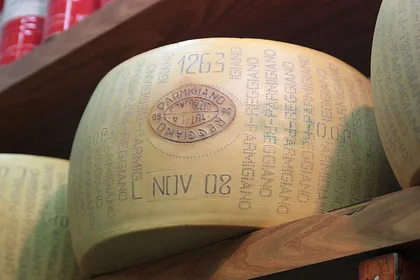 CheeseParmigiano ReggianoThree ingredients and no additives of any kind are permitted: raw cow's milk, salt and calf rennet, from five…
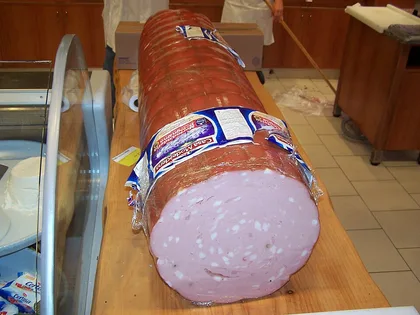 Cured meatsMortadellaThe white cubes are not just any fat: they are jowl, the firmest part of the pig, and they stay whole…
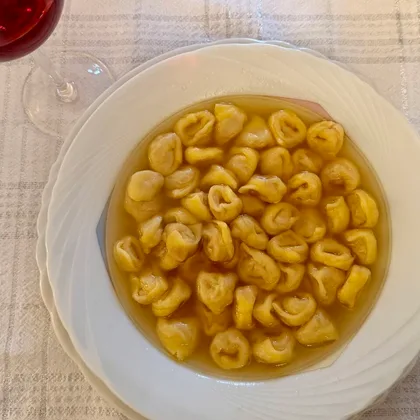 Pasta and breadTortelliniTortellini are tiny ring-shaped egg pasta parcels filled with pork, prosciutto, mortadella and Parmigiano…
 Pasta and breadStrozzapretiStrozzapreti are hand-rolled Romagnolo pasta: strips of semolina-and-water dough twisted between the palms…
 Pasta and breadPiadina RomagnolaNo yeast and no waiting: flour, water, salt and lard, rolled thin and cooked dry on a hot plate for two…
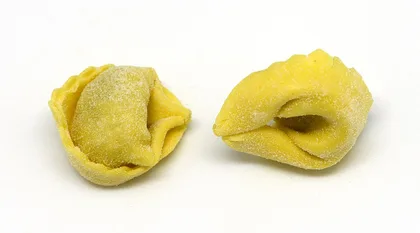 Pasta and breadTortelloniSeven-centimetre squares of egg pasta filled with ricotta and parsley, folded into a little hat.
 Pasta and breadGnocco FrittoEat it within a minute of the pan, because once it deflates it is over: a diamond of leavened dough fried in…
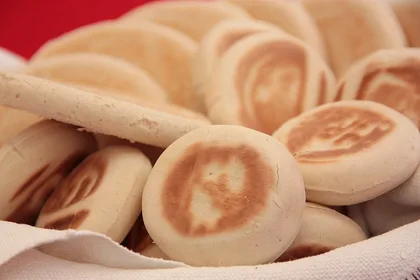 Pasta and breadTigelleTigelle are small round breads from the Modena Apennines, cooked between two hot plates and served warm…