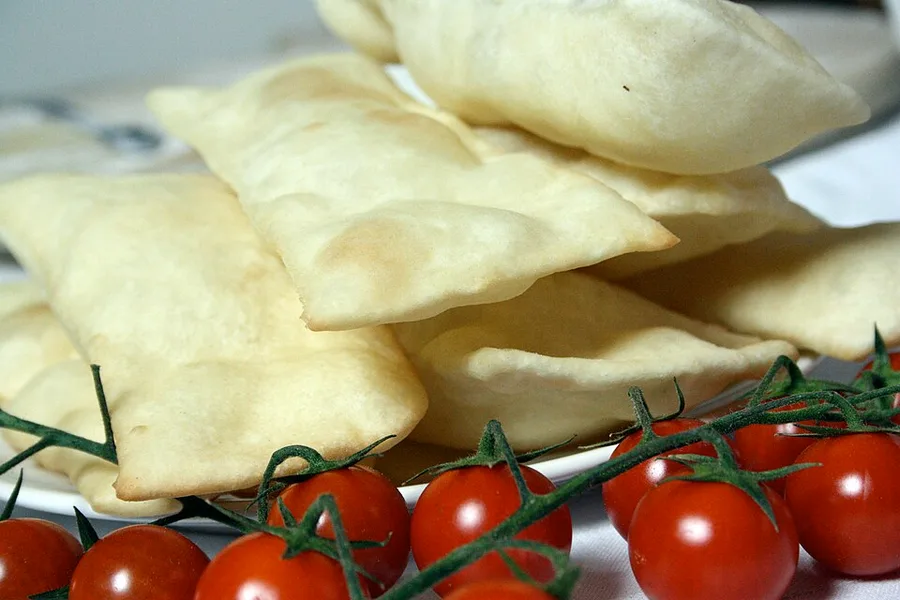
What is Gnocco Fritto?
Gnocco fritto is a simple yeasted dough (flour, water or milk, lard, yeast, salt) rolled paper-thin, cut into diamonds and dropped into hot lard. It inflates within seconds into a hollow, golden cushion, and it goes to the table immediately, wrapped in a napkin.
It is not a bread and not a doughnut. It is a delivery system for Emilian salumi. You tear it open or fold it around a slice of prosciutto di Parma, culatello, coppa, salame or mortadella, and the heat softens the fat of the meat just enough. In Emilian homes it is a Friday-night dinner and a pantry-emergency meal at the same time.
The name misleads almost every foreigner. It has nothing to do with potato gnocchi. In the local dialect gnocco simply meant a lump of dough, and the word stayed attached to this preparation even after potato gnocchi took over the rest of Italy.
What does it taste like?
Salty, warm, faintly milky from the lard, with a crackling shell about a millimetre thick and nothing inside but steam. The flavour is deliberately plain, closer to a hot flour tortilla or a good Indian puri than to anything sweet, because it exists to carry the salumi.
The texture is the point. It should shatter slightly at the first bite and then go soft, and it should not taste of oil at all. A properly fried one leaves the napkin dry.
With prosciutto draped over it, the effect is a small collision: hot and crisp against cool and silky, salt against salt, with the fat of the ham beginning to melt. That contrast is the whole dish.
How to use it
Make the dough with 500 g of 00 flour, 250 ml of warm water or milk, 25 g of lard, 7 g of fresh yeast and 10 g of salt. Knead for five minutes, cover, and leave it an hour until it has roughly doubled.
Roll it out to 2-3 mm, thinner than instinct suggests, and cut diamonds of about 8 cm with a fluted pastry wheel. The serrated edge is not decoration: it holds the steam in long enough for the piece to inflate.
Heat lard or peanut oil to 175 C in a deep pan and fry three or four pieces at a time. They sink, rise, balloon within ten seconds, and need turning exactly once. Forty seconds total. Drain on paper for a moment and serve immediately, in a basket lined with a cloth napkin.
On the table: prosciutto di Parma, culatello, coppa, salame, mortadella cut thick, plus squacquerone or stracciatella for spreading, and pickled vegetables for acidity. Count four or five pieces per person as a starter, ten as a meal. Do not fry ahead. Whoever is frying eats last: that is simply how it works.
How long it keeps
Almost nothing about gnocco fritto is stored after frying. A fried piece has a life measured in minutes: the steam that inflated it condenses as it cools, the shell softens from the inside, the pillow collapses and the fat it carries becomes noticeable. A few minutes in a 180 C oven drives some of that moisture back out; a microwave does the opposite. Restaurants in Emilia fry them to order for exactly this reason and bring them out in a cloth-lined basket.
The dough is what keeps. After its rise it can sit covered in the fridge at 0 to 4 C for up to a day, where the cold slows the yeast and the surface will skin over unless it is wrapped; bring it back to room temperature before rolling. Cut pieces freeze on a floured tray then go into a bag at minus 18 C for a couple of months and are fried from frozen. Lard for the pan keeps cold and dark, and over time it yellows at the surface and the smell turns oilier as it oxidises. Frozen supermarket packs carry the producer's date.
Spot the real thing
The first thing to clear up is the name, because gnocco here has nothing to do with potato dumplings. This is a leavened dough rolled thin, cut into diamonds or rectangles and dropped into hot fat, where it inflates into a hollow golden pillow with a thin blistered shell and almost nothing inside. Lifted from the oil it should feel light and sound papery when tapped, not heavy or slick. Lard, strutto, belongs in the dough and traditionally in the pan, and it is what gives the savoury edge that distinguishes it from plain fried bread.
Emilia calls it different things town by town: torta fritta in Parma, crescentine in Bologna, chisolini around Piacenza, pinzini in Ferrara. The confusion to avoid is with tigelle, the small round griddled discs from the Modena hills that are also called crescentine and are split and filled rather than fried. Piadina is a flat unleavened bread cooked dry on a plate. Sweet carnival fritters such as chiacchiere use a similar shape and a sugared dough. It is a cheap thing everywhere, priced by the basket alongside a plate of salumi.
How to pronounce Gnocco Fritto
NYOK-koh FREET-toh
The 'gn' is one sound, like the 'ny' in canyon, never a hard g. Double consonants get held a beat longer: NYOK-koh, not NYO-ko. Stress falls on the first syllable of both words. Common mistakes: 'guh-NOH-cho' and 'NO-cho fry-TOE'.
Gnocco Fritto compared
vsTigelle (crescentine modenesi)
Two breads from the same hills, one fried and one baked. Tigelle are small discs cooked between hot terracotta or cast-iron plates; gnocco fritto is a diamond dropped in lard. Both get served with the same platter of cured meats, often at the same meal.
| This | Tigelle (crescentine modenesi) | |
|---|---|---|
| Cooking method | Deep-fried in lard | Pressed between hot discs |
| Shape | Diamond, 7-8 cm, hollow | Round, 8 cm, dense |
| Texture | Crisp shell, air inside | Soft, bready, chewy |
| Served | Instantly, or not at all | Stays good for 20 minutes |
| Classic filling | Prosciutto, lard pesto | Pesto modenese, pancetta |
| Confusing name | Called crescentine in Bologna | Called crescentine in Modena |
vsTorta fritta, pinzino, chisolino
The same recipe under four passports. Emilia renames this dough at almost every provincial border, and locals will correct you with real conviction. Knowing the map is the fastest way to order confidently anywhere between Piacenza and Ferrara.
| This | Torta fritta, pinzino, chisolino | |
|---|---|---|
| Modena, Reggio Emilia | Gnocco fritto | The reference name |
| Parma | Torta fritta | Cut larger, often square |
| Bologna | Crescentine | Identical product, different word |
| Ferrara | Pinzino or pinzin | Rolled thinner still |
| Piacenza | Chisolini, chisulén | Sometimes made with milk |
| Mantua (Lombardy) | Gnocco fritto | The dialect crosses the Po |
vsPiadina
The other Emilia-Romagna flatbread, and the one you are more likely to have met abroad. Piadina belongs to Romagna, east of Imola; gnocco fritto belongs to Emilia, west of it. The dividing line runs down the middle of the region and holds surprisingly well.
| This | Piadina | |
|---|---|---|
| Region | Emilia (west) | Romagna (east) |
| Cooking | Fried in lard | Cooked dry on a hot testo |
| Leavening | Yeast, one hour rise | Usually none, or baking soda |
| Shape | Small puffed diamonds | Large flat round, 25 cm |
| Eaten as | Shared basket with salumi | Folded sandwich, one per person |
| Travels | Five minutes, maximum | Fine cold, sold everywhere |
Gnocco Fritto substitutes
- Puri or bhatura (Indian fried breads)
Structurally the closest thing in any other cuisine: thin leavened or unleavened dough that puffs hollow in hot fat. Bhatura, which uses yogurt and yeast, is nearly the same eating experience. Serve with prosciutto and nobody will complain.
1:1 by piece - Tigelle or piadina
If you want the same meal without a pot of hot fat, either Emilian bread does the job. Both are sold vacuum-packed in Italian delis and both reheat in a dry pan in ninety seconds.
1 tigella per 2 gnocchi fritti - Pizza dough, rolled thin
Shop-bought pizza dough fries perfectly well. Roll it to 3 mm, much thinner than feels right, rest it fifteen minutes, cut into diamonds and fry at 175 C. The crumb will be slightly chewier than the real thing.
500 g dough makes about 30 pieces - Vegetable shortening instead of lard
For a vegetarian version, swap lard for a solid vegetable fat in both the dough and the fryer. You lose the faint dairy note but keep the texture exactly. Refined peanut oil is the next best frying medium.
1:1 by weight - Sopaipillas (Chilean or New Mexican)
Fried leavened dough that puffs the same way. The New Mexican version is closest; the Chilean one contains squash and turns sweeter. Both work as a savoury base if you skip the honey.
1:1 by piece - Crumpets or English muffins, toasted
A genuine compromise rather than a substitute, but a hot split muffin with prosciutto and squacquerone gets you the temperature contrast that makes the dish work. Use it when frying is not an option.
Where to buy it
You will not find gnocco fritto ready-made outside Italy, and that is fine: the dough takes ten minutes of work and an hour of waiting. What you do need to source is lard and the salumi.
For lard, look for leaf lard or rendered pork fat at a butcher rather than the shelf-stable blocks in supermarkets, which are often hydrogenated and taste of nothing. In the US, expect 6 to 12 dollars per pound for good leaf lard; in the UK, 5 to 9 pounds per kilo. Italian delis sell Italian strutto in 500 g tubs at around 6 to 9 euro per kilo.
The salumi matter more than the flour. Buy prosciutto di Parma aged at least 24 months, and if you can find culatello di Zibello, that is the pairing Emilians consider definitive: expect 90 to 140 euro per kilo in Italy, and roughly double that abroad where it is legally imported. Eataly, Gustiamo and Italian delicatessens in London and New York carry all of it.
Frozen pre-fried gnocco fritto exists in Italian supermarkets at 7 to 10 euro per kilo. It is not worth shipping.
Where to eat it in Italy
The hills south of Modena and Reggio Emilia are the heartland: Castelvetro, Vignola, Scandiano, Casina. The osterie there bring baskets in waves until you tell them to stop, which is the correct way to serve it. Modena city has several near the Albinelli covered market.
In Parma province, ask for torta fritta and go down to the flat land along the Po (Zibello, Polesine Parmense, Busseto) where it comes with culatello made a few hundred metres away. It is the most expensive and most memorable version of this meal.
Bologna serves it under the name crescentine, in the old osterie of the Quadrilatero and along Via del Pratello.
Summer village festivals are the cheapest and best route in. Between May and September almost every town between Modena and Reggio holds one, and 5 euro buys a paper plate of hot dough and two slices of salame in a school courtyard.
Recipes with it
Frequently asked questions
What is gnocco fritto?
A diamond of leavened dough deep-fried in lard until it puffs hollow, served hot with cured meats and soft cheese. It comes from Emilia, in northern Italy, and despite the name it has nothing to do with potato gnocchi.
How do you pronounce gnocco fritto?
NYOK-koh FREET-toh. The 'gn' sounds like the 'ny' in canyon, and both double consonants are held slightly longer than in English.
Why does it have so many different names?
Because it predates the Italian state and was named locally everywhere it was made. Gnocco fritto in Modena and Reggio, torta fritta in Parma, crescentine in Bologna, pinzino in Ferrara, chisolini in Piacenza. To make it worse, Modena uses crescentine for tigelle, which are a completely different bread.
Can I make it without lard?
Yes. Use vegetable shortening in the dough and peanut oil for frying and the texture will be identical. You lose a subtle dairy note that Emilians would notice and most visitors would not.
Why did mine come out flat?
Either the dough was rolled too thick or the fat was not hot enough. It needs 2-3 mm and a steady 175 C, with only three or four pieces in the pan at once, so the temperature does not drop.
Related foods
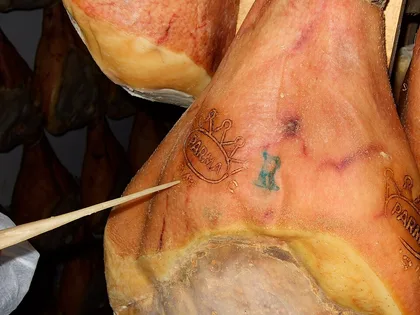 Cured meatsProsciutto di ParmaProsciutto di Parma DOP is Italian ham made from three things only: pork, sea salt and at least 400 days.
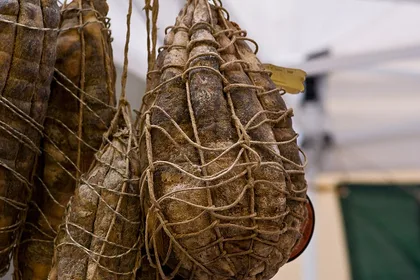 Cured meatsCulatello di ZibelloCulatello di Zibello is the heart muscle of a pork leg, boned out, sewn into a pig's bladder, tied by hand…
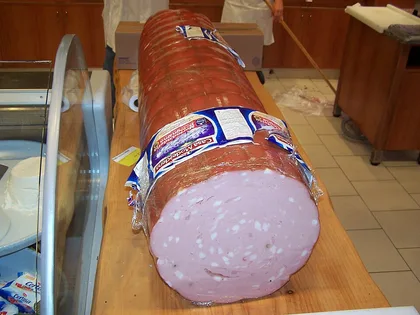 Cured meatsMortadellaThe white cubes are not just any fat: they are jowl, the firmest part of the pig, and they stay whole…
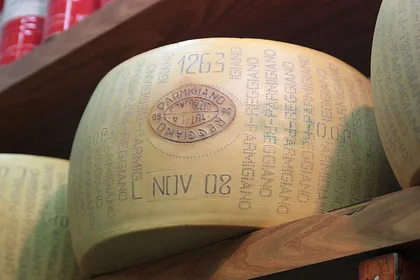 CheeseParmigiano ReggianoThree ingredients and no additives of any kind are permitted: raw cow's milk, salt and calf rennet, from five…
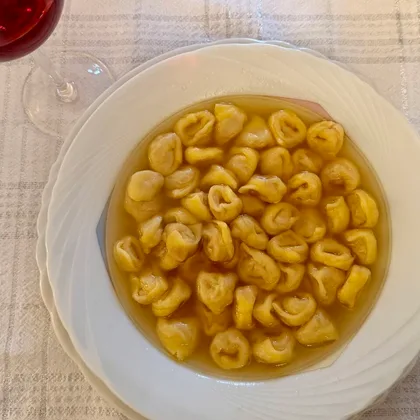 Pasta and breadTortelliniTortellini are tiny ring-shaped egg pasta parcels filled with pork, prosciutto, mortadella and Parmigiano…
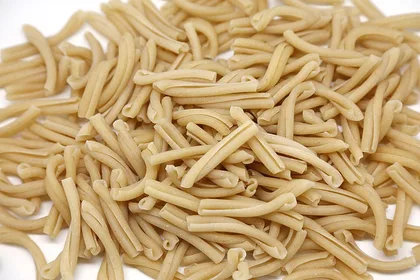 Pasta and breadStrozzapretiStrozzapreti are hand-rolled Romagnolo pasta: strips of semolina-and-water dough twisted between the palms…
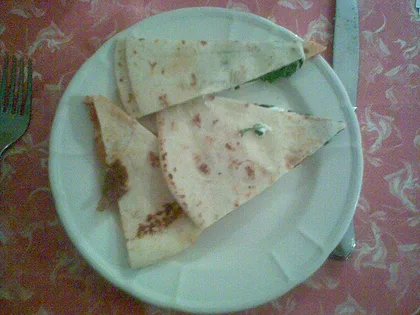 Pasta and breadPiadina RomagnolaNo yeast and no waiting: flour, water, salt and lard, rolled thin and cooked dry on a hot plate for two…
 Pasta and breadTortelloniSeven-centimetre squares of egg pasta filled with ricotta and parsley, folded into a little hat.