What to eat in Bologna
Bologna eats hand-rolled egg pasta: tagliatelle with ragù, tortellini in capon broth, green lasagne, ricotta tortelloni. The rest of the table is pork (mortadella, sausage, the layered veal cutlet) and there is no seafood dish here worth ordering.
Bologna sits in the middle of one of Europe's richest agricultural plains, on a Roman road two thousand years old, and has hosted the western world's oldest university since 1088, which means a steady supply of outsiders with money to spend on dinner. The result is a cuisine that never needed to be frugal: butter instead of olive oil, egg in the pasta dough, meat fillings, grated cheese on everything. In most of Italy this is festival food. Here it is Tuesday.
Everything turns on sfoglia, the sheet of flour-and-egg dough rolled out by hand with a long wooden pin rather than pressed through a machine. Hand-rolled sfoglia is faintly rough, and that roughness is the whole point: sauce clings to it. The women who make it, the sfogline, are a recognised profession, and several shops in the medieval lanes put them at work behind the window. Tagliatelle, tortellini, tortelloni, lasagne and passatelli all come from that same sheet.
The city also has a habit of writing its recipes down. The official ragù recipe was deposited with the Chamber of Commerce in 1982, the tortellino filling in 1974, and neither contains cream. Two things follow for a visitor. First, spaghetti bolognese is not a Bolognese dish and you will not find it in a serious trattoria. Second, the neighbouring cities of Modena and Parma cook a related but different cuisine: no culatello here, no balsamic in the sauces, and a drier ragù.
The dishes of Bologna
Tagliatelle al ragù
The dish the world knows wrongly as spaghetti bolognese. Ragù needs a wide, porous ribbon to cling to, and the registered recipe calls for hand-chopped beef skirt, pancetta, a slow soffritto, very little tomato, wine, milk and at least two hours on the stove. The correct tagliatella is eight millimetres wide once cooked, a measurement the city has actually recorded in brass.
Tortellini in brodo
Tiny pasta parcels filled with pork loin, mortadella, prosciutto, parmesan, egg and nutmeg, served in clear capon broth and nothing else. Cream sauces and tomato versions exist for tourists; locals will tell you plainly that they are wrong. This is the Christmas dish, and on Christmas Eve the pasta shops work until midnight.
Lasagne verdi
Spinach pasta, ragù, béchamel and parmesan in thin layers: not the tall, sagging construction served abroad, but a compact slab about four centimetres high. The green is functional, not decorative: spinach makes the dough more elastic and it holds up better in the oven. Portions are small, because it is rich and nobody pretends otherwise.
Tortelloni burro e salvia
Larger than tortellini and filled with ricotta and parsley (never spinach, in the strict Bolognese version) dressed with melted butter, sage leaves and parmesan. This is the dish to order in warm weather, when tortellini in hot broth feel like too much. Also excellent with a spoonful of ragù.
Passatelli in brodo
A dough of breadcrumbs, parmesan, eggs and nutmeg pushed through a wide-holed press straight into boiling broth. They cook in three minutes and must be eaten immediately or they disintegrate. Invented to use up stale bread, they remain more of a home dish than a restaurant one, so grab them when you see them.
Cotoletta alla petroniana
Veal escalope, breaded and fried, then topped with prosciutto and a thick shaving of parmesan and finished in the oven with a splash of broth until the cheese melts into the ham. It is the opposite of the Milanese cutlet, which is all butter and bone: this one is about layering. Named after Bologna's patron saint, Petronius.
Gramigna con la salsiccia
Short curled tubes of pasta with crumbled sausage cooked down in white wine, finished with cream or tomato depending on the house. It is osteria food (fast, unsubtle and very good) and it works because the sausage lodges inside the hollow curls. Usually the cheapest primo on the menu.
Friggione
White onions cooked for three hours with tomato, salt and a little sugar until they collapse into a dark, almost jammy relish. Eaten with bread, with polenta, or as a side to boiled meat. It is the only genuinely poor dish in the Bolognese repertoire, and the city registered its recipe too, in 2005.
Crescentine, tigelle and gnocco fritto
The mountain platter: small round breads cooked between hot discs (called crescentine in Bologna, tigelle in Modena) and diamonds of dough puffed up in lard (gnocco fritto). You fill them yourself with cunza (lard pounded with garlic and rosemary) or with salumi and soft squacquerone cheese. Ordered as a starter, they routinely become dinner.
Mortadella di Bologna IGP
Finely ground pork studded with cubes of neck fat and whole peppercorns, cooked very slowly in dry-air ovens. What English speakers know as baloney is a distant industrial descendant; the real thing is sweet, aromatic and served either sliced tissue-thin or cut into thick cubes as a bar snack with a glass of Pignoletto. It also goes into the tortellino filling.
Local products
Four things underpin the local table: mortadella di Bologna IGP; Parmigiano Reggiano DOP, produced in the part of the province west of the river Reno; potatoes with their own DOP; and the wines of the Colli Bolognesi, led by Pignoletto, a dry, faintly bitter white built for cured pork. From the Apennine side come Castel del Rio chestnuts IGP and the white truffles of the Savigno hills, which land on tagliatelle in October and November.
Just beyond the city limits, Romagna adds squacquerone DOP, a fresh, tangy spreadable cheese that is the natural filling for piadina flatbread, and Romagna shallots IGP. Modena supplies balsamic vinegar and Lambrusco, which Bolognese drink without any territorial guilt. The counters at Salumeria Simoni and Tamburini, in the Quadrilatero lanes, show all of it in one place and will vacuum-pack for travel.
Sweets and pastries
Bolognese pastry is dry, dense and tied to the calendar rather than to cream. Torta di riso (rice cooked in milk with eggs, almonds and candied citron) belongs to the Festa degli Addobbi, when central parishes hang red drapes from their windows; it is baked in trays and cut into diamonds. On 19 March, raviole di San Giuseppe are shortcrust half-moons filled with mostarda bolognese, which is not mustard but a quince preserve. On 2 November come fave dei morti, small almond biscuits for All Souls' Day.
At Christmas the city makes certosino, also called panspeziale: a dark, heavy cake of honey, almonds, pine nuts, chocolate, candied fruit and quince preserve, glazed with more candied fruit, invented by Carthusian monks and later taken over by apothecaries. Paolo Atti & Figli, trading on Via Caprarie since 1868, and Regina di Quadri are the historic addresses. Majani, founded in 1796, is the city's chocolate house.
Where to try them
The Quadrilatero, the grid of medieval lanes behind Piazza Maggiore, is still the food quarter: Via Pescherie Vecchie for fish and vegetables, Via Drapperie for cured meats and for sfogline rolling pasta in the windows, Via Caprarie for Tamburini and the Atti bakery. Mercato delle Erbe on Via Ugo Bassi is the working covered market where residents shop. Mercato di Mezzo has been converted into a food hall and is better for a quick stop than for groceries. Il Mercato Ritrovato, on Saturday mornings, is the producers' market.
Shops to know: Salumeria Simoni for mortadella sliced to order, Paolo Atti & Figli for fresh pasta and Christmas certosino, and Antica Aguzzeria del Cavallo, open since 1783, which sells the wooden pins and brass pasta wheels themselves, a better souvenir than most.
For sitting down: Via del Pratello for student osterias and low prices, the streets around Santo Stefano for classic trattorias, and Bolognina beyond the railway station for neighbourhood cooking at neighbourhood cost. Book ahead; the good traditional places are small and fill up with locals.
When to go
Autumn is the best season. October and November bring white truffles from the hills (the Savigno truffle fair is the serious one) plus chestnuts from Castel del Rio and Apennine mushrooms. In October the Mortadella Bò festival fills Piazza Maggiore with stalls and cutting demonstrations. From late November the tortellini season builds towards Christmas Eve, which is the single biggest eating night of the Bolognese year.
Spring and winter have their fixed dates: raviole on 19 March, fried sfrappole at Carnival, fave dei morti on 2 November. August is the month to avoid: the city empties and many family trattorias close for two or three weeks, though the village festivals up in the Apennines run every weekend and are worth the short drive.
Food tours and classes here
Recipes from here
Guides that cover this city
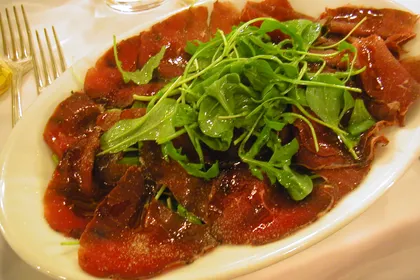 InvestigationProtected names vs common names: PDO and PGIEuropean protection attaches to a name in full, and that name is almost always longer than the one used at…
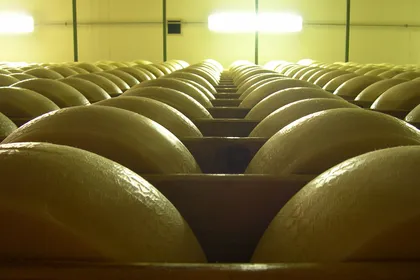 ExplainerGrana Padano vs Parmigiano ReggianoSame family, same rennet, raw milk in both. The real differences are written in the rules: the zone, silage…
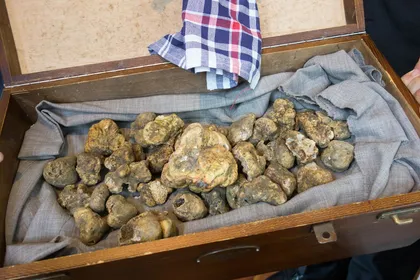 InvestigationWhy are white truffles so expensive?In early November 2025 the Alba truffle bourse quoted white truffles at €5,000 a kilo, about €2,270 a pound.
Frequently asked questions
Why can't I find spaghetti bolognese in Bologna?
Because it is not a Bolognese dish. The local sauce, ragù, is served with tagliatelle (a wide, rough egg ribbon that holds it) or layered into lasagne. Spaghetti is too smooth and thin; a serious trattoria in Bologna will not have it on the menu.
What is the difference between tortellini and tortelloni?
Tortellini are small, filled with pork loin, mortadella, prosciutto and parmesan, and served floating in capon broth. Tortelloni are several times larger, filled with ricotta and parsley, and dressed with butter and sage or with ragù. Different dish, different season, different price.
How much should I pay for a pasta course in Bologna?
Ten to fifteen euros for tagliatelle or tortelloni in a proper trattoria, a few euros more for tortellini in broth because the labour is higher. A full dinner with wine and a cover charge runs 30 to 45 euros a head. Anything much cheaper in the tourist centre is usually machine-made pasta.
Is Bologna difficult for vegetarians?
More than most Italian cities, since the cuisine is built on pork, beef and meat broth. But ricotta tortelloni with butter and sage, crescentine with squacquerone cheese, friggione, torta di riso and a strong contemporary restaurant scene around Pratello and Bolognina all work well. Ask whether the pasta is dressed with meat broth, as it often is.