What is Balsamic Vinegar?
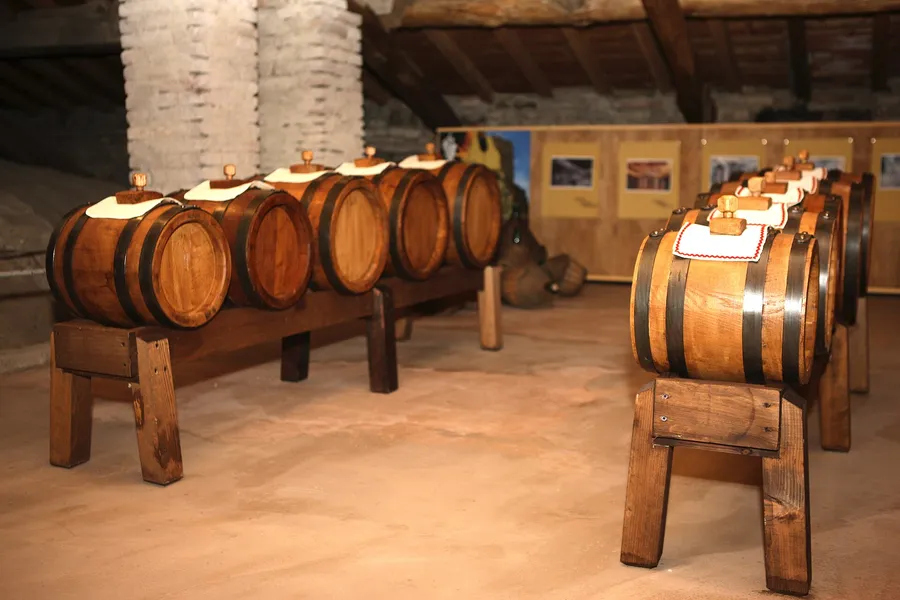
Real balsamic vinegar, Aceto Balsamico Tradizionale, is made from one ingredient in Modena's rules: grape must, cooked over a direct flame for at least 30 minutes at 80 °C or more, then fermented, acidified, and aged a minimum of twelve years in a graduated set of wooden barrels. No wine vinegar, no caramel, no thickeners. It pours like a light syrup and tastes sweet before it tastes sour.
Two protected designations exist, both granted DOP status by the EU in 2000: Aceto Balsamico Tradizionale di Modena and Aceto Balsamico Tradizionale di Reggio Emilia. Modena's rulebook keeps «extra vecchio» for vinegar aged at least twenty-five years, and the consortium calls the twelve-year category «affinato», a word the rulebook does not use. Reggio Emilia grades by tasting score, with lobster, silver and gold labels; gold also requires at least twenty-five years.
What most bottles labelled balsamic abroad contain is a different thing: Aceto Balsamico di Modena IGP, an industrial condiment made by blending cooked or concentrated grape must with wine vinegar, with up to 2% caramel colouring permitted and a minimum ageing requirement of sixty days. It is a perfectly reasonable cooking ingredient. It is not the same product, and the label does very little to tell you so. Products sold as condimento fall outside both schemes: some are made from cooked must alone, others are thickened with sugar and starch. Only the ingredients list separates them.
What does it taste like?
Traditional balsamic is dense and glossy, and the first thing it does is taste sweet: dried fig, prune, cooked cherry, a hint of molasses. The acidity arrives second, as a lift rather than a sting, and the finish runs long on wood and something faintly resinous from the juniper barrel. It should never burn the throat.
At twelve years it is bright and fruit-forward with a clear acetic backbone. At twenty-five it is thicker, darker and quieter, more like a very old fortified wine reduced to syrup: the fruit turns to tar and liquorice and the acidity almost disappears under the concentration.
Supermarket balsamic is easy to identify once you know: the sourness comes first and hits the throat, the sweetness is flat because it comes from must blended with vinegar rather than from years of evaporation, and the finish stops almost immediately.
How to use it
Never heat the traditional stuff. Twelve years of aromatics vanish in about ten seconds over a flame, turning a fifty-euro bottle into ordinary sour caramel. Use it raw, at the end, on a dish already plated and warm, where the residual heat is enough to open it, in quantities measured by the drop.
The canonical uses are all correct: a few drops over shavings of long-aged Parmigiano Reggiano, a drizzle over plain butter risotto, a few drops on a rare steak straight off the pan. Beyond that, roasted onions, grilled asparagus, and the one that surprises people, vanilla ice cream, where milk fat carries the acidity into liquorice territory. The strawberry pairing is real, and works best when the fruit is ripe and sits with the vinegar for ten minutes first.
Everything you actually cook with should be IGP: vinaigrettes, marinades, deglazing onions, reducing with meat juices. A good three-year Invecchiato does all of it for a fraction of the money. Buying Traditional and boiling it is the most common expensive mistake in the category.
How long it keeps
Balsamic vinegar keeps for years, and the traditional kind has already spent twelve to twenty five of them in wood. Store the bottle upright and closed, away from the stove and out of direct light; a dark cupboard at room temperature is right, and the fridge is not, because cold thickens it and mutes the aromatics. Never decant it into plastic or into an oil style pourer with an open spout. A sealed IGP bottle carries a best before date, which is the number to work from.
What changes after opening is slow. The bottle loses a little volume to evaporation, the liquid thickens and darkens, and the volatile aromatics fade first, so a bottle left half full for two years tastes flatter and more caramel heavy than the day it was opened. Sediment or crystals settling out of a traditional bottle is a normal consequence of a concentrated must; pour gently and it stays behind. A 100 millilitre bottle used by the drop lasts most households a year, and the producer is the right person to ask about a specific bottle.
Spot the real thing
Three things share the word balsamic on a shelf abroad, and the label separates them. Aceto Balsamico Tradizionale di Modena DOP, or the Reggio Emilia version, comes in a sealed bottle: for Modena, the consortium's squat 100 millilitre bulb; for Reggio, an inverted tulip with sealing wax. Modena's ingredient list has exactly one line, cooked grape must, and it pours thick enough to coat the back of a spoon and cling. Aceto Balsamico di Modena IGP comes in bottles from 100 millilitres to 5 litres, lists wine vinegar alongside cooked or concentrated must, sometimes with caramel, and runs freely.
The third thing is glaze or crema di balsamico, thickened with sugar and starch and outside both schemes; it is a sauce, not a vinegar. Price makes the split obvious and is the clearest signal: 100 millilitres of Tradizionale at twelve years runs roughly $60 to $110, twenty five years well above that, while IGP sits anywhere between $6 and $40 a bottle. Anything sold as aged twenty five years for fifteen dollars is IGP with a story. Reggio Emilia grades by tasting score, with lobster, silver and gold labels, and gold also requires at least twenty five years.
How to pronounce Balsamic Vinegar
ah-CHEH-toh bal-SAH-mee-koh
Stress on the second syllable of each word. The 'ce' in aceto is soft, like the 'che' in 'cherry', never 'ah-SEE-toh' or 'ah-KEH-toh'. In balsamico the 'c' before 'o' is hard, like a k. The full name of the real thing adds tradizionale: trah-dee-tsyoh-NAH-leh, with 'zi' as 'ts'.
Balsamic Vinegar compared
vsBalsamic Vinegar of Modena IGP (the supermarket bottle)
This is one of the biggest gaps between name and content in Italian food, and it is entirely legal. Traditional Balsamic Vinegar of Modena DOP contains cooked grape must and nothing else, aged a minimum of twelve years, and sells for roughly 50 to 200 euro per 100 ml. Balsamic Vinegar of Modena IGP is a blend of grape must and wine vinegar, may include up to 2% caramel colouring, needs only sixty days in wood, and sells for a few euro. The difference on the label is one word, Tradizionale, plus DOP instead of IGP.
| This | Balsamic Vinegar of Modena IGP (the supermarket bottle) | |
|---|---|---|
| Full legal name | Aceto Balsamico Tradizionale di Modena DOP | Aceto Balsamico di Modena IGP |
| Ingredients | Cooked grape must only | Grape must, wine vinegar, optional caramel (E150d) |
| Minimum ageing | 12 years (25 for extra vecchio) | 60 days; 3 years for invecchiato, 5 for Riserva |
| Ageing method | Battery of barrels of different woods, topped up yearly | Wooden vessels, at least 60 days |
| Bottle | Sealed; the consortium uses a single 100 ml bulb | 100 ml to 5 litres, no bulb shape from 100 to 200 ml |
| Minimum density | 1.240, coats a spoon | 1.06, higher for aged categories |
| Price | 50-200 EUR per 100 ml | 3-10 EUR per 250 ml |
| Best use | Raw, by the drop, on finished dishes | Dressings, marinades, reductions, cooking |
vsModena DOP vs Reggio Emilia DOP
Two separate protected designations for what is effectively the same product, made in two adjacent provinces with slightly different rules and different grading systems. Modena is far better known abroad.
| This | Modena DOP vs Reggio Emilia DOP | |
|---|---|---|
| Grading | 12 years minimum, extra vecchio from 25 | Lobster, silver, gold labels by tasting score |
| Bottle shape | Spherical glass; the consortium uses one 100 ml bottle | Inverted tulip with sealing wax |
| Barrel woods | Different woods, not named in the rulebook | Oak, chestnut, cherry, juniper, mulberry, ash, black locust |
| Minimum acidity | 4.5 g per 100 g | 5 g per 100 ml |
vsBalsamic glaze (glassa)
The thick sauce in a squeeze bottle has no compositional standard: in an Italian test of 11 balsamic creams in 2024, the usual thickeners were corn starch, xanthan and guar, often with glucose syrup and sugar. It may contain IGP balsamic, but it cannot be sold under that name, and it exists to hold a shape on a plate. Treating it as a cheaper version of aged balsamic is a category error, not a compromise.
| This | Balsamic glaze (glassa) | |
|---|---|---|
| Base | Cooked must, evaporated over years | Vinegar or must, plus thickeners and sugar |
| Thickness | From concentration | From thickeners |
| Purpose | Flavour | Decoration |
| Price | 50-200 EUR per 100 ml | 3-6 EUR per 200 ml |
Balsamic Vinegar substitutes
- Saba (or vin cotto)
Cooked grape must that was never fermented: sweet, thick, non-acidic, made in Emilia, Marche and Sardinia. It is the raw material of balsamic minus the vinegar. Add a few drops of good wine vinegar to bring the acidity back.
1:1, plus 1 teaspoon wine vinegar per 3 tablespoons saba - Aged Pedro Ximénez sherry vinegar
The closest widely available match: sweet, dark, raisiny, genuinely wood-aged. More raisin than prune, and roughly a third of the price.
1:1 - Reduced IGP balsamic
Simmer a decent Invecchiato IGP down to half its volume and cool it. You get thickness and concentration, not barrel complexity. Never do this with anything marked Tradizionale.
2 parts IGP reduced down to 1 part - Pomegranate molasses
Similar density and the same sweet-sour architecture, with a sharper fruit edge and no wood. Works well on roasted vegetables and grilled meat, badly on Parmigiano or ice cream.
1:1, cut with a little water if it tastes too aggressive
Where to buy it
In the US, Traditional DOP is stocked by Eataly, Gustiamo, Formaggio Kitchen and Zingerman's: expect 60 to 90 dollars for a twelve-year Affinato and 120 to 250 dollars for a twenty-five-year Extravecchio, both in 100 ml. In the UK, Italian delicatessens and specialists such as Vorrei and Natoora carry it at 55 to 80 pounds for the twelve-year and 110 to 200 for the twenty-five.
Check three things before paying: the bottle must be sealed (for Modena, the consortium's 100 ml bulb), the word Tradizionale must appear in the name, and on a Modena bottle the ingredients must read as cooked grape must alone. Anything labelled Balsamic Vinegar of Modena IGP is IGP, whatever the price.
For daily use, IGP marked invecchiato has spent at least three years in wood, and Riserva at least five. Condimento with cooked must as the only ingredient is another option, at roughly 30 to 70 dollars. Treat flavoured balsamics and glazes as sauces, not vinegars.
Where to eat it in Italy
Modena is the obvious base. Dozens of family acetaie in the countryside around the city open for booked visits, usually on farms that also make Lambrusco and Parmigiano, and the standard tour ends with a side-by-side tasting of twelve-year and twenty-five-year, the fastest education available on what you are buying.
Spilamberto, twenty minutes from Modena, has the Museo del Balsamico Tradizionale and hosts the Palio di San Giovanni every June, when family batteries compete before a panel from the Consorteria, the local confraternity founded there in 1967. Modena keeps a municipal acetaia in the attic of its town hall, open for booked visits, and in the province of Reggio Emilia the first municipal acetaia opened in 2008 at Villa Tarabini in Albinea.
At the table, trattorie along the Via Emilia serve it the local way: on Parmigiano before the meal, on gnocco fritto and tigelle, on ice cream at the end. In many Modena restaurants the bottle arrives with a dropper.
Recipes with it
Further reading
Frequently asked questions
What is the difference between DOP and IGP balsamic vinegar?
DOP balsamic, correctly called Aceto Balsamico Tradizionale, is cooked grape must aged at least twelve years in a battery of barrels, sold in small sealed bottles for roughly 50 to 200 euro. IGP balsamic, called Aceto Balsamico di Modena, blends grape must with wine vinegar, may contain up to 2% caramel colouring, and needs only sixty days of ageing. The names differ by a single word.
Why is real balsamic vinegar so expensive?
A battery of barrels yields only a few litres a year after at least twelve years of ageing, loses volume to evaporation every summer, and must pass a tasting panel before it can be bottled at all.
Can you cook with balsamic vinegar?
With IGP balsamic, yes: it was made for dressings, marinades and reductions. With Traditional DOP, no: heat destroys in seconds the aromatics that took twelve years to build. Use the expensive one raw, by the drop, on finished dishes.
How do you know if balsamic vinegar is real?
A sealed bottle, the word Tradizionale in the name, the DOP mark and, on a Modena bottle, a single ingredient: cooked grape must. If wine vinegar or caramel appears in the ingredients, it is IGP balsamic or a condiment.
Sources
Where to check what you just read.
- 1
L'atto del 2000 che registra come DOP due denominazioni distinte, «Aceto balsamico tradizionale di Modena» e «di Reggio Emilia», nella categoria aceti diversi dagli aceti di vino.
- 2
La registrazione dell'Aceto Balsamico di Modena IGP, con la discussione sulla genericità dei termini e il divieto di aggiungere al nome aggettivi come «extra», «fine», «riserva» o «classico».
- 3Consortium · interested partyConsorzio Tutela Aceto Balsamico Tradizionale di Modena DOP
Le classi di invecchiamento, il sistema del baliatico sulle botti certificate e la bottiglia sigillata: come si riconosce il Tradizionale a scaffale.
- 4Consortium · interested partyConsorzio Tutela Aceto Balsamico di Modena IGP
L'altro consorzio, quello dell'IGP: area di produzione limitata alle province di Modena e Reggio Emilia e aziende associate.
- 5InstitutionMasaf, elenco dei disciplinari DOP e IGP
I disciplinari delle due DOP e dell'IGP: vitigni, cottura del mosto, invecchiamento, densità, acidità e bottiglie.
- 6Consortium · interested partyConsorzio dell'Aceto Balsamico Tradizionale di Modena, la bottiglia e il sigillo
La bottiglia da 100 ml disegnata da Giugiaro nel 1987 e le lettere sul sigillo, secondo il consorzio.
- 7
La prima acetaia comunale della provincia di Reggio Emilia, aperta nel 2008 con il consorzio reggiano.
Related foods
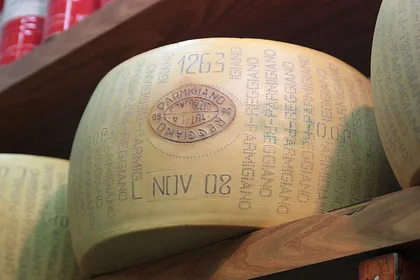 CheeseParmigiano ReggianoThree ingredients and no additives of any kind are permitted: raw cow's milk, salt and calf rennet, from five…
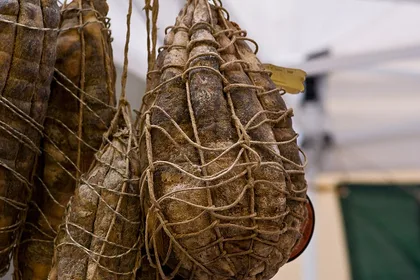 Cured meatsCulatello di ZibelloCulatello di Zibello is the heart muscle of a pork leg, boned out, sewn into a pig's bladder, tied by hand…
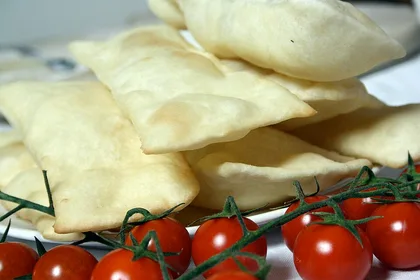 Pasta and breadGnocco FrittoEat it within a minute of the pan, because once it deflates it is over: a diamond of leavened dough fried in…
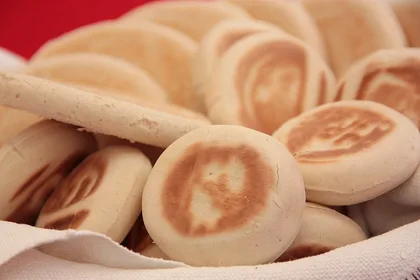 Pasta and breadTigelleTigelle are small round breads from the Modena Apennines, cooked between two hot plates and served warm…
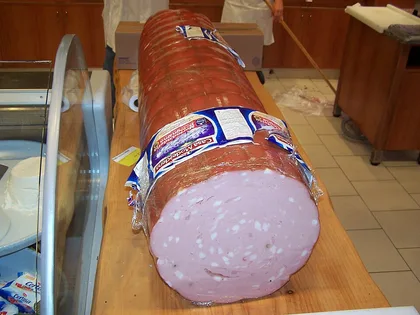 Cured meatsMortadellaThe white cubes are not just any fat: they are jowl, the firmest part of the pig, and they stay whole…Cured meatsPancettaPancetta is Italian cured pork belly: salt, pepper and warm spices, dried for months, never smoked.
 Pasta and breadTortelliniTortellini are tiny ring-shaped egg pasta parcels filled with pork, prosciutto, mortadella and Parmigiano…
 CheeseGrana PadanoNine months is the floor the specification sets before a wheel may carry the name.