What is Pancetta?
Pancetta is pork belly, the same cut as bacon, dry-cured with salt, black peppercorns and spices, then air-dried. It is not smoked and it is not sugar-cured, which changes both how it tastes and how it behaves in a pan.
It comes in two forms. Pancetta tesa stays flat, is cured as a slab and is the cooking version: cut into cubes or thick strips and rendered in a pan. Pancetta arrotolata is trimmed, rolled tightly, sewn into a casing and hand-tied, then aged; it is sliced paper-thin and eaten raw like any other salume, with the spiral of lean and fat as its signature.
There is also pancetta coppata, with a length of neck muscle rolled into the centre, and lightly smoked versions from the Alpine valleys, the one Italian exception to the no-smoke rule.
The protected northern version is Pancetta Piacentina DOP, granted in 1996: rolled, aged at least four months, weighing four to eight kilos. Calabria has its own DOP for a flat, chilli-rubbed pancetta, which is excellent and a completely different animal.
What does it taste like?
Clean, salty, sweetly porky, and crucially without the smoke and sugar that define American bacon. What you taste is pork fat and salt, with a background of black pepper, nutmeg, clove and cinnamon from the cure.
Rendered, it turns golden and gently nutty. It gives off a lot of clear fat and the meat goes tender rather than brittle, so it never quite reaches bacon's shatter-crisp texture: pancetta softens and browns rather than snapping.
Rolled pancetta eaten raw is different again: silky, mild, faintly sweet, closer to a very fatty prosciutto than to anything cooked. The spice notes come forward much more strongly when it is not heated.
The practical upshot is that pancetta disappears into a dish where bacon announces itself. In a ragù or a soffritto it adds depth without telling you what it is.
How to use it
For cooking, buy pancetta tesa, the flat kind, in a slab and cut it yourself into cubes or strips about half a centimetre thick. Pre-cubed supermarket packs are usually wet-cured, release water rather than fat, and steam instead of browning.
Start it in a cold, dry pan with no added oil and bring it up over medium-low heat. The fat needs six to eight minutes to render properly. That rendered fat is the foundation of the dish: never pour it off.
Pancetta is the base of most Italian soffritti alongside onion, carrot and celery, and it belongs in ragù bolognese, pasta e fagioli, lentil and bean soups, and braised greens. Rolled pancetta, sliced thin, is eaten raw with bread and cheese, or wrapped around roasts, fish fillets and vegetables, where it bastes the food as it melts.
For carbonara and amatriciana, guanciale is the traditional choice and pancetta is the fallback. If pancetta is what you have, use unsmoked, cut it thicker than feels right, and render it gently, because it holds less fat than guanciale and the sauce comes out leaner.
One thing pancetta will not do is get bacon-crisp. If a recipe needs shattering crunch, pancetta is the wrong tool.
How long it keeps
A vacuum sealed slab keeps three to four months in the coldest part of the fridge; the date printed on the pack is the one to go by. Once opened or cut, wrap the piece in butcher paper, waxed paper or a clean cloth and use it within three or four weeks. Never put cling film directly against the surface: it traps moisture and the fat sweats. Thin slices of the rolled type have far more surface exposed to air and change fastest, within two or three days.
An open piece changes predictably: the lean dries and firms, the cut face darkens, and the fat oxidises from chalk white towards yellow with a flat, tallowy smell. A surface bloom can appear on aged pieces; what it is and what it means is a question for the producer or the shop that sold it. Cubes freeze well, and that is the practical way to keep pancetta at home: cut a whole slab, freeze it in 100 gram portions, and take out only what the recipe needs. Six months in the freezer, straight into the pan from frozen.
Spot the real thing
The confusion abroad is almost always bacon. Pancetta is cured and air dried, not smoked, and it is sold as a flat slab (tesa) or a tight rolled log (arrotolata) rather than in rashers. A cut face shows clean alternating bands of red lean and chalk white fat; an amber or yellow tint in the fat means it has oxidised in air and light. On a rolled piece the spiral should be closed on itself, with no air pockets between the turns. The smell is sweet and spiced, nutmeg and clove over cured meat, with no smoke.
Read the label the way an Italian deli would: pork belly, salt, pepper and spices is the tradition, while dextrose, maple and smoke flavouring are bacon conventions. For the protected version look for the words Pancetta Piacentina DOP and a producer number. Guanciale is a different cut, jowl, showing one solid block of fat with a thin lean seam; lardo is back fat with no lean at all. Price separates the tiers honestly: domestic pancetta at $10 to $18 per pound is the everyday grade, imported DOP $22 to $35.
How to pronounce Pancetta
pan-CHEH-tah
Three syllables, stress on the middle one. The key sound is the 'ce', which in Italian before an 'e' is always a soft 'ch' as in 'church', so 'pan-CHEH-tah', never 'pan-SET-uh'. The double 't' is held slightly, and the final 'a' is a full open 'ah'. The most common English errors are 'pan-SET-a' (s instead of ch), and stressing the first syllable. If it helps, it rhymes roughly with the second half of 'bruschetta', which people also mispronounce, but in the opposite direction.
Pancetta compared
vsBacon
Same cut of the pig, different curing philosophy. American bacon is cured with salt and sugar and then smoked, which makes it sweet, smoky and assertive. Pancetta is cured with salt and warm spices and air-dried, which makes it clean, salty and neutral enough to disappear into a sauce. Bacon crisps to a shatter; pancetta browns and stays tender. You can swap them, but the dish changes character completely: a carbonara made with bacon tastes distinctly of smoke.
| This | Bacon | |
|---|---|---|
| Cut | Pork belly | Pork belly (US) or loin/back (UK) |
| Smoked | No (except Alpine versions) | Yes, almost always |
| Sugar in the cure | None traditionally | Standard: brown sugar or maple |
| Cure type | Dry-cured, aged 2-6 months | Wet-brined, often under a week |
| Eaten raw | Yes, when rolled and aged | No, must be cooked |
| In the pan | Browns and softens, lots of clear fat | Crisps and shatters, fat is smoky |
| Flavour role | Background depth | Foreground flavour |
| Price (US) | $10-18 per lb | $6-10 per lb |
vsGuanciale
The comparison that decides how your carbonara turns out. Guanciale is jowl, pancetta is belly. Jowl fat is denser and melts at a higher temperature, so guanciale crisps at the edges and gives a richer, more intense rendered fat; pancetta is leaner, milder and wilts rather than crisps. Roman pasta recipes specify guanciale for a reason, and pancetta is the acceptable substitute rather than the equal.
| This | Guanciale | |
|---|---|---|
| Cut | Belly | Jowl and cheek |
| Fat | Softer, renders quickly, wilts | Dense, renders slowly, crisps |
| Flavour | Milder, sweeter, spiced | Deeper, gamier, more peppery |
| Lean-to-fat | More lean, in defined layers | Mostly fat, one lean seam |
| Availability | Widely stocked | Specialist shops and online |
| In carbonara | Acceptable substitute | Traditional and correct |
| Price (US) | $10-18 per lb | $18-30 per lb |
vsProsciutto
Both are Italian, both are dry-cured, both are sliced thin, and people substitute one for the other constantly, usually wrongly. Prosciutto is the hind leg: lean, salty, complex, aged one to three years, and meant to be eaten raw. Pancetta is the belly: fatty, milder, aged a few months, and mostly meant to be cooked. Prosciutto in a soffritto turns leathery and gives you almost no fat; pancetta on a melon plate is greasy.
| This | Prosciutto | |
|---|---|---|
| Cut | Belly | Hind leg |
| Fat content | High, 50-60% | Low: lean muscle with a fat cap |
| Ageing | 2-6 months | 12-36 months |
| Primary use | Cooked: rendered into dishes | Raw: sliced and eaten as is |
| Flavour | Mild, sweet, spiced | Salty, nutty, complex |
| Renders fat | Plenty | Almost none |
| Price (US) | $10-18 per lb | $25-50 per lb |
Pancetta substitutes
- Unsmoked bacon (green bacon / streaky)
The closest everyday match, and easy to find in the UK where unsmoked back and streaky bacon are standard. In the US ask for 'green bacon' or check for unsmoked slab bacon at a butcher. Cut it thicker than a rasher, about half a centimetre, and render it in a cold dry pan.
1:1 - Guanciale
An upgrade rather than a substitute in Roman pasta, but a legitimate swap anywhere pancetta is being rendered. Use slightly less by weight, since it carries more fat and will make the dish richer.
0.8:1 by weight - Salt pork
Widely available in American supermarkets and structurally very close: cured belly, unsmoked. It is much saltier, so blanch it for two minutes in boiling water first and hold back the salt elsewhere in the dish.
1:1, blanched first - Speck
Alto Adige's smoked, dry-cured ham. Leaner than pancetta and definitely smoky, so it works where the smoke is welcome (bean soups, cabbage, potatoes) and less well in a delicate tomato sauce. Add a little olive oil to compensate for the missing fat.
1:1, plus 1 tbsp olive oil per 100g - Halal: beef bacon or smoked turkey
Halal-certified beef bacon renders a usable amount of fat and browns similarly, though it is much leaner and slightly livery. Smoked turkey breast works for soups and greens but gives you almost no fat, so add two tablespoons of olive oil per 100g to build the base a soffritto needs.
1:1, plus added fat - Vegetarian: smoked mushrooms or coconut-oil tempeh lardons
For the savoury, fatty base rather than the meat itself: dice king oyster or shiitake mushrooms small, sear hard in olive oil with smoked paprika and a pinch of salt until deeply browned. Tempeh cut into lardons and fried in coconut oil gets closer on texture. Neither replaces the pork; both give a soffritto real depth.
1.5:1 by weight
Where to buy it
In the US, most supermarkets carry pancetta both as cubed packets and as a rolled log at the deli counter, where Boar's Head, Citterio and Volpi are the common names, at $10 to $18 per pound. Trader Joe's cubed pancetta is a solid weeknight option. For better versions, La Quercia in Iowa, Fra' Mani in Berkeley and Creminelli make excellent domestic pancetta, and Eataly, Gustiamo and Formaggio Kitchen import Pancetta Piacentina DOP at $22 to $35 per pound.
In the UK, Waitrose, Ocado, Tesco Finest and Sainsbury's all stock cubed and sliced pancetta at £2 to £5 per 100g. Natoora, Vallebona and Ham & Cheese Co. import the Italian DOP versions at £25 to £40 per kilo. UK shoppers have an advantage here: unsmoked streaky bacon is a supermarket staple and makes a genuinely good substitute.
Buy a slab rather than cubes wherever you can. Pre-cut pancetta dries at the edges and is often brine-cured, which you notice immediately in the pan: it leaks water and refuses to brown. On the label, look for a short ingredient list and no dextrose or syrups; those are bacon conventions, not Italian ones.
Where to eat it in Italy
Piacenza and its valleys (Val d'Arda, Val Tidone, Val Nure) are the place to go. Castell'Arquato and Ziano Piacentino are the easiest bases, with delis working directly with the Consorzio Salumi DOP Piacentini producers and osterie serving the local trio of coppa, pancetta and salame with torta fritta, the puffed fried dough that goes with all three.
In Piacenza itself, the shops in the old centre and the trattorie around Piazza Cavalli are the reference points, and pisarei e fasö, small dumplings with beans and pancetta, is the dish to order.
In Lombardia, the crotti around Chiavenna in Valtellina serve the local lightly smoked pancetta alongside pizzoccheri and bresaola. Crotti are natural cellars ventilated by constant air currents through the rock, a completely different ageing environment, and worth the detour.
In Milan, the historic counters at the Mercato Comunale in Piazza Wagner and the delis around Porta Romana handle both the Piacentina and the Alpine styles well.
Recipes with it
Further reading
Frequently asked questions
What is pancetta?
Italian cured pork belly. It is dry-cured with salt, black pepper and warm spices like nutmeg and clove, then air-dried for two to six months. Unlike bacon, it is not smoked and not cured with sugar.
How do you pronounce pancetta?
pan-CHEH-tah, with the stress on the middle syllable. The 'ce' is a soft 'ch' as in 'church': 'pan-SET-uh' is the mistake almost everyone makes.
What is the difference between pancetta and bacon?
The same cut, cured differently. Bacon is brined with salt and sugar and then smoked; pancetta is dry-cured with salt and spices and air-dried, with no smoke and no sugar. Bacon crisps and dominates a dish; pancetta browns, stays tender and adds background depth.
Can I use pancetta instead of guanciale in carbonara?
Yes, and it is the standard fallback. It will not be the same: belly fat renders faster and does not crisp at the edges the way jowl fat does, so the sauce is leaner and milder. Use unsmoked pancetta, cut it thick, and render it gently.
Do you need to cook pancetta?
Flat pancetta (tesa) is meant to be cooked. Rolled pancetta (arrotolata) is fully cured and aged, so it is safe to eat raw, sliced paper-thin like prosciutto, and that is how Italians usually serve it.
Sources
Where to check what you just read.
- 1
L'atto che protegge «Pancetta Piacentina» come DOP: mostra che la tutela riguarda quel nome composto, mentre «pancetta» resta un termine generico e libero.
- 2
La seconda pancetta a denominazione protetta in Italia: utile per verificare che le DOP sulla pancetta sono due e distinte, con zone e metodi diversi.
- 3
I PDF dei disciplinari delle due pancette DOP, dove si controllano peso del pezzo, salagione a secco, spezie ammesse e stagionatura minima.
- 4Consortium · interested partyConsorzio di Tutela Salumi DOP Piacentini
L'ente riconosciuto per Coppa, Pancetta e Salame Piacentino: qui si trovano i produttori autorizzati e la descrizione della salagione a secco che il disciplinare impone.
Related foods
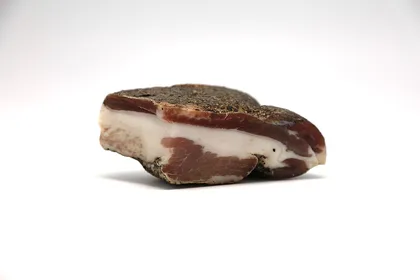 Cured meatsGuancialeGuanciale is cured pork jowl: unsmoked, rubbed with salt and pepper, aged for one to three months.
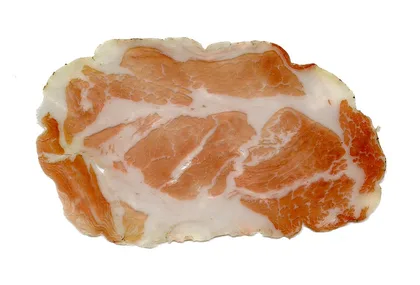 Cured meatsCoppa PiacentinaCoppa Piacentina is dry-cured pork neck from the province of Piacenza, seasoned with cloves, cinnamon and…
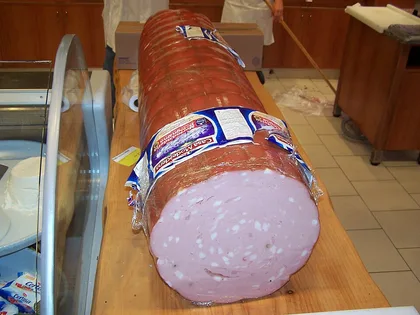 Cured meatsMortadellaThe white cubes are not just any fat: they are jowl, the firmest part of the pig, and they stay whole…
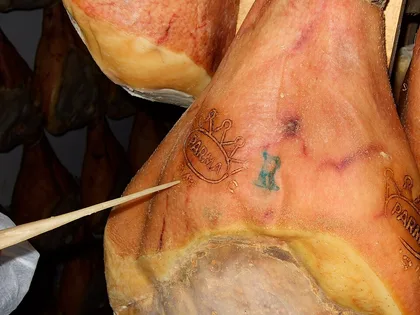 Cured meatsProsciutto di ParmaProsciutto di Parma DOP is Italian ham made from three things only: pork, sea salt and at least 400 days.
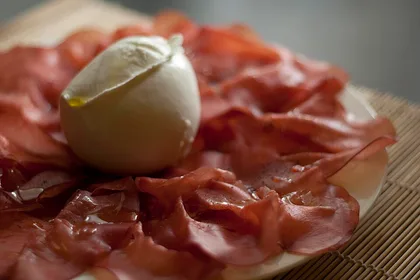 Cured meatsBresaolaOne lean muscle from the hind leg, dry-cured with salt, pepper, juniper and cinnamon, then left in the dry…
 Cured meatsSalsicciaCoarsely ground pork, salt, pepper, wine and usually garlic, packed into natural hog casing and sold raw.Cured meatsSalame MilanoSalame Milano is the salami most of the world pictures when it hears the word: large diameter, mild, evenly…
 Cured meatsCotechinoCotechino is a large fresh pork sausage from Emilia-Romagna, made with pork meat, fat and rind, and always…