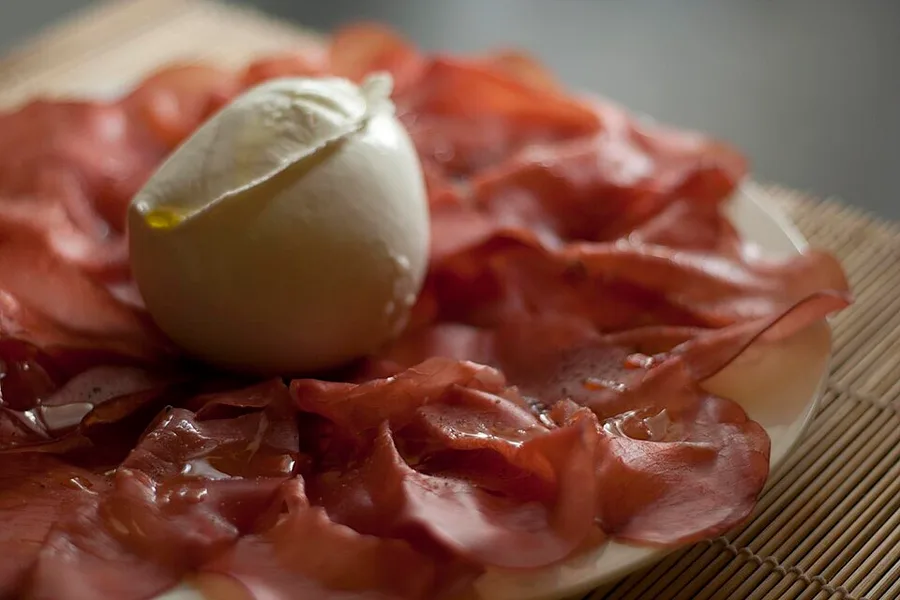
What is Bresaola?
Bresaola is cured raw beef: never cooked, never smoked. A whole muscle from the animal's hind leg is trimmed of every scrap of fat, rubbed with salt and spices, packed into a casing and hung to dry until it has lost around 40% of its weight. What comes out is deep ruby red, firm, and lean enough that it is almost always sliced paper-thin by machine rather than by hand.
The protected version is Bresaola della Valtellina IGP, granted in 1996 and made in the province of Sondrio, in the Alps north of Lake Como. The rules allow five specific cuts, all from the hind leg: fesa (top round), punta d'anca (the tip of the hip, and the prized one), sottofesa (bottom round), magatello (eye of round) and sottosso, from cattle between 18 months and four years old.
One thing is worth knowing before you buy. IGP status protects where and how the meat is cured, not where the animal was raised. Most bresaola is made from imported beef, frequently South American zebu, which is exceptionally lean and suits the process for exactly that reason, or Northern European cattle. The valley never had a herd large enough to supply the roughly twelve thousand tonnes made each year, and the rules say so openly rather than hiding it.
What does it taste like?
Clean, mineral and unmistakably beefy, with none of the sweetness of pork charcuterie. Salt lands first, the spices sit underneath: juniper and cinnamon read as a warm background rather than as identifiable flavours, and the finish is faintly bitter and metallic in the way that good rare beef is.
The texture is the surprise. Cut thin enough, it is silky and dissolves rather than chews, which is precisely why thickness matters: a slice cut like ham turns rubbery and tastes of nothing but salt. Straight from the fridge it tastes flat; twenty minutes at room temperature is what releases the aroma.
If you want a reference point, it is closer to a very good beef jerky that has been kept supple than to prosciutto, and closer to raw beef carpaccio than to pastrami. It is also drier and saltier than either, which is why it is almost always dressed with oil and acid rather than eaten on its own.
How to use it
Take it out of the fridge 20 to 30 minutes before serving. Separate the slices while they are still cold, lay them flat on a plate without overlapping, and let them come up to room temperature. Cold bresaola tastes of salt and nothing else; warm it slightly and the spice and the beef arrive.
The standard dressing is rocket, shavings of grana or Parmigiano, lemon juice and good olive oil, added at the last possible second. Lemon left sitting on the meat cures the surface a second time and turns it grey within minutes. In the Valtellina itself the dressing is usually nothing more than olive oil, black pepper and rye bread on the side.
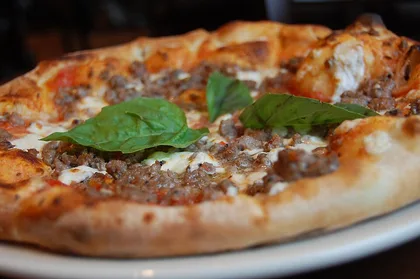
Beyond the plate, three reliable moves. Roll a slice around a teaspoon of soft goat's cheese with chives for the fastest antipasto there is. Drape it raw over a pizza or focaccia straight from the oven, with burrata, so it warms without cooking. Tear it over a risotto or a squash soup for salt and savour with no added fat. It also stands in for prosciutto with melon or figs, though the result is sharper and less sweet.
What you should not do is cook it properly. Thirty seconds in a hot pan and it goes from silky to leather, because there is no fat there to protect it.
How long it keeps
A whole vacuum-packed piece keeps at 0 to 4 C to the date the producer prints on the pack, and that date is the reference. Once the vacuum is opened, the lean muscle has almost no fat to shield it and the surface begins to dry immediately. Wrap the cut end in greaseproof paper or a clean cloth, never in cling film against the meat, and keep it in the coldest part of the fridge. Over one to two weeks the piece hardens from the cut face inward, the colour there deepens toward brown, and the salt concentrates as water leaves.
Pre-sliced packs behave faster still. Air turns the exposed slices from ruby to grey-brown within hours, most visibly at the rims, and the pack itself will carry an instruction from the maker about the window after opening. Slices left uncovered curl and stiffen. Freezing is not the usual route: at minus 18 C the fibres take on ice damage and the slices weep and go floury on thawing, which shows in a product this lean.
Spot the real thing
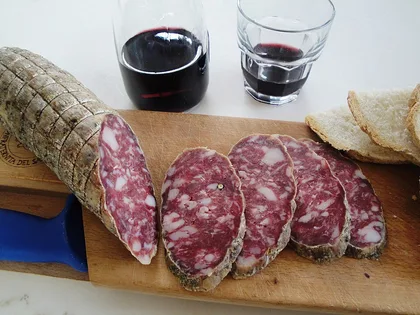
The label to look for is Bresaola della Valtellina IGP, with the European mark and the consortium name, since the protected product is air-dried in the Valtellina valley whatever the origin of the beef. Cut, it is one clean lean muscle: deep ruby to garnet, matte rather than glossy, with no marbling running through it and at most a thin pale rim of trimmed fat at the edge. The slices should be almost transparent when held up, and the smell is dry and faintly spiced, with pepper and juniper behind the beef.
At a counter abroad it sits next to several lookalikes. Swiss bunderfleisch is pressed into a rectangle and dries harder, so the slices come out square. Trentino carne salada is salted and kept moist, never air-dried. American dried or chipped beef is a different cure and often smoked, and pastrami is brined and steamed. Plain beef bresaola with no IGP mark can be made anywhere. The price is high on purpose, because a whole muscle loses a great deal of weight in drying.
How to pronounce Bresaola
breh-zah-OH-lah
Four syllables, stress on the third, on OH. The tricky part is the single s between two vowels, which in northern Italian is voiced: it sounds like the z in 'zoo', not the s in 'sun'. So breh-ZAH, never breh-SAH. Two English mistakes are common. The first is 'breh-SOW-la', rhyming the middle with 'cow', which happens because English readers expect the ao to behave like a diphthong; in Italian the a and the o belong to separate syllables. The second is 'bruh-SHOH-la', which turns the s into an sh and lands you on braciola, a completely different Neapolitan dish of rolled stuffed meat. The name comes from the dialect word brasa, meaning embers: the curing rooms were kept warm and dry with braziers.
Bresaola compared
vsProsciutto crudo
The two are cousins in method and opposites in everything else. Bresaola is beef, cured with spices and ready in weeks; prosciutto is pork, cured with nothing but salt and left for a year or more. If you swap one for the other in a dish, you swap lean and mineral for fatty and sweet.
| This | Prosciutto crudo | |
|---|---|---|
| Animal | Beef, hind leg, boneless single muscle | Pig, whole hind leg, bone in |
| Cure | Dry salt plus pepper, cinnamon, cloves, bay, juniper | Sea salt only: spices are not permitted |
| Ageing | 4 to 8 weeks | 12 to 36 months |
| Fat | About 2 g per 100 g, at most a 2 mm rim | 10 to 18 g per 100 g, with the fat cap left on |
| Protein | 32-34 g per 100 g | About 26 g per 100 g |
| Colour | Even ruby red | Pink to rose, marbled with white fat |
| Flavour | Lean, mineral, faintly spiced | Sweet, nutty, buttery |
| Home | Valtellina, province of Sondrio | Parma and San Daniele |
vsPastrami
Both are cured beef and that is where the similarity stops. Bresaola is dry-cured and air-dried raw for weeks; pastrami is brined, coated in spice, smoked and then steamed until soft. One is a thin cold slice on a plate, the other is a hot pile on rye.
| This | Pastrami | |
|---|---|---|
| Cut | Lean hind leg (round) | Navel end of the brisket, or brisket |
| Cure | Dry salt and spices, 10-15 days | Wet brine, then a pepper and coriander crust |
| Heat | None: air-dried raw | Smoked, then steamed for hours |
| Total process | 6 to 10 weeks | Under a week |
| Fat | About 2 g per 100 g | Roughly 12-20 g per 100 g |
| Slicing | Paper-thin, by machine | Thick, by hand |
| Served | Room temperature, dressed with oil and lemon | Hot, with mustard, between bread |
| Origin | Valtellina, IGP since 1996 | Romanian pastrama, remade in New York delis |
vsBiltong
The world's other famous air-dried beef, arrived at independently. Biltong is cut into strips before drying and acidified with vinegar; bresaola is cured whole and never sees acid. The result is a chewy snack versus a supple slice you eat with a fork.
| This | Biltong | |
|---|---|---|
| Form | Whole muscle cured intact, sliced after | Cut into strips first, dried as strips |
| Cure | Salt, pepper, juniper, cinnamon, cloves | Vinegar, salt, coriander seed, often sugar |
| Drying | 4 to 8 weeks at 12-14 C | 4 days to 2 weeks, warm and airy |
| Weight lost | About 40% | 50% or more for dry biltong |
| Texture | Silky, supple, sliced transparently thin | Chewy and dense, cut into chunks or shavings |
| Dominant flavour | Mineral beef, warm spice | Tangy vinegar and coriander |
| Eaten as | An antipasto, dressed, on a plate | A snack, from the bag |
| Protection | EU IGP since 1996 | None |
Bresaola substitutes
- Carne salada del Trentino
The closest Italian relative: beef eye of round cured in a wet salt bath with juniper, garlic, bay and rosemary for two to three weeks. Wetter, milder and less concentrated than bresaola, sold raw for slicing thin or searing. Season more aggressively than you would bresaola, since it carries less salt.
1:1 by weight - Cecina de Leon IGP
Spain's version of the same idea, from the same part of the animal, but smoked over oak and aged seven months or more. Far more intense and unmistakably smoky, so use less and drop any other smoked element from the dish.
2 parts cecina for every 3 of bresaola - Bundnerfleisch / Viande des Grisons
The Swiss neighbour, made just over the mountains from the Valtellina: beef leg salted with alpine herbs, pressed into a rectangular block and air-dried for up to four months. Drier and firmer, with square slices instead of round. Ideal when you want the same flavour register in a dish.
1:1 - Prosciutto crudo with the fat trimmed
The easiest swap to find anywhere, and the least faithful: pork instead of beef, sweet and fatty instead of lean and mineral. Trim the fat rim, cut back or omit added salt in the dish, and add extra lemon to compensate for the sweetness.
1:1 - Pastrami, sliced as thin as possible
Works in a salad or a sandwich, not in a carpaccio. It is cooked and smoked, so the dish changes character: skip the black pepper, which is already in the crust, and lean harder on lemon and rocket to cut the richness.
1:1 - Vegetarian and halal notes
For a meat-free plate, roast beetroot until tender, slice it on a mandoline and marinate it in olive oil, lemon, salt and a little thyme: it gives the same ruby colour and an earthy-sweet bite; raw porcini sliced thin under oil and lemon works as well. On halal: bresaola contains no pork, but that does not make it halal by default. The slaughter has to be certified, and some recipes include wine in the cure. A handful of Italian producers run certified halal lines; standard IGP bresaola is not one of them.
Where to buy it
In the UK it is easy: Italian delis, Waitrose, Ocado and online specialists all carry it. Expect roughly 32 to 48 pounds per kilo sliced to order at a counter, or 3.50 to 5.50 pounds for an 80-100 g pack, which works out considerably dearer per kilo than buying it cut fresh.
The US is a different situation. USDA restrictions on beef products from Italy mean genuine Bresaola della Valtellina IGP is rare on American shelves, and most bresaola sold in the States is made domestically by producers such as Volpi, Creminelli and La Quercia, using the same method with American beef. It is good charcuterie and it is not the IGP product. Whole pieces run about 28 to 40 dollars a pound; 2-3 oz sliced packs at 9 to 14 dollars work out closer to 50-70 dollars a pound.
Wherever you buy, look for the full name Bresaola della Valtellina IGP and the blue-and-yellow EU mark if the protected version is what you want. Ask for it sliced as thin as the machine will go, and check that the colour is an even ruby red. Liquid pooling in the bottom of a tray means the meat has wept and the slices will be limp.
Where to eat it in Italy
The province of Sondrio, an hour and a half north of Milan by train, and worth the trip on its own. Chiavenna is the best single stop: its crotti, natural cellars dug into ancient rockfalls and ventilated by a constant current of cool air, serve bresaola alongside sciatt, the buckwheat fritters with melting cheese inside, and the Sagra dei Crotti fills the town every September.
Further up the valley are Sondrio, Chiuro, Teglio and Tirano, where the Bernina Express begins its climb into Switzerland. The default antipasto in any valley trattoria is a board of bresaola, alpine cheeses and sciatt with a glass of Valtellina Superiore, followed by pizzoccheri. Morbegno and Delebio, lower down, are where many of the historic curing houses actually are.
In Milan the historic salumerie and the covered markets will slice punta d'anca to order, and bresaola with rocket and grana appears on essentially every aperitivo menu in the city.
Further reading
 InvestigationProtected names vs common names: PDO and PGIEuropean protection attaches to a name in full, and that name is almost always longer than the one used at…
 InvestigationSan Marzano DOP vs regular San Marzano«San Marzano» is at once the name of a cultivar anyone may plant anywhere, and a protected designation that…
 InvestigationItalian sounding: what is it really worth?Sixty billion, then a hundred, then a hundred and twenty, then forty-two.
Frequently asked questions
What meat is bresaola made from?
Beef, always: a single lean muscle from the hind leg. The IGP rules allow five cuts: fesa, punta d'anca, sottofesa, magatello and sottosso, from cattle aged between 18 months and four years. There is no pork in it. The beef itself is usually imported, often South American zebu, because the protected status covers the curing and not the animal's origin.
How much protein is in bresaola?
About 32 to 34 g per 100 g, with only 2 g of fat and roughly 150 calories, which makes it the leanest cured meat on an Italian deli counter. It is also a solid source of iron, zinc and B12. The catch is salt: around 4 to 5 g per 100 g, so a 50 g portion carries more than 2 g of salt, close to half the recommended daily maximum.
Is bresaola raw or cooked?
Raw. It is preserved by salt, spices and four to eight weeks of air-drying, never by heat and never by smoke, and that last point is what separates it from pastrami. It is meant to be eaten exactly as it comes, and cooking it is a waste, since with almost no fat it dries out in seconds.
Can you eat bresaola when pregnant?
Standard advice in Italy and the UK is no. Cured raw meat can carry toxoplasma and listeria, and bresaola is not heat-treated at any stage. Women with confirmed toxoplasmosis immunity are usually told it is fine; otherwise heating it right through, above 70 C on a pizza for instance, removes the risk. Check with your midwife or doctor.
Is bresaola gluten-free and lactose-free?
Yes in its protected form: the IGP recipe is beef, salt, spices, curing salts and sometimes wine, with no cereals and no dairy. Flavoured and non-IGP versions can contain dextrose or additives worth checking on the label, and a deli slicer that also handles salami containing lactose is a real cross-contamination risk if you are highly sensitive.
Sources
Where to check what you just read.
- 1
Il regolamento del 1° luglio 1996 che registra «Bresaola della Valtellina» come IGP: il nome protetto è quello, non la bresaola in generale.
- 2
Il decreto del 9 giugno 2026 con le modifiche ordinarie al disciplinare: è il testo di riferimento aggiornato su materie prime, concia e stagionatura.
- 3Consortium · interested partyConsorzio Tutela Bresaola della Valtellina
Il consorzio attivo dal 1998: il vincolo della sola provincia di Sondrio per la lavorazione e le aziende autorizzate a usare il marchio.
Related foods
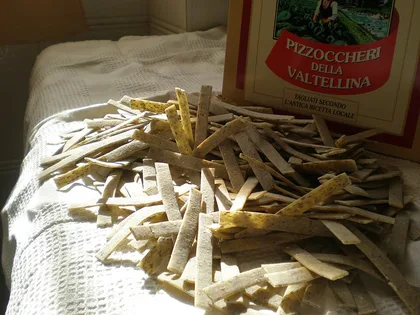 Pasta and breadPizzoccheriBuckwheat rather than wheat, which is where the dark colour and the nutty taste come from.
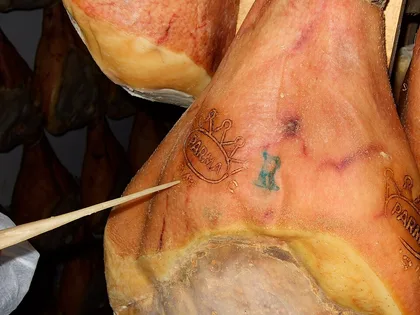 Cured meatsProsciutto di ParmaProsciutto di Parma DOP is Italian ham made from three things only: pork, sea salt and at least 400 days.
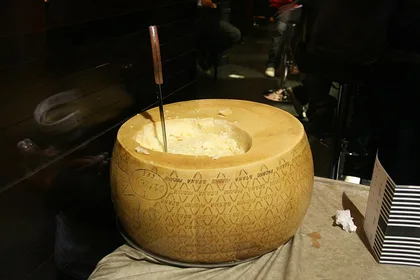 CheeseGrana PadanoNine months is the floor the specification sets before a wheel may carry the name.Cured meatsPancettaPancetta is Italian cured pork belly: salt, pepper and warm spices, dried for months, never smoked.
 Cured meatsSalsicciaCoarsely ground pork, salt, pepper, wine and usually garlic, packed into natural hog casing and sold raw.Cured meatsSalame MilanoSalame Milano is the salami most of the world pictures when it hears the word: large diameter, mild, evenly…Cured meatsSalame d'Oca di MortaraGoose salami from Mortara began in the Jewish communities of the Lombard rice plains as a cured sausage…
 Cured meatsSalame di VarziSalame di Varzi is a DOP salami from the Staffora valley in Lombardy's Oltrepò Pavese.