What is Salame d'Oca di Mortara?
Salame d'oca di Mortara is a sausage made with goose meat, stuffed into the goose's own skin and sewn shut by hand. Two versions exist, and confusing them is the main problem for anyone looking for it.
The historic one is pure goose: no pork, salted and air-dried like a raw salami. It came out of the Jewish communities of the Po plain, where pork was excluded and geese, raised in numbers around the rice paddies, supplied both the meat and the fat that pork normally provides.
The second is the one you will actually find, and the one granted IGP status in 2004: roughly one third goose meat, one third lean pork and one third pork jowl fat, stuffed into goose skin, tied, and then cooked in water or steam for several hours. It is eaten cold or barely warm, in thick slices.
So, plainly: Salame d'Oca di Mortara IGP contains pork and is not kosher. Nor would the all-goose version be kosher by default, since kashrut requires ritual slaughter and rabbinic supervision, which commercial producers in Mortara do not have. Anyone who needs a compliant product should look for explicit certification rather than for this name.
Locally the mixed version is sometimes called ecumenico, ecumenical, because it brings together two food traditions that coexisted in the town for centuries. It is an affectionate and honest name: it describes a compromise, not a continuity.
What does it taste like?
Rich, mild and faintly gamey, much softer than the word salami suggests. The cooked version is closer in texture to a coarse mortadella or a French galantine than to a dry-cured sausage: it slices cleanly, holds together and yields easily, and the goose skin around each slice is chewy and savoury.
Goose fat is the flavour that carries everything. It is more delicate than pork fat, with a clean, buttery quality and a slight nuttiness, and it coats the mouth without feeling heavy. The seasoning stays quiet (salt, pepper, garlic, sometimes nutmeg) because the point is the bird.
The rare raw, all-goose version tastes quite different: drier, darker, more concentrated, with an unmistakable wild note that the pork in the modern recipe softens. If you have eaten cured duck breast, that is the register.
How to use it
Cut the cooked version thick, seven or eight millimetres, and serve it at room temperature or slightly warmed. Straight from the fridge, goose fat is waxy and gives away nothing. Eat the skin: it is the best part.
In Mortara the standard accompaniment is plain: bread, butter and fruit mostarda, or pickled vegetables. On feast days it appears warm next to risotto, since this is rice country, or with mashed potato that soaks up the fat.
Warmed briefly in a pan with a splash of vinegar it becomes a main course, served over braised cabbage or lentils: one minute a side is enough, as it is already cooked.
The rare raw version is handled like any dry salami: thin slices, bread, a glass of red. It is leaner and more assertive, with the wild goose note that pork softens in the modern recipe.
How long it keeps
The cooked salame, whole and vacuum sealed, keeps in the fridge for one to three months depending on the maker. Being cooked rather than cured it has a shorter life than a raw salame, and treating it like one is the standard mistake. Once opened, reckon on ten to fifteen days, wrapped in greaseproof paper in the least cold part of the fridge, with a sheet against the cut face so the exposed fat does not grey over. It freezes for around three months, better whole than sliced, and it wants a slow thaw in the fridge, since a fast one makes the fat weep and leaves the slice grainy.
The raw, cured version behaves like a pork salame. Hung somewhere cool it goes on maturing, in the fridge it wants a tea towel rather than plastic, and once cut into it is usually worked through in three or four weeks. One thing about both: goose fat oxidises faster than pork fat, so a smell of paint or old walnuts on the slice is that change happening, and there the date and the producer are the reference.
Spot the real thing
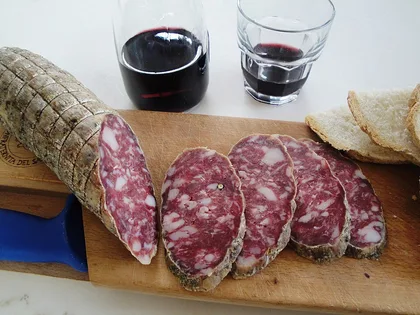
The cooked one wears the goose skin as its casing, with the stitching in plain view and a colour running from beige to gold. It is never a perfect cylinder, because skin follows its own folds. Cut it and the mix is pale pink with distinct white specks of jowl fat, ringed by the darker skin and a thin layer of fat beneath it, and the slice should hold together rather than fall apart, which is what happens when the cooking or pressing was approximate.
Read the ingredient list. Goose meat in first position with declared percentages is what counts, since plenty of things labelled goose salami abroad carry little goose and much pork. The IGP mark is what guarantees the proportion and the production area. The raw version is easy to tell apart: smaller, drier, dark red, without the glossy look of the cooked one. If you need it free of pork, that has to be stated on the label; where it is not, the question goes to the producer. It is not a liver product and has nothing to do with foie gras.
How to pronounce Salame d'Oca di Mortara
sah-LAH-meh DOH-kah dee mor-TAH-rah
Salame ends in a clear 'eh', never 'ay'. D'oca is two syllables, DOH-kah, and simply means 'of goose'; oca on its own is OH-kah. Mortara takes the stress in the middle: mor-TAH-rah.
Salame d'Oca di Mortara compared
vsPork salami
The comparison most people are making without realising it, and it misleads twice. First, the modern Mortara sausage is cooked, not cured, so it behaves like a cooked deli meat: short shelf life, soft slice, refrigerate and eat within days of opening. Second, goose fat is lighter and more delicate than pork fat, so even the mixed version tastes milder than an equivalent pork salami rather than gamier. The one thing that does carry over is that it also contains pork.
| This | Pork salami | |
|---|---|---|
| Meat | Goose plus pork (IGP version) | Pork only |
| Casing | The goose's own skin, hand-sewn | Gut or synthetic casing |
| Process | Cooked for hours, then pressed | Fermented and air-dried |
| Shelf life | Weeks, refrigerated | Months, hung |
| Slice | Thick, 7–8 mm, soft | Thin, firm |
| Served | Cold or lukewarm | Room temperature |
vsCertified kosher and halal salami
If dietary compliance is the reason you are searching, this is the comparison that matters. Certified kosher beef salami and halal beef, lamb or poultry salami are produced under religious supervision, with ritual slaughter and a certifying body named on the pack. Salame d'oca di Mortara has none of that: the IGP recipe includes pork, and even all-goose artisan versions are made in conventional facilities. Historical origin is not certification, and no producer in Mortara claims otherwise.
| This | Certified kosher and halal salami | |
|---|---|---|
| Pork content | Yes, in the IGP version | None |
| Slaughter | Conventional | Ritual, supervised |
| Certification | None: IGP is about origin, not diet | Named certifying authority on pack |
| Availability | Mortara and Italian specialists | Widely, in dedicated shops and online |
| Use case | A regional speciality with a Jewish origin story | An actually compliant product |
vsThe raw, all-goose version
Still made by a handful of Mortara butchers and worth seeking out, because it is the older product. Pure goose meat and goose fat, stuffed into the skin or the neck, salted and air-dried for two to three months. It is leaner, darker, firmer and considerably more expensive, and it contains no pork, though, again, it is not kosher-certified. It is sliced thin like an ordinary salami rather than thick like the cooked one.
| This | The raw, all-goose version | |
|---|---|---|
| Meat | Goose only | Goose and pork |
| Process | Air-dried 2–3 months | Cooked for hours |
| Texture | Firm, dry, dense | Soft, moist, yielding |
| Pork-free | Yes, but not certified | No |
| Price | 45–65 €/kg | 26–38 €/kg |
| Availability | Order ahead from a producer | On the counter in Mortara |
Salame d'Oca di Mortara substitutes
- Certified kosher beef salami
If the reason you wanted goose salami is dietary, this is the honest answer rather than a compromise. Widely available in the US and UK, produced under supervision, and reliable. It tastes nothing like goose, and it does the job goose salami was invented to do.
1:1 - Certified halal beef, lamb or turkey salami
Same logic. Look for a named certifying authority on the pack rather than a generic claim. Turkey versions are the mildest and come closest to the delicacy of goose.
1:1 - Cured or smoked goose breast
Widely made in Germany, Hungary, Poland and northern Italy, and much easier to find than the salami. It is a whole muscle rather than a sausage, so slice it thin, but the goose flavour is purer than in the mixed Mortara version.
1:1 - Duck breast prosciutto or duck salami
Duck is the nearest bird in fat quality and flavour, and duck charcuterie is far more widely produced. Slightly stronger and more mineral than goose, and usually saltier.
1:1 - Mortadella or a fine cooked sausage
For the cooked version specifically, the closest texture substitute: soft, pale, mildly spiced, sliced from a large casing. Pork-based, so no help on the dietary question, but right on the plate.
1:1 - Goose confit or rillettes
Different form, same pleasure. Shredded goose preserved in its own fat, spread on bread with mostarda, delivers the goose-fat richness that makes the Mortara sausage worth eating in the first place.
Where to buy it
In Italy, from butchers in Mortara and across the Lomellina, and from delicatessens in Pavia and Milan. Read the ingredient list: the IGP guarantees roughly a third goose, while generic products sold as 'goose salami' can contain far less. If you need the all-goose version, order it ahead, because it is rarely on the counter.
Expect 26 to 38 euro per kilo at source for the cooked IGP, and 45 to 65 for the raw all-goose one. Whole pieces run 800 g to 1.5 kg.
Outside Italy it is close to unobtainable, partly because poultry products face tighter export rules. US specialist importers occasionally list it at 30 to 45 dollars per pound, UK Italian delicatessens at 42 to 60 pounds per kilo. European buyers are better off ordering direct from Mortara.
Where to eat it in Italy
Mortara itself, where the old butchers in the centre make both versions and every trattoria puts goose salami on the antipasto plate. The Sagra del Salame d'Oca, on the last Sunday of September, fills the town with stalls and a historical procession, and is the easiest day to taste several producers side by side.
Across the Lomellina (Vigevano, Garlasco, Sannazzaro de' Burgondi, Parona) goose appears in every form: the salami, oca in onto preserved in its own fat, cracklings, smoked breast. Vigevano, with Bramante's Piazza Ducale and its Sforza castle, is the obvious sightseeing stop.
The Oltrepò Pavese wine country starts twenty minutes south, and Pavia with its Certosa is half an hour away. Mortara is under an hour from Milan by train or car, and almost no foreign visitors make the trip.
Further reading
Frequently asked questions
Is Salame d'Oca di Mortara kosher?
No. The IGP version, which is what you will normally find, contains a substantial proportion of pork meat and pork fat. Even the all-goose version is not kosher unless it is made with ritual slaughter under rabbinic supervision, which commercial producers in Mortara do not have. If you need a compliant product, look for explicit certification.
Then why is it described as a Jewish product?
Because of where it came from. Goose salami was created as a pork-free alternative in the Jewish communities of the Po plain, which raised geese around the rice fields. The recipe later spread to the whole town and changed: the modern version mixes goose with pork, and lost that defining quality.
Is it cooked or cured?
The IGP version is cooked, boiled or steamed for several hours after being stuffed into the goose skin, and eaten cold or lukewarm in thick slices. A rarer raw, air-dried version made only from goose still exists, and is drier, firmer and more expensive.
How much goose does it actually contain?
In the IGP product, about a third of the mixture is goose meat, with a third lean pork and a third pork jowl fat; the casing is the goose's own skin. Generic 'goose salami' can contain far less, so the percentage on the label is worth reading.
How should it be served?
Thick slices, seven to eight millimetres, at room temperature or gently warmed, with bread and mostarda. Eat the skin. Served fridge-cold, the goose fat stays waxy and most of the aroma never appears.
Related foods
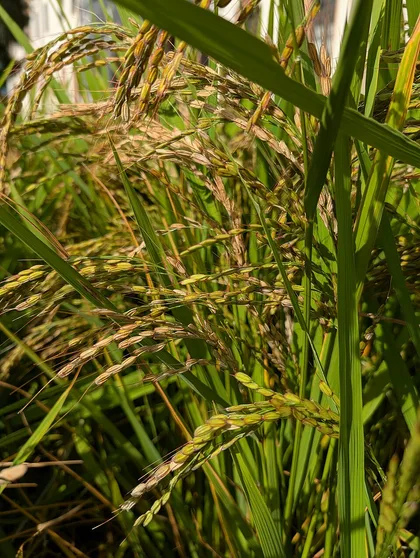 Vegetables and fruitCarnaroli RiceCarnaroli is the risotto rice with the highest amylose content: it sheds enough starch to build a creamy…Cured meatsSalame MilanoSalame Milano is the salami most of the world pictures when it hears the word: large diameter, mild, evenly…
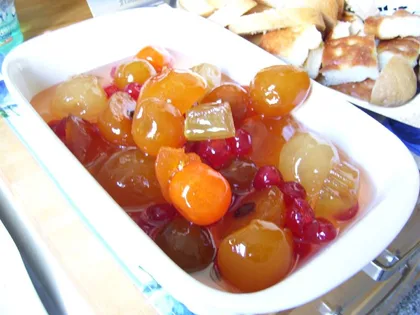 Oil and preservesMostarda di CremonaWhole candied fruit suspended in clear syrup and charged with mustard essence.Cured meatsPancettaPancetta is Italian cured pork belly: salt, pepper and warm spices, dried for months, never smoked.
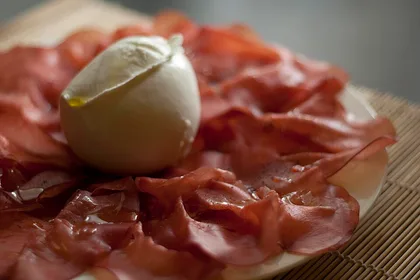 Cured meatsBresaolaOne lean muscle from the hind leg, dry-cured with salt, pepper, juniper and cinnamon, then left in the dry…
 Cured meatsSalsicciaCoarsely ground pork, salt, pepper, wine and usually garlic, packed into natural hog casing and sold raw.
 Cured meatsSalame di VarziSalame di Varzi is a DOP salami from the Staffora valley in Lombardy's Oltrepò Pavese.Cured meatsViolino di CapraViolino di capra is a goat leg cured like a ham in the natural rock cellars of Valchiavenna, in the Italian…