What is Pizzoccheri?
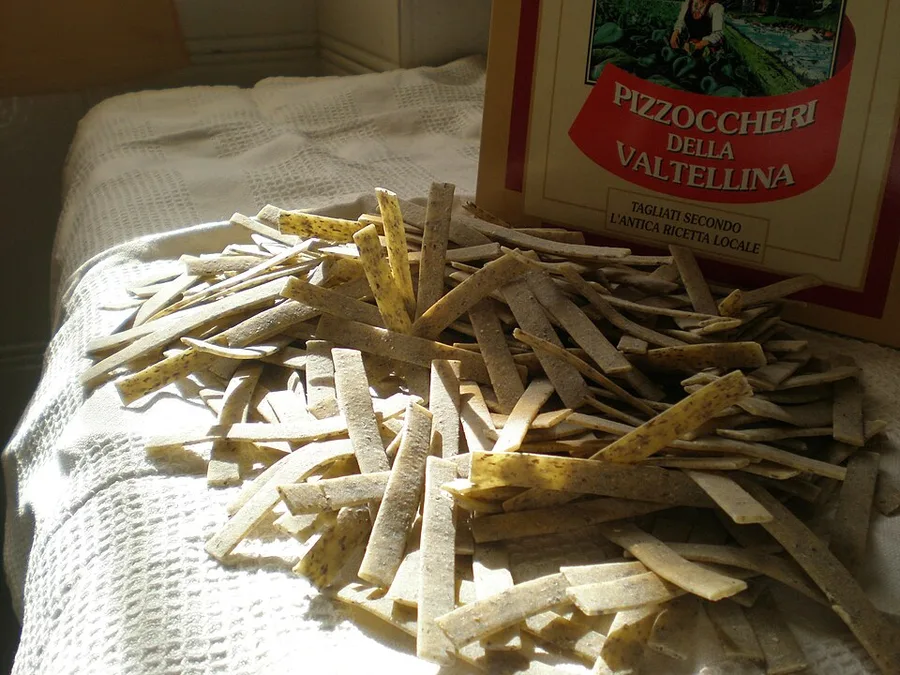
Pizzoccheri are flat buckwheat noodles about 7 cm long, a centimetre wide and a couple of millimetres thick: greyish-brown, rough-surfaced and deliberately rustic. They have carried Protected Geographical Indication status as Pizzoccheri della Valtellina IGP since 2016.
The rules require at least 80% buckwheat flour, with wheat flour making up the rest. Buckwheat has no gluten and will not hold a dough together on its own, so that wheat fraction is structural rather than a shortcut.
The word also names an entirely different dish. Pizzoccheri bianchi di Chiavenna, from a neighbouring valley, are small white gnocchi made with bread and wheat flour. Same word, unrelated plate.
Almost nobody eats pizzoccheri plain. In practice the noodle and the dish that goes with it, pizzoccheri alla valtellinese, are the same subject.
What does it taste like?
Nutty, earthy and faintly bitter, the way soba noodles or a good rye bread are. Buckwheat has a mineral, toasted flavour that is much more assertive than wheat pasta, and the texture is softer and more crumbly: pizzoccheri never go truly al dente.
The finished dish is rich in a very alpine way: melted semi-hard cheese, browned butter with garlic, sweet boiled potato and the sulphurous edge of savoy cabbage. The bitterness of the buckwheat is what keeps it from being cloying, and it is the reason the dish works at all.
If you want a reference point, it sits somewhere between a mountain gratin and a bowl of very good macaroni cheese, with the sweetness swapped out for earthiness.
How to use it
Everything cooks in one pot, in sequence. Diced potato goes into salted boiling water first, savoy cabbage cut into ribbons follows after a few minutes, and the pizzoccheri go in last: 12 to 15 minutes for dried, 7 to 10 for fresh, so that everything finishes together.
Lift it all out with a slotted spoon and build it in a warm bowl in layers (noodles and vegetables, thin slices of Valtellina Casera, a dusting of grana) repeating until it is used up. Meanwhile brown butter in a small pan with a smashed garlic clove and, if you like, a few sage leaves, and pour it smoking hot over the top.
Toss it at the table and eat it immediately. This dish does not wait: within ten minutes the butter separates and the cheese tightens.
Three things ruin it. Cream or béchamel, which are not in the recipe and turn it into something else. Grated instead of sliced cheese, which will not stretch. And the oven, which dries it out. Leftovers are best fried hard in a nonstick pan the next day for the crisp edges.
How long it keeps
Dried pizzoccheri live in the cupboard like any pasta, a year or more, with a best-before date printed by the maker. One difference matters: buckwheat carries more fat than wheat and that fat oxidises faster, so an open pack in a warm cupboard picks up a flat, papery note within weeks. Reseal it tightly or decant into a jar, kept away from coffee and spices, whose smells buckwheat takes on readily.
Fresh pizzoccheri hold three or four days in the fridge on a floured tray under a cloth, and they freeze well: cook straight from frozen with a couple of extra minutes.
The dressed dish is another matter. It holds a day in the fridge, but reheating separates the butter out and tightens the cheese into rubbery strings. A hot non-stick pan, pressing it down into a crisp cake, treats it better than a microwave. A whole piece of Casera keeps in the fridge wrapped in greaseproof paper, never with film pressed flat against the cut face.
Spot the real thing
An honest pack states the buckwheat percentage on the label, and anything above eighty percent tells you it is the real thing. The colour should be a matte grey-brown rather than pale beige: a pale ribbon is mostly wheat. The surface should look rough and dull, which comes from a bronze die or a hand cut, and the shape is a short flat ribbon, around seven centimetres long and half a centimetre wide, not a long noodle. In the pot, good ones stay whole and firm; low-buckwheat versions go slack and rubbery.
On a shelf abroad the confusion is with Japanese soba, also buckwheat but round in section, thinner, and built for broth or for eating cold. Generic buckwheat penne and fusilli are a different thing again.
The cheese is half the recognition problem. The Teglio recipe asks for Valtellina Casera DOP, semi-fat, aged two to six months, which melts into strands. Bitto DOP, older and more expensive, is grated in for aroma. Grana or Parmigiano can sit alongside them, never replace them.
How to pronounce Pizzoccheri
peets-oh-KEH-ree
Four syllables, stress on the third. The double 'z' is a 'ts' sound, exactly as in 'pizza'; the 'cch' is a hard 'k'. Common mistakes are 'pizza-CHERRY', 'pit-so-CHAIR-ee' and 'pi-ZOK-er-eye'. Valtellina is 'val-tel-LEE-nah'.
Pizzoccheri compared
vsSoba noodles
The two great buckwheat noodles of the world, developed independently at opposite ends of Eurasia. Soba is thin, round-cut and often eaten cold with dipping sauce; pizzoccheri is thick, flat and served hot under melted cheese and butter. They taste related and behave completely differently.
| This | Soba noodles | |
|---|---|---|
| Shape | Flat ribbons, 7 cm long | Thin square-cut strands, long |
| Buckwheat content | At least 80% | Anywhere from 30% to 100% |
| Served | Hot, with cheese, butter, potato, cabbage | Hot in broth or cold with tsuyu |
| Cooking time | 12–15 minutes (dried) | 4–6 minutes |
| As a substitute | n/a | Workable in a pinch; drain and undercook |
vsTagliatelle and other wheat pasta
Pizzoccheri are shaped like short tagliatelle, but they are not a regional variant of them. Different flour, different texture, different sauce logic: wheat pasta is a neutral carrier, pizzoccheri are an ingredient with their own flavour that the rest of the dish is built around.
| This | Tagliatelle and other wheat pasta | |
|---|---|---|
| Flour | 80%+ buckwheat | Durum or soft wheat |
| Colour | Grey-brown | Pale yellow |
| Texture | Soft, slightly crumbly | Elastic, al dente |
| Eggs | Traditionally none | Usually, in fresh tagliatelle |
| Sauce | Cooked together with potato and cabbage, dressed with cheese and butter | Sauce made separately |
vsPizzoccheri bianchi di Chiavenna
A trap for the unwary. The Chiavenna version shares the name and nothing else: white flour and bread gnocchi rather than buckwheat noodles, from the valley immediately north-west of the Valtellina. If a recipe surprises you by containing no buckwheat, this is why.
| This | Pizzoccheri bianchi di Chiavenna | |
|---|---|---|
| Flour | Buckwheat | White wheat flour and stale bread |
| Shape | Flat noodles | Small dumplings |
| Valley | Valtellina: Teglio, Sondrio | Val Chiavenna |
| IGP | Yes, since 2016 | No |
Pizzoccheri substitutes
- Soba noodles
The closest widely available buckwheat noodle. Buy the highest buckwheat percentage you can find, cook them a minute short, rinse briefly to stop them going gluey, and cut them in half before dressing.
1:1 by weight - Homemade, with buckwheat flour
Genuinely easy and better than most substitutes: 400 g buckwheat flour, 100 g plain flour, about 250 ml water, a pinch of salt. Roll to 2–3 mm, cut into strips 7 cm long and 1 cm wide. No pasta machine required.
500 g of flour serves 5 - Wholewheat tagliatelle or pappardelle
Right shape, wrong flavour. Add two tablespoons of buckwheat flour to the pot in the last minute, or toast a little buckwheat groat and scatter it over, to recover some of the earthiness.
1:1, broken into short lengths - Cheese: Fontina Val d'Aosta instead of Valtellina Casera
The single most useful swap outside Italy. Fontina melts the same way and is stocked almost everywhere. Young Asiago, raclette, or a young Toma also work; Gruyère is too assertive but usable.
1:1, about 60 g of cheese per person - Gluten-free: 100% buckwheat noodles
Certified gluten-free buckwheat pasta exists and is a reasonable approximation, though it breaks up more in the pot. It cannot legally be called Pizzoccheri della Valtellina IGP, which requires wheat flour.
1:1, cooked two minutes less - Vegetarian and vegan notes
The classic dish is already meat-free. For a vegan version, use good olive oil browned with garlic and sage in place of butter, and a firm cashew-based melting cheese. Accept that the result is a different, lighter dish.
Where to buy it
Dried pizzoccheri travel well and are the practical choice abroad. In the US, Italian importers and online grocers stock them; in the UK, Italian delis and specialist online shops such as Sous Chef carry both the pasta and Valtellina Casera. A 500 g pack runs about $6–10 or £4–8.
Read the buckwheat percentage on the pack. Anything above 80% is the real thing; a lot of supermarket 'buckwheat pasta' sits at 30–50% and tastes mostly of wheat. The colour tells you too: proper pizzoccheri are matte grey-brown, not pale beige.
For the cheese, look for Valtellina Casera DOP first and Fontina Val d'Aosta second. Buy a block, not a bag of shreds: the anti-caking agents on pre-grated cheese stop it melting cleanly.
Where to eat it in Italy
Teglio, in the province of Sondrio, claims the dish and defends it: the Accademia del Pizzocchero di Teglio has codified the recipe since 2002, and the town holds its Sagra del Pizzocchero in July, with cooking in the square and long communal tables. Palazzo Besta, a Renaissance palace improbably far north, is worth the same trip.
The rest of the middle Valtellina delivers: Sondrio, Chiuro, Ponte in Valtellina, and Tirano, where the Bernina Express narrow-gauge railway begins its climb into Switzerland. The terraced vineyards above the road produce the Nebbiolo that goes with the dish.
In winter the ski towns of Bormio and Livigno serve it everywhere, generally in a richer, less orthodox version.
Further reading
Frequently asked questions
What are pizzoccheri made of?
Buckwheat flour, at least 80% under the IGP rules, plus wheat flour, water and salt. The wheat is there because buckwheat has no gluten and will not hold a dough together on its own.
How do you pronounce pizzoccheri?
peets-oh-KEH-ree, with the stress on the third syllable. The 'zz' is a 'ts' as in pizza, and the 'cch' is a hard 'k'.
Are pizzoccheri gluten-free?
No. Buckwheat itself is naturally gluten-free, but the IGP recipe includes up to 20% wheat flour. Certified 100% buckwheat noodles exist and are a decent substitute, but they cannot carry the Pizzoccheri della Valtellina name.
What cheese can I use if I can't find Valtellina Casera?
Fontina Val d'Aosta is the closest and melts identically. Young Asiago, raclette or a young Toma also work. Slice it rather than grate it, and skip anything pre-shredded: the coating stops it stretching.
Do pizzoccheri contain cream?
They should not. The traditional recipe gets its richness from melted cheese, browned garlic butter and the starch of the boiled potatoes. Cream and béchamel are restaurant shortcuts, not part of the Valtellina version.
Sources
Where to check what you just read.
- 1
L'atto che il 22 settembre 2016 ha iscritto «Pizzoccheri della Valtellina» nel registro delle IGP, nella classe 2.5 delle paste alimentari: da qui si vede che il nome protetto è quello completo con «della Valtellina», non «pizzoccheri» da solo.
- 2
Il PDF del disciplinare vigente, dove si controllano la percentuale minima di farina di grano saraceno, gli ingredienti ammessi e le misure della sfoglia.
- 3Consortium · interested partyConsorzio di tutela dei Pizzoccheri della Valtellina IGP
Chi sono i pastifici autorizzati a usare il marchio e quali formati sono ammessi: utile per capire se la confezione che avete in mano è dentro o fuori la IGP.
Related foods
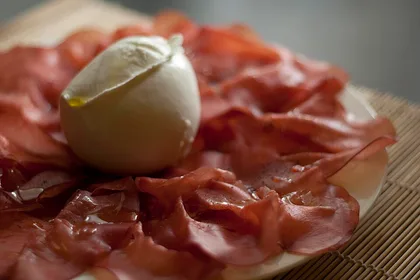 Cured meatsBresaolaOne lean muscle from the hind leg, dry-cured with salt, pepper, juniper and cinnamon, then left in the dry…
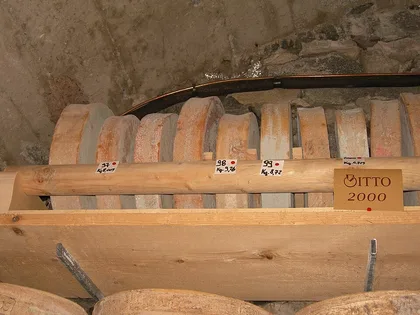 CheeseBittoBitto DOP can only be made between 1 June and 30 September, on high summer pasture, in a dismantlable stone…Pasta and breadGnocchiGnocchi are small boiled dumplings, in their modern form made of potato bound with a little flour.Pasta and breadPolenta TaragnaPolenta taragna is the dark alpine polenta of Lombardy: cornmeal cut with buckwheat flour, stirred for the…
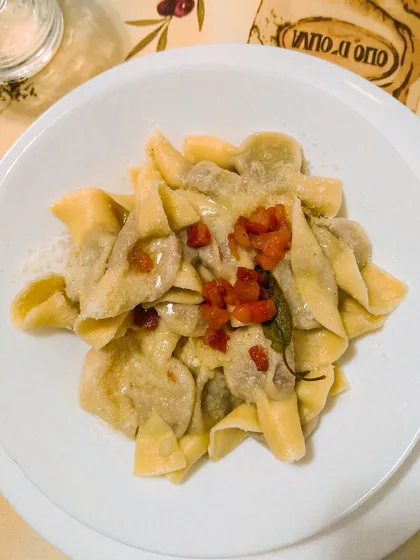 Pasta and breadCasoncelliCasoncelli are Bergamo's stuffed pasta: beef and salami filling laced with crushed amaretti and raisins…Pasta and breadMichetta (Rosetta Roll)The michetta is Milan's hollow bread roll: five petals around a small central dome, and nothing at all inside.Cured meatsPancettaPancetta is Italian cured pork belly: salt, pepper and warm spices, dried for months, never smoked.
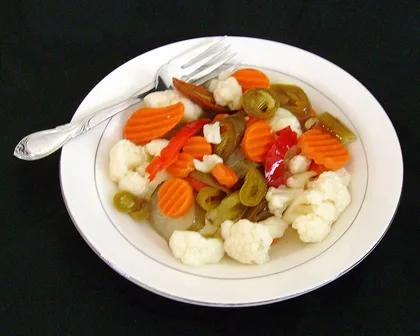 Oil and preservesGiardinieraGiardiniera means two very different jars. In Italy it is a mild mix of vegetables pickled in wine vinegar…