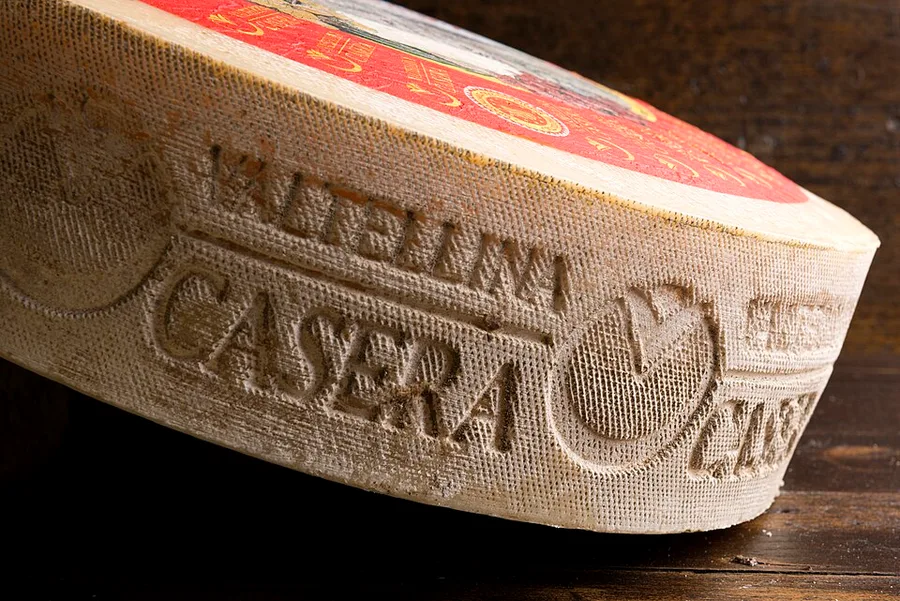
What is Valtellina Casera?
Valtellina Casera DOP is a semi-cooked cheese made from partially skimmed cow's milk throughout the province of Sondrio, in the Alps of northern Lombardy. It was protected in 1996 alongside Bitto, with which it shares a consortium.
The wheel is a cylinder with flat faces and straight or barely convex sides: 30 to 45 centimetres across, 8 to 10 tall, weighing 7 to 12 kilos. The rind is thin and straw-coloured, darkening with age.
The milk comes from two or more milkings and is partially skimmed by settling: the milk stands in shallow vats, the cream rises, it is removed and turned into butter. This was never a dietary decision. In the mountains butter was the cash crop, and cheese was made from what was left over.
Minimum ageing is 70 days. At three months Casera is sweet and elastic with a light acidity; by eight or ten months the paste dries, the flavour concentrates and a clear savoury edge appears. The rennet is calf rennet.
What does it taste like?
Clean, milky and gently sour at three months, with a springy paste and an aroma of butter and cool stone. Because the cream has been taken off, it is noticeably leaner on the palate than Fontina or a whole-milk alpine cheese: less coating, more clarity, and a lactic tang that the fattier cheeses smother.
With age it turns nutty and savoury. Around six months there is hazelnut and browned butter; past ten months the paste goes slightly granular, the salt comes forward and a mild peppery finish develops. It never becomes aggressive.
The texture is the giveaway of a semi-cooked, pressed curd: elastic enough to bend a slice without cracking, firm enough to cut cleanly, with small sparse eyes scattered unevenly through the paste.
If you have eaten pizzoccheri, you already know the taste: that faintly sour, savoury note running between the cabbage and the potato is Casera, and no other cheese does it the same way.
How to use it
Casera is the cheese for pizzoccheri, and that alone would justify it. Teglio's buckwheat tagliatelle are layered with cabbage or chard, potatoes, butter melted with garlic, and generous shavings of Casera that melt between the boiling-hot layers without turning stringy.
It is also the cheese inside sciatt, the buckwheat fritters with a molten centre served on a bed of chicory in Chiavenna and throughout the valley, and it goes into polenta taragna, stirred hard into buckwheat polenta until the whole pot turns glossy.
On its own, at three or four months, it is a good table cheese: thick slices with rye bread and the valley's own bresaola. Aged past eight months it can be grated, with a gentler saltiness than a hard grating cheese.
One technical point: because the milk is skimmed, Casera melts well but gives up less fat than Fontina. Any recipe that wants creaminess needs a knob of butter alongside, which is exactly what the pizzoccheri recipe does.
How long it keeps
Keep the rind on the wedge and let it work. Wrap the cut faces in cheese paper, or parchment inside a loosely closed bag, so the rind still has air, and put it in the salad drawer. Never press cling film against the paste, which within a day leaves the surface damp and slick. A young Casera of two or three months holds ten days to two weeks; a wedge aged eight months or more, three to four weeks, because there is less water left to move.
Semi skimmed paste dries faster than a fatty one, so the cut face is where you will see the change: it pales, hardens into a rim and eventually cracks, while the paste behind it stiffens and the flavour turns from milky towards nutty and slightly bitter. Older wedges throw white tyrosine crystals, a sign of protein breakdown with age. Take it out of the fridge an hour before eating. Grated Casera can be frozen for cooking, but a wedge frozen whole thaws crumbly. The date and the counter that cut it are the reference.
Spot the real thing
Look at the heel of the wheel: a DOP Casera has CASERA branded around the side in repeating letters, plus the consortium mark and a casein plate with the dairy number. The rind is thin, smooth and straw yellow to grey brown, not waxed. Cut, the paste is compact and elastic, white to straw depending on season, with sparse small irregular eyes and a slightly rubbery give under the thumb. It smells of milk and hay, mild rather than barnyard, and it is less fatty than a whole milk mountain cheese.
Abroad it usually sits beside Fontina, and the two get swapped constantly. Fontina is whole milk, softer, fattier and more aromatic; Casera is semi skimmed, firmer and drier, which is exactly why it melts without going stringy in pizzoccheri. Do not confuse it with Bitto DOP either, the other Valtellina cheese, which is made only from summer alpine milk, aged far longer and priced several times higher. Age matters more than brand here: ask for seventy days to four months for the table, eight months and up for grating. Expect $18 to $30 a pound.
How to pronounce Valtellina Casera
val-tel-LEE-nah kah-SEH-rah
Two words, stress on LEE in the first and SEH in the second. The double 'l' in Valtellina is held. 'Casera' is not 'cassera': one 's', pronounced softly, and the 'e' is open. It means the ripening room, not a family name, so both words are places rather than people.
Valtellina Casera compared
vsBitto DOP
The other Valtellina DOP and the pairing every local will explain to you. Bitto is made only in summer, up on the alpine pastures, from whole milk still warm from the animal, with up to ten per cent milk from Orobica goats permitted; it can age for years and becomes intensely concentrated. Casera is made year-round in valley dairies from partially skimmed milk and rarely goes past a year. Bitto is the occasion cheese and costs two to three times as much; Casera is what the valley actually eats. You can tell them apart at a glance: Bitto's sides curve inward, Casera's are straight.
| This | Bitto DOP | |
|---|---|---|
| Milk | Partially skimmed | Whole, plus up to 10% goat |
| Where made | Valley dairies, all year | Alpine huts, June to September |
| Sides of the wheel | Straight or slightly convex | Concave |
| Minimum ageing | 70 days | 70 days, often several years |
| Flavour | Milky, lactic, savoury with age | Deep, herbal, sometimes goaty |
| Price | EUR 12-26 per kg | EUR 30-90 per kg and beyond |
vsFontina Val d'Aosta DOP
The comparison for anyone reaching for an Italian alpine cheese abroad, and a study in what skimming does. Fontina is made from whole raw milk from Valdostana cows, aged at least three months in cool tunnels, and is deliberately fatty: it melts into the silky, unbroken cream that fonduta valdostana depends on. Casera has had its cream removed, so it melts well but stays leaner and tangier, and any recipe using it adds butter to compensate. Fontina is richer and sweeter; Casera is drier and more savoury.
| This | Fontina Val d'Aosta DOP | |
|---|---|---|
| Milk | Partially skimmed cow's milk | Whole raw milk, Valdostana breed |
| Fat | Lower: cream goes to butter | High, by design |
| Melting | Good, but needs added butter | Exceptional, silky, for fonduta |
| Flavour | Lactic, tangy, savoury | Sweet, nutty, rich |
| Minimum ageing | 70 days | 3 months |
| Signature dish | Pizzoccheri, sciatt, polenta taragna | Fonduta, gnocchi alla bava |
vsLatteria cheeses of the Alps (Montasio, Asiago d'allevo, Piave)
The wider family Casera belongs to: semi-cooked, pressed, cooperative-made wheels from milk that has usually given up some of its cream to butter. All of them run from a mild young version to a hard grating one. Casera's particular signature within the group is its lactic sourness and its short ceiling: it is rarely aged past a year, where Montasio and Piave go to eighteen months and beyond and end up as grating cheeses.
| This | Latteria cheeses of the Alps (Montasio, Asiago d'allevo, Piave) | |
|---|---|---|
| Curd | Semi-cooked to 40-45 C | Semi-cooked, similar range |
| Typical age | 3-8 months | Up to 18 months and more |
| Role when aged | Table cheese, occasionally grated | Primarily grating cheeses |
| Flavour | Tangier, more lactic | Sweeter, more caramelised |
| Availability abroad | Limited | Montasio and Asiago widely exported |
Valtellina Casera substitutes
- Fontina Val d'Aosta DOP
The best-known substitute and the easiest to buy, especially for pizzoccheri. It is fatter and sweeter, so use a little less and cut back the butter in the recipe, or the dish will turn heavy.
0.8:1 - Asiago d'allevo mezzano or Montasio semistagionato
Structurally the closest of the widely exported Italian cheeses: same semi-cooked pressed curd, similar age, similar melt. Slightly sweeter and less tangy than Casera, so a squeeze of lemon in the dish is not a bad idea.
1:1 - Bitto DOP
Available in the same shops and unimpeachably authentic, but richer, stronger and several times the price. Use it in smaller quantity on a board rather than melting a whole block of it into a pasta dish.
0.7:1 - Young Gruyère or Comté
The practical answer outside Italy for pizzoccheri or polenta taragna. Both melt cleanly and bring savoury depth. They are sweeter and nuttier than Casera and lack its sourness, so use the youngest wheel you can find.
1:1 - Raclette or a young Appenzeller
For sciatt or anything where the cheese sits inside a hot crust, a good melter matters more than an exact flavour match. Raclette is milder, Appenzeller sharper; either works better than a cheese that splits.
1:1 - Vegetarian: none within the DOP
Valtellina Casera requires calf rennet, as do Bitto, Taleggio, Quartirolo, Gorgonzola and every other Lombard cheese DOP. For a vegetarian pizzoccheri, a microbial-rennet alpine-style cheese or a vegetarian Gruyère-style wheel is the only route, and you should add a little extra butter to compensate for the texture.
Where to buy it
In Valtellina it costs 12 to 17 euros a kilo at the dairy and 15 to 20 in a shop, rising to 20 to 26 for wheels aged past ten months. Elsewhere in Italy expect 18 to 26 euros a kilo.
In the US, Italian importers list it at roughly 16 to 28 dollars per pound; in the UK, 22 to 34 pounds per kilo, often on the same counter as bresaola from the same valley. Production runs to well over a hundred thousand wheels a year, so this is a solid DOP rather than a rarity, and it is easier to find abroad than most alpine Italian cheeses.
For pizzoccheri, buy a piece aged four to six months: savoury enough to be noticed between the cabbage and the potato, soft enough to melt properly. Heavily aged wheels are better on a board and stay grainy in the pan.
At the counter, check the branded mark on the rind and look at the sides of the wheel. Straight sides mean Casera; sides that curve inward mean Bitto, a different cheese at a very different price.
Where to eat it in Italy
Teglio, halfway up the valley, is the home of pizzoccheri, where a local academy guards the recipe and the restaurants serve them all year. The frescoed Renaissance Palazzo Besta is reason enough to stop even without an appetite.
Morbegno, lower down, has hosted the area's historic cheese show for more than a century; in October it brings together Casera, Bitto and the summer alpine production of the Val Gerola. It is the best single occasion for tasting across the range.
Chiavenna, in the side valley to the west, has the crotti: natural cavities in the rockfall where a constant cold draught called the sorel keeps the temperature steady all year. They have been cellars for centuries and taverns for almost as long, and sciatt are what you eat in them.
Sondrio is the logistical base, with the protection consortium and shops that keep the long-aged wheels. From there you can climb into the Valmalenco and Val Masino towards the summer pastures, or drop down to the terraced Nebbiolo vineyards of Sassella and Inferno, where the dry-stone walls are as protected as the cheese.
Further reading
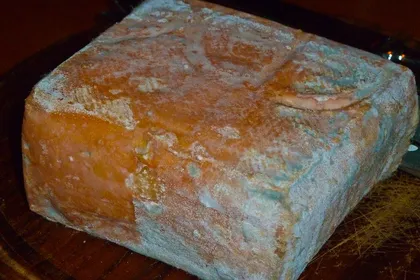 GuideCan you eat cheese rind?On some wheels the rind is the same paste, dried out. On others it is paraffin.
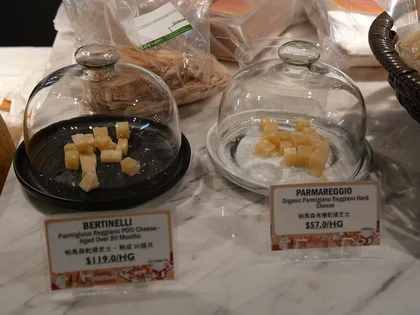 ExplainerParmesan vs Parmigiano Reggiano: the differenceIn Europe «parmesan» evokes a protected designation and cannot be used for anything else.
 GuideHow long food keeps once openedThe date on the label describes the sealed package. After that, four things govern everything: water, salt…
Frequently asked questions
Why is Valtellina Casera made from skimmed milk?
Because butter was the cash crop. In the mountains, cream was skimmed off and churned into butter that could be sold down in the plain, and cheese was made from what remained. Partial skimming stayed in the specification because it defines the cheese: a drier paste, a more lactic flavour and none of the fattiness of a whole-milk alpine wheel.
What is the difference between Casera and Bitto?
Bitto is made only in summer on the high pastures, from whole milk straight from the animal, with up to ten per cent Orobica goat's milk allowed, and can age for years. Casera is made year-round in valley dairies from partially skimmed milk and rarely passes a year. Bitto is the special-occasion cheese at two to three times the price; Casera is the everyday one. Bitto's wheels have concave sides, Casera's are straight.
Is it really the cheese for pizzoccheri?
Yes, and the codified recipe says so. Use a piece aged four to six months: savoury enough to register between the cabbage and the potatoes, soft enough to melt through the hot layers. Very mature wheels stay grainy and never give the right texture.
How long is it aged?
Seventy days minimum by law. In shops you will find wheels from three months, sweet and elastic, up to ten or twelve months, dry and savoury with a mild peppery finish. Four to six months is the commonest and the most useful in the kitchen.
Is Valtellina Casera vegetarian?
No. Calf rennet is required by the specification, as it is for Bitto, Taleggio, Quartirolo, Gorgonzola and every other Lombard cheese DOP. Vegetarian cooks need to look outside the denominations, at cheeses that declare microbial rennet on the label.
Sources
Where to check what you just read.
- 1
Il regolamento del 1° luglio 1996 che registra Valtellina Casera come DOP, nello stesso allegato di Bresaola della Valtellina e Ragusano.
- 2
Il fascicolo depositato, con le note storiche sulla pastorizia valtellinese e il vincolo del latte parzialmente scremato che distingue il Casera dal Bitto.
- 3Consortium · interested partyConsorzio Tutela Valtellina Casera e Bitto
Il consorzio che dal 1995 segue entrambe le DOP valtellinesi: caseifici associati, ente di certificazione e controlli di filiera.
Related foods
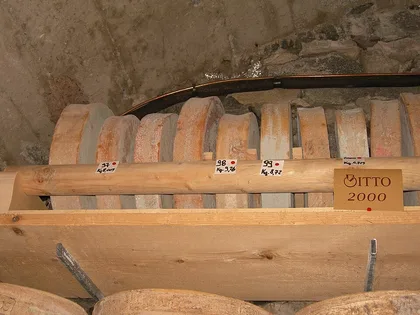 CheeseBittoBitto DOP can only be made between 1 June and 30 September, on high summer pasture, in a dismantlable stone…
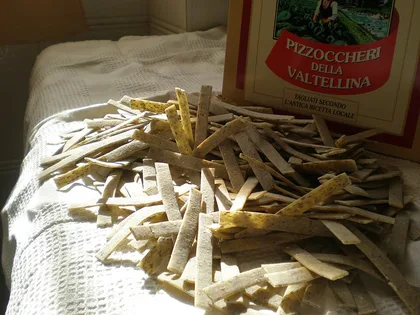 Pasta and breadPizzoccheriBuckwheat rather than wheat, which is where the dark colour and the nutty taste come from.
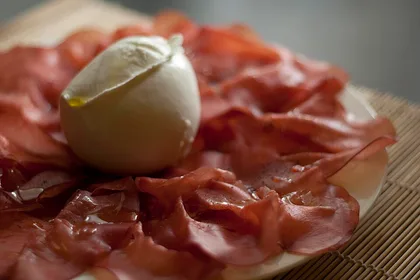 Cured meatsBresaolaOne lean muscle from the hind leg, dry-cured with salt, pepper, juniper and cinnamon, then left in the dry…Pasta and breadPolenta TaragnaPolenta taragna is the dark alpine polenta of Lombardy: cornmeal cut with buckwheat flour, stirred for the…
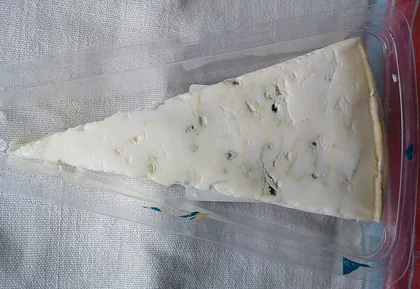 CheeseGorgonzolaThe green veining is the product, not a flaw anyone tolerates: it grows from a mould added to the milk and…
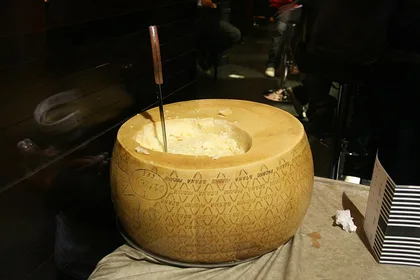 CheeseGrana PadanoNine months is the floor the specification sets before a wheel may carry the name.
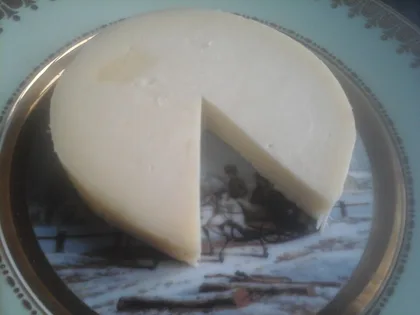 CheeseProvoloneProvolone is a stretched-curd cow's milk cheese from northern Italy, rope-tied and hung to age in shapes from…
 CheeseTaleggioTaleggio DOP is a square, washed-rind cow's milk cheese from the Bergamo Alps, aged at least 35 days.