What is Polenta Taragna?
Two things separate taragna from ordinary polenta. First, the flour: instead of pure cornmeal it uses a blend with buckwheat, which turns the finished dish grey-brown and gives it a toasted, nutty depth that corn alone never reaches. Second, the finish: butter and cut-up alpine cheese are worked in during the last few minutes, off the heat, until the whole pot goes glossy and pulls into strands.
The name comes from the tarèl, the long wooden stick used to stir a polenta in the copper cauldron. In the dialects of the Lombard Alps, tarare means to stir, and taragna is, literally, the polenta you stir. It needs forty to fifty minutes of near-continuous work.
It is not a side dish. In the Valtellina and the Bergamo valleys it is a one-pot meal, dense with fat, built for people who spent the day at two thousand metres.
What does it taste like?
Rich, savoury and unmistakably nutty. Buckwheat brings a toasted, almost bitter edge that reads as roasted hazelnut, and it stops the whole thing from being merely creamy and bland the way plain polenta can be.
The cheese and butter give it the texture of a loose, molten mash: spoonable, stringy, coating. Good taragna pulls a thread when you lift the spoon and settles into a slow slump on the plate rather than holding its shape.
If you know Swiss älplermagronen or a very rich aligot, the fat-plus-cheese register will be familiar. The buckwheat is what makes it Lombard. Alpine cheese (Bitto, Valtellina Casera, Branzi) brings a grassy, faintly sour depth that a generic melting cheese cannot fake.
How to use it
Bring salted water to the boil (roughly four parts water to one part flour by weight) and rain the blended flours in while whisking. Once it thickens, switch to a wooden spoon or stick and stir for forty to fifty minutes over low heat, always in the same direction. It is done when it pulls away from the sides of the pot and a furrow closes slowly behind the spoon.
Then take it off the heat and add the fat: about 100 g of butter and 300 g of diced alpine cheese per kilo of flour. Beat it in for two or three minutes until the cheese strings and the surface goes glossy. Serve immediately, straight onto warm plates or a wooden board.
Eat it on its own, or with what the valleys eat it with: beef stewed in red wine, venison in salmì, grilled luganega sausage, sautéed porcini in autumn. A spoonful of soft gorgonzola melted into the middle needs nothing else, and a poached egg on top turns it into supper.
Leftovers set solid. Cut them into slabs and grill or fry them until crusted, with a slice of taleggio melted over the top.
How long it keeps
The flour is the part that needs attention. Keep it in a closed jar somewhere cool and use it within about six months, because buckwheat carries more fat than maize and its oil turns first: the toasted note fades and a flat, cardboard edge takes its place. In a warm kitchen, or through a hot summer, the fridge is a sensible home for the bag, and the date printed on the packet is the reference for anything you buy sealed. Keep it away from the hob and close the bag properly, since flour picks up whatever the cupboard smells of.
Cooked taragna keeps two or three days in the fridge, covered. It sets completely solid in the cold, which is simply what cooked maize and buckwheat do, and it comes back in a pan with a splash of milk and a knob of butter, or gets cut into slabs and grilled. It freezes well already cooked and cut into slices, about two months, going straight from the freezer into the pan. Freezing it creamy achieves nothing, since it releases water as it thaws.
Spot the real thing
Colour is the first clue. Taragna is dark, grey brown, flecked with the paler specks of the maize; a yellow taragna is yellow polenta with cheese stirred through it, which happens far more often than anyone admits, in Milan as much as in New York. The texture should be loose and stringy rather than firm: real taragna is eaten with a spoon and pulls threads of cheese when you lift it. If it stands up in slices, it was made too thick or it has gone cold.
On the tongue the buckwheat is audible, a toasted, almost hazelnut note that maize alone never gives. The cheese should be there without smothering everything; if all you taste is melted cheese, industrial fontina went in instead of an alpine one. On bagged mixes sold abroad, read past the words polenta taragna flour and find the buckwheat percentage: below twenty per cent it is yellow polenta in disguise. Note also that buckwheat here means the flour, not the roasted groats sold as kasha, and that American grits are a different grain preparation altogether.
How to pronounce Polenta Taragna
poh-LEN-tah tah-RAH-nyah
Stress on LEN and RAH. The 'gn' is a single soft sound like the 'ny' in 'canyon', never a hard G, so not 'ta-RAG-na'. And polenta is 'poh-LEN-tah', with an open final A, not 'po-LEN-ter'.
Polenta Taragna compared
vsClassic yellow polenta
Same technique, different flour and a different finish. Yellow polenta is cornmeal, water and salt, and it plays a supporting role next to stews and braises. Taragna adds buckwheat and finishes with butter and cheese, which makes it the main event.
| This | Classic yellow polenta | |
|---|---|---|
| Flour | Cornmeal plus 30-50% buckwheat | Cornmeal only |
| Colour | Grey-brown, flecked | Golden yellow |
| Fat added | Butter and cheese stirred in at the end | None, or a knob of butter |
| Flavour | Nutty, toasted, savoury | Sweet, mild, corn-forward |
| Texture | Loose, molten, stringy | Can be soft or set firm and sliced |
| Role on the table | A main course | A base or side for stews and cheese |
| Where | Valtellina, Bergamo valleys | All of northern Italy |
vsPolenta uncia (Brianza and Lecco)
The other cheese-loaded Lombard polenta, and the one taragna is most often confused with. Uncia is made with yellow cornmeal only; its identity comes from butter browned with garlic and sage, poured over polenta layered with cheese.
| This | Polenta uncia (Brianza and Lecco) | |
|---|---|---|
| Flour | Corn and buckwheat blend | Yellow cornmeal only |
| Colour | Dark grey-brown | Yellow |
| Fat | Butter and cheese stirred through | Garlic-and-sage butter poured over the top |
| Cheese | Casera, Bitto, Branzi, cut into cubes | Semuda or young Lecco cheeses, layered |
| Home | Valtellina, Val Brembana, Val Seriana | Brianza, Valsassina, around Lecco |
vsPizzoccheri
The same valley, the same flour, the same cheese and butter: served as pasta instead of porridge. If you have eaten pizzoccheri you already know what buckwheat, Casera and browned butter taste like together; taragna is that flavour without the ribbons.
| This | Pizzoccheri | |
|---|---|---|
| Format | Stirred porridge | Short, flat buckwheat noodles |
| Flour | Corn and buckwheat | Buckwheat with some wheat flour |
| Gluten | Naturally gluten-free | Contains wheat flour: not gluten-free |
| Cheese | Casera or Bitto, stirred in | Casera, layered between the noodles |
| Extras | None traditionally | Savoy cabbage or chard, potatoes, garlic butter |
| Cooking time | 40-50 minutes of stirring | About 15 minutes, boiled |
Polenta Taragna substitutes
- Make your own blend: coarse cornmeal plus buckwheat flour
Pre-mixed taragna flour is hard to find outside Italy and completely unnecessary. Buy coarse stone-ground cornmeal (polenta, not instant) and buckwheat flour separately and blend them yourself.
2 parts cornmeal to 1 part buckwheat, or 1:1 for a Valtellina-dark version - Fontina, for Bitto or Valtellina Casera
The most reliable stand-in for the cheese, widely available and with the right melting behaviour and alpine character. It is milder than Bitto, so be generous.
1:1, or 1.2:1 by weight - Gruyère or raclette
Both melt cleanly and carry the grassy alpine note. Gruyère is nuttier and drier; raclette is closer in fat and stretch. Use either where fontina is unavailable.
1:1 - Taleggio or young Asiago
Taleggio adds a pungency that works surprisingly well and is easy to find in the US and UK; young Asiago is milder and stretches nicely. Both are Italian and both are correct in spirit if not in valley.
1:1 - Vegetarian: microbial-rennet Gruyère-style or vegetarian Cheddar
Bitto DOP and Valtellina Casera DOP are both made with calf rennet and are not vegetarian. Vegetarian alpine-style cheeses from UK and US dairies melt the same way; a mature vegetarian Cheddar works too, though it is sharper.
1:1 - Instant polenta, for time
It will not be taragna, but if you have twenty minutes rather than an hour, use instant cornmeal and stir in buckwheat flour that you have toasted dry in a pan first, to compensate for the missing long cook.
4 parts instant polenta to 1 part toasted buckwheat flour
Where to buy it
The flour is the thing to buy, and both halves are easy. Coarse stone-ground cornmeal (labelled polenta, bramata or 'coarse yellow') runs about 4 to 8 dollars per pound in the US and £3 to £6 per kilo in the UK. Buckwheat flour is stocked in every health food shop and most supermarkets, at similar prices. Blend two to one.
Pre-mixed farina per polenta taragna is imported by Italian specialists online, at roughly €7 to €12 per kilo plus shipping. Check the buckwheat percentage on the label: below 20% you are paying a premium for slightly beige polenta.
For the cheese, look for fontina in any decent supermarket. Valtellina Casera DOP and Bitto DOP reach the US and UK through Italian importers and cheese specialists: Casera runs 18 to 28 dollars per pound, Bitto considerably more and worth it once. Buy buckwheat flour in small quantities and store it cool: it is oily and goes rancid within months.
Where to eat it in Italy
The Valtellina, in the province of Sondrio, is the obvious base. The crotti and mountain rifugi above Sondrio, Teglio and Chiuro still cook it in copper cauldrons over wood, and Teglio (which also claims the pizzoccheri) puts both on the same menu.
In the province of Bergamo, head up the Val Brembana towards Branzi and Foppolo, or into the Val di Scalve. The dairies here make the cheeses the dish depends on, and the winter refuges serve taragna at midday to skiers who have earned it.
The Val Camonica runs autumn festivals pairing it with wild mushrooms. And in Milan, where generations of mountain families settled, the older osterie keep it as a fixed winter dish: less authentic than the valley version, but honestly made and a good introduction.
Frequently asked questions
What is the difference between polenta and polenta taragna?
Taragna blends buckwheat flour into the cornmeal, which makes it dark and nutty, and finishes with butter and alpine cheese stirred in. Plain polenta is cornmeal, water and salt, and usually plays a supporting role next to a stew.
Is polenta taragna gluten-free?
Yes, in principle: corn and buckwheat both contain no gluten, despite buckwheat's misleading English name, which has nothing to do with wheat. The risk is cross-contamination at the mill, so coeliacs should buy certified flour.
What cheese goes in polenta taragna?
Traditionally Valtellina Casera or Bitto in the Valtellina, Branzi or Formai de Mut in the Bergamo valleys. Outside Italy, fontina is the most reliable substitute, with Gruyère, raclette and taleggio all working well.
Do I really have to stir it for an hour?
For the traditional version, yes: the long cook is what gelatinises the starch and develops the flavour. Instant cornmeal cuts it to five minutes but gives a thinner, flatter result. Compromise by toasting the buckwheat flour first.
How do you pronounce polenta taragna?
poh-LEN-tah tah-RAH-nyah. The 'gn' is soft like the 'ny' in canyon, never a hard G.
Related foods
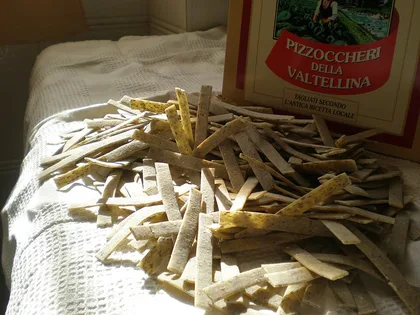 Pasta and breadPizzoccheriBuckwheat rather than wheat, which is where the dark colour and the nutty taste come from.
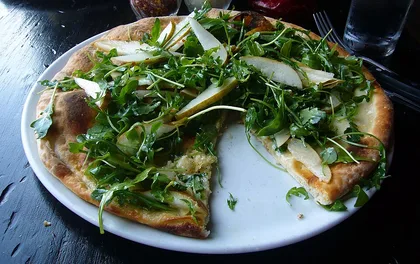 CheeseTaleggioTaleggio DOP is a square, washed-rind cow's milk cheese from the Bergamo Alps, aged at least 35 days.
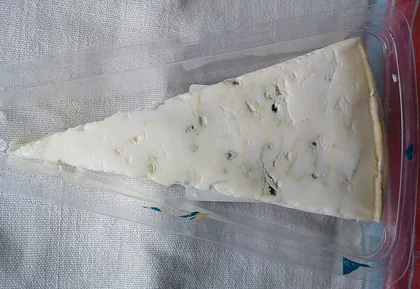 CheeseGorgonzolaThe green veining is the product, not a flaw anyone tolerates: it grows from a mould added to the milk and…
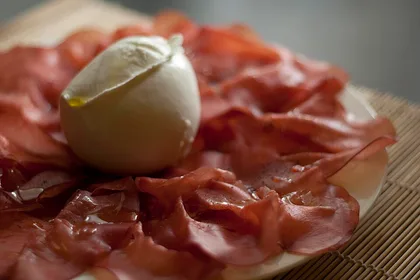 Cured meatsBresaolaOne lean muscle from the hind leg, dry-cured with salt, pepper, juniper and cinnamon, then left in the dry…Pasta and breadGnocchiGnocchi are small boiled dumplings, in their modern form made of potato bound with a little flour.
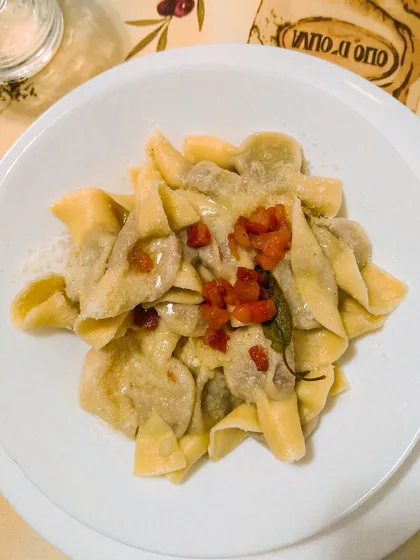 Pasta and breadCasoncelliCasoncelli are Bergamo's stuffed pasta: beef and salami filling laced with crushed amaretti and raisins…Pasta and breadMichetta (Rosetta Roll)The michetta is Milan's hollow bread roll: five petals around a small central dome, and nothing at all inside.Cured meatsPancettaPancetta is Italian cured pork belly: salt, pepper and warm spices, dried for months, never smoked.