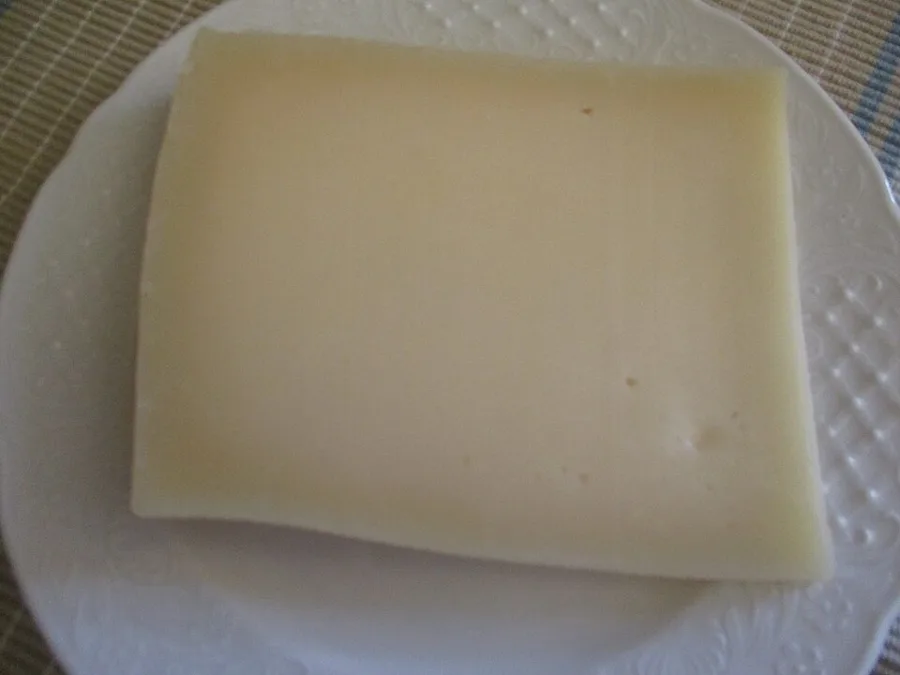
What is Asiago?
Asiago is one name covering two cheeses. Asiago Pressato (the fresh one) is made from whole milk, pressed in the mould and ripened for a minimum of 20 days. It is white, elastic, full of irregular holes and mild to the point of sweetness, in wheels of 11 to 15 kilos.
Asiago Stagionato, still widely called Asiago d'Allevo, starts from partly skimmed milk taken from two milkings, is cooked harder in the vat and ripens for at least 60 days. The grades that matter come later: mezzano at four to six months, vecchio past ten, stravecchio past fifteen. The paste turns hard, straw-coloured and granular, and the flavour goes from milky to sharply piquant. Wheels are smaller, 8 to 12 kilos.
The DOP zone is the provinces of Vicenza and Trento in full, plus parts of Padua and Treviso. A separate label, Asiago Prodotto della Montagna, applies to wheels whose milk is produced, made and aged above 600 metres.
What does it taste like?
Pressato tastes of fresh milk and yoghurt, faintly sweet, with a clean lactic tang and almost no salt to speak of. The texture is springy and moist, closer to a young Fontina or a good Monterey Jack than to anything hard.
Stagionato is a different cheese in the mouth. At four to six months it is firm, buttery and nutty, with a mild bite. Past ten months it dries into a granular, crumbly paste studded with crunchy tyrosine crystals, and the flavour turns sharp, savoury and a little piquant, with a brown-butter note underneath. Even at its oldest it stays milkier and less salty than Parmigiano.
If you have only met the shredded asiago on a bagel, that is a domestic American cheese and not this. The DOP versions are gentler and more distinctly dairy-flavoured at every age.
How to use it
Match the age to the job. Pressato is for melting and slicing: toasted sandwiches, gratins, savoury tarts, cubed through a farro salad, or stirred into polenta. It releases some water as it melts, so use it with a light hand on pizza.
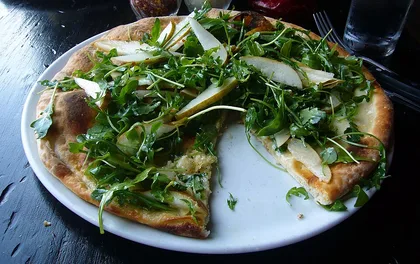
Mezzano is the everyday middle ground: good on a board, good grated into a frittata, good in cubes with an aperitivo. Vecchio and stravecchio are grating cheeses: they finish a mushroom risotto or a pasta e fagioli with a milkier, less salty note than Parmigiano, and they shave beautifully over rocket and pears.
Bring any Asiago to room temperature before serving on a board. The local combination on the Vicenza plateau is Asiago with sopressa salami on grilled polenta, with a spoonful of mostarda alongside.
How long it keeps
A vacuum-sealed wedge keeps at 4 to 8 C until the date printed on the pack, which is the maker's reference, not something you can read off the cheese. Once it is open the two types diverge. Asiago Pressato is a high-moisture cheese: wrap it in waxed paper inside a box that is not airtight, keep it in the vegetable drawer and reckon on about two weeks. Cling film pressed against the surface makes it sweat, and a slick film forms on the cut faces within days.
Asiago Stagionato behaves like a hard cheese. Wrapped in a barely damp cloth and then in paper it holds two to three months, and what it does over that time is dry: the cut face hardens and goes pale, and that layer comes off with a knife before serving. Dry bloom on the rind lifts with a cloth dipped in vinegar. Freezing suits neither type well. The free water in the Pressato tears the structure and it crumbles on thawing; grated Stagionato lasts six months at minus 18 C but loses its finer aromatics, so freeze 200 g pieces and grate as needed.
Spot the real thing
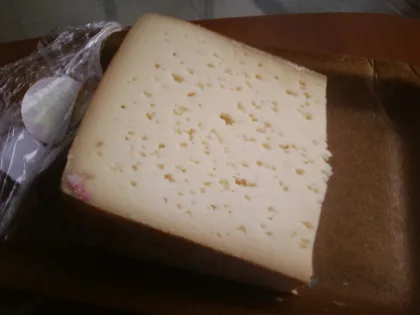
The rind carries the proof. On the heel of a real wheel the word ASIAGO is stamped over and over, next to the dairy number and the code for the type, all pressed in by the marking bands; mountain wheels add their own wording. Beyond that, tell the two types apart by eye. Pressato has a white to faintly straw paste, elastic, with irregular and obvious holes and a smell of milk and yogurt. Stagionato is compact and darker, its holes small and scattered, and from ten months it carries white tyrosine crystals.
This is the cheese where the name matters most outside Italy. Asiago is protected in the EU and the UK but not in the United States, where domestic factories have used the word for decades: the shredded bags, the deli wedges and the asiago bagel all borrow it, and none of them come from the Veneto. If the label says only asiago, with no DOP seal, no type (Pressato or d Allevo, often sold as fresco and stagionato) and no Italian origin, it is that other cheese. The imported wheel costs several times the domestic block.
How to pronounce Asiago
ah-ZYAH-goh
In Italian this is three syllables, not four: the 'sia' collapses into a single 'zyah'. The 's' is voiced, like the 's' in 'rose', never a hissing 'ss'. The common American 'ah-see-AH-go' is understood everywhere and is effectively the standard English pronunciation, but the Italian stress sits on that 'ZYAH'. Avoid 'AY-see-ah-go'.
Asiago compared
vsAsiago Stagionato (fresco vs stagionato)
The comparison that decides whether a recipe works. Fresco is a mild melting and slicing cheese; stagionato is a grating and snacking cheese with real bite. A shop that sells 'Asiago' without saying which is almost always selling the fresh one in Italy and the aged one abroad.
| This | Asiago Stagionato (fresco vs stagionato) | |
|---|---|---|
| Milk | Whole | Partly skimmed, two milkings |
| Minimum ageing | 20 days | 60 days; mezzano 4-6 months, vecchio 10+, stravecchio 15+ |
| Texture | Soft, elastic, moist, holey | Firm to hard, granular, crystalline when old |
| Flavour | Milky, sweet, gently lactic | Nutty, savoury, sharp and piquant with age |
| Fat on dry matter | Minimum 44% | Minimum 34% |
| Wheel | 11-15 kg | 8-12 kg |
| Best for | Melting, sandwiches, salads, gratins | Grating, shaving, cheeseboard, risotto |
| Price | $8-14 per lb | $14-24 per lb, more for stravecchio |
vsAmerican Asiago
In the United States 'asiago' is a generic name with no protection, and most of what is sold under it is made in Wisconsin. It is typically drier, saltier and sharper than the Italian original, engineered for shredding onto bagels and salads. Not worse for its purpose, just not the same cheese.
| This | American Asiago | |
|---|---|---|
| Protected name | DOP, EU-protected | Generic, unprotected in the US |
| Where made | Vicenza, Trento, parts of Padua and Treviso | Wisconsin, mostly |
| Typical form | Whole wheels, cut to order | Pre-shredded, wedges, grated shakers |
| Flavour | Milky and rounded, sharp only when very old | Sharp and salty young, more like a mild Parmesan |
| Rennet | Calf rennet, always | Often microbial: several US brands are vegetarian |
| Price | $14-24 per lb | $7-12 per lb |
vsParmigiano Reggiano
Asiago vecchio is the cheese people reach for when Parmigiano feels too expensive, and it is a reasonable move. It is less salty, less granular and milkier, with a shorter finish. In a risotto the swap is barely noticeable; on a board, Parmigiano wins on complexity.
| This | Parmigiano Reggiano | |
|---|---|---|
| Milk | Partly skimmed cow, pasteurised or raw | Partly skimmed cow, always raw |
| Minimum ageing | 60 days; typically 4-15 months | 12 months; typically 24-36 |
| Texture | Firm to hard, less granular | Hard, flaky, heavily crystalline |
| Flavour | Milky, nutty, moderately sharp | Deep umami, sweet-nutty, long finish |
| Salt | Lower | Higher, around 1.4% |
| Price | $14-24 per lb | $18-30 per lb |
vsMontasio
The closest Italian relative, from Friuli one valley east, and the one cheese most likely to be sitting beside Asiago at a counter. Same idea, similar ages, slightly nuttier and more compact. If a recipe calls for Asiago and the shop only has Montasio, buy it without hesitation.
| This | Montasio | |
|---|---|---|
| Origin | Veneto and Trentino | Friuli-Venezia Giulia and eastern Veneto |
| Milk | Whole (fresco) or partly skimmed (stagionato) | Partly skimmed cow |
| Ages | 20 days to 2 years | Fresco 60 days, mezzano 4 months, stagionato 10+ |
| Texture | Elastic young, granular old | Compact, slightly denser at every age |
| Signature dish | Melted over polenta | Frico, the Friulian cheese crisp |
Asiago substitutes
- Montasio
The nearest thing in existence, from the next region east, with matching fresh and aged versions. Substitute age for age and nothing noticeable changes.
1:1 - Fontina Val d'Aosta (for Pressato)
When the recipe needs Asiago fresco to melt (gratins, polenta, toasted sandwiches), Fontina does it better and is easier to find abroad. It is nuttier and less sweet.
1:1 - Piave Vecchio or Grana Padano (for Stagionato)
Piave is the closer match in flavour, being a Veneto cow's milk cheese with the same milky-sweet base. Grana Padano is easier to buy and slightly saltier: pull back on salt elsewhere.
1:1 - Monterey Jack or young Gouda (for Pressato)
In the US, plain Monterey Jack is the practical stand-in for the fresh version: similar moisture, similar mildness, melts cleanly. Young Gouda works the same way in the UK and is a shade sweeter.
1:1 - Vegetarian: BelGioioso or Sartori asiago-style
Asiago DOP always uses calf rennet, so it is never vegetarian. Several US-made asiago-style cheeses are produced with microbial rennet instead: check the label, since the same brand may vary by line. In the UK, a vegetarian Italian-style hard cheese from Twineham Grange grates as a stand-in for the aged version.
1:1 - Vegan: cashew and nutritional yeast, or a cultured almond block
For grating over pasta, blend 100 g cashews with 3 tablespoons nutritional yeast and half a teaspoon of salt. For melting, the firm cultured blocks from Miyoko's behave closer to fresh Asiago than any shredded vegan cheese.
Where to buy it
In the US, imported Asiago DOP is stocked by Whole Foods, Eataly, Murray's and Italian delis, alongside a great deal of domestic Wisconsin asiago that is a different product. Read the label for 'Asiago DOP' or 'Asiago d'Allevo'. Expect $14-24 per pound for the aged DOP, $8-14 for Pressato, and $7-12 for the domestic version.
In the UK, Waitrose, Ocado and Italian delicatessens carry it at roughly £14-26 per kilo, more for stravecchio and mountain-labelled wheels.
The check is on the heel of the wheel: 'ASIAGO' repeated all around, impressed by the marking mould, with the dairy's number and the type. Wheels marked Prodotto della Montagna cost 20-30% more and are worth it: the milk comes from summer pasture above 600 metres and the difference in flavour is real. In the aged versions, white crunchy specks are tyrosine crystals and a sign of good ripening, not a flaw.
Where to eat it in Italy
The Altopiano di Asiago, an hour north of Vicenza, is the place. From June to September the malghe (high mountain dairies) sell cheese directly and many serve food, and the Strada del Formaggio Asiago links the best of them on a single day's drive.
In September the town of Asiago hosts Made in Malga, a festival that brings hundreds of Alpine cheesemakers into the main square; the autumn descent of the herds from the high pastures is an event in its own right.
In Trentino, production is quieter but present in the Valsugana and on the Lavarone and Folgaria plateaus. Vicenza's cheese shops carry stravecchi that on the plateau itself are usually only available by order.
Further reading
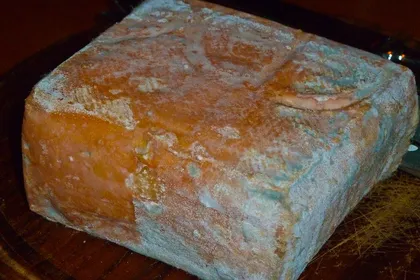 GuideCan you eat cheese rind?On some wheels the rind is the same paste, dried out. On others it is paraffin.
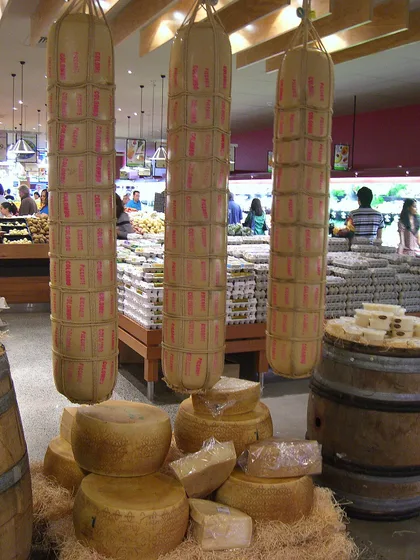 ExplainerWhich Italian cheeses contain no lactoseItaly sets a legal threshold, and long-aged cheeses clear it on their own, with no treatment involved.
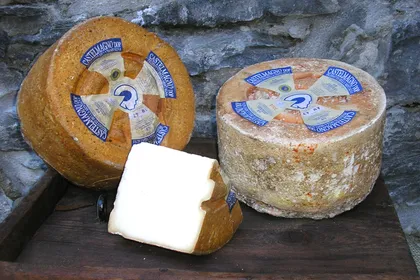 InvestigationItalian raw milk cheeses: the full listWe counted: 19 of 43 declare raw milk, and 16 of those 19 carry a protected designation.
Frequently asked questions
What is the difference between fresh and aged Asiago?
Asiago Pressato is made from whole milk, pressed and aged 20 days: soft, elastic and mild. Asiago Stagionato uses partly skimmed milk and ages at least 60 days, with grades at four to six months, ten months and fifteen: hard, granular and sharp.
Is American asiago the same as Italian Asiago?
No. In the US the name is generic and unprotected, and most is made in Wisconsin: drier, saltier and sharper, designed for shredding. Only wheels marked Asiago DOP come from the protected zone in Veneto and Trentino.
Is Asiago vegetarian?
Asiago DOP is not: it requires calf rennet. Several US-made asiago-style cheeses use microbial rennet and are suitable for vegetarians, but they are not the protected product. Check the individual label.
What are the crunchy white bits in aged Asiago?
Tyrosine crystals, an amino acid that precipitates during long ripening. They indicate a well-aged cheese and are entirely edible.
How do you pronounce Asiago?
Italians say ah-ZYAH-goh in three syllables, with a voiced 's'. The English 'ah-see-AH-go' is universally understood; the mistake to avoid is 'AY-see-ah-go'.
Sources
Where to check what you just read.
- 1
Il regolamento del 12 giugno 1996 che iscrive l'Asiago fra le DOP europee: nell'allegato compare nella sezione formaggi, accanto a Montasio, Taleggio e Quartirolo Lombardo.
- 2
Il testo depositato: le due tipologie, i tempi minimi di stagionatura di ciascuna e le condizioni per la menzione Prodotto della Montagna.
- 3Consortium · interested partyConsorzio Tutela Formaggio Asiago
Le categorie commerciali in vigore (fresco, riserva, mezzano, vecchio, stravecchio) e come si legge la marchiatura impressa sullo scalzo della forma.
Related foods
 CheeseTaleggioTaleggio DOP is a square, washed-rind cow's milk cheese from the Bergamo Alps, aged at least 35 days.
 CheeseGrana PadanoNine months is the floor the specification sets before a wheel may carry the name.
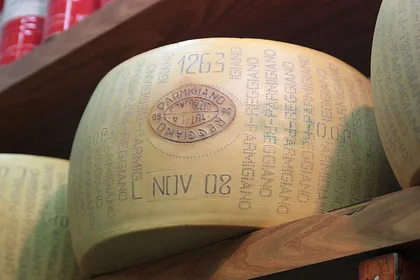 CheeseParmigiano ReggianoThree ingredients and no additives of any kind are permitted: raw cow's milk, salt and calf rennet, from five…
 CheeseProvoloneProvolone is a stretched-curd cow's milk cheese from northern Italy, rope-tied and hung to age in shapes from…
 CheesePuzzone di MoenaPuzzone di Moena means 'the big stinker of Moena', and the name is earned honestly: the rind is washed with…
 SweetsTiramisuNothing here goes near an oven. Savoiardi dipped in cold espresso, raw egg yolk whipped with mascarpone…Pasta and breadGnocchiGnocchi are small boiled dumplings, in their modern form made of potato bound with a little flour.
 WineProseccoProsecco is made from Glera grapes by the Martinotti tank method, not the traditional bottle method used for…