What is Prosecco?
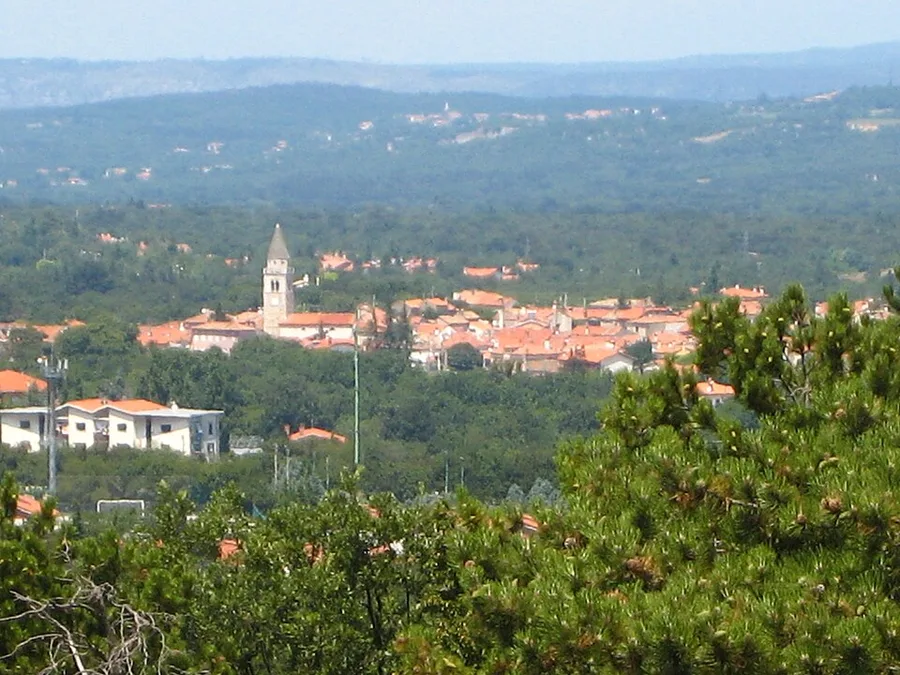
Prosecco is at least 85 per cent Glera; the rest can be Verdiso, Bianchetta Trevigiana, Perera, Glera lunga, Chardonnay or Pinot. Until 2009 the grape itself was called prosecco. The name was moved onto a place, the village of Prosecco in the hills above Trieste, precisely so nobody outside the zone could label a wine prosecco just by planting the vine.
The denomination is a pyramid. At the base, Prosecco DOC covers nine provinces across Veneto and Friuli Venezia Giulia, mostly flat land, with Treviso and Trieste as sub-zones: this is the volume tier, over six hundred million bottles a year. Above it sit two hillside DOCGs created in 2009: Conegliano Valdobbiadene Prosecco Superiore, fifteen communes between the two towns, and Asolo Prosecco on the Asolo hills.
Inside the Conegliano Valdobbiadene DOCG there are two further steps. Rive are forty-three named single slopes (Rive di Soligo, Rive di Guia, Rive di Colbertaldo) requiring hand harvest, lower yields and a vintage date. Valdobbiadene Superiore di Cartizze is the historic cru: 108 hectares between San Pietro di Barbozza, Santo Stefano and Saccol, the most expensive farmland in Italy.
Style matters as much as zone. Spumante is fully sparkling, above 3 bar; frizzante is lightly sparkling at 1 to 2.5 bar; still Prosecco rarely leaves the valley. Since 2020 there is also Prosecco Rosé DOC: Glera with 10 to 15 per cent Pinot nero vinified as red, always vintage-dated.
What does it taste like?
Green apple, Williams pear, white acacia flower, lemon zest, and often a faint bitter-almond note on the finish that is a signature of Glera.
What you will not find is bread, brioche, toast or hazelnut. Those come from long ageing on dead yeast inside the bottle, which Prosecco does not get, and their absence is deliberate rather than a shortfall.
The body is light, the alcohol usually 11 to 11.5 per cent, the acidity moderate rather than sharp. The bubbles are larger and shorter-lived than in Champagne because the finished pressure is 3 to 3.5 bar instead of 5 to 6. Sweetness varies more than most drinkers expect: a brut tastes lemony, an extra dry noticeably rounder, a Cartizze frankly sweet. Baked apple and tired bubbles mean the bottle is too old.
How to use it
Serve at 6-8°C. Colder anaesthetises the aromas and leaves only acidity; warmer makes it taste sweet and flabby. Three hours in the fridge, or twenty minutes in a bucket of water, ice and a handful of salt.
Use a tulip glass. A coupe loses the bubbles in a minute and a narrow flute traps the CO2 and gives the aromas nowhere to go. Prosecco is never decanted and never needs air: open it and pour it. Hold the cork and turn the bottle rather than the cork, and do not let it fly: at 3 to 3.5 bar it comes out easily enough.
The classic uses are Venetian. The Bellini was invented at Harry's Bar in 1948 by Giuseppe Cipriani: white peach purée and Prosecco, no syrup. The spritz is Prosecco, a bitter aperitivo (Select in Venice, Aperol in Padua) and a splash of soda. The sgroppino is lemon sorbet whipped with vodka and Prosecco, served between courses or at the end of a meal.
At the table it belongs with fried food above all: fritto misto, salt cod fritters, courgette flowers, soft-shell crabs. Also cicchetti, prosciutto di San Daniele, soppressa, fresh cheeses, white asparagus from Bassano and sweet-and-sour dishes such as sarde in saor. It fails with red meat, long-cooked sauces, aged cheese and chocolate. To finish a meal with it you need a dry or a Cartizze, not a brut: only those carry enough sugar for dessert.
How long it keeps
Prosecco is built to be drunk young and the producers say so. An unopened bottle is at its most expressive within about a year or two of the vintage or bottling date on the back label, and that date is the reference point rather than anything you can judge from the outside. Keep it lying down or upright in a dark place at a steady 10 to 14 C, away from the kitchen and away from vibration. Warmth and daylight are what move it: the pale straw deepens toward gold, the apple and pear notes fade toward honey and dried fruit, and pressure slowly drops through the closure.
Once the cork is out, the change is measured in hours. A proper sparkling stopper clamped on and the bottle back in the fridge at 4 to 6 C holds a visible bead for one to three days, and the mousse thins with every hour after that. Teaspoons in the neck do nothing. Never freeze a bottle: the liquid expands and the pressure inside has nowhere to go.
Spot the real thing
Start with the neck of the bottle. A Conegliano Valdobbiadene Prosecco Superiore or an Asolo Prosecco carries a numbered state seal, a printed strip running over the capsule, and the letters DOCG on the label; plain Prosecco DOC does not. Rive plus a village name, or Cartizze, narrows it further to a single hillside. The grape is Glera, and it is usually named on the back label. Colour should be pale straw, the bead fine and quick, the smell green apple, pear and white flowers rather than bread or toast.
The bready, biscuit note belongs to Champagne, Franciacorta and traditional-method Cava, which take their second fermentation in the bottle. Prosecco is made in pressurised tanks and keeps its fruit. The other confusion in a shop abroad is the sweetness scale, which runs backwards to expectation: Extra Dry is sweeter than Brut, and Dry sweeter still. Price sorts the tiers, with DOC bottles the cheapest, DOCG a clear step up, and Cartizze well above both.
How to pronounce Prosecco
proh-SEK-koh
Double k in the middle, stress on the second syllable, short final o, never proh-SEE-ko. The grape is Glera, GLEH-rah. Valdobbiadene is the hard one: val-dohb-BYAH-deh-neh, with bbia as one sound. Conegliano is koh-neh-LYAH-noh, the gli as in million. Cartizze is kar-TEET-tseh, Rive is REE-veh.
Prosecco compared
vsChampagne
Different grapes, different method, different wine. Champagne ferments a second time inside each bottle and spends at least 15 months on the lees, which builds bread and brioche flavours and a fine bubble at 5 to 6 bar. Prosecco ferments in a sealed steel tank for three to four weeks to protect the apple-and-pear character of Glera. The cost of the method is why one starts at USD 15 and the other at USD 45.
| This | Champagne | |
|---|---|---|
| Grapes | Glera, min 85% | Chardonnay, Pinot noir, Meunier |
| Second fermentation | Sealed steel tank | Inside the bottle |
| Time on lees | 20-30 days | 15 months minimum |
| Price | USD 12-30 | USD 45-90 |
vsFranciacorta
The comparison Italians actually care about. Franciacorta, from Lombardy, uses the bottle method with 18 months minimum on the lees, 30 for vintage wines, and is priced accordingly. If an Italian sparkling wine tastes of bread and toasted nuts, it is Franciacorta or Trentodoc, not Prosecco.
| This | Franciacorta | |
|---|---|---|
| Method | Tank, Martinotti | Bottle, traditional method |
| Minimum lees ageing | 20-30 days | 18 months, 30 for vintage |
| Annual volume | Over 600 million bottles | Around 20 million bottles |
| Price | USD 12-30 | USD 28-60 |
vsBrut, extra dry and dry
Not marketing tiers but measured sugar levels, and the names lie: extra dry contains more sugar than brut, and dry more than either. The scale dates from nineteenth-century sparkling wine, when everything was sweeter. Extra dry is the historic style of the hills, brut is what export markets demanded, Cartizze is almost always dry.
| This | Brut, extra dry and dry | |
|---|---|---|
| Brut nature | 0-3 g/l sugar | Bone dry, rare in Prosecco |
| Brut | 0-12 g/l | The international standard |
| Extra dry | 12-17 g/l | Sweeter than brut, the traditional style |
| Dry | 17-32 g/l | Sweetest of the three, usual for Cartizze |
Prosecco substitutes
- Cava Brut
Spanish, and confusingly made by the bottle method despite costing the same as Prosecco. Drier, earthier, less floral, and better with dinner than before it. USD 10-18, GBP 8-14.
- Crémant de Loire or Crémant d'Alsace
Bottle-method sparkling from outside Champagne, 9 to 12 months on lees. Closer to Champagne in flavour, closer to Prosecco in price. USD 16-25, GBP 13-20.
- Franciacorta
The Italian answer to Champagne: the bready, fine-bubbled style without leaving Italy. Not a party substitute, since the price is triple. USD 28-60, GBP 22-45.
- Moscato d'Asti
If what you liked was the sweetness, this is the honest version: 5.5 per cent alcohol, lightly fizzy, openly sweet, very good with fruit and dry cakes. USD 12-18, GBP 10-15.
- Lambrusco secco
Red, dry, tank-method, from Emilia. Same technique and price, opposite colour, and better with salami and fried food than any white. USD 12-20, GBP 10-16.
Where to buy it
Prosecco is the most widely distributed sparkling wine on earth, so the floor is very low and the ceiling is invisible in most shops. Two things on the label do the work.
First the tier. Prosecco DOC is the flatland volume wine. Conegliano Valdobbiadene Prosecco Superiore DOCG and Asolo Prosecco DOCG are the hills, hand-worked, lower-yielding and roughly twice the price. Rive plus a place name means a single slope with a vintage date; Valdobbiadene Superiore di Cartizze is the historic cru.
Second the sweetness. Brut is 0 to 12 grams of sugar per litre, extra dry 12 to 17, dry 17 to 32. Buy brut for the aperitivo and for anything savoury; extra dry if you like the rounder traditional style; dry only for dessert.
Expect USD 12 to 18 for DOC, USD 18 to 30 for DOCG and USD 35 to 55 for Cartizze; GBP 8 to 14, GBP 14 to 22 and GBP 28 to 45. Below about USD 10 you are buying bulk wine bottled to a price. Vintage is almost irrelevant: freshness is everything, so take the most recent bottling and drink it within a year.
Where to eat it in Italy
Valdobbiadene, forty minutes north of Treviso, is the centre. Above the town the Conca d'Oro opens up, the amphitheatre of hills that holds Cartizze: the road climbing to San Pietro di Barbozza, Santo Stefano and Saccol runs through the 108 most expensive hectares of farmland in Italy, and one look at the gradient explains why the harvest is done by hand.
At Santo Stefano there is the Osteria senz'Oste, an unstaffed farmhouse where you let yourself in, help yourself to wine, cheese and soppressa, and leave the money in a box. It has become famous and crowded, but the idea behind it exists nowhere else.
The Strada del Prosecco, laid out in 1966 as Italy's first wine road, links Valdobbiadene to Conegliano through Col San Martino, Farra di Soligo and Rolle. Worth the detour: the Cistercian abbey at Follina and the Molinetto della Croda at Refrontolo, a water mill built into a waterfall. The landscape has been a UNESCO World Heritage site since 2019.
Conegliano has Italy's first oenology school, founded in 1876, and an altarpiece by Cima da Conegliano in the cathedral. Come in spring, when villages take turns hosting the Primavera del Prosecco Superiore from March to June, or in September for the harvest.
Further reading
Frequently asked questions
Is Prosecco made the same way as Champagne?
No. Prosecco uses the Martinotti or tank method: the second fermentation happens in a sealed pressurised steel tank over three to four weeks, rather than inside each bottle over at least 15 months. That is why it tastes of apple, pear and white flowers rather than bread and brioche, why the bubbles are larger, and why it costs a third as much.
Which is drier, brut or extra dry?
Brut. The scale runs brut nature 0-3 grams of sugar per litre, extra brut 0-6, brut 0-12, extra dry 12-17, dry 17-32. Extra dry is sweeter than brut despite the name, and dry is sweeter still. The terminology dates from an era when all sparkling wine was sweet, and it has never been corrected.
What is Cartizze, and is it worth the money?
Cartizze is a 108-hectare hill inside Valdobbiadene, split between San Pietro di Barbozza, Santo Stefano and Saccol, and the most expensive vineyard land in Italy. The wine is richer and almost always made dry, 17 to 32 grams of sugar. Worth trying once at USD 35 to 55, but it leans towards dessert, and a good Rive at half the price is more useful.
Does Prosecco improve with age?
No. Drink it within twelve to eighteen months of bottling, two years for a hillside DOCG: it loses bubbles and aromatics and turns baked-apple. Once opened, a proper sparkling stopper keeps it drinkable in the fridge for a day or two; the teaspoon in the neck does nothing.
Sources
Where to check what you just read.
- 1
Il passaggio del 2009 che spiega tutto: il vitigno smette di chiamarsi Prosecco e diventa Glera, e «Prosecco» resta solo come denominazione d'origine.
- 2Consortium · interested partyConsorzio di Tutela della DOC Prosecco
Il perimetro della DOC grande: le nove province fra Veneto e Friuli-Venezia Giulia, i marchi consortili e le regole di etichettatura.
- 3Consortium · interested partyConsorzio Conegliano Valdobbiadene Prosecco DOCG
L'altro consorzio, quello della DOCG collinare: serve a capire perché due bottiglie con scritto Prosecco possono venire da due denominazioni diverse.
- 4
Gli elenchi ufficiali e i disciplinari dei vini per lettera iniziale: qui si verifica quali denominazioni Prosecco esistono davvero e con quali tipologie.
Related foods
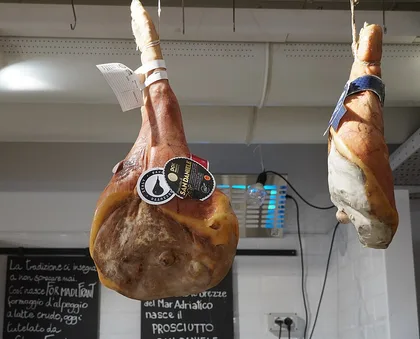 Cured meatsProsciutto di San DanieleProsciutto di San Daniele DOP is made in one town in Friuli from two ingredients: pork leg and sea salt.
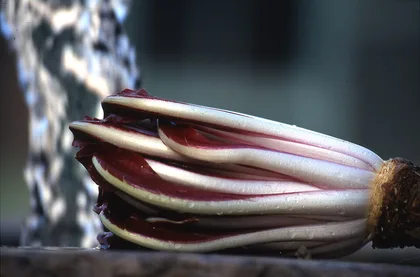 Vegetables and fruitTreviso RadicchioTreviso radicchio comes in two forms that are effectively different vegetables.
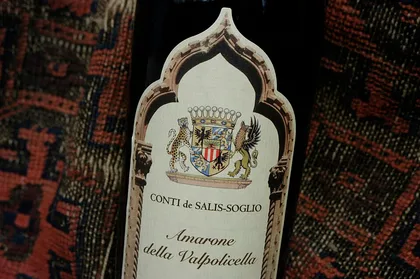 WineAmarone della ValpolicellaAmarone is made from Corvina, Corvinone and Rondinella dried on racks for 100 to 120 days until they lose…
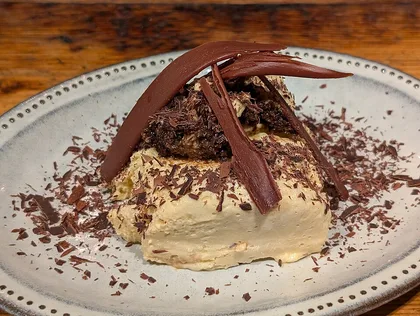 SweetsTiramisuNothing here goes near an oven. Savoiardi dipped in cold espresso, raw egg yolk whipped with mascarpone…Pasta and breadGnocchiGnocchi are small boiled dumplings, in their modern form made of potato bound with a little flour.
 CheeseAsiagoOne name covers two cheeses nobody would mistake for each other at the counter.
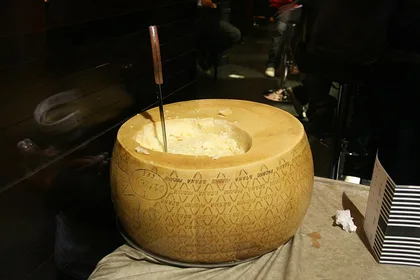 CheeseGrana PadanoNine months is the floor the specification sets before a wheel may carry the name.
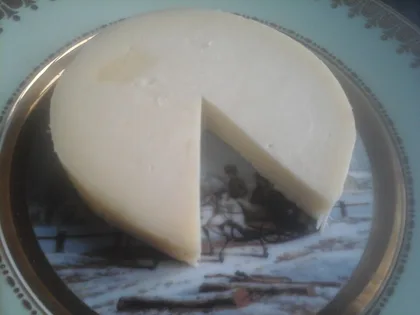 CheeseProvoloneProvolone is a stretched-curd cow's milk cheese from northern Italy, rope-tied and hung to age in shapes from…