Italy's novello wine goes on sale at 00:01 on 30 October, and the hour is written into law
Novello has a legal release hour, a bottling deadline and three words it keeps other labels from using. All of it sits in annex 7 of a 2012 Italian decree.
By the Agrofood.it editorial team · 31 October 2026 · 5 min read · 4 sources
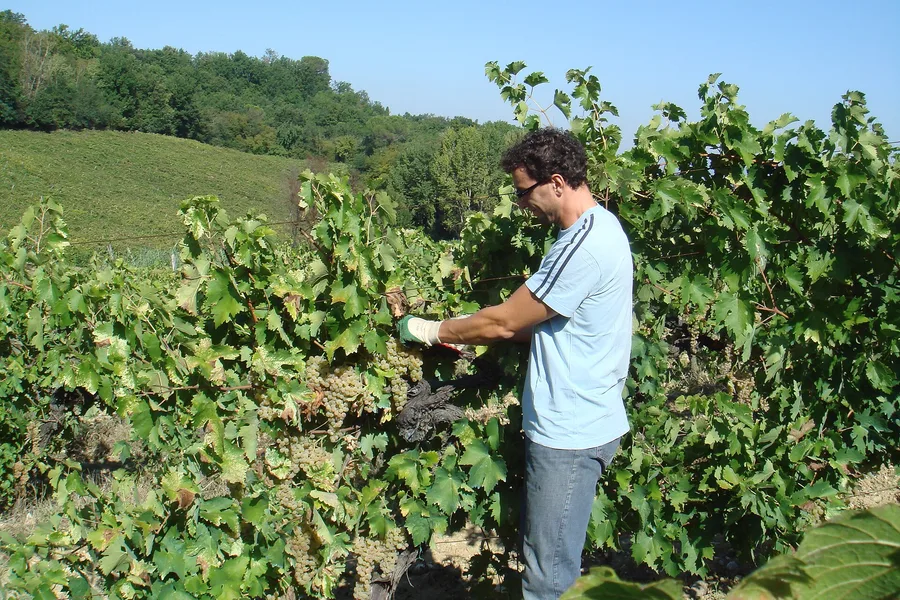
A wine with its release hour printed in the official gazette
Almost no Italian food has a legal opening time. Novello does. Annex 7 of the ministerial decree of 13 August 2012, published in the Gazzetta Ufficiale on 28 August, sets release to the public at «00:01 on 30 October of the grape harvest year». The only change allowed is a later one: if a denomination's specification sets a later date, that date wins.
The logistics turn around that hour. Novello leaving the bottling plant before 30 October travels with compulsory wording on the transport documents: «not to be released for consumption before 00:01 on 30 October», with the year filled in. Bottles can sit in a shop's stockroom the week before, waiting for midnight.
The second date is quoted less and matters more: bottling has to happen by 31 December of the harvest year. A wine bottled in January is not novello, whatever is inside it. The category lives inside a two-month window, which is why it appears and disappears from the shelf at the same speed.
Not every wine can be called novello
The first paragraph of the annex shuts out half the market. The words «novello» or «vino novello» belong only to wines with a protected designation of origin or a typical geographical indication «for which the relevant production specifications expressly provide for the novello type». Making a young wine and bottling it in October is not enough.
So there is no generic novello. Behind the word there has to be a denomination, and that denomination has to carry the type in its own specification: a decision taken when the specification is written or amended, not one a single winery can take.
For a buyer the check takes two seconds: next to the word novello there has to be the name of a PDO or an IGT. A label that says only «red wine» and novello is putting two things together that do not belong together. There is no single list of the wines entitled to the type: it sits inside the individual specifications, one by one.
Ten days, 40 per cent and two numbers
The annex also says how the wine is made, in four flat measurements. Vinification cannot last less than ten days from the moment it starts. At least 40% of the batch has to be obtained «through fermentation with carbonic maceration of whole grapes». Total alcohol as sold cannot fall below 11% vol, and residual reducing sugars cannot go above 10 grams per litre.
Carbonic maceration is what gives novello its character. Whole bunches go in uncrushed, into a vessel saturated with carbon dioxide, and fermentation starts inside the berry before the yeasts in the liquid take over. The result carries little tannin, a lot of fruit aroma and a bright colour.
The 40% figure deserves attention, because it is a share and not an exclusive method: the rest of the batch can be vinified the usual way and blended in afterwards. Anyone who reads novello as «entirely carbonic maceration» is reading something the rule does not say.
| Requirement | What annex 7 says |
|---|---|
| Who may use the word | Only PDO and IGT wines whose specification expressly provides for the «novello» type |
| Release to the public | 00:01 on 30 October of the grape harvest year, unless the specification sets a later date |
| Bottling | By 31 December of the harvest year |
| Vinification | No less than ten days from the start |
| Carbonic maceration | At least 40% of the batch, from whole grapes |
| Total alcohol | Not below 11% vol as sold |
| Residual sugars | No more than 10 grams per litre |
| Vintage | Compulsory in the designation and presentation |
| Banned wording | «novello», «giovane», «nuovo» and similar terms on wines without the right to them |
«New» and «young» are banned words
Paragraph 3.4 is the most useful line for anyone reading labels, and almost nobody quotes it. It forbids the use of «novello» or «vino novello», «as well as the terms giovane, nuovo, or other similar indications», on wines that have no right to the mention.
The border, in other words, does not run along the word novello alone: it runs along all of its near misses. A wine from the latest harvest that does not meet the conditions of the annex cannot present itself as new or young in order to suggest the same thing.
What sits outside this perimeter is the new wine of the cellar, the one still fermenting that gets tasted from the vat between October and November in many areas, and that is neither bottled nor sold under that name. Keeping those two apart is exactly what the ban is for: one is a regulated mention, the other is a cellar habit.
What has to be on the label
The annex requires novello wines to refer to the harvest year in their designation and presentation. The year is not a flourish, it is an obligation: without it the word novello has nothing to be measured against.
The wording also has to travel outside the bottle. Paragraph 3.1 requires «novello» or «vino novello» to appear on all official and commercial documents and in the registers kept by the companies that make or sell it. That is the part that makes everything else checkable: without the paper trail, the release date would be a claim and nothing more.
In front of a shelf, then, there are three things to look at and they are all on the same label: the name of a PDO or an IGT, the word novello, and the vintage. Price and producer say something else, and this site does not rank bottles.
Why Beaujolais nouveau arrives three weeks later
The most common mix-up involves France. Beaujolais nouveau does not come out on 30 October: the French ministry of agriculture writes that «since 1985 the arrival date of Beaujolais Nouveau has been set at the third Thursday of November». In 2026 that Thursday falls on 19 November, twenty days after the Italian release.
The two dates tell different stories. Italian novello was born in the 1970s with the French model in view, but its date comes from a national decree that applies to every denomination providing for the type. In France the rule belongs to particular appellations and has a longer history behind it.
In between sits San Martino, 11 November, which is not a legal date at all but the day when novello is traditionally drunk in much of Italy, with roast chestnuts. Between 30 October and 11 November the commercial calendar and the popular one do not line up: the first opens, the second celebrates.
How many bottles are left, and why the number is hard to pin down
Italian novello was a phenomenon and is now a niche. The figure in circulation comes from Coldiretti, the farmers' organisation, and was reported by the trade site WineNews on 29 October 2018: around 2 million bottles that year, against a peak of 17 million «ten years ago», so somewhere around 2008. Those are one organisation's estimates rather than official statistics, and they are eight years old.
We could not find a public, up-to-date series for this type. Official figures count hectolitres by denomination and by category, not by mention, and novello sits inside the denominations that provide for it without a line of its own. Anyone publishing a round number for this year's novello is taking it from a press release.
What can be checked is the rule itself: a two-month bottling window and a compulsory vintage make this category incompatible with long storage. Why the market shrank is a question for the people who sell it and the people who buy it, not for an annex.
The short of it
- Novello can be sold from 00:01 on 30 October of the harvest year, unless a specification sets a later date.
- It has to be bottled by 31 December of that same harvest: a two-month window.
- Only PDO and IGT wines whose specification provides for the type may use the word novello.
- At least 40% of the batch must come from carbonic maceration of whole grapes, with at least ten days of vinification.
- Total alcohol no lower than 11% vol, residual sugars no higher than 10 grams per litre.
- «Young» and «new» are banned on wines that have no right to the novello mention.
- French Beaujolais nouveau is released on the third Thursday of November, which in 2026 is the 19th.
Frequently asked questions
When is Italian novello wine released?
At 00:01 on 30 October of the year the grapes were harvested. The date is set by annex 7 of the Italian ministerial decree of 13 August 2012, and it can only be moved later, where a denomination's specification says so.
What is the difference between novello and new wine?
«Novello» is a regulated mention, reserved for PDO and IGT wines whose specification provides for it and made to set requirements. «New wine» is not a mention at all: annex 7 actually bans the words «nuovo» and «giovane» on wines with no right to be called novello.
Why does Beaujolais nouveau come out later?
It follows a different, French rule. The French ministry of agriculture states that since 1985 the release has been fixed on the third Thursday of November: in 2026 that is 19 November, twenty days after the Italian date.
What does carbonic maceration mean?
Whole, uncrushed bunches sit in a vessel saturated with carbon dioxide and fermentation begins inside the berry. Annex 7 requires at least 40% of the batch to be made that way; the rest can be vinified conventionally.
How long does novello stay on sale?
The rule sets no selling or drinking deadline. It sets the start, 30 October, and the end of bottling, 31 December of the harvest year: after that date no more wine can be bottled under the name.
Does novello have to show the vintage?
Yes. The annex requires novello wines to refer to the grape harvest year in their designation and presentation, and the wording has to appear on commercial documents and in company registers too.
Sources
Where to check what you just read.
- 1
L'allegato sta a pagina 34 del fascicolo: ora di immissione al consumo, confezionamento entro il 31 dicembre, dieci giorni di vinificazione, 40% di macerazione carbonica, 11% vol, 10 g/l, obbligo dell'annata e divieto di «giovane» e «nuovo».
- 2
Il decreto che ha rivisto gli allegati 1, 2, 3 e 5: l'allegato 7, quello del novello, non è toccato. Letto per controllare che il testo del 2012 fosse ancora quello valido.
- 3
La frase sulla data francese: dal 1985 l'uscita del Beaujolais Nouveau è fissata al terzo giovedì di novembre.
- 4
La stima Coldiretti dei 2 milioni di bottiglie e del picco di 17 milioni dieci anni prima: è una stima di parte agricola, datata 2018, e come tale viene citata.
The foods behind this
 WineLambruscoLambrusco is not one wine but a family of Emilian grape varieties.
 WineChianti ClassicoChianti Classico is the Black Rooster wine: at least 80 per cent Sangiovese from nine communes between…
 WineProseccoProsecco is made from Glera grapes by the Martinotti tank method, not the traditional bottle method used for…