How long it keeps once opened, and what actually decides that
The date on the label describes the sealed package. After that, four things govern everything: water, salt, fat and acidity. Knowing them means you already have the answer.
By the Agrofood.it editorial team · 15 August 2026 · 4 min read · 4 sources
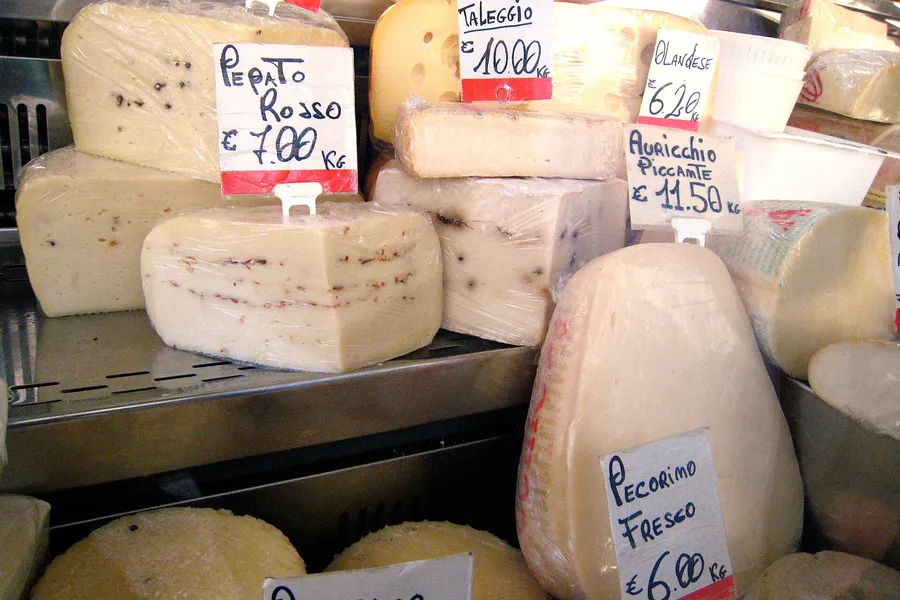
What the date on the label actually says
Two phrases sit on packaging and mean different things. «Use by» marks a date past which the food may not be sold, and applies to highly perishable products. «Best before» marks the minimum durability date: until that day the producer guarantees the declared characteristics, colour, aroma, texture.
Both share an assumption almost nobody reads: they hold for an unopened package kept in the stated conditions. The moment you open it, that date stops describing what you are holding, and something else starts counting.
That something else is composition, and you can read it without instruments.
The four things that decide, in order of weight
First, water. Microorganisms need available water to multiply, which is why mozzarella and dried pasta belong to different worlds despite both being food. The wetter a product, the more alive it is.
Second, salt, which works directly against the first: it binds water and makes it unavailable. Prosciutto crudo keeps for months not because it was sterilised but because salt took the water out of play, and the same logic governs Pecorino Romano or salt-packed anchovies.
Third, fat, which behaves unlike everything else. It does not fear microorganisms, it fears oxygen: it goes rancid. That is why olive oil follows rules of its own, and why the cut face of a prosciutto is sealed with its own fat.
Fourth, acidity. Below a certain pH many things simply do not grow: it is the principle behind vinegar, giardiniera and pickles generally, and partly behind cheese too, where lactic fermentation lowers pH while the paste dries.
How it applies, product by product
Line the four criteria up and the keeping of almost anything becomes predictable without looking it up. The table below gives no number of days, and that is not an omission: the criteria transfer, while the number shifts with your fridge temperature, the humidity of your kitchen, and how fresh the thing was when you bought it.
| Product | What decides how long it keeps |
|---|---|
| Parmigiano Reggiano | Little water and plenty of salt: the rind protects, the cut face does not. The cut surface dries and hardens. |
| Buffalo mozzarella | Lots of water, little salt, no ageing. Out of its liquid it loses structure in hours, not days. |
| Gorgonzola | Moist paste and live mould: it keeps ripening in the fridge, and the sharpness advances on its own. |
| Ricotta | Made from whey, so rich in water and residual sugar. It is the dairy product that changes fastest. |
| Whole prosciutto | Salt and drying do the work. The cut face should be covered with its own fat, not with cling film. |
| Sliced prosciutto | The exposed surface multiplies: an opened tray lasts days, a whole ham months. |
| Extra virgin olive oil | Not time but light, heat and air. Every opening oxidises it, and oxidation does not reverse. |
| Traditional balsamic vinegar | High acidity and concentrated sugars: it does not fear time and does not go in the fridge. |
| Dried pasta | Practically no water. The limit is the humidity of the room, not the date. |
| Opened preserves in oil | Oil does not preserve: it isolates. Once the jar is open it goes in the fridge and the contents stay covered. |
Cheese, and why cling film is nearly always wrong
A hard cheese is alive and still breathing. Wrapping it in cling film against the paste stops it exchanging moisture, and the surface turns tacky before growing mould where it should not.
The paper good counters use, the paper-and-polyethylene laminate, exists for exactly this: it lets a little air through and holds enough moisture back. Failing that, the domestic answer is baking parchment inside a closed container, which is a reasonable compromise between drying out and suffocating.
On hard pastes there is a second rule you can see by eye: the rind protects, the cut face does not. A piece with more cut surface dries faster than a compact piece of the same weight.
Cured meats: whole and sliced are two different products
The difference between a whole prosciutto and a tray of slices is not convenience, it is geometry. Slicing multiplies the surface exposed to air many times over, and everything that happens to a cured meat happens at the surface.
Hence the practice at the counter, which is not laziness: the cut face of a whole ham is covered with its own sugna, the fat taken off the previous cut. It acts as a plug, keeps air away and leaves the next slice soft.
On pre-sliced trays the opposite of the cheese rule applies: there, film in contact makes sense, because the enemy is air rather than moisture.
Olive oil is the case that plays by its own rules
Extra virgin olive oil has no microorganisms to fear. It has oxygen. Over time it oxidises, loses its fruity notes and develops rancidity, and that process does not run backwards.
What speeds it up, in order: light, heat, and the air that enters at every opening. Three practical consequences follow. The dark bottle is not styling. The spot beside the hob is the worst place in the kitchen. And a five-litre tin bought to save money, in a household of two, ends up costing more than two one-litre bottles, because it will sit half full of air for months.
And it is the reverse of wine: olive oil does not improve with age, and the best-before date exists precisely so you can work out how recent it is.
What this page does not say, and why
This is about how products change over time: how much they dry, how much they oxidise, how far a ripening carries on. You will not find whether something is still safe to eat.
That is not formal caution. The judgement depends on the individual package, on how it was kept, on the real temperature of your fridge and on who is eating. No web page can know those things. Food safety rules are published by health authorities, and they are the reference.
What we can say, and what the table sets out, is what governs each product's behaviour. That is the information you need in order to decide how much to buy and how to keep it, which is a different question.
The short of it
- The label date applies to a sealed package: once open, composition takes over.
- Four factors decide almost everything: water, salt, fat and acidity.
- More water and less salt means faster change. It is why mozzarella and dried pasta have nothing in common.
- Fat fears oxygen rather than microorganisms: olive oil follows its own rules, and light and heat matter more than time.
- On cheese, film in contact is nearly always wrong; on sliced meats it makes sense, because there the enemy is air.
- Slicing multiplies exposed surface: whole and sliced are two products with two different lives.
Frequently asked questions
What is the difference between «use by» and «best before»?
The first is a date past which the food may not be sold, and covers highly perishable products. The second is the minimum durability date: until then the producer guarantees the declared characteristics. Both apply to an unopened package.
Should Parmigiano be wrapped in cling film?
Against the paste it is the worst option, because it blocks moisture exchange and leaves the surface tacky. Better the laminated paper used at cheese counters, or at home baking parchment inside a closed container.
Why does a whole prosciutto keep so much longer than slices?
Because slicing multiplies the surface exposed to air, and everything that happens to a cured meat happens at the surface. On a whole leg the cut face is sealed with its own fat, which acts as a plug.
Does extra virgin olive oil expire?
Not the way a perishable food does: it oxidises. It loses its fruity notes and turns rancid, and light, heat and air drive that more than elapsed time. The dark bottle and a spot away from the hob genuinely matter.
Does refrigeration preserve everything?
It slows microbial activity, so it helps with fresh cheeses, dairy and sliced meats. It does nothing for olive oil, where the problem is oxygen, nor for traditional balsamic vinegar, whose acidity and concentrated sugars look after it.
How do I know whether something is still good?
This page does not answer that, and not out of formality: it depends on the individual package, on how it was kept and on your fridge. Health authority guidance is the reference.
Sources
Where to check what you just read.
- 1
Definisce «da consumarsi entro» e «da consumarsi preferibilmente entro», e stabilisce che valgono a confezione integra e alle condizioni indicate.
- 2
La cornice sulla catena del freddo e sulle condizioni di conservazione a cui le etichette rimandano.
- 3
I parametri di ossidazione, dal numero di perossidi agli assorbimenti nell'ultravioletto: sono la misura di quel che succede a un olio nel tempo.
- 4InstitutionEFSA, sicurezza alimentare
Il riferimento per le valutazioni di sicurezza, che questa pagina non fa e non sostituisce.
The foods behind this
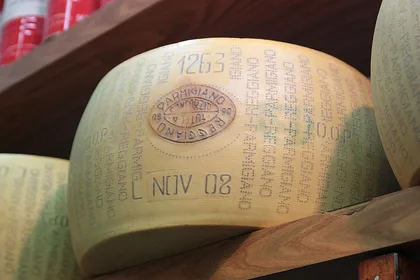 CheeseParmigiano ReggianoThree ingredients and no additives of any kind are permitted: raw cow's milk, salt and calf rennet, from five…
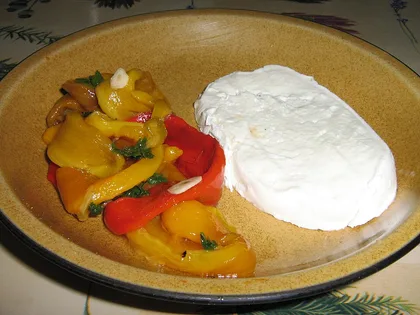 CheeseBuffalo MozzarellaMozzarella di Bufala Campana DOP is made from the whole raw milk of Italian Mediterranean water buffalo…
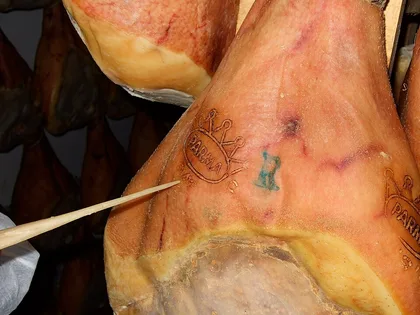 Cured meatsProsciutto di ParmaProsciutto di Parma DOP is Italian ham made from three things only: pork, sea salt and at least 400 days.
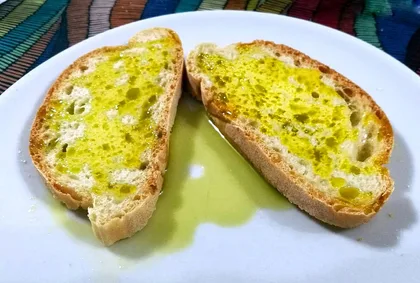 Oil and preservesExtra Virgin Olive OilTwo exams have to be passed, and one of them is carried out by people.
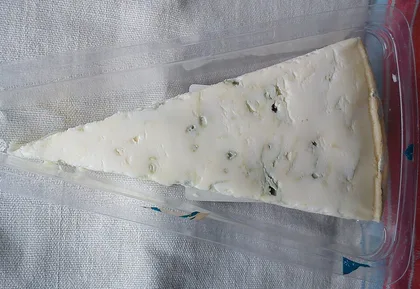 CheeseGorgonzolaThe green veining is the product, not a flaw anyone tolerates: it grows from a mould added to the milk and…
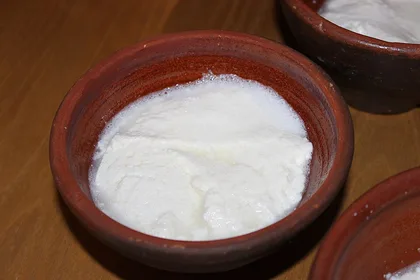 CheeseRicottaRicotta is not a cheese. It is a dairy product made from whey, the liquid left over after cheese has been…