What is Pecorino Romano?
Pecorino Romano is made from whole sheep's milk, coagulated with lamb rennet paste, cooked in the vat and pressed into cylindrical wheels of 20 to 35 kilos. It is one of the oldest cheeses in continuous production in Europe: Columella described the method in the first century AD, and Roman legionaries carried a daily ration of it on campaign.
Two things make it what it is. The first is dry salting: coarse salt rubbed onto every wheel by hand, in waves, over eighty to a hundred days, which pushes the finished cheese to around 5% salt. The second is lamb rennet paste, which carries lipase enzymes that break down milk fat and produce the piquant, almost peppery bite that liquid rennet never gives.
Despite the name, roughly 95% of it is now made in Sardinia. The recipe is Roman; the sheep moved.
What does it taste like?
Salt first, always. Then a sharp, tangy piquancy that catches at the back of the throat, and underneath it the slightly gamey, lanolin-adjacent flavour of sheep's milk. There is very little sweetness and no nuttiness, the two things people expect if they arrive from Parmigiano Reggiano.
The texture is hard, dry and granular, breaking into flakes rather than slicing into ribbons. Eaten in a chunk it is punishing on its own and superb with honey, pears or raw broad beans. Grated into hot pasta it stops being a cheese and becomes seasoning.
A useful mental model: Parmigiano is savoury depth, Pecorino Romano is salt and edge. Recipes that call for one rarely want the other.
How to use it
Buy a wedge and grate it yourself, as fine as you can. Pre-grated Pecorino Romano loses most of its aroma within days and behaves badly in sauce because of the anti-caking agents.
The cardinal rule is never to add it to a pan over direct heat. Sheep's milk protein tightens fast and the cheese will string, then seize into rubbery lumps. For cacio e pepe, take the pan off the heat, add pasta water that has stopped steaming hard, and work the cheese into a paste before the pasta goes anywhere near it. For carbonara, the cheese goes into the egg mixture, off the heat, always.
Because it is around 5% salt, treat it as seasoning and not as garnish: cut the salt everywhere else in the recipe, including the pasta water. Beyond pasta it is excellent shaved over raw artichokes and broad beans, folded into meatballs, or with honey and pears on a board. Keep the rind: dropped into a soup or a bean pot it releases flavour for an hour.
How long it keeps
A wedge lives in the fridge, in the vegetable drawer, wrapped first in a lightly dampened cloth and then in waxed or greaseproof paper. Cling film against the surface makes it sweat and softens the rind. Handled that way it holds for two to three months, and across that time it keeps giving up water: it hardens, the salt concentrates, and it grates more finely than it did on the first day.
The cut face dries and turns glassy within a week or two, and scraping that surface back exposes the paste underneath. A dry white or green bloom on the rind can be wiped away with a cloth dipped in vinegar; anything damp, pink or black is a question for the cheesemonger or the producer rather than for guesswork. Grated cheese freezes for about six months in a rigid box but loses the finer aromatics, so freezing the wedge itself in 200 gram pieces gives a better result. Rinds keep in the freezer and go into soups.
Spot the real thing
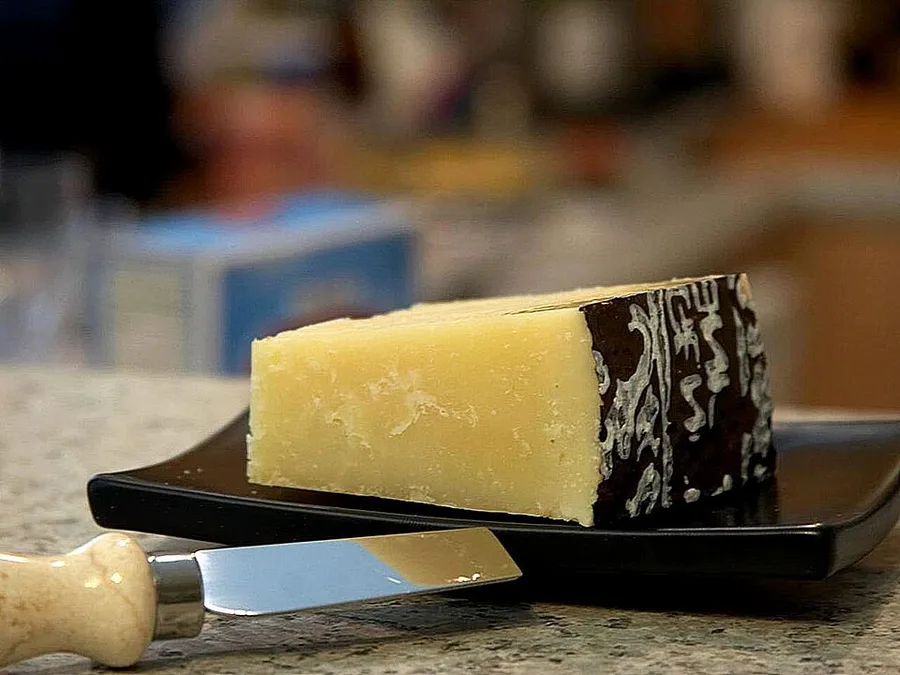
The mark is on the rind and it is the first thing to check: a stylised sheep's head inside a diamond, repeated all the way round the side of the wheel alongside the words Pecorino Romano. It is pressed in with a matrix before salting, so it sits inside the rind instead of being printed on top. The paste is white to faintly straw coloured and compact, with few and irregular eyes, and it breaks into shards rather than bending into slices; a piece that flexes has not been aged long enough. On the nose there is a sharp, faintly sheepy note, and the salt arrives before the peppery finish does.
The trap outside Italy is the word Romano on its own. Domestic Romano, frequently cow's milk and made in Wisconsin or Argentina, is a different cheese at a much lower price. Locatelli, confusingly, is a genuine DOP brand. Pecorino Toscano is softer and milder, and Parmigiano is cow's milk with a grainy, nutty profile.
How to pronounce Pecorino Romano
peh-koh-REE-noh roh-MAH-noh
Seven syllables, stress on the third of each word. The 'c' in pecorino is hard, as in 'corn', never 'pech-'. Every vowel is pronounced clearly and separately, so the ending is 'noh', not 'nuh'. The word simply means 'sheep's, Roman': pecora is Italian for ewe.
Pecorino Romano compared
vsParmigiano Reggiano (Parmesan)
Different animal, different age, different job. Pecorino Romano is sheep's milk, dry-salted and aged five to twelve months; Parmigiano is cow's milk, brine-salted and aged at least twelve. Swapping them one for one will make a Roman pasta taste flat, or a risotto taste like a salt lick.
| This | Parmigiano Reggiano (Parmesan) | |
|---|---|---|
| Milk | Whole sheep's milk | Partly skimmed cow's milk, raw |
| Minimum ageing | 5 months (8 for grating) | 12 months |
| Salting | Dry salt rubbed by hand, 80-100 days | Brine bath, about 20 days |
| Salt content | Around 5% | Around 1.4% |
| Flavour | Salty, sharp, piquant, faintly gamey | Nutty, sweet, savoury, crystalline |
| Rennet | Lamb rennet paste | Calf rennet |
| Classic uses | Cacio e pepe, carbonara, amatriciana, gricia | Risotto, broth, shaved on salad, eaten alone |
| Wheel | 20-35 kg | 38-40 kg |
| Price | $12-20 per lb | $18-30 per lb |
vsAmerican Romano cheese
In the United States, 'Romano' is a generic name with a federal standard of identity, and it is usually made from cow's milk in Wisconsin. It is drier, blander and much cheaper than the Italian DOP, and it is what most pre-grated 'Romano' shakers contain.
| This | American Romano cheese | |
|---|---|---|
| Milk | Sheep, by law | Usually cow, sometimes goat or a blend |
| Protected name | DOP, EU-protected | Generic US name, unprotected |
| Where made | Sardinia, Lazio, Grosseto | Wisconsin, New York, California |
| Flavour | Sharp, piquant, complex | Salty, flat, one-dimensional |
| Label check | 'Pecorino Romano DOP' plus the sheep-head rind stencil | Just 'Romano' or 'Romano cheese' |
| Price | $12-20 per lb | $6-10 per lb |
vsPecorino Sardo and Pecorino Toscano
All three are sheep's milk DOP cheeses, and all three are routinely mislabelled as interchangeable. Sardo and Toscano are far milder, less salty and often eaten as table cheese; Romano is a seasoning cheese that happens to be edible on its own.
| This | Pecorino Sardo and Pecorino Toscano | |
|---|---|---|
| Salting | Dry salt, months | Brine, days |
| Ageing | 5-12 months | Sardo 20-60 days (dolce) or 2+ months (maturo); Toscano 20 days to 4 months |
| Texture | Hard, flaking, granular | Semi-soft to firm, sliceable |
| Flavour | Salty and sharp | Milky, buttery, mildly nutty |
| Best use | Grated into pasta | Sliced on a board, in sandwiches, melted |
vsManchego
The nearest non-Italian sheep's milk hard cheese most shoppers can find. Manchego curado is a workable stand-in for grating, but it is buttery and nutty where Pecorino Romano is salty and sharp, so you will need to add salt to the dish.
| This | Manchego | |
|---|---|---|
| Origin | Sardinia, Lazio, Tuscany | La Mancha, Spain |
| Breed | Sarda and Comisana ewes | Manchega ewes |
| Flavour | Salty, piquant, lactic sharpness | Buttery, nutty, sweet, mild tang |
| Texture | Dry and granular | Firmer but more elastic, oilier |
| Grating | Powders cleanly | Tends to clump slightly |
Pecorino Romano substitutes
- Pecorino Sardo maturo
The closest replacement in style and species: same sheep's milk character, roughly half the salt and less bite. Season the dish more aggressively to compensate.
1:1, plus a pinch of salt per serving - Parmigiano Reggiano
The default swap and the one most recipes suggest, but be clear about what changes: you get nutty depth instead of sharp salt. Best in a blend rather than alone.
1:1 by weight, plus salt; or two parts Parmigiano to one part Pecorino Romano - Manchego curado (12 months or more)
Widely available in the US and UK and genuinely sheep's milk. Grate it fine, because it is oilier than Pecorino Romano and can clump if the pasta is too hot.
1:1, plus salt - Grana Padano
Cheaper and milder than Parmigiano, and perfectly serviceable when the cheese is one ingredient among many. Too gentle to carry cacio e pepe on its own.
1.2:1, plus salt - Vegetarian: Berkswell or Spenwood
Pecorino Romano is never vegetarian: the DOP requires lamb rennet paste, and there is no compliant alternative. Both of these English sheep's milk cheeses from Village Maid in Berkshire use microbial rennet, age hard and grate well. Berkswell is the sharper of the two.
1:1, plus salt - Vegan: cashew, nutritional yeast and white miso
Blitz 100 g toasted cashews with 3 tablespoons nutritional yeast, a teaspoon of white miso and a good half-teaspoon of fine salt. It will not emulsify into a cacio e pepe sauce, but scattered over finished pasta it delivers the salt and savoury hit.
Where to buy it
In the US, Pecorino Romano is one of the easiest Italian DOP cheeses to find: Costco, Whole Foods, Wegmans and most Italian delis carry Locatelli, Fulvi or Zerto. Locatelli is the market leader and is made in Sardinia; Fulvi is one of the few still made in Lazio and is noticeably less salty and more rounded. Expect $12-20 per pound, less at warehouse clubs.
In the UK, Waitrose, Ocado and Italian delicatessens stock it at roughly £18-28 per kilo. Some supermarkets label it simply 'Pecorino', so check for the DOP mark, since Pecorino Sardo and Toscano are quite different cheeses.
Whatever the source, look for the Consorzio's rind stencil: a stylised sheep's head inside a diamond, repeated all around the side of the wheel and impressed into the rind rather than printed on it. Buy a piece with rind attached, avoid anything pre-grated, and if there is a choice, ask for a wedge cut from a wheel that day.
Where to eat it in Italy
Rome is the obvious pilgrimage. The trattorie of Testaccio, the neighbourhood built around the city's old slaughterhouse, still make cacio e pepe, gricia and carbonara with nothing but pecorino, pepper, pasta water and guanciale. Pigneto and Trastevere are close behind.
In Sardinia, the Marghine district around Macomer, Thiesi and Bortigali is the industrial heart of production, and several dairies run tours through the salting rooms. For long-aged wheels that never leave the island, the Barbagia around Nuoro and the Marmilla are where to ask.
In Lazio the DOP production is now small, but a handful of dairies in the Sabina hills and the Agro Pontino still work local milk, and their cheese is worth seeking out for the difference in salt alone.
Recipes with it
Further reading
 ExplainerWhich Italian cheeses contain no lactoseItaly sets a legal threshold, and long-aged cheeses clear it on their own, with no treatment involved.
 InvestigationWhich Italian cheeses are vegetarianWe counted what rennet the 43 cheeses in our atlas declare: 35 out of 43 say animal, none say otherwise.
 ExplainerParmesan vs Parmigiano Reggiano: the differenceIn Europe «parmesan» evokes a protected designation and cannot be used for anything else.
Frequently asked questions
Is Pecorino Romano the same as Parmesan?
No. Pecorino Romano is sheep's milk, dry-salted and sharp; Parmigiano Reggiano is cow's milk, brine-salted and nutty. Pecorino Romano contains roughly three times the salt. They are not interchangeable without adjusting the seasoning of the dish.
Why is Pecorino Romano so salty?
Because it is salted with coarse dry salt rubbed onto each wheel by hand, repeatedly, over eighty to a hundred days, not dipped in brine for a few weeks. That method was originally about preservation for long sea voyages, and it survives in the DOP rules.
Is Pecorino Romano vegetarian?
No. The DOP specification requires lamb rennet paste, an animal product, and it is what gives the cheese its piquant flavour. If you need a vegetarian hard sheep's cheese, English Berkswell or Spenwood use microbial rennet and grate well.
How do you pronounce Pecorino Romano?
peh-koh-REE-noh roh-MAH-noh. Hard 'c' as in 'corn', stress on the third syllable of each word, and the final 'o' fully pronounced.
Can lactose-intolerant people eat it?
Usually yes. After five months of ageing the lactose has been almost entirely consumed by lactic bacteria, and in eight-month wheels it is generally below the detectable threshold.
Sources
Where to check what you just read.
- 1
L'atto del giugno 1996 che iscrive «Pecorino Romano» fra i formaggi DOP italiani.
- 2
Da qui si scarica il disciplinare: latte ovino intero delle sole zone ammesse, salatura a secco e stagionature minime distinte fra da tavola e da grattugia.
- 3Consortium · interested partyConsorzio per la tutela del Pecorino Romano
I numeri della filiera (allevatori e caseifici) e la conferma che la produzione si concentra in Sardegna, non nel Lazio come lascerebbe intendere il nome.
Related foods
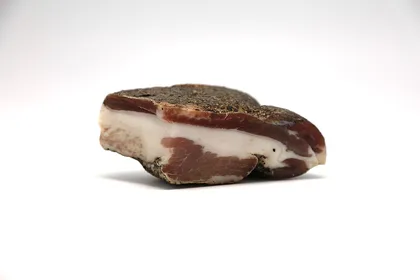 Cured meatsGuancialeGuanciale is cured pork jowl: unsmoked, rubbed with salt and pepper, aged for one to three months.
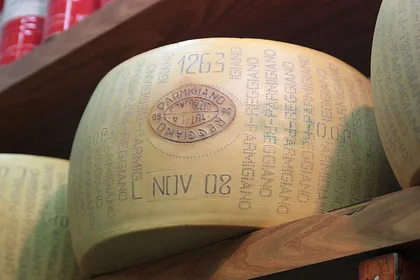 CheeseParmigiano ReggianoThree ingredients and no additives of any kind are permitted: raw cow's milk, salt and calf rennet, from five…
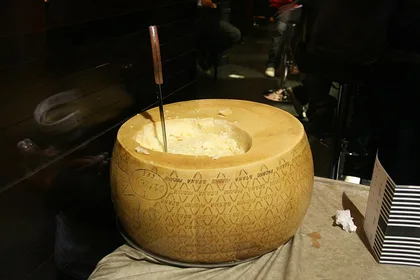 CheeseGrana PadanoNine months is the floor the specification sets before a wheel may carry the name.
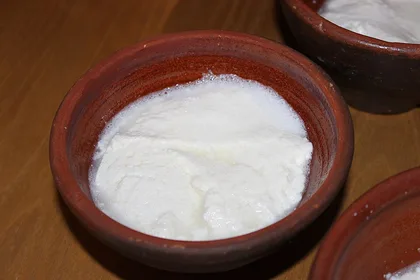 CheeseRicottaRicotta is not a cheese. It is a dairy product made from whey, the liquid left over after cheese has been…
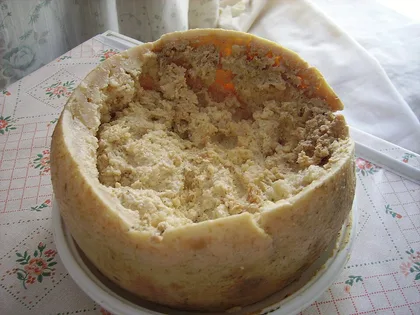 CheeseCasu MarzuCasu marzu is a Sardinian sheep's cheese whose ripening is carried on by the larvae of the cheese fly.
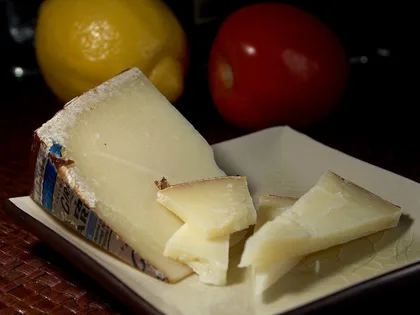 CheesePecorino SardoPecorino Sardo DOP is Sardinia's table cheese: whole sheep's milk, calf rennet, two official types.
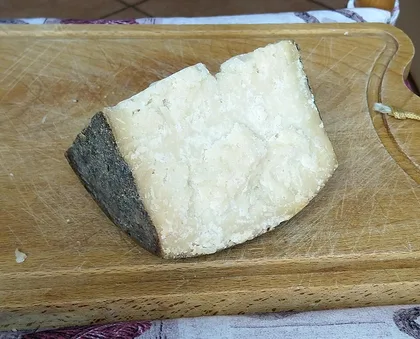 CheeseFiore SardoFiore Sardo DOP is the shepherd's pecorino of Sardinia: raw sheep's milk, lamb rennet paste, an uncooked…
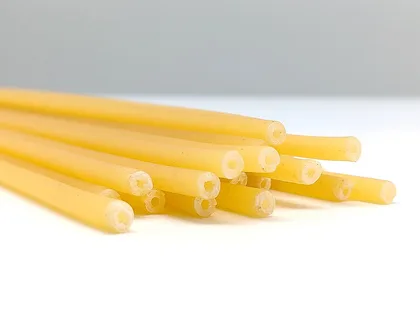 Pasta and breadBucatiniBucatini are thick spaghetti with a hole running through the middle.