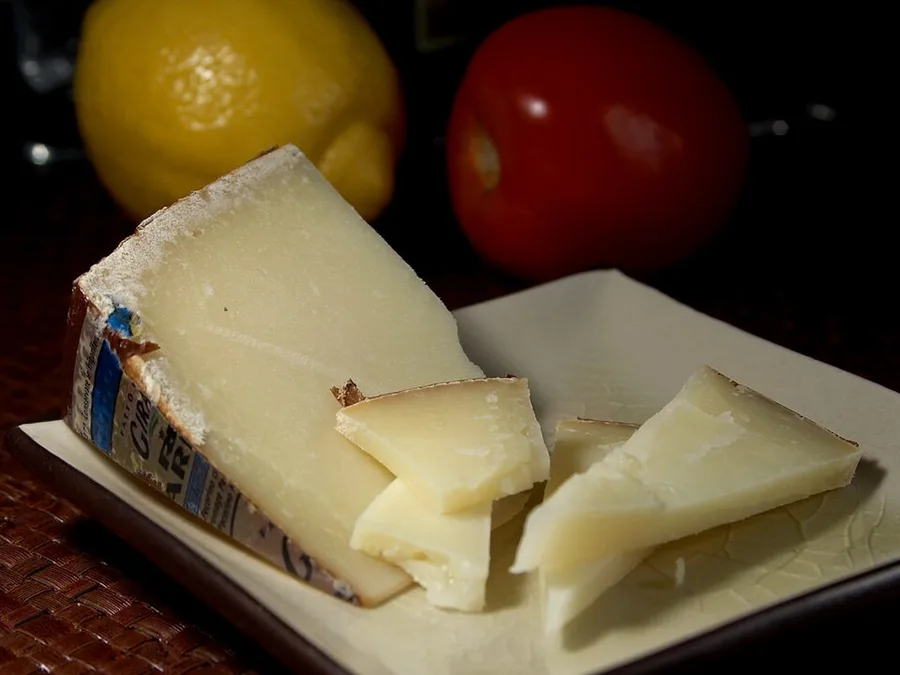
What is Pecorino Sardo?
Pecorino Sardo is a semi-cooked sheep's milk cheese made across the island of Sardinia from the milk of Sarda ewes. The DOP rules define two separate cheeses, and the label must say which one you are buying.
Pecorino Sardo Dolce comes in wheels of 1 to 2.3 kilos, aged 20 to 60 days, with a thin pale rind and a white, elastic, slightly moist paste. Pecorino Sardo Maturo weighs 1.7 to 4 kilos, ages from two months up to a year and beyond, and develops a hard amber rind and a firm, faintly granular paste.
The decisive technical choice is the rennet. Pecorino Sardo is coagulated with calf rennet, not the lamb rennet paste used for Pecorino Romano and Fiore Sardo. Lamb rennet paste carries lipase enzymes that break down milk fat and create sharp, peppery flavours; calf rennet does not. That is why Pecorino Sardo stays sweet-natured even when it is old, and why it was conceived as a cheese to eat rather than a cheese to grate.
It was recognised in Italy in 1991 and granted EU protection in 1996, largely to give the island's own table cheese a defensible identity next to the Roman giant that had taken over its dairies.
What does it taste like?
The Dolce tastes of fresh sheep's milk: clean, lactic, faintly tangy like good yoghurt, with a buttery weight in the mouth and a short, sweet finish. There is no sharpness at all, and the salt is moderate: it eats like a young Manchego with the oiliness dialled down.
The Maturo is a different register. Six months in, it is savoury and nutty with a lanolin note that says sheep clearly but politely, a mild tingle at the back of the palate and a long finish that recalls toasted almonds. Past a year it picks up a genuine piquancy and small crunchy crystals, though it never reaches the salt-forward aggression of Pecorino Romano.
The texture tells the same story: Dolce slices and melts, Maturo flakes and grates.
How to use it
Treat Dolce as a slicing and melting cheese. It goes on bread with a drizzle of olive oil, into ravioli and pasta fillings, over hot malloreddus, into a frittata, or under the grill on toast. It melts without stringing or splitting, which is exactly what Pecorino Romano refuses to do.
Treat Maturo as a board and finishing cheese. Shave it over fennel and orange salad, over raw broad beans in spring, or with a spoon of bitter corbezzolo honey. Grate it into bean soups, over fregola, into meatballs. Because it is far less salty than Pecorino Romano, you can be generous with it, but you will also need to add salt yourself.
The useful kitchen rule: in a dish where the pecorino is the loudest ingredient, Romano is the right cheese; where it is one voice among several, Sardo Maturo lets everything else be heard. Both benefit from thirty minutes out of the fridge before serving: cold sheep cheese has almost no aroma.
How long it keeps
Dolce sits in the fridge between 4 and 8 °C, wrapped in greaseproof paper or left in the pack it came in, and is generally used within two or three weeks. It carries a lot of water, so cling film against the surface makes it sweat and a slick film gathers within days. Maturo holds far longer, two to three months, wrapped first in a barely damp cloth and then in paper, and over that time it keeps losing water: it hardens, the salt concentrates and it drifts towards the grater.
The cut face dries and turns glassy after a week or so, and scraping it back exposes the paste underneath. A dry white or green bloom on the rind comes away with a cloth dipped in vinegar; anything damp, pink or black is a question for the cheesemonger or the producer. Dolce crumbles on thawing and is not worth freezing, while Maturo takes it in 200 to 300 gram pieces for up to six months. Give either half an hour out of the fridge before serving, because cold it has almost no smell.
Spot the real thing
The label has to spell out Pecorino Sardo DOP and then the type, Dolce or Maturo; a piece naming no type is not compliant. On the wheel there is a numbered casein plaque, pressed in at moulding and so embedded in the rind rather than stuck on, alongside the Consorzio mark. Dolce has a white paste, moist at the cut but not wet, springy under a finger, with a few small irregular eyes; chalky or floury Dolce acidified badly. Maturo is straw coloured, flakes rather than slices and carries a faint grain, and a piece that bends like a soft caciotta has not spent the months it claims.
Two phrases to distrust at a counter: pecorino sardo in lower case with no DOP, which states origin and nothing more, and semisardo, which often means a sheep and cow milk blend. A black or red rind is a dairy's styling, not a category. Fiore Sardo, sold beside it abroad, is a separate DOP, smoked and made from raw milk.
How to pronounce Pecorino Sardo
peh-koh-REE-noh SAR-doh
The 'c' in pecorino is hard, as in 'corn', never 'pech-'. Stress on the third syllable of pecorino and the first of Sardo. The final 'o' is a full, round vowel, not the weak 'uh' of English word endings. Pecora means ewe; Sardo simply means Sardinian.
Pecorino Sardo compared
vsPecorino Sardo Maturo (versus Dolce)
Two cheeses under one name, not one cheese at two ages. The curd is cut coarsely and barely heated for Dolce, cut to rice-grain size and cooked to 45C for Maturo, so the older cheese is built from the vat onwards to lose whey and survive ageing. If a recipe or a cheeseboard calls for Pecorino Sardo, it matters which one you buy.
| This | Pecorino Sardo Maturo (versus Dolce) | |
|---|---|---|
| Ageing | 20 to 60 days | Over 2 months, commonly 6 to 12 |
| Wheel weight | 1 to 2.3 kg | 1.7 to 4 kg |
| Curd | Cut to hazelnut size, barely heated | Cut to rice-grain size, cooked to 43-45C |
| Paste | White, elastic, moist, small eyes | Straw-coloured, firm, faintly granular |
| Flavour | Milky, sweet, gently tangy | Nutty, savoury, mildly piquant with age |
| Melts | Yes, smoothly | Poorly: it separates |
| Best use | Sliced, stuffed into pasta, on a sandwich | Cheeseboard, shaved over salad, grated |
| Price | $11-17 per lb | $16-26 per lb |
vsPecorino Romano
Around 80% of all Pecorino Romano is made in Sardinia, from Sardinian sheep, by Sardinian dairies, and it is still a completely different DOP with a different recipe, a different rennet and a different job in the kitchen. The name refers to the Roman method, protected since 1996 across Sardinia, Lazio and the province of Grosseto, not to the place the milk comes from. Shoppers who assume Sardinian sheep cheese equals Pecorino Romano end up salting their food twice.
| This | Pecorino Romano | |
|---|---|---|
| Rennet | Calf rennet, liquid | Lamb rennet paste, with lipase |
| Salting | Brine or dry, 1-2 days (Dolce) | Dry salt rubbed by hand over 80-100 days |
| Salt content | Around 1.5-2.5% | Around 5% |
| Minimum ageing | 20 days (Dolce), 2 months (Maturo) | 5 months, 8 for grating grade |
| Wheel | 1-4 kg | 20-35 kg |
| Flavour | Milky to nutty, mild to gently piquant | Salty first, then sharp and peppery |
| Designed for | Eating in slices | Grating as seasoning |
| Where made | Sardinia only | Sardinia (about 80%), Lazio, Grosseto |
vsManchego
The sheep's milk cheese most non-Italian shoppers already know, and the closest thing to a like-for-like swap. Manchego is oilier and sweeter with a distinctive grassy note; Pecorino Sardo is cleaner and more lactic. Curado Manchego sits roughly where a six-month Maturo sits.
| This | Manchego | |
|---|---|---|
| Origin | Sardinia | La Mancha, Spain |
| Breed | Sarda ewes | Manchega ewes |
| Rind | Smooth, thin (Dolce) or hard amber (Maturo) | Basket-weave pattern, often waxed |
| Texture | Elastic then flaking | Firmer, oilier, more brittle |
| Flavour | Lactic, clean, nutty with age | Buttery, grassy, sweetly nutty |
| Melting | Dolce melts well | Tends to weep oil |
Pecorino Sardo substitutes
- Manchego semicurado or curado
The best all-round stand-in and easy to find in both the US and the UK. Semicurado maps onto Dolce, curado onto Maturo. Slightly oilier, so use a touch less if it is melting into a sauce. Made with animal rennet unless the label says otherwise.
1:1 - Ossau-Iraty
French Basque sheep's milk cheese, mild and buttery, an excellent replacement for Pecorino Sardo Dolce on a board or in a sandwich. Less tangy, so it will not cut through fat as cleanly.
1:1 - Young Pecorino Toscano
Same species, same idea of a table pecorino, marginally softer and sweeter. The most faithful substitute if your deli has it, and the easiest to find in Italy itself.
1:1 - Pecorino Romano, only with adjustment
The common mistake. It carries roughly double the salt and a sharp lipase bite, so it will overwhelm anything that expected Pecorino Sardo. If it is all you have, use half the weight and remove salt elsewhere in the dish.
0.5:1, and cut the salt in the recipe - Vegetarian: Berkswell or Spenwood
Pecorino Sardo DOP is never vegetarian: the specification requires calf rennet, and no microbial-rennet version can carry the DOP. These two English sheep's milk cheeses from Berkshire are made with microbial rennet, age hard and behave like a Maturo on the board and on the grater.
1:1 - Vegetarian, softer register: microbial-rennet young sheep cheeses
For the Dolce end, several UK and US creameries make young sheep's milk tommes with microbial rennet: check the label for 'suitable for vegetarians' or 'non-animal rennet'. They melt like the Dolce does and slice cleanly.
1:1
Where to buy it
In the US it is stocked by Italian delis, Murray's Cheese, Eataly and the better supermarket cheese counters, at roughly $14 to $24 per pound depending on type and age. Ask explicitly for Dolce or Maturo: American counters often sell both simply as 'Pecorino Sardo', and the difference matters more than the price does.
In the UK expect £18 to £30 per kilo from Italian delicatessens, La Fromagerie, Ocado and online Italian importers. It is less widely distributed than Pecorino Romano or Toscano, so a specialist cheesemonger is usually the shorter route.
Wherever you buy, check the label for the words Pecorino Sardo DOP plus the type. Lowercase 'sardinian pecorino' or 'sheep cheese from Sardinia' is a description of origin, not a certification. On a whole wheel, look for the numbered casein plate set into the rind at moulding: a printed sticker on its own means nothing.
Where to eat it in Italy
The Marghine district around Macomer, Thiesi and Bortigali is the densest concentration of dairies on the island, and several run tours through the ageing rooms. Ozieri, in the Logudoro, is the other historic centre, where dairies still collect milk from small flocks.
Inland Barbagia is where to go if you want the cheese and the landscape together. From September to December the Autunno in Barbagia circuit opens the courtyards of villages like Gavoi, Ollolai, Orgosolo and Ovodda in rotation, and the cheeses are tasted where they are made.
On the east coast, Dorgali, Oliena and the Ogliastra have shepherds and agriturismi selling directly. Anywhere on the island, the honest test is an agriturismo dinner: the antipasto will arrive with three or four pecorini at different ages, and the difference between Dolce and Maturo will explain itself in one plate.
Further reading
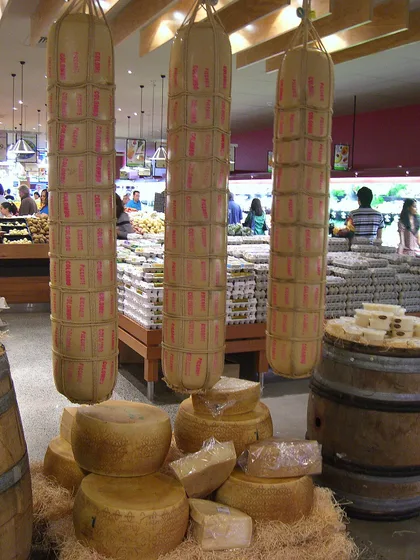 ExplainerWhich Italian cheeses contain no lactoseItaly sets a legal threshold, and long-aged cheeses clear it on their own, with no treatment involved.
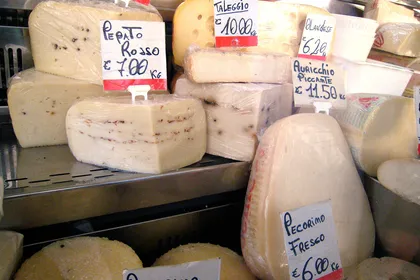 GuideHow long food keeps once openedThe date on the label describes the sealed package. After that, four things govern everything: water, salt…
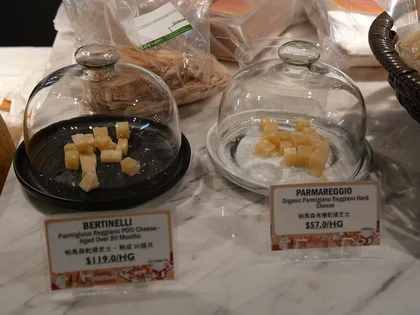 ExplainerParmesan vs Parmigiano Reggiano: the differenceIn Europe «parmesan» evokes a protected designation and cannot be used for anything else.
Frequently asked questions
What is the difference between Pecorino Sardo and Pecorino Romano?
They are two separate DOPs, even though both are largely made in Sardinia. Pecorino Romano uses lamb rennet paste, is dry-salted by hand for months and aged at least five, which makes it very salty and sharp: a seasoning cheese. Pecorino Sardo uses calf rennet, is salted briefly and stays mild: a table cheese.
Should I buy Dolce or Maturo?
Dolce for slicing, sandwiches, melting and anything where you want milky sweetness. Maturo for a cheeseboard, for shaving over salads and vegetables, and for grating when you want sheep character without a salt bomb.
Is Pecorino Sardo vegetarian?
No. The DOP specification requires calf rennet, an animal product, and there is no compliant microbial-rennet version. English Berkswell and Spenwood are hard sheep's milk cheeses made with microbial rennet and work well as substitutes.
Can I use it instead of Parmesan?
Maturo, yes, but use slightly less, since it is more savoury and more distinctly sheep-flavoured. Dolce, no: it melts rather than seasons, and will make a risotto stringy instead of creamy.
How do you pronounce Pecorino Sardo?
peh-koh-REE-noh SAR-doh, with a hard 'c' as in 'corn' and the final vowels fully pronounced.
Sources
Where to check what you just read.
- 1
Il regolamento del 1º luglio 1996 che iscrive «Pecorino Sardo» fra le DOP: nome distinto dal Pecorino Romano, che in Sardegna si produce comunque.
- 2
Il disciplinare in PDF: parametri di dolce e maturo, giorni minimi di stagionatura per ciascuna tipologia, peso delle forme e razza ovina ammessa.
- 3Consortium · interested partyConsorzio per la tutela del formaggio Pecorino Sardo DOP
Il consorzio con sede a Cagliari: la distinzione ufficiale fra dolce e maturo e l'elenco dei caseifici che possono usare la denominazione.
Related foods
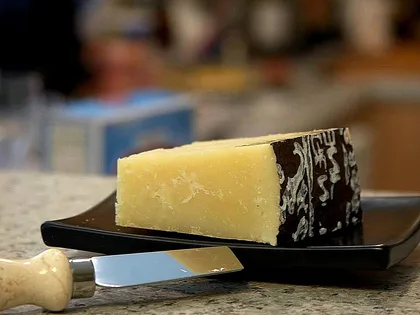 CheesePecorino RomanoPecorino Romano DOP is a hard, dry-salted sheep's milk cheese aged at least five months, made in Sardinia…
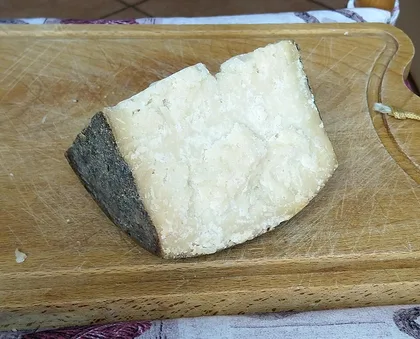 CheeseFiore SardoFiore Sardo DOP is the shepherd's pecorino of Sardinia: raw sheep's milk, lamb rennet paste, an uncooked…
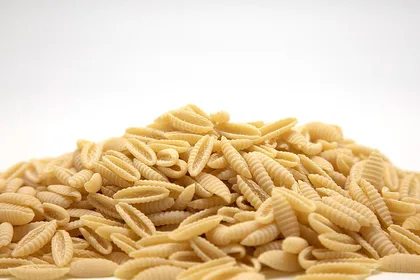 Pasta and breadMalloreddusThe ridges are not decoration: they hold sauce on a shape that would otherwise be smooth and slippery.
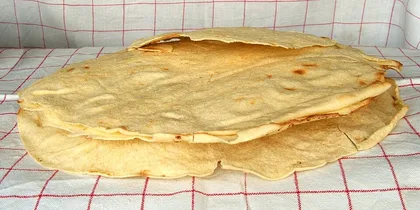 Pasta and breadPane carasauBaked twice because it had to survive months in a shepherd's saddlebag: a paper-thin disc of durum semolina…
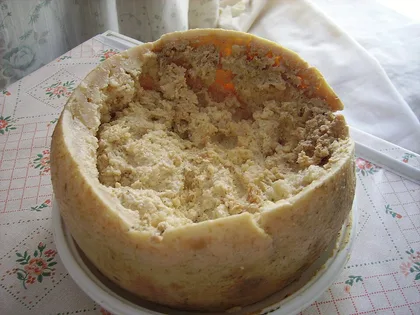 CheeseCasu MarzuCasu marzu is a Sardinian sheep's cheese whose ripening is carried on by the larvae of the cheese fly.
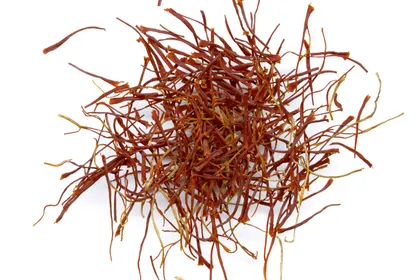 Oil and preservesSaffronOne kilo takes between 150,000 and 200,000 flowers, and every flower gives up three stigmas that have to be…
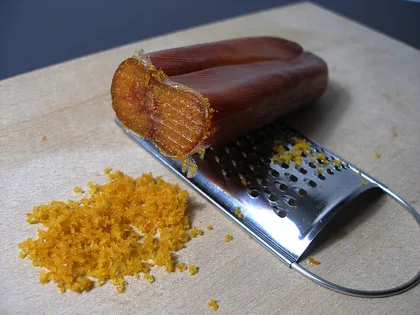 Fish and seafoodBottargaFifteen grams a head is enough, and that is not meanness: bottarga is the salted, pressed, air-dried roe sac…
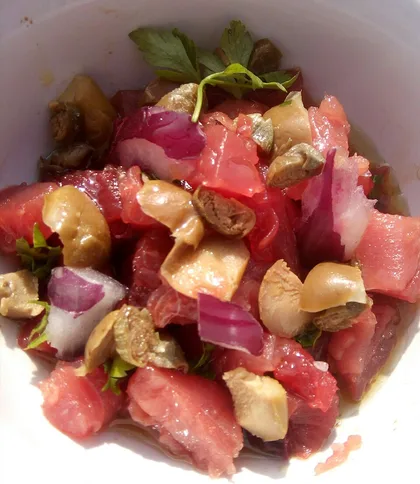 Fish and seafoodBluefin TunaAtlantic bluefin, Thunnus thynnus, is the fish Sicily and Sardinia built their tonnare around, with a…