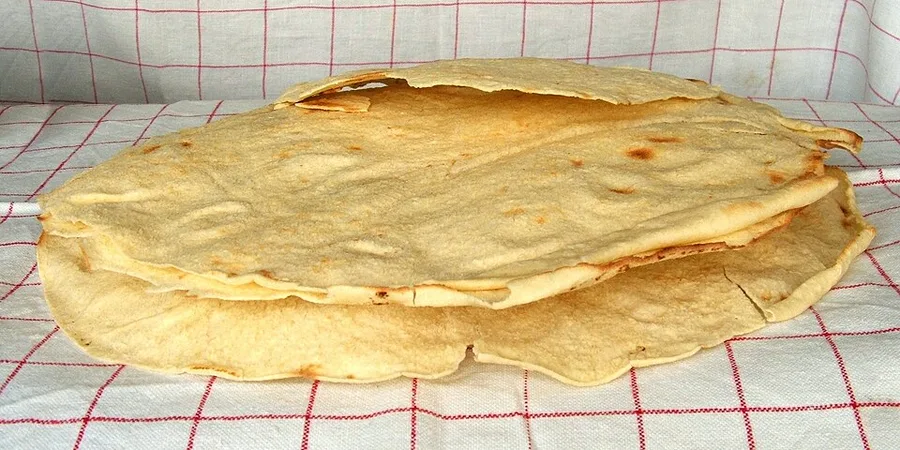
What is Pane carasau?
Pane carasau is a leavened bread that behaves like a cracker. The dough is rolled to well under a millimetre, baked at high heat until it inflates into a balloon, split in half with a knife while still hot, then baked a second time to drive out every trace of moisture. The result is an amber disc 25 to 35 centimetres across and roughly as thick as a postcard.
The name comes from the Sardinian verb carasare, to toast, because the second bake is what gives the bread its identity. Outside Sardinia you may see it sold as carta da musica, 'sheet music', a nineteenth-century mainland nickname referring to how thin and translucent it is.
This is functional bread before it is fashionable bread. Inland Sardinia lived on transhumant shepherding, and a shepherd away from home for weeks needed something that would not mould and would not weigh him down. With no water in it, carasau cannot spoil, and a kilo of it is a stack of thirty or forty sheets.
What does it taste like?
Toasted wheat, plainly and without distraction: nutty, faintly sweet from the semolina, with a mineral saltiness and a bitter edge where the blisters have caught in the oven. There is no fat and no sourness, so it does not taste like a sourdough cracker or a matzo: it tastes like the inside of a very good crust, detached from the loaf.
The experience is mostly textural. It shatters rather than crumbles, and it does so loudly. That brittleness is the reason it works with soft, fatty, salty things: sheep's cheese, cured pork, bottarga, olive oil.
Dressed with oil and salt and re-toasted into pane guttiau, it turns rounder and greener, and becomes close to the best crisp you have eaten. Soaked in broth for pane frattau it goes soft and silky and stops being bread altogether: the closest comparison is a fresh pasta sheet.
How to use it
Eaten as it comes, broken by hand, it needs nothing but sheep's cheese and a glass of Vermentino. That is how most Sardinians actually consume it.
For pane guttiau, brush a sheet with olive oil, scatter flaky salt, and give it two minutes in a 200C oven until it blisters. Eat it warm, within a few minutes.
Pane frattau is the dish worth learning. Dip a sheet in boiling broth, traditionally mutton, for two or three seconds only, lay it on a warm plate, cover with tomato sauce and grated pecorino, and repeat for three or four layers. Top with a poached egg. The bread must be plain carasau, not guttiau, and the dip must be brief: leave it in the broth and it disintegrates.
Beyond the traditional uses it behaves like a ready-made pastry sheet. Use it in place of pasta in a lasagne, layer it with soft cheese and roasted vegetables for a savoury millefeuille, roll it warm around a cheese filling for savoury cannoli, or break it over soup instead of croutons.
How long it keeps
Sealed and dry it lasts for months, and industrial packs carry dates up to a year out. The enemy is humidity, not time: one night in a steamy kitchen is enough for a sheet to give up its crispness and turn leathery, because the starch takes moisture straight out of the air. Keep it stacked or upright in a paper bag inside a rigid container, in a cupboard away from the hob, and never in the fridge, which is the dampest place in the house. Once a pack is open, fold the bag over and get it into the tin.
What makes this bread unusual is that softening reverses: two minutes in a 180 C oven and the sheet is dry and brittle again, which works as often as you need it. Wetting is the one-way step. Once a sheet has been dipped for frattau or layered like lasagne it will not come back and is meant for that meal. Guttiau lives shorter because of the oil on it, two or three days before the oil starts to oxidise and taste stale.
Spot the real thing
Hold a sheet up to the light: a good carasau is almost translucent and even in thickness, and the thicker patches stay chewy, which is the standard fault of rushed production. The colour should be a light, uniform amber with scattered scorched blisters. Pale white means the second toasting was cut short; dark brown means it went too far and will taste bitter. Snapped in half it makes a dry crack and breaks into clean shards rather than bending, and it feels dry, never greasy, because classic carasau contains no oil at all.
If your fingers come away oily you are holding pane guttiau, which is carasau already brushed with oil and salt and toasted again: a different product, and dearer for the same wheat. On the label the ingredient list should stop at four items, durum wheat semolina, water, salt and yeast. Soft wheat flour, generic vegetable oils, preservatives or chemical raising agents mark an industrial shortcut. Abroad it usually turns up in the cracker or flatbread aisle, and the round sheets are often broken in transit, which says nothing about the bread itself.
How to pronounce Pane carasau
PAH-neh kah-rah-ZAH-oo
Five syllables in total, with the stress falling on the ZAH. The 's' between vowels is voiced, like the 's' in 'rose', not hissed. The tricky part is the ending: 'au' is two separate vowels, ah-oo, not the 'ow' of 'now', so kah-rah-ZAH-oo, never 'kara-SOW'. Sardinians often clip it to something close to kah-rah-ZAU in one breath, but the two-vowel version is safer and correct.
Pane carasau compared
vsPane guttiau
Not a different bread but a dressed one. Guttiau is carasau brushed with olive oil, sprinkled with salt and put back in a hot oven for a couple of minutes until it blisters. It is a snack; carasau is an ingredient. Recipes that call for carasau want the plain, dry, oil-free sheet.
| This | Pane guttiau | |
|---|---|---|
| What it is | Plain twice-baked sheet | Carasau dressed with oil and salt |
| Fat | None | Extra virgin olive oil, brushed on |
| Served | Room temperature | Warm, straight from the oven |
| Shelf life | Months if kept dry | Two or three days before the oil turns |
| Used for | Frattau, lasagne, cheese boards | Snacking, aperitivo |
| Calories per 100g | About 380 | About 450-480 |
vsLavash and other flatbreads
Carasau's nearest relatives are the thin flatbreads of the eastern Mediterranean, but one step separates it from all of them: the sheet is split in two after the first bake. That split, not the thinness, is what makes carasau carasau.
| This | Lavash and other flatbreads | |
|---|---|---|
| Bakes | Two, the second one dries it out | One |
| Split after baking | Yes, into two identical discs | No |
| Shape | Round, 25-35cm | Usually oval or rectangular |
| Flour | Durum semolina only | Usually soft wheat flour |
| Texture | Rigid, shatters | Pliable when fresh, leathery when stale |
| Keeps | Months | Days, or must be rehydrated |
vsMatzo
Both are dry, flat, long-keeping and made from wheat, but matzo is unleavened by religious requirement and baked once. Carasau is leavened, split, and twice-baked. In layered dishes they behave similarly, which is why matzo is the best emergency substitute in a supermarket.
| This | Matzo | |
|---|---|---|
| Leavening | Yeast or sourdough starter | None, by definition |
| Flour | Durum semolina | Soft wheat |
| Thickness | Under 1mm | 1-2mm |
| Flavour | Toasted, nutty, salted | Neutral, faintly floury |
| In layered dishes | Softens to a silky sheet | Softens but stays chalky |
Pane carasau substitutes
- Lavash, thin and dry
The best all-round stand-in. If it is still pliable, dry it in a 150C oven for eight to ten minutes first, otherwise it will go gummy rather than crisp when you dress or bake it.
1:1 by weight - Matzo
The easiest thing to find in a British or American supermarket, and structurally the closest for layered dishes. Slightly thicker and blander, so salt the broth more when making pane frattau.
1:1 by weight; about 1.5 sheets of matzo per sheet of carasau - Fresh lasagne sheets, dried
For pane frattau specifically. Dry fresh egg-free lasagne sheets in a low oven until brittle, then use them exactly as you would carasau. The semolina flavour is right; the shattering texture never quite arrives.
1:1 by weight - Knäckebröd or rye crispbread
Right brittleness, wrong grain. Good on a cheese board with pecorino and honey, poor in anything wet, because rye goes pasty when soaked.
1:1 for serving, not recommended for cooking - Homemade, with semolina
Very doable without a wood oven. Make a firm dough of 500g fine durum semolina, 300ml water, 8g salt and 5g yeast, prove for two hours, roll each 60g ball as thin as you can, bake at 250C for 2-3 minutes until it puffs, split it hot, then dry both halves at 160C for 5 minutes.
Makes about 14 sheets - Gluten-free: none, honestly
The extreme thinness depends entirely on the gluten network of durum wheat, and no commercial gluten-free version convinces. For a coeliac guest, serve thin rice crackers and be upfront that it is a different thing.
Where to buy it
In the US, Italian specialty grocers and online importers carry 250g packs at roughly 8 to 14 dollars, which is 15 to 25 dollars per pound: expensive per kilo, cheap per meal, since a sheet weighs about 30 grams. Eataly and the larger Italian delis stock it reliably; Whole Foods does in some regions.
In the UK it is harder to find on a shelf and easiest to order from Sardinian and Italian importers, at around 10 to 18 pounds per kilo. Sardinian producers themselves ship across Europe, and because the bread is stable and light, postage is rarely the deal-breaker it is for cheese.
Read the ingredients: durum wheat semolina, water, salt, yeast, and nothing else. Soft wheat flour, vegetable oils or preservatives all signal an industrial shortcut. If your fingers come away greasy, you have bought guttiau rather than carasau: fine to eat, wrong for cooking.
Where to eat it in Italy
Inland Nuoro province is the heartland. The triangle of Nuoro, Oliena and Orgosolo has bakeries that still sell the sheets warm from the second bake, which is a completely different experience from the packet. Mamoiada and Ollolai have ovens working to order and producing wider sheets than anything that reaches the mainland.
Ogliastra, on the east coast around Baunei and Urzulei, makes a smaller and slightly thicker disc, worth comparing back to back if you are travelling between the two.
Cagliari and Alghero serve carasau everywhere but bake very little of it; you will eat well and buy badly. For pane frattau, trattorie in and around Nuoro have it on the menu year-round, while in the villages it appears mostly during patron saint festivals, when there is mutton broth on the go anyway.
Frequently asked questions
Is pane carasau the same as carta da musica?
Yes. Carasau is the Sardinian name, from carasare, to toast; carta da musica, 'sheet music', is the mainland nickname coined in the nineteenth century for how thin and translucent it is. Same bread, two names.
How long does pane carasau keep?
Months, and commercial packs often carry a one-year date, because there is essentially no water left in it. The only enemy is humidity. If it goes leathery, two minutes in a 180C oven restores it completely: it is one of the few breads that fully regenerates.
What is the difference between carasau and guttiau?
Guttiau is carasau brushed with olive oil, salted and re-toasted until it blisters. It is a snack, served warm, and lasts only a few days. Carasau is the plain, dry, oil-free sheet and is what recipes mean.
How do you soften pane carasau?
Dip it in boiling broth or salted water for two or three seconds and lift it straight out. Any longer and it falls apart. For a layered bake, moisten it only briefly and let the sauce finish hydrating it in the oven.
How do you pronounce pane carasau?
PAH-neh kah-rah-ZAH-oo, with stress on ZAH and a voiced 's'. The final 'au' is two vowels, ah-oo, so it does not rhyme with 'now'.
Related foods
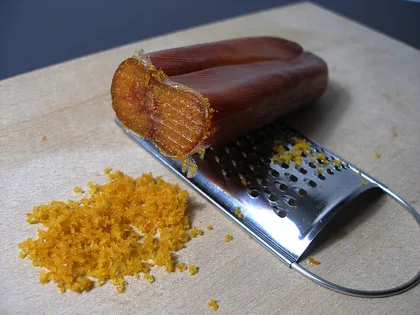 Fish and seafoodBottargaFifteen grams a head is enough, and that is not meanness: bottarga is the salted, pressed, air-dried roe sac…
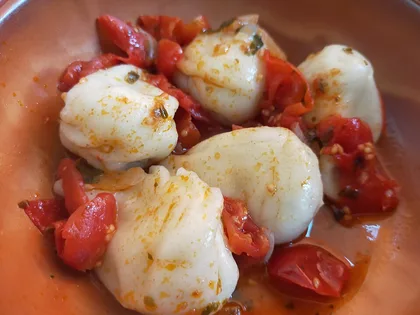 Pasta and breadCulurgionesCulurgiones are Sardinian filled pasta: potato, pecorino and mint sealed inside a semolina wrapper by hand…
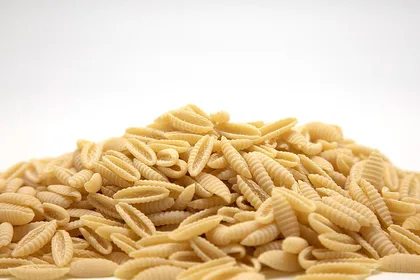 Pasta and breadMalloreddusThe ridges are not decoration: they hold sauce on a shape that would otherwise be smooth and slippery.
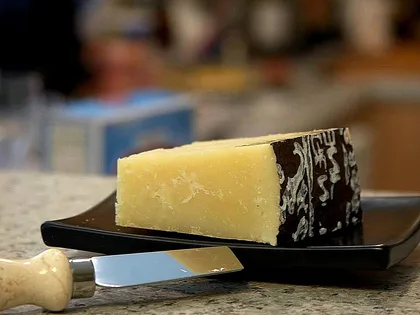 CheesePecorino RomanoPecorino Romano DOP is a hard, dry-salted sheep's milk cheese aged at least five months, made in Sardinia…
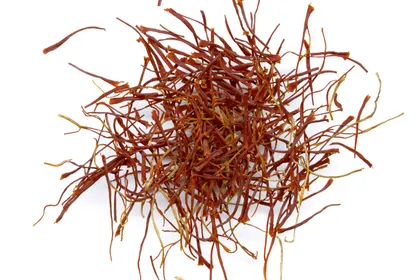 Oil and preservesSaffronOne kilo takes between 150,000 and 200,000 flowers, and every flower gives up three stigmas that have to be…
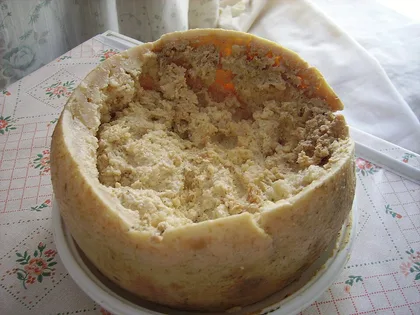 CheeseCasu MarzuCasu marzu is a Sardinian sheep's cheese whose ripening is carried on by the larvae of the cheese fly.
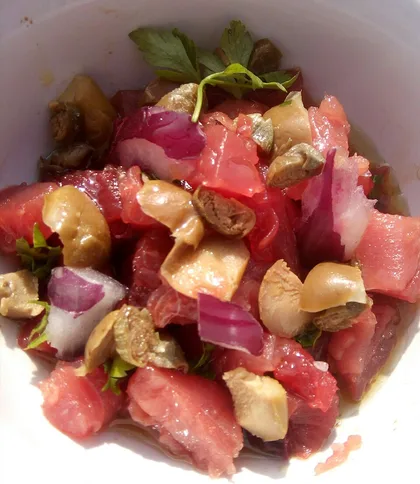 Fish and seafoodBluefin TunaAtlantic bluefin, Thunnus thynnus, is the fish Sicily and Sardinia built their tonnare around, with a…
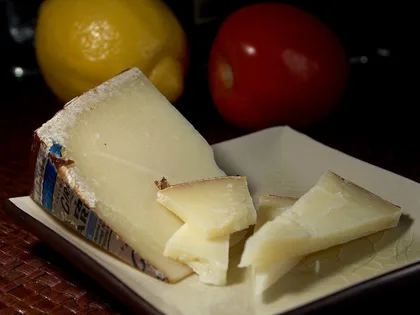 CheesePecorino SardoPecorino Sardo DOP is Sardinia's table cheese: whole sheep's milk, calf rennet, two official types.