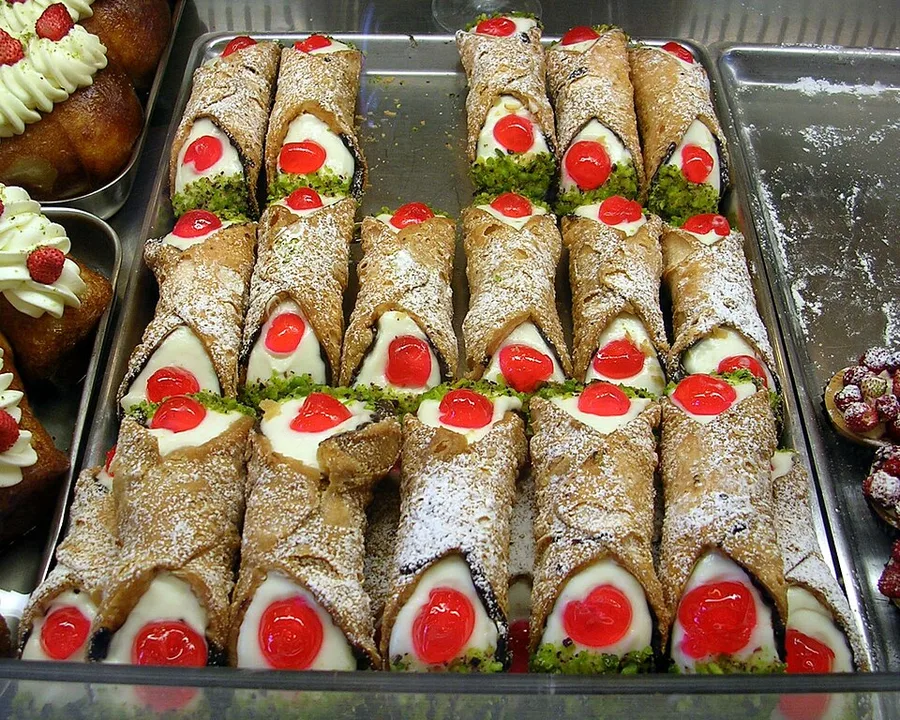
What is Cannoli?
A cannolo is made of two things that must stay apart until the last possible second. The shell (the scorza) is a dough of flour, lard, sugar, egg and wine, usually Marsala, rolled paper-thin, wrapped around a metal tube and deep-fried until it blisters. The filling is sheep's-milk ricotta, drained and sweetened. That is the whole recipe.
The name comes from the river reeds the dough was originally wrapped around. The singular is cannolo; cannoli is the plural, which is why 'a cannoli' makes Sicilians wince.
There are three sizes: the standard 12–15 cm cannolo, the small cannolicchio you find on party trays, and the giants of Piana degli Albanesi outside Palermo, which run past 20 cm and weigh close to 300 g each.
What is not in a Sicilian cannolo matters as much as what is. No whipped cream, no mascarpone, no pastry cream, no vanilla pudding. Those are all ways of stabilising a filling that properly drained ricotta does not need stabilised.
What does it taste like?
The shell shatters rather than crunches, and it tastes faintly of wine and fried pastry, with a savoury depth from the lard that vegetable oil never gives. It is barely sweet on its own.
The filling is the surprise for most first-timers: sheep ricotta is grassy, mildly tangy and only lightly sweetened, closer to a fresh cheese than to a dessert cream. It is cool, dense and slightly granular on the tongue before it turns silky. Alongside it, the candied cherry or the pistachio at the ends reads as a sharp accent rather than decoration.
The overall impression is much less sweet and much more savoury than an American bakery cannoli. If you have only had the sugar-heavy version with chocolate chips throughout, the Sicilian original tastes almost restrained.
How to use it
Treat it as assembly, not cooking. Keep the shells in a tin at room temperature and the ricotta cream covered in the fridge, and bring them together no more than an hour before eating, ten minutes is better.
Pipe from both ends with a plain nozzle so the filling meets in the middle and there are no air pockets. Dip the exposed ends in chopped pistachio, candied orange, candied cherry or dark chocolate chips, then dust with icing sugar at the very last moment, because it dissolves on contact with the moist filling.
Serve the ricotta cool but not fridge-cold, around 10–12 °C: straight from the refrigerator it is stiff and tastes of nothing. If you are making them for a party, set up the piping bag and let people fill their own: it solves the timing problem and it is how Sicilian bars do it anyway.
One professional trick buys you a few hours: brush the inside of each shell with melted dark chocolate and let it set before filling. It works as a moisture barrier and tastes good.
How long it keeps
Unfilled shells are the part that keeps. Sealed in a tin at room temperature, away from the stove and the kettle, they hold their snap for two to three weeks; once the box is open they start pulling moisture out of the air and turn leathery within days in a damp kitchen. Do not refrigerate them, since a crisp shell softens there in hours. They freeze for about a month in a rigid box, and five minutes in a 160 °C oven brings the crackle back. On packaged shells the printed date is the reference, not the tin on your counter.
Sweetened ricotta cream holds about two days in an airtight container at 4 °C or below. After that the sugar draws water out of the curd, whey pools at the bottom and the texture goes loose and grainy; freezing is worse, because thawed ricotta separates and never comes back smooth. A filled cannolo has no window at all: it is at its best in the first hour, visibly soft by the third or fourth, and by the next morning the shell has absorbed the filling and become a softer, different pastry.
Spot the real thing
Start with the shell. A properly fried one is blistered, amber rather than dark brown, thin enough that the bubbles show light through them, and it snaps dry when you break it. Pale and smooth means the fat was too cool; deep brown usually means tired frying oil. Then look at the counter. A tray already filled and sitting under the lights is the thing to walk past, because those shells have been drinking the ricotta for hours. A bakery worth the trip fills yours while you wait.
The filling is where most versions sold abroad part company with Sicilian ones. Sheep ricotta is off white rather than bright, faintly grainy on the first bite and then silky, with a grassy, mildly saline edge under the sugar. Anything glossy, firm and uniform like a mousse has cream, mascarpone or stabilisers in it, and the tubs labelled cannoli cream or cannoli dip are sweetened cream cheese, a different product entirely. Price follows: filled to order runs about $4 to $8 or £3.50 to £5, while cheap trays by the dozen are pre-filled almost by definition.
How to pronounce Cannoli
kah-NNOH-lee (singular: kah-NNOH-loh)
Three syllables, stress on the second, and the double 'n' is held slightly longer than in English. The most common mistake is not the sound but the grammar: cannoli is plural, so 'a cannoli' is like saying 'a sandwiches'. One is a cannolo. Avoid 'ca-NO-lie' and 'cannolis': the Italian plural never takes an English 's'.
Cannoli compared
vsItalian-American cannoli
Same ancestor, two different desserts. The American bakery version is filled hours or days ahead, uses cow's-milk ricotta or a ricotta-mascarpone blend, and is considerably sweeter. The Sicilian original is filled in front of you with sheep ricotta and is closer to a cheese course than to a cream pastry.
| This | Italian-American cannoli | |
|---|---|---|
| Filling | Sheep's-milk ricotta, drained | Cow's-milk ricotta, often with mascarpone or whipped cream |
| When filled | To order, seconds before serving | In advance, displayed filled |
| Sweetness | Restrained: about 250 g sugar per kg ricotta | Markedly sweeter, often with added vanilla |
| Shell fried in | Lard | Vegetable shortening or oil |
| Chocolate chips | Regional, mostly at the ends | Usually mixed through the filling |
| Texture after an hour | Still crisp | Softened, sometimes chewy |
| Size | 12–15 cm, or 20 cm+ in Piana degli Albanesi | 8–12 cm, plus mini versions |
vsCassata siciliana
The same sweetened sheep ricotta, built into an entirely different object. Cassata is a domed cake lined with green marzipan and sponge, glazed with sugar icing and covered in candied fruit; the cannolo is a fried shell. If you like the filling of one, you will like the filling of the other.
| This | Cassata siciliana | |
|---|---|---|
| Structure | Fried pastry tube | Sponge, marzipan, icing, candied fruit |
| Filling | Sweetened sheep ricotta | Sweetened sheep ricotta, often with chocolate |
| Assembled | Seconds before eating | A day ahead: it needs to set |
| Keeps | An hour or two | Two to three days refrigerated |
| Occasion | Everyday, originally Carnival | Easter and celebrations |
| Served | By the piece, standing up | In slices, at the table |
vsCannoncino
The northern Italian pastry that English speakers often mistake for a cannolo. A cannoncino is puff pastry wound around a cone and filled with pastry cream or chantilly; it is a different dough, a different filling and a different region.
| This | Cannoncino | |
|---|---|---|
| Pastry | Fried shortcrust with wine and lard | Baked puff pastry, sugar-glazed |
| Filling | Sheep ricotta | Crema pasticcera or whipped cream |
| Region | Sicily | Piedmont, Lombardy, the north generally |
| Texture | Shatters, then cool and dense | Flaky and soft, sweeter throughout |
Cannoli substitutes
- Whole-milk cow's ricotta, drained hard
The realistic swap outside Italy. Drain it in cheesecloth in the fridge for a full 24 hours, weighted, then sieve twice. Never use part-skim or anything with gums or stabilisers on the label: it will weep inside the shell.
1:1, then expect to lose 20–25% of the weight in whey - Ricotta impastata
Italian-American delis in New York, Boston and Philadelphia sell this drained, smooth, professional-grade ricotta specifically for pastry. It is the single biggest upgrade available in the US and needs no further draining.
1:1, no draining needed - Greek or Middle Eastern sheep ricotta
Anthotyro and fresh myzithra are made the same way from sheep whey and get you the grassy note that cow ricotta lacks. Sold in Greek and Middle Eastern grocers, usually cheaper than Italian imports.
1:1 - Ready-made shells
Boxed cannoli shells from an Italian grocer are a legitimate shortcut: the shell is the hard part. Refresh them for four or five minutes in a 160 °C oven and let them cool before filling; it undoes the staleness of the box.
12 shells per 500 g of filling - Brik or spring roll pastry, for homemade shells
A cheat that works surprisingly well: cut the sheets into circles, wrap around cannoli tubes, seal with egg white, deep-fry at 175 °C. Blistered and crisp in 90 seconds, with less flavour than the real dough but the right texture.
One sheet makes two shells - Lard alternatives
In the dough, vegetable shortening is the closest structural swap; butter burns at frying temperature and makes a heavier shell. For frying, a neutral high-smoke-point oil works, but you lose the savoury note that defines the Sicilian shell.
1:1 by weight
Where to buy it
In the US, an Italian bakery that fills to order is worth crossing a city for: ask before you buy, and walk out if the tray is already full. Boxed shells from Italian grocers run about $6–9 for a dozen, ricotta impastata about $8–12 a pound, and a filled cannolo in a good bakery costs $4–8.
In the UK, Italian delicatessens and online specialists carry shells and Sicilian ricotta; Greek grocers are the reliable source for sheep's-milk fresh cheese. Expect £3.50–5 for a filled cannolo and £4–7 for a box of shells.
For the filling, read the ricotta label for stabilisers, gums or added cream and put it back if you find them. Whole-milk only. If you can find sheep's-milk ricotta at all, buy it: the difference is not subtle.
Skip anything sold as 'cannoli cream' or 'cannoli dip' in a tub. It is sweetened cream cheese, and it is not the same thing.
Where to eat it in Italy
Palermo first. The rule holds all over the city: order one, watch them fill it. Antico Caffè Spinnato on Via Principe di Belmonte and Pasticceria Cappello are long-standing references; the Ballarò and Vucciria markets sell the rougher, more everyday version.
Piana degli Albanesi, half an hour up into the hills above Palermo, is worth the trip on its own: an Albanian-speaking Arbëreshë town that makes cannoli the size of a forearm from the ricotta of the flocks around it. Sicilians drive up on Sunday mornings to do exactly this.
In Erice, above Trapani, Maria Grammatico's workshop kept the convent pastry tradition alive and still works ricotta and marzipan the old way. In Catania, Pasticceria Savia opposite the Villa Bellini gardens has been an institution since the 1930s.
Time it between November and June if you can. That is when the sheep are in milk and the ricotta is at its best; the summer product is frozen or from cow's milk.
Recipes with it
Further reading
Frequently asked questions
Is it cannoli or cannolo?
Cannolo is one, cannoli is more than one. Ordering 'a cannoli' is the equivalent of asking for 'a sandwiches'. There is no such word as 'cannolis': Italian plurals do not take an English 's'.
Why are Sicilian cannoli filled to order?
Because ricotta contains water and the shell is a thin fried pastry. The moment they touch, moisture starts migrating. After an hour the shell is still crisp; after three or four it is soft. Any bakery displaying pre-filled cannoli is selling you a pastry past its best.
What is really inside a Sicilian cannolo?
Sheep's-milk ricotta, drained and sweetened, and nothing else in the traditional recipe. Chocolate chips, candied orange, candied cherry and pistachio go on the exposed ends, varying by town. Mascarpone, whipped cream and pastry cream are not part of it.
Can I make cannoli ahead of time?
You can make both halves ahead and assemble at the last minute. Shells keep two to three weeks in a sealed tin, or a month frozen; the sweetened ricotta keeps two days in the fridge but must not be frozen, because it separates. Filled cannoli do not keep at all.
Why do Sicilian cannoli taste less sweet than American ones?
Two reasons: sheep's-milk ricotta is savoury and grassy where cow's-milk ricotta is mild and milky, and the Sicilian ratio is roughly 250 g of sugar to a kilo of cheese. American versions add more sugar, often vanilla, and frequently mascarpone or whipped cream.
Related foods
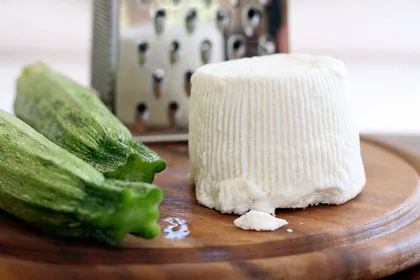 CheeseRicotta SalataRicotta salata is sheep's milk ricotta that has been salted, pressed and aged for at least three months…
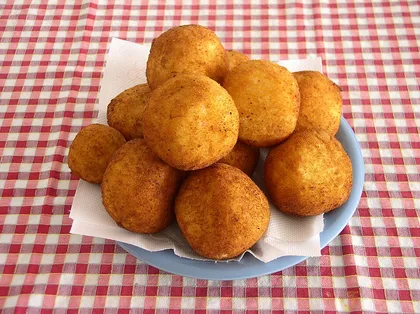 Pasta and breadAranciniArancini are deep-fried Sicilian rice balls: saffron rice moulded around a filling of meat ragù and peas, or…
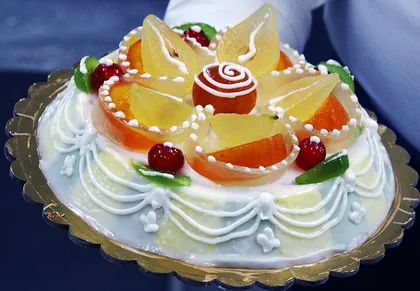 SweetsCassata SicilianaCassata siciliana is a layered Palermo cake: sponge soaked in liqueur, sweetened sheep's-milk ricotta studded…
 SweetsGelatoGelato is not ice cream translated. It carries less fat (4-8% against 10-18%), holds far less air (20-35%…
 SweetsGranitaSicilian granita is churned, not crushed. Water, sugar and one flavouring (lemon, mulberry, almond, espresso)…
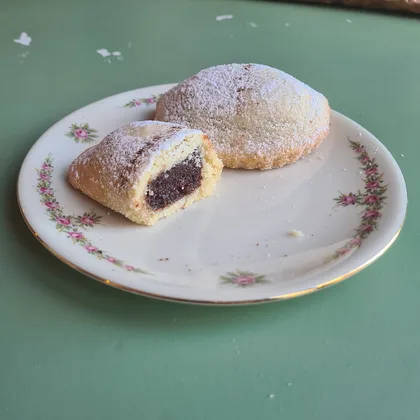 SweetsCassatellaA cassatella is a fried Sicilian turnover: thin wine-based pastry folded around sweetened sheep's-milk…
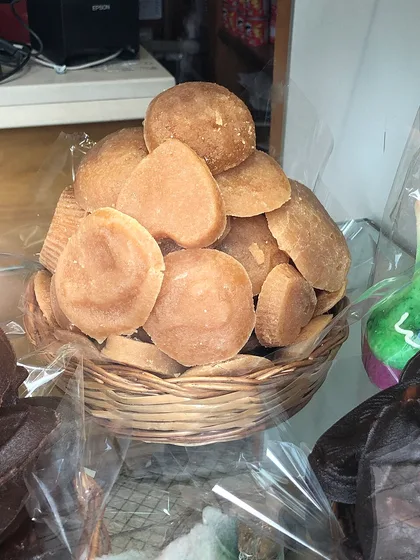 SweetsCotognata (Quince Paste)Cotognata is quince pulp cooked with sugar and then air-dried for days in moulds until it sets into a firm…
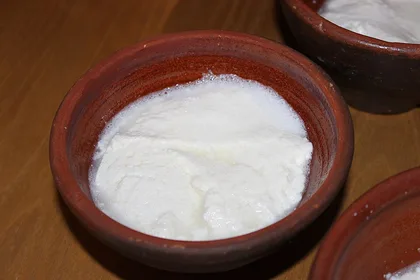 CheeseRicottaRicotta is not a cheese. It is a dairy product made from whey, the liquid left over after cheese has been…