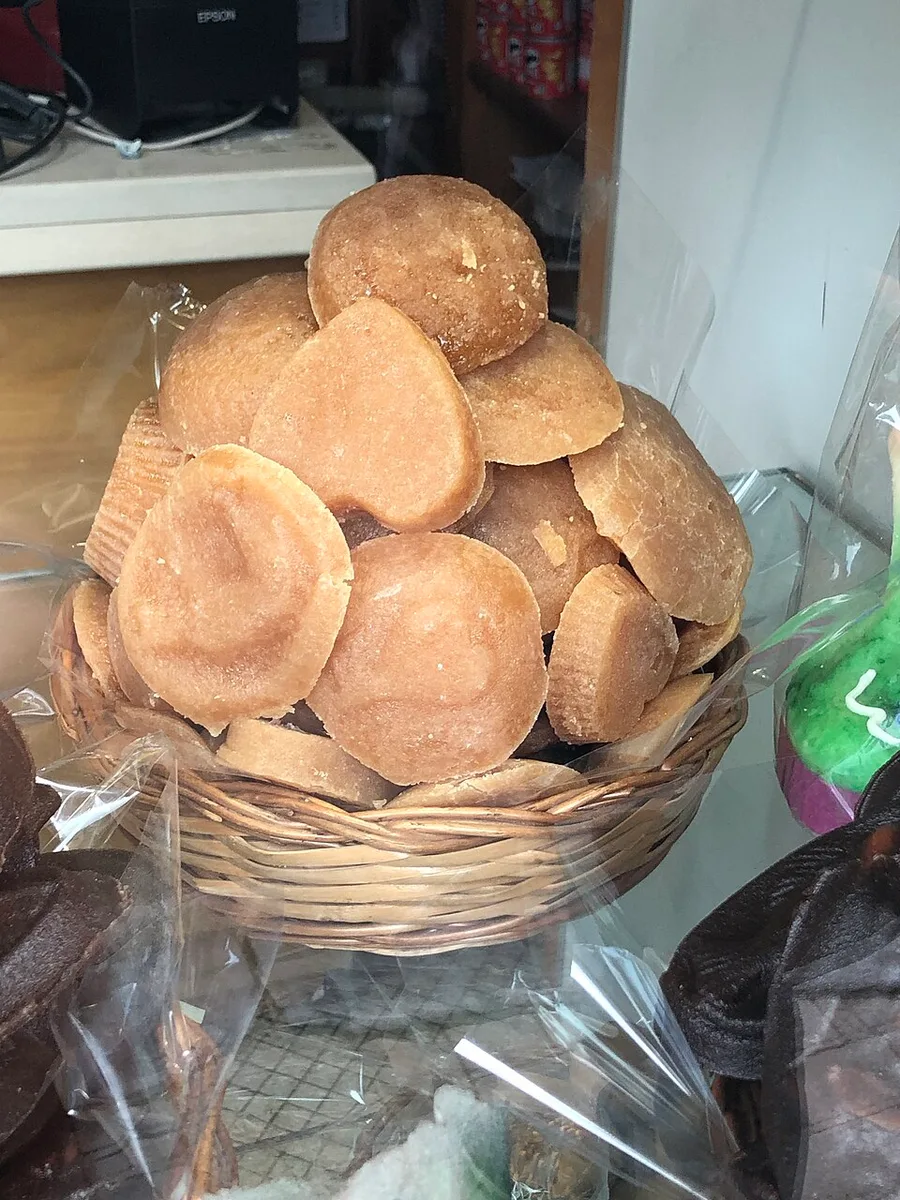
What is Cotognata (Quince Paste)?
Cotognata is a solid quince preserve. The pulp is cooked down with sugar until it thickens, poured into moulds and left to dry in air for several days, ending as an opaque, faintly elastic block you can slice.
It is not a thicker jam: it is a different category. A jam still holds water and spreads; cotognata has lost most of its water, cuts into pieces and is eaten with your fingers as a sweet in its own right.
What makes it possible is the quince itself, Cydonia oblonga: rock-hard, inedible raw, astringent, and extraordinarily rich in pectin. That pectin sets the mass without anything being added, and the fruit's tannins and acids give the floral aroma that no other cooked fruit has.
The colour surprises people who make it for the first time. Raw pulp is off-white; cooking takes it through amber to pink to deep ruby, and the longer the cook the darker the result. Nothing is added: it is tannin oxidation and sugar caramelisation.
In Sicily it is poured into formelle: terracotta or ceramic moulds carved with fish, flowers, grapes, coats of arms and saints. In Puglia, and particularly in the Salento, it is more often set in slabs and cut into diamonds or cubes. Same sweet, two different gestures.
What does it taste like?
Floral in a way that is hard to place, somewhere between apple, rose and vanilla, with a clean acidity underneath that keeps it from being simply sweet. It is more perfumed and more tart than any jam made from apples or pears.
The texture is the point of the whole thing. It is firm enough to hold a knife-cut edge, dense, slightly yielding, never gummy or bouncy. A good one gives cleanly and leaves a matt surface; a bad one is rubbery, which means added pectin.
Eaten with a salty aged cheese, the acidity does the work: it cuts the fat and the salt in a way honey or jam cannot, because it is drier and sharper.
How to use it
Eat it as it is first: cut into cubes or diamonds, at room temperature, as an after-dinner sweet or with coffee. In Sicily it appears around All Souls' Day on 2 November alongside marzipan fruit; in the Salento it goes with an espresso or a small glass of rosolio.
The second use is the one that gave it a life outside tradition: cheese. With aged pecorino, canestrato pugliese, ricotta salata or caciocavallo it does exactly what membrillo does for manchego: the sharp sweetness cuts fat and salt. Serve in thin slices, never fridge-cold.
In baking it is a solid, manageable filling. Cut into batons it goes inside shortbread-style biscuits, fried sweet ravioli and thin-layered tarts, and unlike jam it does not run in the oven.
With meat it works better than it sounds. A cube melted into the pan juices of roast pork or duck gives acidity and body at once.
Simplest of all: a slice on bread with salted butter, or dissolved in a little hot water to make a glaze to brush over a cake.
How long it keeps
Properly dried, this is a real preserve and it keeps a long time. Wrapped in baking paper and shut in a tin or an airtight box in the cupboard, it holds around a year, and throughout that time it goes on losing the last of its water, so it firms slowly and the flavour concentrates. It does not need the fridge, where the cold stiffens it and condensation gathers on the surface every time it comes back out.
A block poured thick, or dried only briefly, carries more water and behaves differently: that one belongs in a closed box in the fridge and is generally used within three months. The white haze that appears on the surface over the months is sucrose crystallising out as the paste keeps drying, and a damp cloth takes it off, or the outer layer is simply trimmed away. It freezes very well cut into slices separated by baking paper: a year in the freezer, and half an hour at room temperature to come back.
Spot the real thing
Colour first. A well made cotognata is deep amber or ruby and translucent when held to the light; a pale pink block was cooked briefly, and a dull opaque brown one either went too far or carries too much caramelised sugar. Then texture: firm but yielding, with a knife going in cleanly and not sticking. Rubbery and bouncy means added pectin, and anything spreadable was never dried enough and is really a jam. The surface of a handmade block is matte and faintly sugary under the finger, sometimes with a light crystalline veil, while a glossy, plastic-smooth face points to industrial gelling agents.
The ingredient list should read quinces, sugar and perhaps lemon, and nothing else. Glucose syrup, pectin, citric acid, flavourings and colourings describe a different thing, often apple jelly wearing a quince label. Quinces ripen in autumn, so an artisanal batch code falls between October and December. Spanish membrillo, sold beside manchego abroad, is the close cousin: softer, paler and usually tubbed rather than moulded.
How to pronounce Cotognata (Quince Paste)
koh-toh-NYAH-tah
Four syllables, stress on the third. The 'gn' is a single sound, the 'ny' of 'canyon': koh-toh-NYAH-tah, never 'kot-og-NA-ta' with a hard g. It comes from mela cotogna, the quince, which is koh-TOH-nyah.
Cotognata (Quince Paste) compared
vsMembrillo (Spanish quince paste)
Effectively the same food under a different flag, and there is no point pretending otherwise. Same fruit, same method, same Arab-Mediterranean origin. The differences are of presentation and habit: Sicily moulds it into decorated tiles, Spain sells it in plain blocks, and membrillo has become internationally famous as the standard partner for manchego while cotognata stayed domestic.
| This | Membrillo (Spanish quince paste) | |
|---|---|---|
| Fruit | Quince | Quince |
| Method | Cook with sugar, air-dry | Identical |
| Shape | Decorated moulds or slabs | Plain rectangular blocks |
| Classic partner | Pecorino, canestrato, ricotta salata | Manchego |
| Occasion | All Souls' Day in Sicily | Year-round table cheese |
| Availability | Regional, autumn-made | International, everywhere |
vsJam and marmalade
The distinction is water, and it changes everything downstream. Jam keeps enough moisture to spread and needs a jar and a fridge once opened. Cotognata is dried until it is sliceable, keeps for a year in a tin, and is eaten as a confection rather than a spread. A pleasing footnote: the word marmalade comes from marmelo, Portuguese for quince, and originally meant exactly this solid paste.
| This | Jam and marmalade | |
|---|---|---|
| Water content | Low, dried for days | High |
| Texture | Sliceable block | Spreadable |
| Added pectin | Never needed | Often added |
| Storage | A year in a tin, no fridge | Fridge once opened |
| How eaten | In cubes, with cheese, as a sweet | On bread, in baking |
| Making time | 1 hour cooking, 3-7 days drying | 1 hour, then jarred |
vsPâte de coing and fruit pastes
French pâte de coing and the wider family of pâtes de fruits are the closest confectionery cousins. The difference is finish rather than substance: fruit pastes are cut into small squares and rolled in granulated sugar, are usually softer and sweeter, and are made from many fruits. Cotognata is quince only, drier, larger-format and unsugared on the outside.
| This | Pâte de coing and fruit pastes | |
|---|---|---|
| Fruit | Quince only | Any fruit, often with added pectin |
| Surface | Matt, unsugared | Rolled in granulated sugar |
| Texture | Firm and dry | Softer, more yielding |
| Format | Tiles and slabs to slice | Small individual squares |
| Eaten with | Cheese, coffee, on its own | As a petit four |
Cotognata (Quince Paste) substitutes
- Membrillo (Spanish quince paste)
The direct replacement, sold in every good cheese shop and most supermarkets. Identical in use, sometimes a touch sweeter and softer. If a recipe calls for cotognata, this is the answer.
1:1 - Portuguese marmelada
The same preserve under the original name, usually sold in small wooden or plastic tubs. Often slightly darker and firmer than Spanish membrillo, which puts it very close to the Sicilian version.
1:1 - Guava paste (goiabada or pasta de guayaba)
The Latin American analogue and a genuinely good stand-in on texture and behaviour, sold in blocks in Caribbean and Brazilian groceries. Sweeter, more tropical, and it partners fresh white cheese rather than aged sheep's cheese.
1:1, expect more sweetness - Homemade quince paste
Easier than it sounds and cheaper than buying it. Cook chopped quinces with skin and cores in a little water, sieve, add 700-900 g sugar per kilo of pulp and a lemon, cook until the spoon leaves a clear track, then dry in a low oven for four to six hours.
1 kg quinces yields about 500 g paste - Damson cheese or apple butter, reduced
The British and American approximations. Neither has the quince perfume, but a well-reduced damson cheese has the right density and acidity for the cheeseboard. Dry apple butter in a low oven until it slices.
1:1 by volume once firm
Where to buy it
Italian delis and online specialists carry cotognata in the US and the UK, usually in 100 to 250 gram pieces, at 10 to 18 dollars per pound or 14 to 25 pounds per kilo. In Italy it runs 12 to 22 euro per kilo, with small Sicilian moulded tiles at 3 to 6 euro each.
Be practical about it: Spanish membrillo is the same food, is stocked in almost every cheese counter and supermarket, and usually costs less. Buy the Italian version for the moulded shapes and the provenance, not because the paste is fundamentally different.
Read the ingredients. Quinces, sugar and perhaps lemon is the whole list. Glucose syrup, added pectin, apple purée, citric acid or colouring point to an industrial product, often a set apple jelly with quince flavouring. Anything under about seven or eight euro a kilo is in that category.
Check the block itself: translucent ruby or dark amber held to the light, a matt surface, firm but not bouncy. And check the lot date, because real cotognata is made between October and December, because that is when quinces exist.
Where to eat it in Italy
Palermo and the Madonie towns around the start of November, when pastry shops and All Souls' Day market stalls set cotognata out beside marzipan fruit and hard biscuits. The old shops in the centre of Palermo still sell the decorated moulded tiles.
In eastern Sicily, around Catania and the villages on Etna, autumn home production is still common and quinces appear in markets through September and October.
In Puglia, the Salento: Lecce and the towns around it, where cotognata leccese is a recognised traditional product and pastry shops carry it through autumn and winter. Here it is served at the end of a meal with coffee.
October and November are the months in both regions: quinces on the stalls, production under way, and the product of the current year. From January it is still around, but it is last year's stock.
Recipes with it
Frequently asked questions
What is the difference between cotognata and quince jam?
Water. Jam stays soft and spreads; cotognata is dried in moulds for days until it becomes a firm block you cut into slices and eat with your fingers. The ingredients are the same and the products are not.
Why does it turn red?
Cooking does it. Raw quince pulp is off-white and moves through amber, pink and finally deep ruby as the tannins oxidise and the sugars caramelise. The longer the cook, the darker the block. No colouring is involved.
Do I need to add pectin?
No, and you should not have to. Quince is one of the most pectin-rich fruits there is, and cooking it with skins and cores extracts plenty. Added pectin on an ingredient list means the fruit content is low.
Is it the same as Spanish membrillo?
Essentially yes. Same fruit, same technique, same Arab-Mediterranean origin. What differs is presentation and habit (decorated Sicilian moulds against plain Spanish blocks) and the fact that membrillo travelled and cotognata largely did not.
How long does it keep?
Properly dried and wrapped in baking paper in a tin, a year in a cupboard without refrigeration. A white bloom of crystallised sugar on the surface is normal and wipes off. Actual mould means it was never dried enough, and the whole block should go.
Related foods
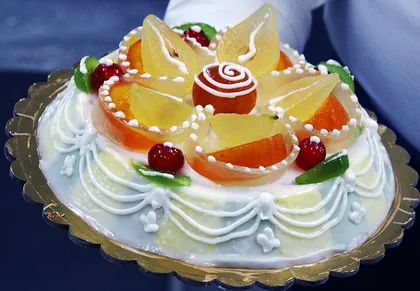 SweetsCassata SicilianaCassata siciliana is a layered Palermo cake: sponge soaked in liqueur, sweetened sheep's-milk ricotta studded…
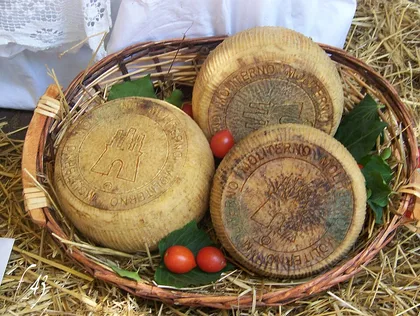 CheeseCanestrato PuglieseCanestrato Pugliese DOP is a hard sheep's milk cheese from the Tavoliere plain of northern Puglia, pressed…
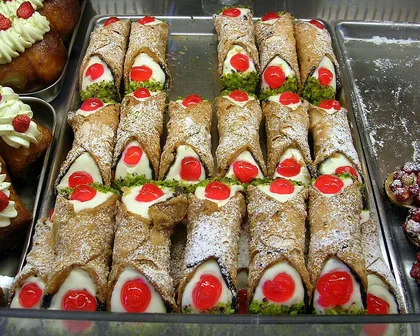 SweetsCannoliIt has to be filled when you order it, and anywhere that fills them in advance has already lost: the fried…
 SweetsGelatoGelato is not ice cream translated. It carries less fat (4-8% against 10-18%), holds far less air (20-35%…
 SweetsGranitaSicilian granita is churned, not crushed. Water, sugar and one flavouring (lemon, mulberry, almond, espresso)…
 SweetsCartellatePaper-thin ribbons of dough, pinched into pockets and wound into roses, deep-fried and steeped in vincotto or…
 SweetsCassatellaA cassatella is a fried Sicilian turnover: thin wine-based pastry folded around sweetened sheep's-milk…
 CheeseBurrataIt began as a way of using offcuts: leftover shreds of pasta filata, drowned in cream and sealed inside a…