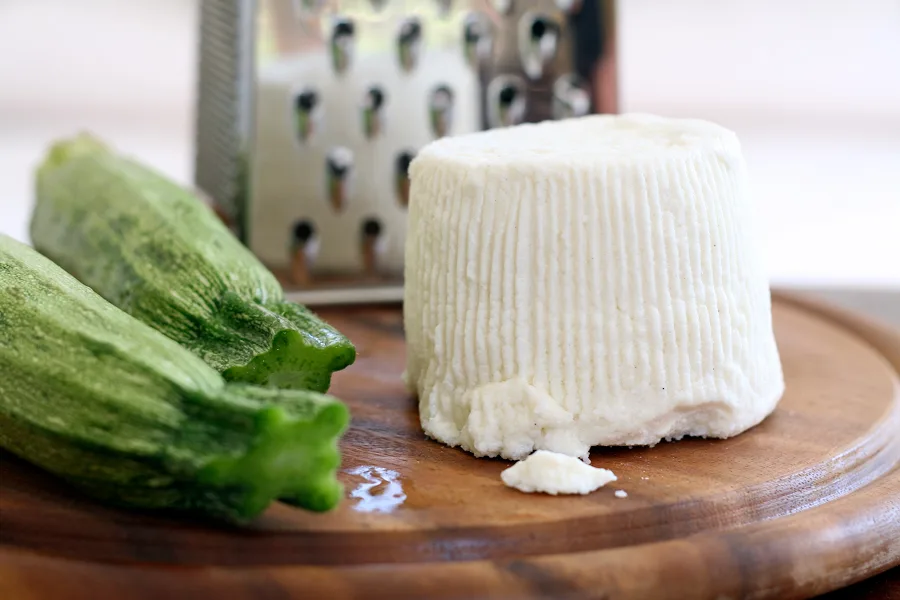
What is Ricotta Salata?
Ricotta salata starts as ricotta, which is not really a cheese at all. Ricotta is made by reheating the whey left over from making pecorino until the remaining proteins float to the surface: ri-cotta, re-cooked. No rennet is added, no curd is cut. What you get is soft, sweet and highly perishable.
Ricotta salata is what happens if you refuse to let it perish. The fresh ricotta is drained in perforated baskets, dry-salted repeatedly over a week or two, pressed to force out the remaining moisture and then aged for three to six months. It loses more than half its weight and becomes a dense, chalk-white block that grates into fine snowy shreds or crumbles into clean shards.
It is white all the way through, with no yellowing and no real rind, just the basket's ridged pattern printed on the surface. Sicily makes most of it, and Sicily is where it matters most.
What does it taste like?
Salty first, then milky. The salinity is direct and clean, closer to feta than to pecorino, and behind it sits the distinctive sweetness of sheep's milk: a little grassy, a little buttery, never barnyard.
The texture does half the work. It is firm and slightly chalky, drier than feta and less greasy than aged pecorino, so it grates into fluffy threads that sit on top of hot pasta rather than melting into it. Bite a piece on its own and it crumbles rather than yields.
Compared with pecorino romano it is markedly less aggressive: no peppery bite, no lingering sharpness, less fat. Compared with feta it is drier, less tangy and not remotely briny. That middle position is exactly why it works over fried aubergine and tomato, where anything sharper would take over.
How to use it
Grate it, coarsely, over hot food at the moment of serving. Pasta alla Norma is the canonical use: fried aubergine, tomato sauce, torn basil, then a thick snowfall of ricotta salata that half-softens in the heat without melting. Do not stir it in.
It is equally at home raw and shaved: over an orange and fennel salad, over sliced tomatoes with oregano and olive oil, over warm caponata, over grilled courgettes. Its acidity is gentler than pecorino's, so it reads as refreshing rather than sharp.
Remember that it does not melt. In a baked dish it will dry out into hard flecks, so add it after the oven, not before. In meatballs, stuffings and fritters it works well, adding salt and savour without releasing water.
Anywhere a recipe calls for pecorino romano and you want the volume turned down (a delicate vegetable pasta, a fish dish, a spring salad) ricotta salata is the better choice.
How long it keeps
A vacuum-sealed block keeps at 4 C until the date on the pack, which is the maker's reference. Once it is open the wrapping decides everything: cheese paper, or a barely damp cloth, inside a box that is not airtight, and it will hold a good month in the fridge. Do not lay cling film against the surface, which turns slick within days. What happens in the meantime is simple water loss. The cut face dries, whitens further and hardens, the edges go translucent, and the salt concentrates as the moisture leaves, so the flavour sharpens week by week.
A piece that has gone rock hard is the grating stage of its life, and it powders more finely then than when fresh. A whole uncut wheel does not need the fridge at all: in a cool ventilated cellar it goes on ageing slowly and losing weight. It also freezes, best already grated and portioned, for around six months at minus 18 C, since it is never asked to melt or hold a slice. Thawed blocks crumble more readily than they did.
Spot the real thing
Absolute white, inside and out. A straw or heavy ivory cast, or yellow showing under the surface, means an old piece or one that has been kept badly. The paste is compact but crumbly: it takes a knife without shattering and grates without clogging the blade. There should be no holes and no true rind, only a slightly drier outside carrying the marks of the draining basket. It smells of sheep milk and butter with no sour edge, and the salt should arrive first without flattening everything, leaving a sweet milky finish behind it.
The usual mistake abroad is buying the wrong white salty block. Feta sits in brine, tastes lactic and sharp and breaks into wet chunks; cotija, in the Mexican section of American supermarkets, is the closest in texture but saltier and made from cow milk; Greek myzithra is the near relative. Read the label for sheep milk, because a great many industrial blocks are made from cow whey or a blend and behave differently on the plate. A rectangular vacuum block with no milk stated is the tell, and it costs well under an imported sheep-milk wedge.
How to pronounce Ricotta Salata
ree-KOT-tah sah-LAH-tah
Six syllables in two words, stress on KOT and LAH. The double T is held: 'ree-KOT-tah', not 'ri-COT-a'. Every A is open as in 'father'. Salata means salted; it has nothing to do with salad, and 'ricotta salad' is a mishearing you will hear in shops on both sides of the Atlantic.
Ricotta Salata compared
vsFeta
The most common substitution and a reasonable one, but they are made differently. Feta is a curd cheese brined in liquid; ricotta salata is a whey product dry-salted and pressed. Feta is wetter, tangier and saltier; ricotta salata is drier, milder and gratable.
| This | Feta | |
|---|---|---|
| Made from | Whey, reheated (no rennet added) | Whole sheep or sheep-goat milk, rennet-set |
| Curing | Dry salt, pressed, air-aged 3-6 months | Brined in salted whey, 2 months minimum |
| Moisture | Low: firm and chalky | High: wet and crumbly |
| Flavour | Milky, clean, moderately salty | Tangy, lactic-sour, aggressively salty |
| Grates? | Yes, into fine threads | No, it smears and clumps |
| Origin | Sicily and southern Italy | Greece, PDO-protected |
| Best in | Pasta alla Norma, grated over hot dishes | Salads, pastries, baked dishes |
vsPecorino romano
They come from the same vat: pecorino is made first, and ricotta salata is made from what is left. Pecorino is a fatty, salty, sharp grating cheese; ricotta salata is lean, salty and mild. Swapping one for the other changes how loud the dish is.
| This | Pecorino romano | |
|---|---|---|
| Made from | Whey left over from pecorino production | The milk curd itself |
| Fat | Low, roughly 20-25% in dry matter terms | High, around 36% |
| Colour | Pure white | Pale straw to deep ivory |
| Flavour | Milky and salty | Sharp, peppery, intensely savoury |
| Melts | No | Partially, into a sauce with starch water |
| Ageing | 3-6 months | 5 months minimum, often 8-12 |
| Price | Lower | Higher |
vsFresh ricotta
Same starting point, opposite product. If a recipe says ricotta and you reach for ricotta salata, or the reverse, the dish will not work. One is a soft, sweet, spoonable curd; the other is a hard salted block.
| This | Fresh ricotta | |
|---|---|---|
| Texture | Firm, dense, gratable | Soft, moist, spoonable |
| Salt | Heavily salted | Barely salted or unsalted |
| Shelf life | A month or more refrigerated | 2-4 days |
| Used in | Grated over pasta and salads | Cannoli, ravioli filling, cheesecake |
| Interchangeable? | Never | Never |
Ricotta Salata substitutes
- Mizithra sklirì / dry anthotyro (Greek)
The closest thing on earth, and almost nobody knows it. Greek dry mizithra is also a salted, aged whey cheese, and it grates identically. Widely stocked in Greek shops and often cheaper.
1:1 - Cotija (Mexican, añejo)
Behaves the same way (dry, salty, crumbly, does not melt) and is stocked in every US supermarket. Slightly saltier and more pungent, so use a little less.
0.8:1 - Feta, drained and dried
Workable if you press it: wrap in a cloth, weigh it down for a few hours in the fridge, then crumble. Rinse first to strip brine. It will stay tangier than ricotta salata.
0.8:1 by weight - Pecorino romano
Reach for it when you want the salt and savour and do not mind losing the mildness. Because it is much saltier and sharper, cut the quantity by a third and taste before adding more.
0.6:1 - Vegetarian: microbial-rennet feta or vegetarian mizithra
Italian ricotta salata is usually not vegetarian even though no rennet is added to it: the whey comes from pecorino made with lamb or kid rennet. Several UK and US dairies sell vegetarian feta and vegetarian whey cheeses that do the same job.
1:1, pressed and dried first if wet - Vegan: pressed tofu with salt and nutritional yeast
Not a flavour match, but functionally right on pasta alla Norma. Press firm tofu hard, freeze and thaw it for a crumblier texture, then salt generously and grate.
1:1 by volume
Where to buy it
In the US it is one of the easier Italian cheeses to find: Whole Foods, Wegmans, most Italian delis and every decent cheese counter carry it, usually in vacuum-packed wedges. Expect 10 to 17 dollars per pound. Look for 'latte di pecora' or 'sheep's milk' on the label, because American-made versions are often cow's milk and taste blander and flatter.
In the UK, Italian delicatessens and online importers stock it, and larger Waitrose and Sainsbury's branches sometimes list it seasonally. Prices run roughly £16 to £26 per kilo.
What to check at the counter: it should be uniformly white with no yellow shading at the edges, firm to the press, and marked with the ridges of the draining basket. Ask how long it has been aged: under three months it is soft and underdeveloped, over six it is rock hard and only good for grating, which may be exactly what you want.
Where to eat it in Italy
Catania, first and without argument. Pasta alla Norma is the city's dish, named after Bellini's opera, and the trattorias around the Pescheria fish market grate the ricotta salata at the table. If the cheese arrives pre-grated in a bowl, you are in the wrong place.
The mountain dairies of the Nebrodi and Madonie ranges (Castelbuono, Mistretta, Petralia Sottana, San Fratello) sell direct and let you taste ricotta salata alongside its two Sicilian relatives: ricotta infornata, baked until the surface browns, and ricotta affumicata, cold-smoked.
In Palermo, the Capo and Ballarò markets cut it to order from whole wheels, and the stallholders will tell you the milk and the age without being asked twice. Across the island, any restaurant serving pasta con le sarde or maccheroni with pork ragù will have it on the table.
Recipes with it
Further reading
 GuideHow long food keeps once openedThe date on the label describes the sealed package. After that, four things govern everything: water, salt…
 ExplainerWhich Italian cheeses contain no lactoseItaly sets a legal threshold, and long-aged cheeses clear it on their own, with no treatment involved.
 ExplainerParmesan vs Parmigiano Reggiano: the differenceIn Europe «parmesan» evokes a protected designation and cannot be used for anything else.
Frequently asked questions
Is ricotta salata vegetarian?
Usually not. No rennet is added to ricotta itself, but the whey it is made from comes from pecorino, which in Sicily is set with lamb or kid rennet. Unless the label says vegetarian or microbial rennet, assume it is not.
Can I substitute feta for ricotta salata?
Yes, with adjustments. Rinse the feta to remove brine, press it under a weight for a few hours to dry it, then crumble rather than grate. It will be tangier and saltier, so use about 20% less.
Does ricotta salata melt?
No. It has too little fat and moisture to flow, and in a hot oven it simply dries into hard flecks. Add it at the end, over the finished dish.
Is ricotta salata the same as fresh ricotta?
Same origin, entirely different product. Fresh ricotta is soft, sweet and lasts a few days; ricotta salata is salted, pressed and aged for months into a firm grating block. They are not interchangeable in any recipe.
What is ricotta salata used for besides pasta alla Norma?
Grated over pasta con le sarde and other Sicilian pastas, shaved over orange and fennel salad, crumbled over caponata and grilled vegetables, and used anywhere you want salt and sheep's milk flavour without the sharpness of pecorino.
Related foods
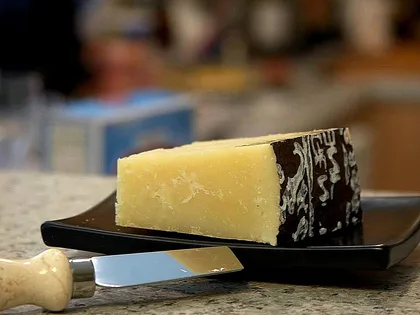 CheesePecorino RomanoPecorino Romano DOP is a hard, dry-salted sheep's milk cheese aged at least five months, made in Sardinia…
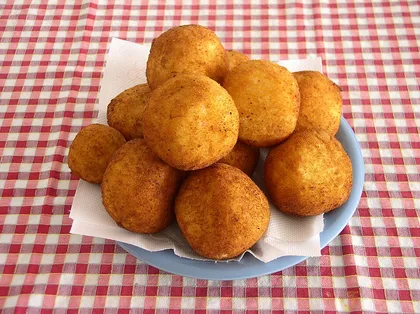 Pasta and breadAranciniArancini are deep-fried Sicilian rice balls: saffron rice moulded around a filling of meat ragù and peas, or…
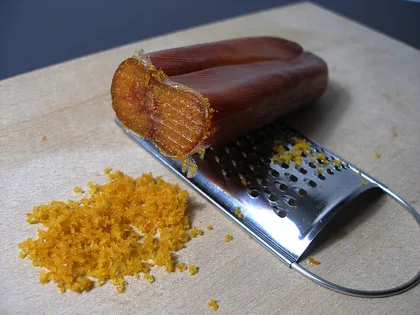 Fish and seafoodBottargaFifteen grams a head is enough, and that is not meanness: bottarga is the salted, pressed, air-dried roe sac…
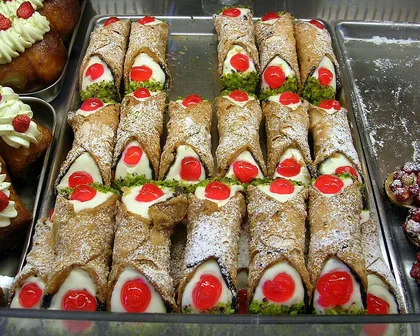 SweetsCannoliIt has to be filled when you order it, and anywhere that fills them in advance has already lost: the fried…
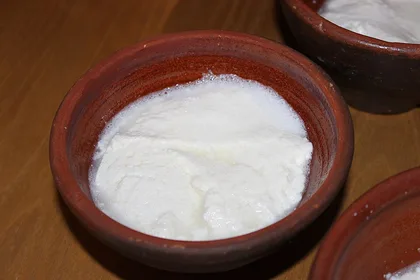 CheeseRicottaRicotta is not a cheese. It is a dairy product made from whey, the liquid left over after cheese has been…CheeseRagusanoRagusano is a ten-to-sixteen-kilo rectangular block of raw-milk pasta filata cheese from the Iblei plateau in…
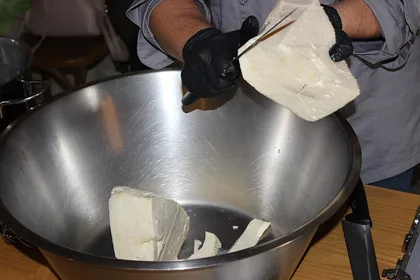 CheeseProvola dei NebrodiProvola dei Nebrodi is a raw cow's milk pasta filata cheese from the mountains of north-eastern Sicily…
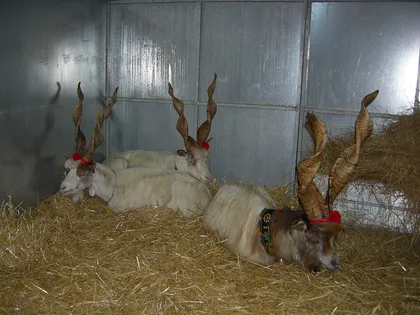 CheeseGirgentana Goat CheeseThe Girgentana is the corkscrew-horned goat of Agrigento, in south-western Sicily: white, spiral-horned…