What is Sardines?
A sardine is Sardina pilchardus. An anchovy is Engraulis encrasicolus. Two species, two families, and the single most persistent mix-up at any fish counter.
Telling them apart takes three seconds. A sardine has a short, blunt, rounded snout, a small terminal mouth, a deep body and large scales that come off if you look at them; the gill cover carries distinctive radiating grooves. An anchovy has a pointed snout with the upper jaw jutting well past the lower like a beak, an enormous mouth that opens back past the eye, a slim body and a bright silver stripe along the flank.
The flavours diverge too. Fresh, a sardine is fatter and far more assertive: it is a fish that stands up to charcoal and leaves a mark. Fresh anchovy is leaner and more delicate. Cured, the positions reverse completely: salted anchovy becomes the most intense ingredient in Italian cooking, while salted sardine stays a comparatively mild, oily fish.
The naming does not help. In Italian, sarda, sardina and sardella are the same fish in different regions; in Romagna a saraghina is a small grilling sardine; and in the Marche a sardoncino is not a sardine at all but an anchovy.
What does it taste like?
Rich, oily and unmistakably itself. A fresh sardine off the coals tastes of the sea and of its own fat in roughly equal measure, with a slightly bitter, mineral edge near the backbone and a soft, flaking flesh that goes grey-brown rather than white when cooked.
The fat is the whole point and the whole problem. It is what makes a sardine delicious in July and dull in January, and it is what makes every classic sardine recipe reach for acid: vinegar in Venice, lemon in Sicily, tomato and capers in Liguria.
Tinned sardines taste different again: softer, saltier, rounder, with edible bones that add a faint chalky sweetness. Good ones in olive oil are closer to a preserved meat than to fresh fish.
If you have only ever eaten sardines from a tin, a grilled fresh one in season is a genuine surprise.
How to use it
The best treatment is the simplest. Whole sardines over hot coals, coarse salt, olive oil and lemon, three or four minutes in total, eaten with your hands. Fat drips, skin blisters, nothing else is required.
For stuffed dishes you butterfly them: cut off the head, open the belly, lift the backbone out from head to tail and leave the tail attached. It takes five fish to learn.
Sarde a beccafico, from Palermo, are butterflied fillets rolled around toasted breadcrumbs, raisins, pine nuts, sugar and lemon juice, packed tails-up in a dish with bay leaves between them and baked. The name comes from the beccafico, a small bird once eaten by the aristocracy, which the rolled fish resemble. Catania makes a fried, breaded, sandwiched version instead.
Pasta con le sarde needs wild fennel, blanched and with its cooking water used for the pasta, plus onion, salted anchovy melted in oil, raisins, pine nuts, saffron, fresh sardines broken into the sauce, and toasted breadcrumbs instead of cheese. Without the fennel it is a different dish; in the version called a mare, the sardines are left out entirely and the name jokes that they are still at sea.
Sarde in saor, from Venice, go the opposite way: fried, then layered with onions long-stewed in vinegar with raisins and pine nuts, and left at least a day before eating cold.
How long it keeps
Fresh sardines are a same-day fish. Gut them as soon as you get home, because the belly cavity is where the oil and the enzymes sit and it softens well before the flesh does; cleaned, covered and sitting on ice in the fridge they run to about twenty-four hours. For the freezer, butterfly them first and lay them flat in single layers: two months is the working limit, since the fat in an oily fish oxidises and the flavour turns metallic and painty long before the texture gives any sign.
Salted sardines follow the anchovy routine. A sealed jar sits in a cool dark cupboard for a year or two; once opened, lift out what you need, press the salt back down over the rest and keep the jar refrigerated. Tins keep two to three years in a cool dark place, and some conservas are deliberately aged, which is why Portuguese and Spanish households turn them over now and then to move the oil around. Once open, move the contents to a glass container and finish them within two days. The stamped date and the packer are the reference.
Spot the real thing
On a fishmonger's ice, a fresh sardine has taut mirror skin, a blue-green back with a metallic sheen, a domed clear eye and red gills. Scales rub off at the lightest touch, so a fish that arrives bare and dull has been handled hard. The belly is the decisive check: the gut is oily and softens first, so a slack, split or yellowing belly puts the fish a day or two back. Held by the head, a very fresh one stays rigid rather than folding. To tell it from an anchovy, look for the blunt rounded snout, the small mouth rather than a gaping one, the large scales and the radiating lines across the gill cover.
In tins the species is on the label. Sardina pilchardus is the classic European fish; brisling, sild, sardinella and sprat are other species sold under sardine wording and are their own products. The packing medium is the other cost line: extra virgin olive oil, plain olive oil, sunflower oil and water are not interchangeable, and price follows in the same order, roughly 1.50 to 9 dollars a tin.
How to pronounce Sardines
SAR-deh
Two syllables, and the final 'e' is pronounced: SAR-deh, never 'sards' or 'SAR-day'. The singular is sarda, SAR-dah, and sardina, sar-DEE-nah, is equally correct. Pasta con le sarde is PAH-stah kon leh SAR-deh; sarde a beccafico is SAR-deh ah bek-kah-FEE-koh. The Ligurian focaccia, sardenaira, is sar-deh-NIGH-rah.
Sardines compared
vsAnchovies
The confusion that never goes away, and it is a genuine mistake rather than a matter of names: these are separate species. Sardines are bigger, fatter, deeper-bodied and scaly, with a blunt snout and a small mouth; anchovies are slim, lean and smooth, with a pointed snout, an overshot upper jaw and a huge mouth. Fresh, the sardine is the stronger fish. Cured under salt, the anchovy is by far the stronger one, which is why anchovy is a seasoning and sardine is a meal. They are not interchangeable in any recipe that matters.
| This | Anchovies | |
|---|---|---|
| Species | Sardina pilchardus | Engraulis encrasicolus |
| Snout and mouth | Blunt, small terminal mouth | Pointed, upper jaw overshot, huge mouth |
| Body | Deep, large loose scales, 13-20 cm | Slim, silver stripe, 10-15 cm |
| Fresh flavour | Strong, oily, assertive | Leaner, delicate, sweet |
| Cured flavour | Mild, oily, still a fish | Intense, savoury, a seasoning |
| Classic use | Grilled, stuffed, pasta con le sarde | Salt-cured, melted into oil |
vsMackerel
The other blue fish on the same ice, and the closest genuine substitute. Scomber scombrus is bigger, firmer and more metallic, with a stronger, almost gamey flavour and denser flesh that holds together on a grill where sardines flake apart. Mackerel takes vinegar and mustard beautifully and is the better fish for a marinade or a smoke; sardines are better small, whole and charred. Both are cheap, oily, high in omega-3 and low in mercury.
| This | Mackerel | |
|---|---|---|
| Species | Sardina pilchardus | Scomber scombrus |
| Size | 13-20 cm | 30-45 cm |
| Flesh | Soft, flaking, pale grey-brown | Firm, dense, darker |
| Flavour | Oily, mineral, moderate | Stronger, metallic, almost gamey |
| Best cooked | Whole over coals, 3-4 minutes | Filleted, grilled or marinated |
vsPilchards and herring
A naming problem rather than a fish problem, and specifically a British one. A pilchard and a sardine are the same species, Sardina pilchardus: traditionally 'sardine' meant the young fish and 'pilchard' the adult, and Cornish producers rebranded pilchards as Cornish sardines in the 1990s for the obvious commercial reason. Herring is genuinely different: Clupea harengus, a larger, colder-water fish with a milder, sweeter flesh, and the backbone of northern European curing traditions from rollmops to kippers.
| This | Pilchards and herring | |
|---|---|---|
| Species | Sardina pilchardus | Pilchard: identical. Herring: Clupea harengus |
| Size | 13-20 cm | Herring: 25-35 cm |
| Flavour | Oily, mineral | Herring: milder, sweeter, softer |
| Classic curing | Salt, oil, vinegar (saor) | Smoke and brine: kippers, rollmops |
Sardines substitutes
- Fresh mackerel
The best all-round stand-in: same oiliness, same price bracket, same cooking logic. Fillet it rather than cooking it whole, and cut the seasoning back, since mackerel is stronger.
1 mackerel = 4-5 sardines - Fresh herring
Excellent for anything involving vinegar, onions and time: sarde in saor works perfectly with herring. Milder and sweeter, so add a little more acid than the recipe says.
1:1 by weight - Fresh anchovies
Smaller, leaner and more delicate, so they cook faster and fall apart sooner. Good stuffed and baked, poor on a barbecue. Reduce cooking time by a third and handle them gently.
1:1 by weight, roughly 2 anchovies per sardine - Sprats
Cheap, abundant and underrated in northern Europe. Too small to butterfly, but ideal floured and fried, or grilled hard and eaten whole.
3 sprats per sardine - Good tinned sardines in olive oil
No use for grilling or for beccafico, but usable in pasta con le sarde at a pinch: drain them, add them at the very end, expect a softer and saltier result. Buy tins naming Sardina pilchardus.
1 tin of 120 g drained = about 200 g fresh sardines
Where to buy it
Sardines are among the cheapest fish anywhere. In Italy, 4 to 9 euros a kilo fresh, and less at the height of the season; in the US, roughly 2 to 4.50 dollars a pound where fresh ones are sold at all; in the UK, 3.50 to 8 pounds a kilo, best from a fishmonger between May and September.
Buy whole, never pre-filleted. Look for taut, mirror-bright skin, a blue-green back, a domed clear eye, red gills and scales still attached, because a dull, bald-looking sardine has been handled too much. Above all, check the belly: sardine guts are fatty and go first, so a soft, burst or yellowing belly means the fish is a day or two old. A fresh one is rigid and does not bend when held by the head.
Tinned sardines are a category of their own. Italian, Spanish, Portuguese and French producers all pack excellent fish, from 1.50 euros for a basic tin to 6 to 10 for premium extra virgin packs. Read the species: Sardina pilchardus is the classic European fish, while cheaper tins often use sardinella or sprat, which are honest but different. Above about 15 euros a tin you are largely paying for the tin. Salted sardines, sold in jars in Italy and Spain, run 12 to 20 euros a kilo, of which about 40 per cent is salt and waste.
Where to eat it in Italy
Palermo, before anywhere else. The markets of Ballaro, Capo and Vucciria, the fry shops, and trattorie where pasta con le sarde is a permanent fixture even though wild fennel is really a February-to-May ingredient. Sarde a beccafico are in every delicatessen counter in the city.
Along the Sicilian coast, Sciacca and Trapani cook the same blue-fish repertoire with more tuna history behind them; in Catania the fish market behind the cathedral is a spectacle in itself.
In Liguria, Sanremo and Imperia for sardenaira and pissalandrea; Camogli fries blue fish in an enormous pan on the harbour on the second Sunday of May.
Outside those two regions, Venice for sarde in saor, best eaten standing up in a bacaro with a glass of white, and Romagna for saraghina grilled over charcoal and folded into piadina.
Recipes with it
Frequently asked questions
Are sardines and anchovies the same fish?
No. Sardines are Sardina pilchardus and anchovies are Engraulis encrasicolus, different species in different families. Sardines are deeper-bodied and scaly with a blunt snout and small mouth; anchovies are slim and smooth with a pointed snout, an overshot upper jaw and a very large mouth. Fresh, sardines are fattier and stronger; salt-cured, anchovies are far more intense.
When are sardines at their best?
May to October, peaking between July and September, when fat content is highest. After spawning in winter they are thin and comparatively bland: cheap, but not much of a bargain.
Are tinned sardines as good as fresh?
They are a different product rather than a lesser one. Canning gives a soft fish with edible bones, which is why a single tin delivers a large share of a day's calcium, and good ones in olive oil on toast with lemon and raw onion are a proper meal. For grilling, for beccafico and for pasta con le sarde, you need fresh fish.
Do sardines contain mercury?
Very little. Mercury accumulates up the food chain and in long-lived fish, and sardines live only a few years and eat plankton. They are among the lowest-mercury fish available, unlike tuna, swordfish and shark, which is why they are recommended even during pregnancy.
Is sardine fishing sustainable?
It depends where. Adriatic small pelagics operate under a multiannual management plan with catch limits, introduced after assessments found overexploitation, and in the western Mediterranean sardine biomass is low with individuals noticeably smaller and leaner than in past decades. Even so, sardines remain one of the lowest-impact fish you can buy: check the origin on the label and favour certified fisheries where they exist.
Related foods
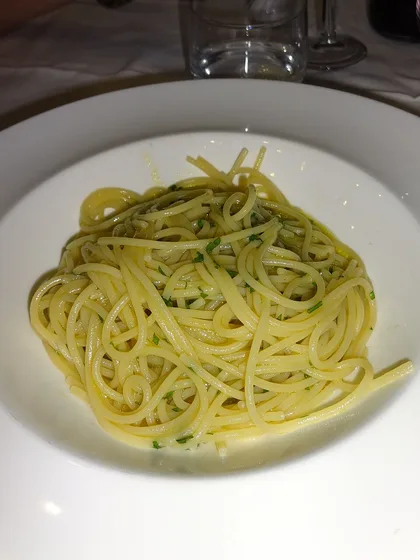 Fish and seafoodColatura di Alici (Italian Anchovy Sauce)Colatura di alici is the amber liquid that drains from anchovies packed in salt in chestnut barrels at…Fish and seafoodCantabrian AnchoviesCantabrian anchovies are caught in the Bay of Biscay in spring, cured under salt for six to eighteen months…Pasta and breadFocacciaTwo centimetres tall, dimpled with the fingertips, flooded with a brine of water, salt and olive oil before…
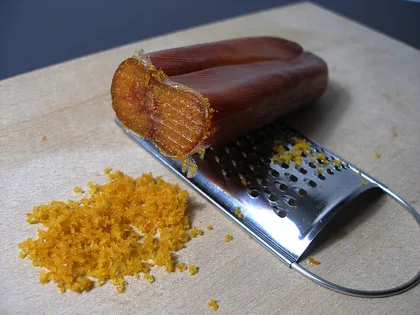 Fish and seafoodBottargaFifteen grams a head is enough, and that is not meanness: bottarga is the salted, pressed, air-dried roe sac…
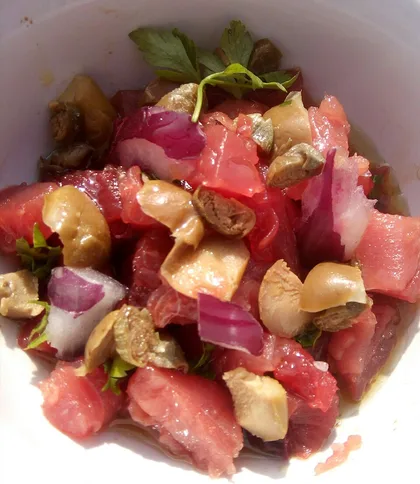 Fish and seafoodBluefin TunaAtlantic bluefin, Thunnus thynnus, is the fish Sicily and Sardinia built their tonnare around, with a…
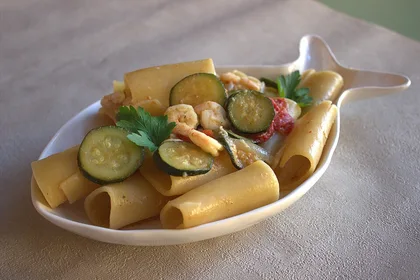 Fish and seafoodMazara Red PrawnsMazara red prawns are trawled between 400 and 700 metres down in the Strait of Sicily, where the water stays…
 SweetsCannoliIt has to be filled when you order it, and anywhere that fills them in advance has already lost: the fried…
 Pasta and breadAranciniArancini are deep-fried Sicilian rice balls: saffron rice moulded around a filling of meat ragù and peas, or…