What is Focaccia?
Genoese focaccia, fugassa in dialect, is a leavened bread baked flat in an oiled tray, roughly one to two centimetres high. Its signature is the dimples: fingertips pressed into the risen dough, each hollow filling with a brine of water, salt and extra virgin olive oil. The water evaporates in the oven, the oil stays, and the top comes out glossy and lightly salted.
Three things share the name and almost nothing else. Focaccia di Recco col formaggio has no yeast at all: two paper-thin sheets of dough with fresh stracchino between them, blasted in a very hot oven, and it is the only one of the family with a protected IGP status. Focaccia di Voltri is thinner and drier, with deeper dimples, baked in the wood ovens of western Genoa. Focaccia barese, from Puglia, has boiled potato in the dough and cherry tomatoes on top.
What does it taste like?
Salty, olive-forward and soft, with a thin crisp base and a crumb that is moist rather than fluffy. The salt arrives in crystals rather than evenly, so bites alternate between plain bread and sharp seasoning. Good focaccia leaves a clean olive oil finish, not a greasy coating.
What surprises most Americans and Britons is what is missing. There is no rosemary in a classic fugassa, no garlic, no herb crust, no sweetness. Supermarket focaccia abroad is usually taller, drier and heavily herbed: closer to a seasoned dinner roll than to the Ligurian original.
Focaccia di Recco tastes almost nothing like it: shattering thin pastry, blistered and slightly burnt in spots, with molten fresh cheese that is milky and faintly sour.
How to use it
Eat it the day it is baked, warm or at room temperature. In Genoa it is breakfast, dipped into a cappuccino, an entirely ordinary local habit and not a tourist stunt.
To revive day-old focaccia, three to five minutes in a 200 °C oven brings it back. Never use a microwave: it turns rubbery in seconds. To freeze, cut it into portions first, then reheat straight from frozen.
Split it horizontally for sandwiches with prosciutto, mortadella or fresh cheese. Skip the pesto: warm basil turns bitter, and no Genoese bakery serves focaccia that way. Focaccia di Recco is never filled and never reheated: it is eaten within minutes of leaving the oven.
How long it keeps
A wrapped industrial focaccia carries a date on the pack, set by the producer, and that pack is the reference for anything sold sealed. Bakery focaccia is made to be eaten the day it comes out of the oven, and after that it changes in a predictable way. Left in paper at room temperature it stays soft for roughly a day, because the oil in the crumb slows moisture loss. By the second day the starch retrogrades: the crumb tightens, the oiled top goes leathery, and the salt draws a little damp to the surface.
The fridge is the fastest route to a hard focaccia, since staling runs quickest at around 4 C. Room temperature in paper, never a sealed plastic bag, keeps the crust from going soggy. For anything beyond a day the freezer is the usual answer: cut it into portions, wrap them tightly, and reheat straight from frozen at 200 C. Past a month or two at minus 18 C the olive oil slowly oxidises and the flavour flattens toward cardboard.
Spot the real thing
Genoese focaccia looks wet before it looks golden. The surface is glossy with oil pooled in the dimples, salt crystals still visible on top, the slab two to three centimetres high, the underside pale and faintly fried from the oiled tray. On a wrapped pack, read the ingredients: flour, water, extra virgin olive oil, salt, yeast and malt. Sunflower oil, palm fat or a long line of emulsifiers points to a soft sandwich bread shaped like focaccia.
Two things get confused with it abroad. The tall herb-flecked slabs sold as focaccia in supermarket bakery sections run four to six centimetres high and crumble instead of folding. Roman pizza bianca is thinner and crisper and carries no brine. Focaccia di Recco is a separate product with no dimples and no yeast: two almost transparent sheets of dough with pockets of cheese between them, blistered dark in patches. The price tells you which counter you are at, since focaccia sold by weight from a bakery costs more than a wrapped supermarket pack.
How to pronounce Focaccia
foh-KAH-chah
Three syllables, stress on the second. The double 'cc' before 'i' makes a hard 'ch' as in 'church', and the 'i' itself is silent, since it is only there to soften the c. Never 'foh-KAY-shuh', never 'fo-CATCH-ee-ah'. In Genoese dialect you will hear fugassa, roughly foo-GAH-sah.
Focaccia compared
vsFocaccia di Recco col formaggio
Same region, opposite technique. Genoese focaccia is leavened bread; Recco focaccia is two unleavened sheets around melting stracchino, and only four coastal comuni may legally make it under the IGP granted in 2012.
| This | Focaccia di Recco col formaggio | |
|---|---|---|
| Yeast | Leavened, two rises | None at all |
| Thickness | 15-20 mm | Two sheets, under 10 mm total |
| Filling | None: oil and brine on top | Fresh stracchino between the sheets |
| Oven | About 250 °C, 15-20 minutes | 270-320 °C, 4-8 minutes |
| Protected status | None (regional traditional product) | IGP since 2012, four comuni only |
| When to eat | Within a day, good at room temperature | Within minutes, straight from the oven |
| Where | All of Liguria | Recco, Sori, Camogli, Avegno |
vsPizza bianca romana
Rome's flatbread is the other great Italian oil-and-salt bread, and it behaves differently: longer fermentation, wetter dough, bigger holes, chewier bite. Focaccia is eaten as it comes; pizza bianca is also the standard sandwich bread of Rome.
| This | Pizza bianca romana | |
|---|---|---|
| Shape | Baked in a rectangular tray, cut in squares | Long slabs, torn or cut to length |
| Crumb | Fine, even, moist | Open, irregular, chewy |
| Finish | Brine of water, salt and oil in dimples | Oil brushed on, coarse salt scattered |
| Fat in dough | Olive oil worked in | Little or none |
| Classic use | Eaten plain, at breakfast or as bread | Split and filled with mortadella, or figs and prosciutto |
| Texture cold | Stays soft a few hours | Goes leathery fast, best reheated |
vsFocaccia barese
Puglia's version is a different bread wearing the same name: potato in the dough, tomatoes and olives on top, and a semolina base that fries slightly in the oiled pan. Ordering focaccia in Bari and in Genoa gets you two unrelated things.
| This | Focaccia barese | |
|---|---|---|
| Flour | Soft wheat flour | Semolina and soft wheat, plus boiled potato |
| Topping | Oil, salt brine | Cherry tomatoes, olives, oregano |
| Height | 15-20 mm | 25-35 mm, softer inside |
| Base | Thin and dry | Oil-fried, almost crunchy |
| Eaten | Breakfast, snack, bread | Street food, lunch, beach food |
Focaccia substitutes
- Pizza bianca
The closest thing you will find outside Liguria, and better than a bad focaccia. Use it wherever you would use focaccia as a bread or sandwich base: it is chewier and less oily.
1:1 by weight - Home-made dough, 65% hydration
Focaccia is one of the few Italian breads that genuinely works at home: strong bread flour, 65 g water per 100 g flour, olive oil in the dough, a slow rise, then dimples and brine before a 250 °C oven.
500 g flour makes one 30x40 cm tray - Ciabatta, split and oiled
For sandwiches only. Split it, brush the cut faces with good olive oil and a pinch of salt, and warm it: you get the seasoning, not the texture.
1:1 - Crescenza or young robiola (for Recco-style)
Stracchino is hard to find abroad. Crescenza is the same cheese under another name; young robiola works too. Both must be fresh, milky and spreadable.
250 g cheese per 30 cm round - Ricotta and cream cheese blend (for Recco-style)
A workable emergency mix when no Italian fresh cheese is available: whole-milk ricotta and full-fat cream cheese in equal parts, beaten smooth. Slightly less tangy, melts acceptably.
1:1, used as stracchino - Gluten-free focaccia
One of the more forgiving gluten-free breads, because the dough is meant to be flat and wet. Expect a denser crumb; add an extra spoon of oil and bake a few minutes longer.
Where to buy it
In the US, Italian bakeries in the north-east and the Bay Area sell focaccia by weight, typically 10 to 16 dollars per pound; Eataly bakes it daily in its bread counters. In the UK, look to Italian delis and specialist bakeries rather than supermarkets, at roughly 10 to 18 pounds per kilo.
Read the label before buying industrial focaccia: seed oil or palm fat instead of extra virgin olive oil is the reliable sign of a bread pretending to be focaccia. Height is the other tell: anything above three centimetres is a different product.
Focaccia di Recco does not travel. A few Ligurian producers ship it frozen for home baking; everything else sold under that name outside Liguria is an imitation, and legally cannot use the IGP name.
Where to eat it in Italy
Genoa is the place: the bakeries in the caruggi, the arcades of Sottoripa near the old port, and the streets around the Mercato Orientale, where focaccia is sold by weight from early morning. Go to Voltri, in the western suburbs, for the thinner wood-fired version.
For focaccia col formaggio, drive twenty minutes east along the Golfo Paradiso to Recco, Camogli, Sori or Avegno, the four towns of the IGP. Recco holds a festival for it in late May, with trays coming out of the ovens all day.
Anywhere on the Ligurian coast, the rule is simple: buy it from a bakery that sells it by weight, not from a place with photographs on the menu.
Frequently asked questions
Is focaccia the same as pizza?
No. Focaccia is a bread: leavened, baked flat in an oiled tray, seasoned with oil and salt. Pizza is a base built for a topping and baked much hotter and faster. The doughs are related but the fat content, thickness and purpose are different.
Is focaccia vegan?
Classic Genoese focaccia is: flour, water, olive oil, yeast, salt and sometimes malt. Nothing animal goes into it. Focaccia di Recco is not, because of the fresh cheese, and industrial versions sometimes contain milk powder or butter.
Why is Genoese focaccia so oily?
Because oil is the seasoning, not an accident. Extra virgin olive oil goes into the dough and again into the dimples with salt and water as a brine. The water evaporates, leaving the oil behind on the surface.
How do you pronounce focaccia?
foh-KAH-chah, stress on the second syllable. The 'cci' is a single 'ch' sound as in 'church', and the i is silent.
Can you buy real focaccia di Recco outside Italy?
Rarely. The IGP restricts production to four Ligurian comuni, so anything baked elsewhere cannot carry the name. A few producers export it frozen and part-baked; otherwise it is a reason to visit.
Related foods
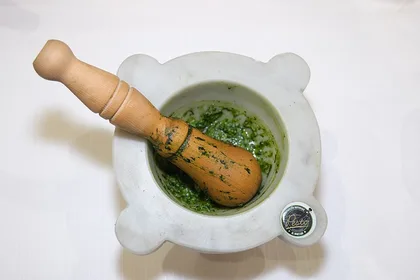 Oil and preservesPesto GenoveseHeat never touches this sauce, and by the rule neither does a blender: basil pounded in a marble mortar with…
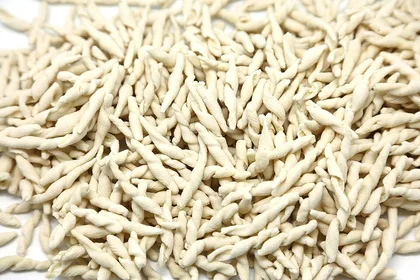 Pasta and breadTrofieTrofie are the pasta that pesto was made for: short, tapered twists of flour and water, rolled one by one…
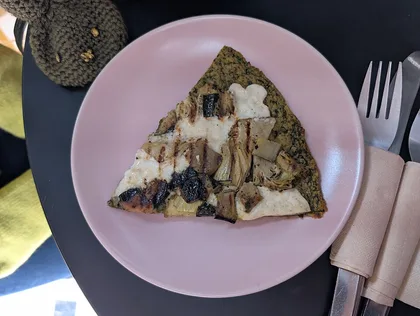 Pasta and breadFarinataFarinata is a paper-thin chickpea flour pancake baked in a copper pan in a blistering wood oven.
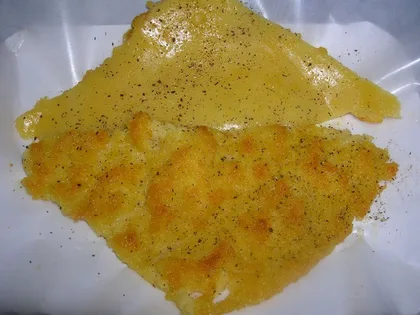 Pasta and breadTorta di Ceci (Cecina)Chickpea flour, water, olive oil and salt, baked in a wide copper pan in a fierce wood oven.Fish and seafoodSardinesSardines are not small anchovies. They are a different species with a different snout, a different mouth and…Fish and seafoodCantabrian AnchoviesCantabrian anchovies are caught in the Bay of Biscay in spring, cured under salt for six to eighteen months…SweetsPandolce GenoveseGenoa's Christmas cake: sultanas, pine nuts, candied citron and fennel seeds.Cured meatsTesta in CassettaTesta in cassetta is pig's head simmered until tender, boned while hot, seasoned with spices and pressed into…