What is Trofie?
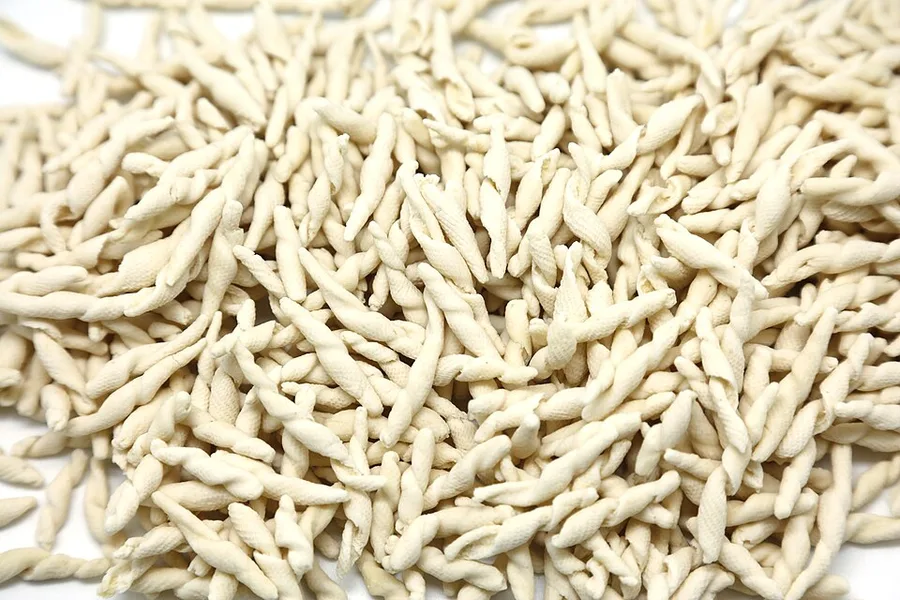
Trofie are a fresh Ligurian pasta made from nothing but soft wheat flour, water and salt. A piece of dough the size of a chickpea is pushed diagonally across the work surface with the edge of the palm, which simultaneously stretches and twists it into a thin spiral with two pointed ends, about three centimetres long.
The shape exists to hold pesto. A cold, oil-based sauce slides straight off smooth pasta; the spiral grooves catch it. The uneven thickness, fatter in the middle and fine at the tips, gives you two textures in the same bite, which is why trofie eat better than an extruded twist of the same size.
The name almost certainly comes from the dialect verb strofuggiâ, to rub, which is exactly what the hands are doing. A darker inland version made with chestnut flour, trofie di castagne, is worth seeking out in autumn.
What does it taste like?
On their own, mild and wheaty, with a firm chew and a rougher surface than any factory pasta. There is no egg, so the flavour is clean rather than rich, and the texture is springy rather than tender.
The point of them is what happens with sauce. Because they are small and twisted, every piece comes loaded, so a plate of trofie al pesto tastes considerably more of basil, garlic, cheese and olive oil than the same amount of pesto on penne would. The potatoes soften the whole dish and the green beans cut it.
Chestnut trofie are a different proposition: sweeter, nuttier, slightly gritty, and best with a simple butter or a walnut sauce rather than pesto.
How to use it
Cook the whole dish in one pot. Cube a waxy potato and put it into boiling salted water first, add halved green beans halfway through, then the trofie for the last three or four minutes if fresh, seven to nine if dried.
Never heat the pesto. Put it in a warmed serving bowl, loosen it with two tablespoons of the cooking water, warm and not boiling or the oil splits and the basil blackens, then drain the pasta and vegetables and tip them in. Toss off the heat.
The starch released by the potatoes and the pasta is what turns loose pesto into a sauce that clings. That is the whole reason the potatoes are in the dish, and skipping them gives you a thinner, oilier plate.
Away from pesto, trofie work with a walnut sauce, light seafood sauces and vegetables. They are wrong for meat ragù: too small, and they get lost.
How long it keeps
Fresh trofie keeps two or three days in the fridge, laid on a tray, dusted with flour and covered with a cloth rather than cling film, which traps moisture and welds the pieces to each other. To freeze them raw, spread them apart on a tray until solid and then bag them: two months, cooked straight from frozen with an extra minute. Dried trofie sits in a cupboard for around two years, with the date on the box as the reference, and what it loses over that time is wheat aroma rather than anything structural.
The pesto is the part that keeps worst. In the fridge under a finger of olive oil it holds four or five days, and the surface darkens wherever that oil layer breaks and air reaches the basil. Frozen in ice cube portions it keeps about three months. Do not freeze trofie already dressed with it: the basil goes dark and the cheese turns grainy on thawing, and neither of those reverses.
Spot the real thing
A handmade trofia has tapered, asymmetric ends and a twist that is clearly there but never regular. They are short, three to four centimetres, and nothing longer: if what you are holding runs past five centimetres, it is long fusilli or gnocchetti under another name. On a shelf abroad the shapes mistaken for them are casarecce, which are longer and folded into a groove rather than twisted, cavatelli, which are hollowed out and not twisted at all, and Sardinian gnocchetti, which are ridged little shells.
In dried pasta the die matters more than the brand on the box. A matte, faintly floury surface means a bronze die; smooth and glossy means Teflon. Trofie di castagne should be genuinely brown and smell of chestnut before they are cooked, and if the colour came from cocoa or toasted flour the label says so. Fresh vacuum-packed trofie in the chilled aisle costs roughly double the dried version.
How to pronounce Trofie
TROH-fee-eh
Three syllables, stress on the first. The final 'e' is pronounced as a separate short vowel: 'fee-eh', not 'fee'. English speakers almost always say 'TRO-fee', which is the singular-sounding version of a plural word; the singular is trofia, 'TROH-fee-ah'. The 'o' is closed and short, as in 'gross', not the drawn-out 'oh' of 'trophy'.
Trofie compared
vsGnocchetti sardi (malloreddus)
They look similar in the packet and behave completely differently. Malloreddus are Sardinian: pure durum semolina, short, plump, deeply ridged, sometimes coloured with saffron, and built for heavy sausage and tomato sauces. Trofie are Ligurian: thinner, tapered, twisted, softer wheat, and built for pesto. Swapping them works in a pinch but changes which sauces make sense.
| This | Gnocchetti sardi (malloreddus) | |
|---|---|---|
| Origin | Liguria (Recco, Camogli, Sori) | Sardinia |
| Flour | Soft wheat, sometimes part semolina | Durum semolina only |
| Shape | Tapered twist, pointed ends | Plump ridged shell, blunt ends |
| Surface | Smooth with a spiral groove | Heavily ridged |
| Classic sauce | Pesto with potato and green beans | Sausage ragù, tomato, saffron |
| Cook time | 3-4 min fresh, 7-9 dried | 10-13 min dried |
| Bite | Springy, uneven | Dense and very chewy |
vsTrenette
The other pasta claimed by pesto, and the source of a genuine Ligurian argument. Trenette are a flat ribbon, close to a narrow linguine, and are the older Genoese choice for pesto; trofie are from the coast east of Genoa and have won the modern popularity contest. Trenette give you a silkier plate where the sauce coats; trofie give you a chunkier one where the sauce is trapped. Both take potatoes and green beans.
| This | Trenette | |
|---|---|---|
| Format | Short twist, 3-4 cm | Long flat ribbon, 25-30 cm |
| Dough | Flour and water | Flour and water (dried), sometimes egg |
| Sauce behaviour | Traps pesto in the spiral | Coats the strand evenly |
| Traditional in | Golfo Paradiso, east of Genoa | Genoa itself, older tradition |
| Eaten with | Potato and green beans | Potato and green beans |
| Ease at home | Rolled by hand, no machine | Bought dried, or rolled and cut |
vsCavatelli
The most available substitute in the US, and a fair one. Cavatelli are southern Italian, semolina and water, dragged into a small hollow shell. They are denser and chewier than trofie and trap sauce inside rather than around, so a pesto sits in pockets rather than coating the piece. Good result, different mouthful.
| This | Cavatelli | |
|---|---|---|
| Origin | Liguria | Molise, Puglia, Basilicata |
| Shape | Twisted spindle | Hollow shell |
| Density | Light, springy | Dense, very chewy |
| Sauce hold | Around the spiral | Inside the hollow |
| US availability | Dried, in delis and online | Excellent, frozen and dried |
| Price (US) | $4-8 per lb | $3-6 per lb |
Trofie substitutes
- Trenette or linguine
The historically correct alternative rather than a compromise: Genoese cooks argue for it. Keep the potatoes and green beans, loosen the pesto with a little more cooking water since a strand needs a thinner sauce to coat evenly.
1:1 by weight - Cavatelli
The best-stocked substitute in American shops, frozen or dried. Denser than trofie, so serve slightly less by weight and cook a minute past the point where they float.
1:1, or 0.9:1 by weight - Gnocchetti sardi (malloreddus)
Similar size, more ridges, sturdier. They hold pesto very well; they just eat chewier and look wrong to a Ligurian. Widely sold in supermarkets in both the US and the UK.
1:1 - Fusilli or casarecce
The supermarket fallback. Both keep the twist that catches the sauce. Choose bronze-die versions if you want the rougher surface.
1:1 - Make them by hand
No equipment at all: 300g plain flour, about 150ml warm water, a pinch of salt. Knead ten minutes, rest thirty, pinch off chickpea-sized pieces and roll each diagonally under the edge of your palm. Slow the first time, quick by the second batch, and naturally vegan.
300g flour + 150ml water serves three - Gluten-free note
Trofie are flour and water, so there is no dairy or egg to work around, but the wheat is unavoidable. Gluten-free short twists made from rice and corn hold pesto acceptably; add an extra spoon of pasta water when mixing, as they release less starch.
1:1
Where to buy it
In the US, dried trofie from Ligurian and Italian producers are stocked by Eataly, Whole Foods and online importers at $4 to $8 per pound. Look for 'trafilata al bronzo' on the pack if you want the rougher surface.
In the UK, Waitrose, Ocado and Italian delis carry dried trofie at £2.50 to £5 for 500g, or £5 to £10 per kilo. Fresh trofie appear in Italian shops in London and are worth the premium if you are eating them the same day.
For the pesto, the label to look for is Basilico Genovese DOP among the ingredients, and no cashews or sunflower oil. Fresh refrigerated pesto beats jarred every time; the jarred kind has usually been heat-treated, which is exactly what you are told never to do to pesto.
Where to eat it in Italy
Recco, Camogli, Sori and the villages behind them, the stretch of coast east of Genoa known as the Golfo Paradiso, are where pasta shops sell trofie made that morning and trattorie still roll their own. Recco is also the home of focaccia col formaggio, so plan to eat twice.
In Genoa's old town, the historic sciamadde serve trofie alongside farinata and vegetable tarts. The city hosts the Pesto World Championship every two years: a hundred competitors pounding DOP basil in marble mortars with wooden pestles, which is how it should be done and how almost nobody does it at home.
Inland, in the Fontanabuona valley and towards the Apennines, chestnut trofie appear on autumn menus. On the Cinque Terre you will pay tourist prices for an ordinary plate; go twenty minutes inland instead.
Frequently asked questions
How do you pronounce trofie?
TROH-fee-eh, stress on the first syllable, with the final e pronounced as its own short vowel. English speakers usually say 'TRO-fee', which drops it. One piece is a trofia, TROH-fee-ah.
Why are there potatoes and green beans in trofie al pesto?
The potatoes release starch that binds the pesto into a creamy sauce that clings to the pasta instead of pooling in oil, and the green beans add sweetness and bite. It is a technique, not a garnish. Everything cooks in the same pot.
Can you heat pesto?
No. Loosen it in the serving bowl with a couple of tablespoons of warm cooking water and toss the pasta in off the heat. Direct heat splits the oil and turns the basil black and bitter.
Are trofie vegan?
The pasta is: flour, water, salt, no egg. The classic dish is not, because Genoese pesto contains Parmigiano and pecorino, both made with animal rennet. Vegan pesto with nutritional yeast or a vegan hard cheese works well with this shape.
What is the difference between trofie and gnocchetti sardi?
Trofie are Ligurian, tapered, twisted, made with soft wheat, and designed for pesto. Gnocchetti sardi, or malloreddus, are Sardinian, plump, deeply ridged, pure semolina, and designed for sausage and tomato sauces. Similar size, opposite purpose.
Related foods
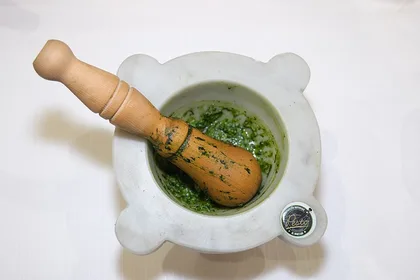 Oil and preservesPesto GenoveseHeat never touches this sauce, and by the rule neither does a blender: basil pounded in a marble mortar with…Pasta and breadFocacciaTwo centimetres tall, dimpled with the fingertips, flooded with a brine of water, salt and olive oil before…
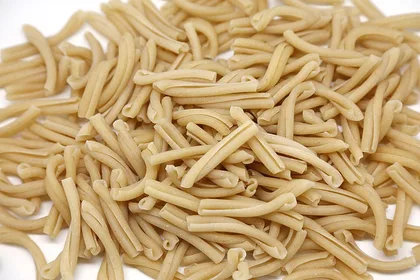 Pasta and breadStrozzapretiStrozzapreti are hand-rolled Romagnolo pasta: strips of semolina-and-water dough twisted between the palms…
 Pasta and breadFarinataFarinata is a paper-thin chickpea flour pancake baked in a copper pan in a blistering wood oven.
 Pasta and breadTorta di Ceci (Cecina)Chickpea flour, water, olive oil and salt, baked in a wide copper pan in a fierce wood oven.Fish and seafoodSardinesSardines are not small anchovies. They are a different species with a different snout, a different mouth and…Fish and seafoodCantabrian AnchoviesCantabrian anchovies are caught in the Bay of Biscay in spring, cured under salt for six to eighteen months…SweetsPandolce GenoveseGenoa's Christmas cake: sultanas, pine nuts, candied citron and fennel seeds.