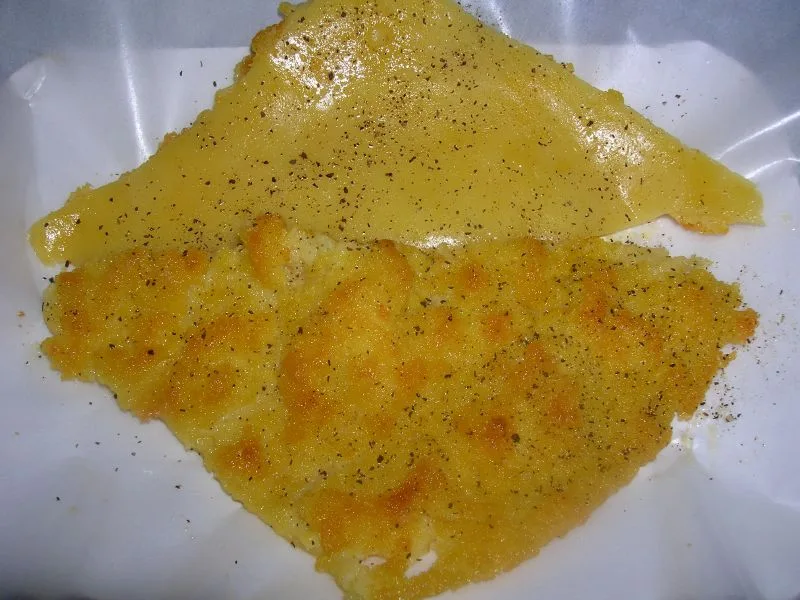
What is Torta di Ceci (Cecina)?
Torta di ceci is a thin round of chickpea-flour batter baked in a wide tinned copper pan at very high heat. The surface comes out blistered and blotched dark; the inside stays soft, almost custardy. The ingredients are chickpea flour, water, extra virgin olive oil, salt and pepper, which makes it naturally gluten free and vegan.
The naming is the part that confuses everyone, including Italians. Along a stretch of Tyrrhenian coast running from Nice to Livorno, the same batter answers to at least six names. In Genoa and Liguria it is farinata. In Livorno it is torta, or torta di ceci. In Pisa and Versilia it is cecina. In Massa and Carrara it is calda calda, the hot-hot. In Nice it is socca. In Sassari, where Genoese traders took it, it is fainè.
Thickness changes too, and by a lot. Genoese farinata is three or four millimetres and aims at crispness. Livornese torta is close to a centimetre and stays creamy inside. Pisan cecina sits between the two. These are not different recipes: it is the same batter poured in different quantities into the same pan.
What does it taste like?
Sweet and earthy, the way chickpeas are, with a faint bitterness underneath and a lot of olive oil carrying both. There is no dairy and no egg, so nothing rounds it off; what you get instead is a clean, savoury, slightly nutty flavour that tastes distinctly of the pulse it is made from.
Texture is where the versions separate. The thick Livornese torta gives you a crisp bottom and blistered top around a soft, spoonable middle, closer to a savoury custard than to bread. The thin Pisan and Genoese versions are crisper throughout and give more of the charred edge, which is the best part in every version.
Fresh from the oven it is hot enough to be a hazard, and that is the correct way to eat it. The black pepper ground over the top at the last second is not a garnish: it is the third flavour, and locals grind on far more than a visitor expects.
Cold or reheated it flattens out considerably. The window is minutes, not hours.
How to use it
The Livornese way is the cinque e cinque: a slice of torta pushed into a bread roll, a francesino or a piece of focaccia, with ground black pepper and, for most people, oil-cured aubergine. The name comes from the historic price, five centesimi of bread and five of torta. It is carbohydrate inside carbohydrate, nutritionally indefensible, and one of the best sandwiches in Italy.
In Pisa and along the Versilia coast the cecina is eaten on its own, by the slice, standing up, with pepper. In Carrara it is sold by weight and carried away in paper.
At home it works as a starter or a light main with vegetables alongside. Do not load it with toppings: Liguria has traditional versions with onion or whitebait, but the Tuscan one is served bare and is better for it.
Reheat only in a dry non-stick pan or a hot oven, never a microwave, which turns it rubbery in ten seconds.
The single rule that matters is pepper. Torta di ceci without freshly ground black pepper is unfinished, and in every town along this coast the grinder sits on the counter for customers to use themselves. Use more than feels reasonable.
How long it keeps
The whole thing is a set custard of chickpea flour and water with a crisp skin on top, and it starts giving that water back the moment it leaves the oven. On a rack in a single layer the surface stays crisp for half an hour or so, a little longer than the thinner Ligurian version because the extra depth holds more moisture in the middle, then steam reaches the skin and softens it. Wrapped or stacked while hot it steams itself and the crust is gone in minutes. Inside a bread roll the same thing happens faster, since the bread pulls moisture out of the wedge and gives it back as softness.
In the fridge, covered once completely cold, it holds two days and firms into something dense and sliceable as the chickpea starch sets. A dry pan or a hot oven at 200 to 230°C for a few minutes drives the moisture back off and returns the edges; a microwave only steams it further. Frozen it keeps about a month and comes back grainier, the set interior broken up by ice crystals.
Spot the real thing
It is cut in wedges straight from a wide round tinned copper pan and handed over warm, five to ten millimetres thick, deep gold with dark blistered patches and a soft, almost creamy middle. The batter is chickpea flour, water, olive oil and salt, rested for hours, with black pepper cracked over at the counter. No wheat flour, no eggs, no raising agent. On the Tuscan coast the tell is what it is served in: the Livornese cinque e cinque is a wedge stuffed into a francesino roll, sold nowhere else.
The naming is the main source of confusion. Cecina, torta di ceci and simply torta are the Pisan and Livornese words for it; Ligurian farinata is the same family under another name; socca in Nice is the thinner French cousin. Panelle in Palermo use the same flour but are set firm and fried. Chickpea pancakes on health food menus usually have eggs or baking powder in them, and anything sold as cecina with wheat flour is a different recipe. A wedge costs 2 to 3.50 euro in Livorno or Pisa and is rarely sold outside Tuscany at all.
How to pronounce Torta di Ceci (Cecina)
TOR-tah dee CHEH-chee
Ceci is the plural of cece, chickpea. Both 'c' sounds are soft before 'e' and 'i', so it is CHEH-chee, like 'chay-chee', never 'see-see' or 'keh-kee'. The Tuscan name cecina is stressed on the second syllable: cheh-CHEE-nah. That matters, because Cecina stressed on the first syllable, CHEH-chee-nah, is a coastal town south of Livorno: same spelling, different word, and putting the stress in the wrong place instantly marks you as an outsider. Calda calda is KAL-dah KAL-dah, and fainè is fah-ee-NEH.
Torta di Ceci (Cecina) compared
vsFarinata genovese
The same batter and the same pan, separated by about a hundred kilometres of coast and half a centimetre of thickness. Genoese farinata is poured thin, comes out crisp with a barely-there interior, and is often sold in the old fried-food shops called sciamadde alongside vegetable tarts. The Livornese torta is poured thick, holds a soft centre, and exists mainly to be stuffed into bread. Liguria also runs variations with onion or whitebait; the Tuscan version is left plain.
| This | Farinata genovese | |
|---|---|---|
| Thickness | 8-10mm (Livorno), 5-6mm (Pisa) | 3-5mm |
| Texture | Crisp edge, creamy middle | Crisp throughout |
| Usual serving | Stuffed into a roll, or by the slice | By the wedge, on paper |
| Variations | Kept plain | Onion, rosemary, whitebait |
| Sold in | Torterie and market stalls | Sciamadde and bakeries |
| Name locally | Torta, cecina, calda calda | Farinata, fainâ |
vsSocca (Nice)
The same dish on the French side of the same coastline, and the Ligurian ancestry is undisputed, since Nice was part of the Savoy world and the traffic along that shore never stopped. Socca is thin, cooked in a copper pan in a wood oven, and served torn into ragged pieces with pepper. The differences are cosmetic: socca is usually torn rather than cut, is eaten standing at a market stall, and is often cooked slightly darker.
| This | Socca (Nice) | |
|---|---|---|
| Country | Italy: Tuscany and Liguria | France: Nice and the Alpes-Maritimes |
| Thickness | 5-10mm | 3-5mm |
| Served | Cut into squares or wedges | Torn into irregular pieces |
| Eaten with | Bread, in Livorno | On its own, with rosé |
| Char | Blistered | Often deliberately darker |
vsPanelle
Same flour, opposite method, and the difference is total. Sicilian panelle are made by cooking chickpea flour and water into a thick paste like polenta, spreading it two millimetres thin, letting it set, cutting it into rectangles and deep-frying them. Torta di ceci is a liquid batter baked in one piece. Panelle are crisp shells with a soft interior, sold hot in a sesame roll in Palermo; torta di ceci is a single baked round. Both end up inside bread, which is the only thing they truly share.
| This | Panelle | |
|---|---|---|
| Method | Liquid batter, oven-baked | Cooked to a paste, then deep-fried |
| Fat | Olive oil in the batter | Frying oil, absorbed at the end |
| Shape | One large round, cut to order | Individual rectangles or triangles |
| Region | Tuscany and Liguria | Palermo and western Sicily |
| In bread | Cinque e cinque roll | Pane e panelle |
Torta di Ceci (Cecina) substitutes
- Make it at home
The best answer by a distance, because the ingredient list is four items and the technique is a rest and a hot oven. Whisk 300g chickpea flour into a litre of cold water, rest four to ten hours, skim the foam, add salt and six tablespoons of olive oil, pour 8mm deep into a heavily oiled shallow metal pan and bake at 250C or higher until blistered.
300g flour to 1 litre water - Socca, if you are anywhere near Nice
Not a substitute so much as the same thing under a French passport. Sold from wood-fired ovens in the markets of Nice and along the Cote d'Azur, usually thinner and torn by hand.
1:1 - Sardinian fainè
The Sassari version, brought to the island by Genoese merchants and often served with onion or sausage on top. Available in Sardinian restaurants and increasingly in Italian delis abroad.
1:1 - Besan chilla or pudla
The Indian chickpea-flour pancake, cooked on a griddle rather than baked. Thinner and usually spiced with chilli and coriander, but the underlying flavour is the same and the ingredients are identical if you leave the spices out.
2 chilla per portion of torta - Panelle
Same flour, different discipline: fried rather than baked, and served in pieces. If you find them at a Sicilian street-food stall they scratch the same itch, and both go inside bread.
4-5 panelle per slice of torta
Where to buy it
In Tuscany, from a torteria: a slice costs 1.50 to 3 euros, or 10 to 16 euros per kilo, and a complete cinque e cinque runs 3.50 to 5 euros. In Liguria, the sciamadde of central Genoa sell farinata at 2 to 3.50 euros a wedge. Outside those regions, Ligurian and Tuscan restaurants in the big Italian cities charge 4 to 6 euros a portion.
Abroad the picture is thin. In the US and the UK you will find it occasionally on the menu of a Ligurian restaurant, at roughly 8 to 14 dollars or 6 to 10 pounds a plate, and almost never in a shop. In and around Nice it is everywhere as socca, at 4 to 6 euros.
The practical route abroad is to buy the flour and make it. Chickpea flour is sold as gram flour or besan in every South Asian grocer, usually at 2 to 4 dollars or 1.50 to 3 pounds a kilo, which is a fraction of what health-food shops charge for the identical product. Check it smells clean and nutty: chickpea flour goes rancid faster than wheat flour and stale flour bakes bitter.
The only equipment that matters is a wide, shallow metal pan, preferably steel or copper rather than glass, and an oven that reaches at least 250C.
Where to eat it in Italy
Livorno first. The torterie of the centre and the stalls around the Mercato delle Vettovaglie, a vast covered market from 1894 and one of the finest in Italy, are where the cinque e cinque belongs. The Venezia Nuova quarter, built on canals in the eighteenth century, is the atmospheric place to eat one, especially in late July during Effetto Venezia, when the whole district fills with stalls and music.
Pisa is twenty minutes away by train and serves cecina in the fried-food shops of the old centre, around piazza delle Vettovaglie and the streets between the Arno and the cathedral. It is the standard student lunch, which keeps portions large and prices low.
Massa and Carrara sell calda calda from kiosks and small shops; it was the quarry workers' food, and eating it after a visit to the marble quarries above Colonnata, where the famous lardo is cured, makes an efficient half day.
For the comparison, Genoa is three hours up the coast, and the sciamadde in the old town serve the thin farinata alongside vegetable tarts. Doing both cities in one trip is the clearest way to understand that these are the same dish and not the same food.
Frequently asked questions
Is torta di ceci the same as farinata?
Same batter, different thickness and different name. Genoese farinata is very thin and crisp throughout; the Livornese torta is nearly twice as thick and stays creamy in the middle; Pisan cecina sits between them. Carrara calls it calda calda, Nice calls it socca, Sassari calls it fainè.
What is a cinque e cinque?
Livorno's signature sandwich: a slice of chickpea torta inside a bread roll or a piece of focaccia, with black pepper and usually oil-cured aubergine. The name comes from its old price, five centesimi of bread and five of torta. It is traditionally washed down with a sweet fizzy drink called spuma.
Is torta di ceci gluten free and vegan?
Yes on both counts: chickpea flour, water, olive oil, salt and pepper, with no wheat, egg or dairy. Two caveats: the wood oven may be shared with other products, and the bread in a cinque e cinque is ordinary wheat bread.
Why does my chickpea batter taste bitter?
Almost always because it has not rested long enough, or because the foam that rises during resting was not skimmed off. Give it at least four hours, ideally eight, and lift the foam away with a ladle. The other cause is old chickpea flour, which goes rancid faster than wheat flour.
How do you pronounce cecina?
cheh-CHEE-nah, with the stress on the second syllable. Stressed on the first syllable it becomes Cecina, a town on the coast south of Livorno. Same spelling, different word, and the stress is what tells locals whether you have been there before.
Related foods
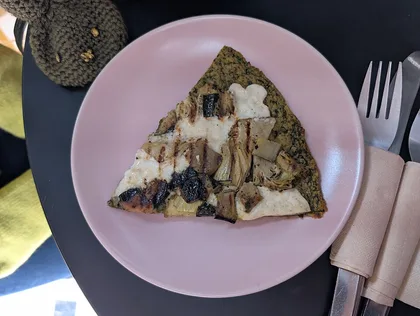 Pasta and breadFarinataFarinata is a paper-thin chickpea flour pancake baked in a copper pan in a blistering wood oven.
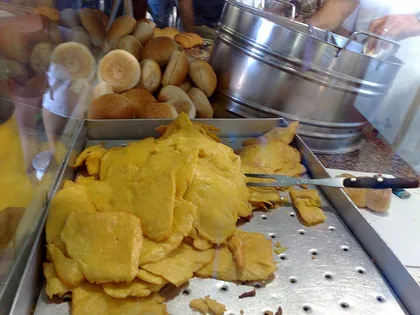 Pasta and breadPanelle (Sicilian Chickpea Fritters)Panelle are Sicilian chickpea fritters: a chickpea-flour batter cooked like polenta, spread paper-thin…Pasta and breadFocacciaTwo centimetres tall, dimpled with the fingertips, flooded with a brine of water, salt and olive oil before…
 Pasta and breadPappardelleRibbons of egg pasta two to three centimetres wide, the widest pasta you still eat twirled on a fork.
 Pasta and breadTrofieTrofie are the pasta that pesto was made for: short, tapered twists of flour and water, rolled one by one…
 Pasta and breadSchiacciataThe name is the gesture: schiacciare means to squash, which is what the baker's fingertips do to the dough…
 Pasta and breadPiciPici are fat, hand-rolled spaghetti from southern Tuscany, made from nothing but flour and water.
 WineChianti ClassicoChianti Classico is the Black Rooster wine: at least 80 per cent Sangiovese from nine communes between…