What is Pici?
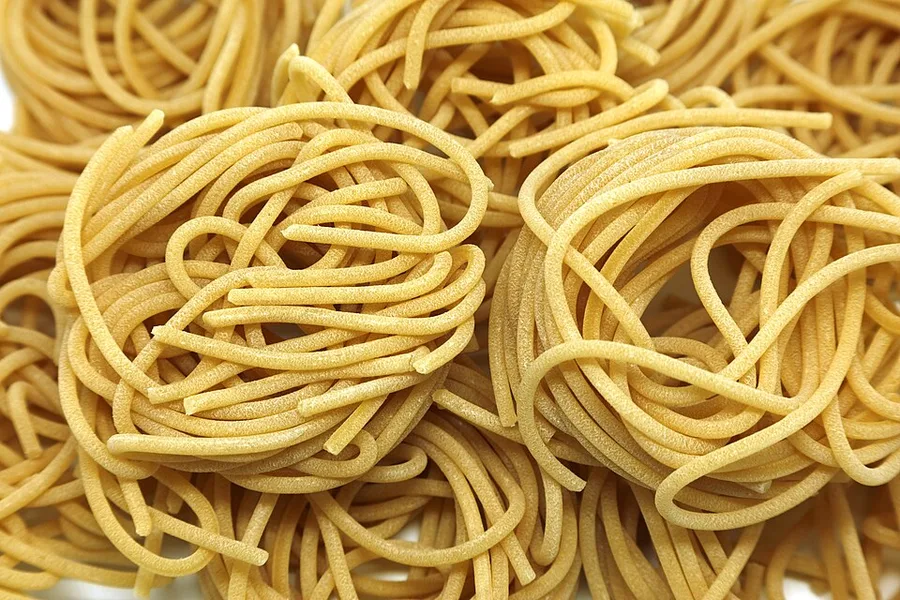
Pici are thick strands of pasta, roughly two to four millimetres across and twenty to thirty centimetres long, made by hand-rolling small pieces of a flour-and-water dough. There is no egg, no machine and no bronze die: the shape comes entirely from the movement of a palm across a wooden board.
The Italian verb for that movement, appiciare, gives the pasta its name. Because the rolling is done by hand, every strand tapers, thickens and twists slightly differently, and the surface stays matt and rough. That irregularity is not a defect, and Tuscan cooks credit it for the way a simple garlic-and-tomato sauce stays on pici.
In Montalcino and parts of the Val d'Orcia the same pasta is called pinci. The name changes, the dough and the gesture do not.
Pici belong to a very specific stretch of Tuscany: the Val d'Orcia, the Sienese side of the Val di Chiana, and the hill towns south of Siena. North of the Chianti hills they are not local, and anywhere they appear on a menu in Florence they have travelled.
What does it taste like?
Of wheat, mostly, which sounds like a non-answer until you eat pasta this thick. There is no egg richness and no semolina snap; instead there is a soft, doughy chew close to a very fresh udon, with a faintly sweet flour flavour that survives whatever sauce is on it.
The texture is the point. A well-made pico is dense and slightly resistant at the centre, softer at the tapered ends, and the mouthfeel changes across a single strand. Overcooked they go gummy; undercooked the core stays chalky, and the window between the two is narrower than for dried pasta.
With aglione, the mild giant garlic of the Val di Chiana, the dish tastes sweet and tomato-forward rather than pungent. With toasted breadcrumbs it becomes nutty and dry, a bowl of almost nothing that works better than it should.
How to use it
Cook them in a lot of well-salted water and start tasting at four minutes, because fresh pici go from chalky to gummy quickly, and the right moment is when the very centre still offers slight resistance. Pull them out with tongs rather than draining, and keep a mugful of the water.
Finish them in the pan. Pici shed a great deal of starch, so a ladle of cooking water and thirty seconds of tossing will build a glossy sauce out of almost nothing. This step does more for the dish than any ingredient you could add.
Four sauces carry the tradition. Aglione: slow-cooked tomato with the mild giant garlic of the Val di Chiana, sweet rather than pungent. Alle briciole: breadcrumbs toasted in olive oil with garlic and chilli, and nothing else. Cacio e pepe made with Tuscan pecorino from Pienza, softer and less salty than the Roman version. And ragù, made here from duck or from wild boar and cooked for hours.
Avoid thin, watery sauces and anything cream-based. A strand this thick needs a sauce that coats it, not one it sits in.
How long it keeps
Fresh pici go into the fridge as they came, in loose floured nests on a tray, covered loosely rather than sealed, and they hold two or three days on the shop date. They keep drying while they sit, so the outside stiffens while the core stays soft and they want an extra minute in the water. Press the nests down or bag them tightly and the strands fuse into a solid block that cooks in clumps, so keep the coils open and keep the flour on them.
Drying them out completely is the traditional alternative: spread on a floured cloth or a rack at room temperature they go brittle in a day or two depending on the humidity and then keep for weeks in a tin, though they snap easily when handled. For the freezer, firm the nests up on a tray before bagging, use them within a month or two and drop them in frozen; thawed on the counter they weep and stick. Dried boxed pici want a cool dry cupboard and an airtight jar once opened.
Spot the real thing
Irregularity is the mark of the real thing. Each strand is rolled out under the palms, so it swells and narrows along its length between roughly two and four millimetres, no two are alike, and the ends often taper. A strand of even thickness from tip to tip came out of a die. The colour is a dull cream rather than yellow, because the dough is soft wheat flour and water with no egg, and the surface is rough and floury. Fresh pici are sold coiled in loose nests, heavily dusted so they do not weld together.
What gets mistaken for them: bucatini, which are hollow, uniform and extruded; thick spaghettoni, uniform again; and udon, which is salted and altogether softer. Umbrichelli and lombrichelli from Umbria and northern Lazio are the same idea under another name, as is Tuscan pinci. Machine made strands sold as pici give themselves away by their regularity. In Siena fresh pici run 8 to 14 euro a kilo; abroad reckon on £5 to £8 for a 250g fresh pack or $6 to $10 for 500g dried.
How to pronounce Pici
PEE-chee
Two syllables, stress on the first. In Italian, C before I is soft, so it is 'chee' as in 'cheese', never 'kee' and never 'see'. Singular is pico, PEE-koh, and note that there the C is hard, because it sits before O. Common errors: 'pie-see', 'pick-ee', 'PY-chy'. The Montalcino name pinci is PEEN-chee.
Pici compared
vsBucatini
They look similar on the plate and behave nothing alike. Bucatini are extruded through a die with a hole down the middle and dried; pici are rolled solid by hand and usually cooked fresh. One is engineered, the other is not.
| This | Bucatini | |
|---|---|---|
| Made by | Hand-rolling, strand by strand | Bronze or teflon die, industrially |
| Centre | Solid all the way through | Hollow: the buco of the name |
| Dough | Soft wheat flour and water, no egg | Durum semolina and water, no egg |
| Sold | Fresh, most often | Dried, almost always |
| Cooking time | Five to eight minutes | Nine to eleven minutes |
| Surface | Rough and uneven | Smooth or lightly ridged |
| Home region | Southern Tuscany | Lazio and Abruzzo |
vsSpaghetti alla chitarra
Abruzzo's hand-cut answer to the same problem, but reached from the opposite direction: chitarra pasta is egg-rich and cut square by pressing a sheet through wires, while pici are eggless and rolled round. Both are thick, both are rough, and the flavour is entirely different.
| This | Spaghetti alla chitarra | |
|---|---|---|
| Region | Tuscany | Abruzzo |
| Egg | None | Central to the dough |
| Cross-section | Round and uneven | Square and regular |
| Tool | Hands and a board | A wire-strung frame, the chitarra |
| Colour | Pale, almost white | Deep yellow |
| Classic sauce | Aglione, breadcrumbs, duck ragù | Lamb ragù with peppers |
vsUdon
An unlikely comparison that turns out to be the most useful one for anyone who has never eaten pici. Both are thick, eggless, wheat-and-water noodles with a chewy centre. Udon is made with salted dough and cut from a folded sheet; pici are rolled and unsalted in the dough, and finished in a pan with the sauce.
| This | Udon | |
|---|---|---|
| Dough | Soft wheat flour, water, a little oil | Wheat flour, water, salt |
| Shaping | Rolled by hand, round | Sheeted and cut, flat-sided |
| Chew | Dense, yielding | Springier, more elastic |
| Cooked in | Salted water, then finished in the sauce | Unsalted water, then rinsed |
| Served | Dressed, never in broth | Often in broth |
Pici substitutes
- Dried bronze-die pici
Several Tuscan producers make a dried version. Cooking time roughly doubles, to twelve or fourteen minutes, and the chew is firmer; the bronze die keeps the surface rough, but the unevenness of the handmade strand is gone.
1:1 by dry weight, about 90 g per person - Bucatini or thick spaghetti (spaghettoni)
The nearest supermarket answer. Choose the thickest bronze-die option you can find, cook it a minute short and finish it in the pan with a ladle of pasta water so the sauce has something to bind to.
1:1 by dry weight - Fresh udon
Texturally closer than any dried Italian pasta. Rinse off the surface starch and the salt after boiling, then dress it in the pan. Works particularly well with the breadcrumb and the cacio e pepe treatments.
1:1 by fresh weight - Pasta alla chitarra or thick tagliatelle
If only egg pasta is available, take the thickest cut. Expect a richer, more yellow dish, and pull back on any cheese in the sauce to compensate.
1:1, cooked two minutes less - Hand-rolled at home
The honest option and not a difficult one: 400 g soft wheat flour, 200 ml warm water, a pinch of salt, a spoon of olive oil. Rest thirty minutes, roll a half-centimetre sheet, cut into fingers, roll each one out. Forty minutes of hands for four people.
100 g flour per person
Where to buy it
Fresh pici rarely travel, so outside Tuscany the realistic choice is the dried version. In the US, Italian importers and online specialists carry bronze-die dried pici at roughly 8 to 14 dollars for a 500-gram bag; in the UK, Italian delicatessens and Ocado stock them at about 6 to 10 pounds a bag. Look for durum wheat semolina and water as the only ingredients, and bronze extrusion stated on the pack.
In Tuscany itself, buy them fresh from a pastificio or an alimentari at 8 to 14 euros a kilo, and the shops in Pienza and Montepulciano sit at the top of that range. They keep two days in the fridge and freeze well raw.
For the sauce, aglione is hard to find abroad and worth ordering online from Val di Chiana growers if you want the real thing; a whole head of ordinary garlic, cooked very slowly until it collapses, is the workaround.
The cheapest route remains flour and water. Pici are one of the few celebrated pastas that need no equipment at all.
Where to eat it in Italy
The Val d'Orcia and the Sienese Val di Chiana: Pienza, Montepulciano, Montalcino, San Quirico d'Orcia, Sarteano, Cetona. In many trattorie there the pasta is rolled every morning, and in some of them the board is in sight of the dining room.
Celle sul Rigo, a hamlet in the comune of San Casciano dei Bagni, holds a summer sagra dedicated to pici; through July, August and September similar village festivals run across the Val d'Orcia and Val di Chiana, and they are the best place to watch the rolling done by people who have done it their whole lives.
Siena has pici on nearly every menu with wildly varying quality. Walk ten minutes away from Piazza del Campo and both the cooking and the price improve.
Montalcino and Montepulciano combine the pasta with the other reason to be there: plenty of Brunello and Nobile estates serve a plate of pici all'aglione as part of a cellar visit, which is the most efficient way to understand why these two things belong together.
Frequently asked questions
Do pici contain egg?
No. The traditional dough is flour, water, salt and sometimes a spoon of olive oil. Pici come from a poor rural kitchen where eggs were sold rather than eaten. Egg versions exist but are not the Sienese tradition.
What is the difference between pici and pinci?
Only the name. Pinci is what the same pasta is called in Montalcino and parts of the Val d'Orcia. Same dough, same hand-rolling, same dishes.
What sauce goes with pici?
Four classics: all'aglione, a slow tomato sauce with the mild giant garlic of the Val di Chiana; alle briciole, toasted breadcrumbs with garlic and chilli; cacio e pepe with Tuscan pecorino; and a long-cooked ragù of duck or wild boar. Thick sauces that coat, never thin or creamy ones.
Can I make pici without a pasta machine?
You have to. A machine would give an even cross-section and a smooth surface, which defeats the purpose. Roll a half-centimetre sheet with a pin, cut it into finger-wide strips, then roll each strip out under your palms.
How do you pronounce pici?
PEE-chee, stress on the first syllable, with a soft C as in 'cheese'. One strand is a pico, PEE-koh, where the C is hard because it precedes an O.
Related foods
 Pasta and breadSchiacciataThe name is the gesture: schiacciare means to squash, which is what the baker's fingertips do to the dough…
 CheesePecorino RomanoPecorino Romano DOP is a hard, dry-salted sheep's milk cheese aged at least five months, made in Sardinia…
 Pasta and breadPappardelleRibbons of egg pasta two to three centimetres wide, the widest pasta you still eat twirled on a fork.
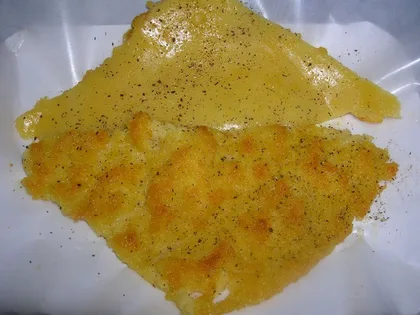 Pasta and breadTorta di Ceci (Cecina)Chickpea flour, water, olive oil and salt, baked in a wide copper pan in a fierce wood oven.
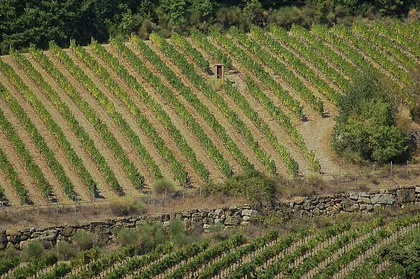 WineChianti ClassicoChianti Classico is the Black Rooster wine: at least 80 per cent Sangiovese from nine communes between…
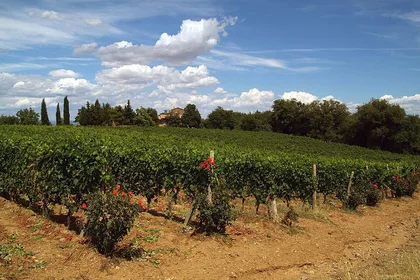 WineBrunello di MontalcinoBrunello di Montalcino is pure Sangiovese aged five years, at least two of them in oak, made only in the…
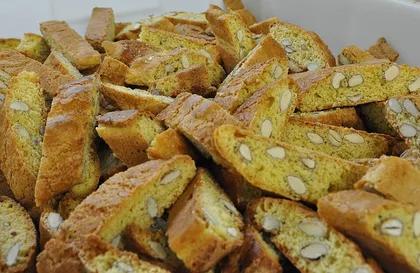 SweetsCantucciCantucci are hard, twice-baked Tuscan almond biscuits. A log of dough is baked, sliced on the diagonal while…Vegetables and fruitChestnutsFor a thousand years the Apennines made bread from them rather than dessert: Castanea sativa was the tree…