What to eat in Florence
Florence eats fire-grilled beef and stale bread: the enormous bistecca alla fiorentina on one side, ribollita, pappa al pomodoro and panzanella on the other. In between is lampredotto: a tripe sandwich bought from a street cart and eaten standing up.
Florentine cooking is built on saltless bread. The usual story blames a medieval salt tax imposed by rival Pisa; the likelier explanation is practical, since bland bread balances heavily salted cured meats, soups and raw olive oil, and once it goes stale it is not thrown away but becomes the base of three fundamental dishes. Ribollita, pappa al pomodoro and panzanella are one idea in three seasons: old bread, new oil, whatever the garden has.
The other half of the table is meat, and here Florence is less frugal than its reputation suggests. The bistecca alla fiorentina is a T-bone cut at least five centimetres thick from a young Tuscan steer, seared for a few minutes a side over oak embers and served rare, without negotiation. It is sold by weight, it is expensive, and it is not portioned for one person: this is a dish for two or three to share.
Then there is the offal, which unlike Rome's is eaten in the street. Lampredotto is the abomasum, the cow's fourth stomach, simmered for hours in a tomato-scented broth, chopped and packed into a bread roll whose top has been dunked in the same broth, then hit with parsley salsa verde and chilli sauce. The trippai carts hold historic licences, open in the morning, and serve office workers, builders and tourists in the same queue. Nothing separates Florence from Siena or Lucca more clearly.
The dishes of Florence
Bistecca alla fiorentina
A T-bone from a young steer of the Vitellone Bianco IGP designation, often Chianina breed, cut a minimum of five centimetres thick. Grilled over embers, roughly five minutes a side plus a few minutes standing on the bone, salted only at the end, served rare. Ordering it well done is possible but will be received as a small tragedy. It is priced by the kilo, so check before you order.
Lampredotto
Cow's fourth stomach simmered for hours in broth with tomato, celery, onion and parsley, then chopped and stuffed into a roll with the top dunked in the cooking liquid. Dressed with green parsley sauce and hot chilli sauce. Four to six euros, eaten standing at a street cart: the most Florentine thing you can do with your lunch hour.
Trippa alla fiorentina
Tripe cut into ribbons and stewed in tomato with a soffritto base, finished with grated parmesan. Milder and sweeter than the Roman version, which uses wild mint. Sold in takeaway tubs at the same tripe carts and served as a main course in trattorias. Most Florentines ate it as children before they knew what it was.
Ribollita
A thick soup of black kale, cannellini beans, vegetables and stale bread, cooked one day and boiled again the next (hence 're-boiled') until a spoon will stand up in it. The kale needs to have taken a frost, otherwise it stays bitter, so this is a winter dish and nothing else. Served with a heavy pour of raw new olive oil on top.
Pappa al pomodoro
Stale bread broken down in tomato, garlic, basil and olive oil until it becomes a thick, uniform purée. It is eaten warm or at room temperature, never piping hot, and it is the summer dish that saltless bread was made for. The quantity of oil is not a garnish; it is roughly half the recipe.
Panzanella
Stale bread soaked, squeezed dry and tossed with ripe tomatoes, red onion, basil, oil and vinegar. No cucumber and no mozzarella in the Florentine version, which actually predates the tomato: a sixteenth-century poem by the painter Bronzino describes it as bread, onion and cucumber. Made an hour ahead and eaten from June to September.
Crostini neri and the Tuscan board
The default starter: chicken liver, capers and anchovy pounded into a dark pâté, spread on bread moistened with broth, served alongside fennel-seed finocchiona salami and Tuscan ham. The best boards also carry lardo di Colonnata, cured pork back fat sliced almost transparent and laid on warm bread so it half melts. Drink young Chianti with it.
Peposo
Beef shin cooked three or four hours in red wine with garlic and a quantity of whole black peppercorns that looks like a mistake. It is tied to the brick kilns of Impruneta, where the furnace workers left it to cook overnight and, legend says, to Brunelleschi, who fed it to the men building the cathedral dome. Served with bread and nothing else.
Fagioli all'uccelletto
Cannellini beans stewed with garlic, sage, tomato and olive oil: the standard side dish with steak or sausages. The name refers to cooking them with the same herbs used for small spit-roasted birds. The rest of Italy has called Tuscans bean-eaters for centuries, and this dish is the reason.
Pappardelle with wild boar or hare
Wide egg-pasta ribbons with a game ragù, the meat hung and marinated in red wine with juniper and bay to tame it. Properly an autumn and winter dish, though it now appears year-round. It is reliably better in the trattorias of the hills outside the city than inside the walls.
Local products
Olive oil is a central ingredient here, not a condiment. The oil of the Florentine hills and Chianti Classico DOP is green, bitter and peppery at the back of the throat, and from November it is sold new and cloudy straight from the mills. On meat, the Vitellone Bianco dell'Appennino Centrale IGP designation (which includes the Chianina breed) supplies the steak, and Dario Cecchini's butcher shop in Panzano, forty minutes south, has become a destination in its own right.
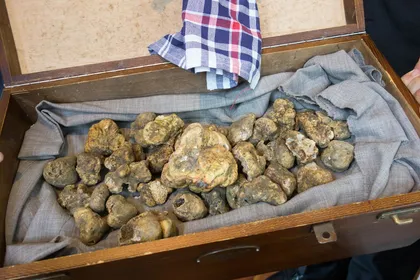
The province also gives finocchiona IGP, a soft salami flavoured with fennel seed, originally used to mask rough wine at country fairs; pecorino toscano DOP, sold fresh and soft or aged and crumbly; the small zolfino bean of the Pratomagno hills; black kale; and pane toscano DOP, made without salt. Just outside the city, San Miniato holds one of Italy's most important white truffle markets each November. For wine, Chianti Rufina is the denomination closest to Florence, drier and more austere than Chianti Classico.
Sweets and pastries
Florentine pastry is dry and unshowy. Schiacciata alla fiorentina is the Carnival cake: a low, soft orange-scented sponge dusted with icing sugar and stamped with the city's lily in cocoa. Cantuccini, hard almond biscuits from nearby Prato, are dunked in sweet Vin Santo at the end of a meal and are the only dessert many trattorias bother to offer. Castagnaccio, made in autumn from chestnut flour, pine nuts, rosemary and raisins, contains no sugar and divides the city into two camps.
The city's real sweet contribution is gelato, which Florence claims to have invented at the Medici court: the flavour called Buontalenti, a rich egg custard, is named after the sixteenth-century architect Bernardo Buontalenti. Vivoli on Via Isola delle Stinche has been open since 1930; Badiani, out beyond the ring road, is the address for Buontalenti; Gelateria della Passera in the Oltrarno works with seasonal fruit. A practical rule: if the pistachio is bright green and the tubs are piled into peaks, walk on.
Where to try them
The Mercato Centrale in San Lorenzo runs on two contradictory floors. The ground floor holds the historic butchers, fishmongers and greengrocers, plus Nerbone, open since 1872, where you eat boiled beef and lampredotto sandwiches at a counter. The first floor is a modern food hall: convenient, but built for visitors. Mercato di Sant'Ambrogio, on the other side of the centre, is smaller, still a neighbourhood market, and has a cheap trattoria inside.
For lampredotto: the cart by the Mercato Nuovo, Sergio Pollini near Sant'Ambrogio, and Tripperia Il Magazzino on Piazza della Passera if you would rather sit down. Historic shops: Procacci on Via Tornabuoni, open since 1885, for truffle-butter rolls and a glass of white standing up; Forno Sartoni on Via dei Cerchi for flatbread by weight; Pasticceria Robiglio, trading since 1928.
The neighbourhoods that eat well are the Oltrarno (Santo Spirito and San Frediano) plus Sant'Ambrogio and San Niccolò. The centre between the Duomo and Ponte Vecchio is almost entirely tourist trade. The working rule is simple: walk three hundred metres away from any monument and prices roughly halve.
When to go
November is the month of new olive oil, tasted on grilled bread as fettunta at the Chianti mills and bought by the tin. The same month, San Miniato runs its white truffle fair across three consecutive weekends. Winter is ribollita season, which depends on kale that has been through a frost, plus game pappardelle.
Carnival, in January and February, brings schiacciata alla fiorentina to every pastry shop. On Easter Sunday morning the Scoppio del Carro sets off a cart of fireworks in front of the cathedral. Spring means fresh broad beans eaten raw with young pecorino. Summer is panzanella and pappa al pomodoro weather, but August is genuinely hot, many family trattorias close for two weeks, and the village festivals in Chianti become the better plan.
Food tours and classes here
Guides that cover this city
Frequently asked questions
What is Florence famous for food-wise?
Bistecca alla fiorentina, a very thick T-bone grilled over embers and served rare; lampredotto, a tripe sandwich sold from street carts; and the bread soups: ribollita in winter, pappa al pomodoro and panzanella in summer. Tuscan olive oil and Chianti wine underpin all of it.
How much does a bistecca alla fiorentina cost?
It is priced by weight, usually 45 to 70 euros per kilo, and a real one weighs 1 to 1.2 kilos. Split between two or three people that comes to 20 to 30 euros each for the main course alone. A single-portion 'fiorentina' offered for 20 euros is a different, thinner cut of steak.
Why is Tuscan bread made without salt?
The historical story involves medieval salt taxes, but the functional reason is what kept the habit alive: unsalted bread balances very salty cured meats, seasoned soups and raw olive oil, and once stale it becomes the base of ribollita, pappa al pomodoro and panzanella instead of being thrown out.
Where do Florentines actually eat in the centre?
Mostly across the river in the Oltrarno (Santo Spirito and San Frediano) and around the Sant'Ambrogio market. The streets between the Duomo and Ponte Vecchio are almost entirely tourist trade. Lunch at a tripe cart or inside the Mercato Centrale ground floor is both cheap and genuinely local.