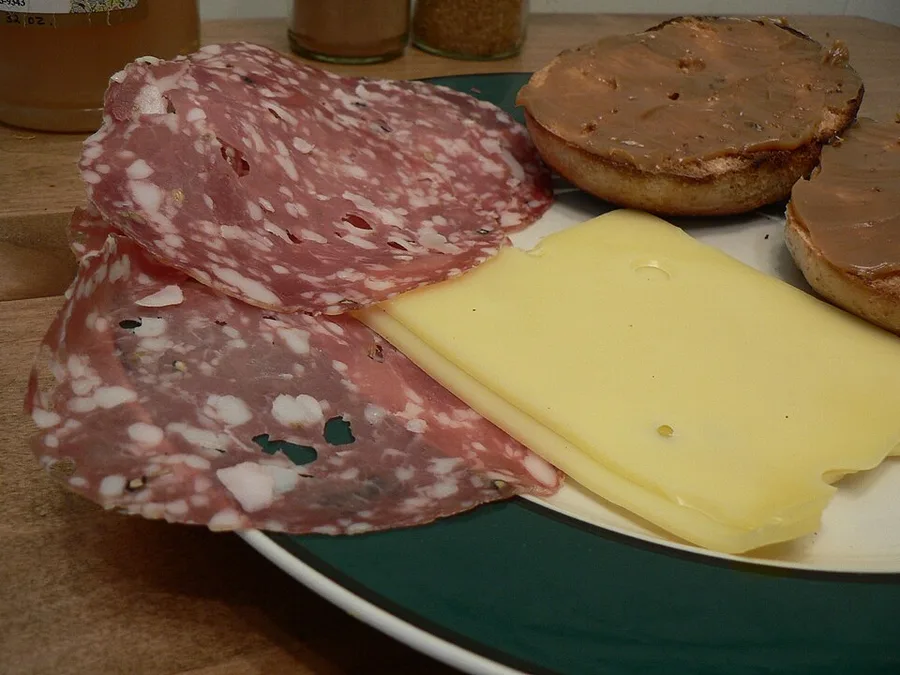
What is Finocchiona?
Finocchiona is a pure pork salami, medium-ground, in which the dominant aroma comes from wild fennel: seeds, flowers, or both. Pepper and garlic are present but stay in the background, and many producers add red wine or Vin Santo to the mix.
Sizes run from half a kilo to twenty-five, with diameters from seven to twenty centimetres. Ageing follows diameter: a few weeks for the smallest, five months and more for the largest.
Sbriciolona is the same salami, younger. Aged less, it stays soft and moist to the point where slicing crumbles it (sbriciolare means to crumble) and it is cut thick and eaten straight away. It is not a fault and not a different product, and plenty of Tuscans prefer it.
Finocchiona IGP has been a protected name since 2015, with a consortium and a written specification that fixes which cuts of pork may be used (shoulder, belly, and trim from the ham and loin) the grind, the mandatory fennel, and minimum ageing times.
What does it taste like?
Fennel arrives first and stays: a sweet, aniseed-adjacent perfume that is softer and greener than liquorice and considerably more floral than the fennel seed in an Italian-American sausage. Then the pork, sweet and clean and gently funky from the ageing, and a slow salt that builds across two or three slices.
The fat is the reason it works. Medium-ground pork with visible white cubes means each slice has cool, silky fat that melts against the roof of the mouth and carries the fennel oil with it. Nothing about it is smoky, and nothing is hot: there is no chilli in finocchiona.
Sbriciolona is milder, wetter and sweeter, with the fennel more floral and less concentrated. A well-aged finocchiona is drier and firmer, with a deeper savoury note and a longer finish. If a slice is rubbery or springy rather than yielding, something went wrong in the drying.
How to use it
Eat it raw, sliced thick, and that is ninety per cent of its use. Two to three millimetres. Thinner than that and the slice collapses before it reaches your mouth and the fat has no time to melt.
Serve it with unsalted Tuscan bread, pane sciocco. This is not local colour: finocchiona is salty, and salted bread makes it heavy. A plain schiacciata works too.
Take it out of the fridge twenty minutes before serving. Cold, the fat stays hard and the fennel aroma never opens.
Cooked uses are secondary but real: cubed into a quick tomato sauce, worked into schiacciata dough, laid over a bianca pizza in the last minute of baking. In spring, Tuscany eats it with fresh broad beans and young pecorino, which is the best antipasto the region produces.
One underrated pairing: finocchiona with acacia honey on bread. The sweetness pushes the aniseed note of the fennel forward.
How long it keeps
A whole uncut salami hangs in a cool, dark, airy place at around 10 to 15°C, and what it does there is keep losing water: it firms up steadily, the diameter shrinks a little and the flavour concentrates. A vacuum packed piece sits in the fridge until the producer date, often months away. Once you cut into it the exposed face is the part that changes fastest, drying and darkening to a deeper brick red within a day or two, so cover it with baking paper or press the cut side against a saved offcut of casing rather than sealing it under cling film.
Over weeks in the fridge the fat shifts from white towards ivory and then yellow as it oxidises, and the aroma turns sharper while the fennel note fades. Pre-sliced packs behave differently again: opened, the thin slices dry and curl within hours, so keep them flat with their interleaving paper in a closed box. Slices freeze for a couple of months wrapped tight, though the fat can come back slightly grainy.
Spot the real thing
It is a wide salami, eight to ten centimetres across or more, and the slice tells you most of what you need. The grind is coarse, so the white fat sits in big irregular flecks rather than an even scatter, and whole fennel seeds are clearly visible through the meat. The colour is a muted rose red, not bright, because the IGP allows no colouring; the seasoning list runs to salt, pepper, fennel, garlic and Tuscan red wine. The natural casing carries a powdery white surface bloom from curing and is peeled back slice by slice.
Sbriciolona is the young, softer version that crumbles as it is cut, which is what the name describes rather than a flaw. Abroad the look-alikes are fennel salami and finocchiona style products made in the United States or Britain, salame toscano, which has large fat cubes and no fennel, and southern soppressata. Salami flavoured with fennel pollen is a different taste altogether. The tag should read Finocchiona IGP. Prices run 18 to 28 euro a kilo in Tuscany, and abroad about £5 to £8 per 100g or $18 to $30 a pound.
How to pronounce Finocchiona
fee-noh-KYOH-nah
Four syllables, stress on the third. The 'cchi' is a hard k glued to a y sound, 'KYOH' in one beat, so it is not 'fino-CHEE-oh-na' and not 'fin-OH-key-oh-na'. The word is built on finocchio, fennel, which is pronounced fee-NOK-kyoh. Sbriciolona is zbree-choh-LOH-nah, with a soft 'ch' as in chair.
Finocchiona compared
vsSalame Toscano
The other salami on every Tuscan board, from the same pigs and often the same butcher. The difference is the spicing and the fat. Salame toscano is peppered rather than fennelled and cut with large, distinct cubes of back fat, the classic wide white polka dots, while finocchiona is fennel-led with a finer, more evenly distributed fat. Salame toscano is firmer and slices cleanly; finocchiona is softer and crumblier.
| This | Salame Toscano | |
|---|---|---|
| Dominant seasoning | Wild fennel seed and flower | Black pepper, whole and cracked |
| Fat | Medium grind, evenly distributed | Large hand-cut cubes of back fat |
| Grind | Medium, slightly coarse | Medium to coarse |
| Texture sliced | Soft, tends to crumble | Firm, holds a clean slice |
| Slice thickness | 2-3 mm | 1-2 mm |
| Protected status | Finocchiona IGP since 2015 | Part of Salamini Italiani alla Cacciatora DOP only in small formats |
| Chilli | None | None |
vsSbriciolona
Not a rival but a stage. Sbriciolona is finocchiona sold young, before the ageing has firmed it up, and the crumbling that gives it its name is the defining feature rather than a defect. Tuscans buy it when they want the fennel bright and the texture soft, and they buy aged finocchiona when they want depth. Outside Italy you will almost never see sbriciolona, because it does not travel or keep.
| This | Sbriciolona | |
|---|---|---|
| Ageing | 3-6 months or more | A few weeks |
| Moisture | Drier, 30% weight loss | Distinctly moist |
| Slicing | Holds together, softens at the edge | Crumbles as you lift it |
| Fennel character | Deeper, more integrated | Brighter, more floral |
| Keeps | Months whole, weeks cut | Days, eat it now |
| Where to find it | Widely, including exported | Tuscany, essentially |
vsAmerican fennel salami
US artisan producers make excellent fennel salami, and some of it is explicitly modelled on finocchiona. What differs is usually the grind, which tends to be finer, the culture, which gives a more pronounced tang, and the fennel, which is generally seed only rather than the wild flowers Tuscany uses. Good on its own terms; not the same thing, and legally not finocchiona.
| This | American fennel salami | |
|---|---|---|
| Fennel used | Wild fennel seeds and flowers | Cultivated fennel seed, usually |
| Acidity | Low, slow natural fermentation | Often higher, from starter cultures |
| Grind | Medium, visibly rustic | Often finer and more uniform |
| Diameter | 7-20 cm | Typically 5-8 cm |
| Legal name | Finocchiona IGP, protected | 'Fennel salami' or 'finocchiona-style' |
| Price per lb | $18-30 imported | $14-24 |
Finocchiona substitutes
- Any good fennel salami
The closest available substitute almost everywhere. Expect a finer grind, a tangier fermentation and a firmer slice. Cut it slightly thinner than you would cut finocchiona, since it holds together better and a thick slice will chew.
1:1 - Salame toscano plus toasted fennel seed
A workable improvisation for a board: lay the slices out, scatter lightly crushed toasted fennel seed and a thread of olive oil over them, and leave them twenty minutes at room temperature. The oil carries the fennel into the fat.
1 tsp crushed seed per 100 g of salami - Soppressata or sopressa, mild
Similar coarse texture and fat structure, no fennel. Best when the recipe wants the pork and the bite rather than the aroma: in a pasta sauce, on a pizza, folded into focaccia dough.
1:1 - Mortadella di Prato, for contrast
Not a substitute so much as the correct thing to buy instead if you cannot get finocchiona and are in Tuscany anyway. It is a cooked, pink, spiced salume flavoured with alkermes liqueur: the exact opposite product, from the same town the finocchiona legend comes from.
- Halal or beef version
Finocchiona is pork by definition, but several producers of beef salumi make a fennel-seasoned dry beef salami that behaves similarly on a board. It is leaner, so serve it with a good olive oil alongside to replace the missing pork fat.
1:1, plus olive oil - Vegetarian: there is no equivalent, but
Nothing reproduces cured pork with fennel. What does work in the same slot on a Tuscan board: raw fennel shaved paper-thin, dressed with good olive oil, black pepper, lemon and shavings of aged pecorino. Same aromatic register, honest about being a different dish.
Where to buy it
In the US, look for the Finocchiona IGP mark rather than the word alone: imported wedges run 18 to 30 dollars a pound at Eataly, Italian delis and online specialists. Domestic artisan fennel salami from producers like Creminelli, Olympia Provisions and La Quercia costs less and is genuinely good, but it is a different product and legally cannot use the name.
In the UK, Italian delicatessens and online importers carry it at 30 to 45 pounds a kilo. It is much rarer than prosciutto or Milano salami, so ask rather than expecting to find it on a shelf.
Buy a vacuum-packed wedge rather than a pre-sliced tray. Sliced finocchiona loses its aroma within hours because the fennel compounds are volatile, and a tray of 80-100 g works out at 35 to 45 euros a kilo, the worst deal on the counter.
What to check: visible fennel seeds in the slice, white and distinct fat cubes rather than smeared fat, an antique-pink lean, and a smell of fennel before pork. A sharp acidic smell means a fermentation problem; yellowing fat means oxidation.
Where to eat it in Italy
Florence and the countryside around it. The Mercato Centrale at San Lorenzo and the Mercato di Sant'Ambrogio both have several producers side by side, which lets you taste an aged finocchiona against a young sbriciolona in one visit: the fastest way to understand the product.
In Chianti, the butchers of Greve, Panzano and Radda make finocchiona alongside everything else from the pig and sell it next to unsalted bread and loose wine. Panzano in Chianti is the best-known stop on the Tuscan butchery circuit.
Prato, where the thief-in-the-fennel-field legend places the origin, is also home to mortadella di Prato, a pink cooked salume spiced with alkermes that is the exact opposite and worth tasting back to back.
Summer village festivals across the Arezzo and Siena provinces put it on every board, and winter pork fairs are where you buy a whole salami from the producer. The best moment of the year is spring, eaten with fresh broad beans and the first young pecorino.
Further reading
Frequently asked questions
How do you pronounce finocchiona?
fee-noh-KYOH-nah, four syllables, stress on the third. The 'cchi' is a hard k run straight into a y sound, so the third syllable is a single beat. Not 'fino-CHEE-oh-na'.
What is the difference between finocchiona and sbriciolona?
Ageing. Sbriciolona is young finocchiona, still moist and soft enough that it crumbles when sliced, which is what the name means. Aged finocchiona, three to six months or more, holds a slice and tastes drier and deeper. Same product, two moments.
Why is finocchiona sliced thick?
Because the grind is medium-coarse and the texture is friable. Under two millimetres the slice breaks apart and the fat has no time to melt in the mouth. Two to three millimetres, cut by hand if possible.
Is all fennel salami finocchiona?
No. Finocchiona IGP is a protected name with a written specification covering the cuts of pork, the grind, the fennel and the minimum ageing, and a consortium enforcing it. Excellent fennel salami is made in the US and elsewhere, but it is a different product and cannot use the name.
How do you store finocchiona?
A vacuum-packed wedge keeps three to four months in the fridge. Once cut, press cling film or parchment directly onto the cut face and eat it within three or four weeks. Sliced, eat within two or three days. Do not freeze it: the fat crystallises and the slice turns grainy.
Sources
Where to check what you just read.
- 1
L'atto del 22 aprile 2015 che iscrive «Finocchiona» fra le IGP dei prodotti a base di carne: il riconoscimento è recente, la ricetta no.
- 2Consortium · interested partyConsorzio di tutela
Il testo del disciplinare, le tipologie ammesse e l'elenco delle aziende autorizzate a marchiare Finocchiona IGP.
- 3
Il PDF ministeriale del disciplinare: tagli e grana dell'impasto, quantità di semi di finocchio, calibri dei budelli e stagionature minime.
Related foods
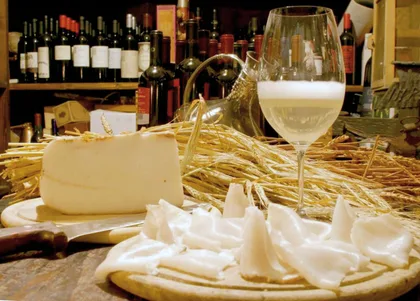 Cured meatsLardo di ColonnataLardo di Colonnata IGP is cured pork back fat, aged at least six months inside vats carved from Carrara…
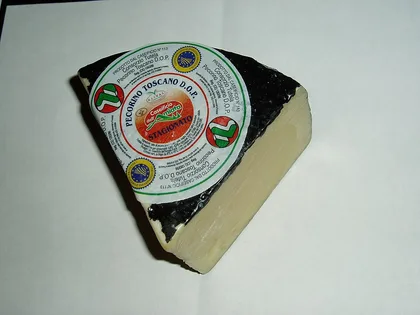 CheesePecorino ToscanoPecorino Toscano DOP is the mild one. Whole sheep's milk, calf rennet, a brief salting: soft-paste wheels…
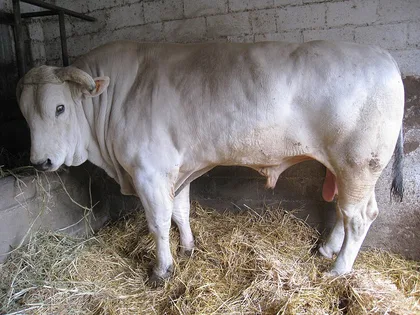 Cured meatsChianina BeefChianina is the largest cattle breed in the world: porcelain-white, bulls over 1,700 kg, from the Chiana…
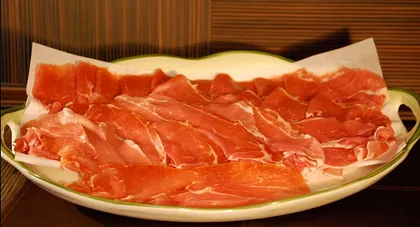 Cured meatsProsciutto ToscanoProsciutto Toscano DOP is the savoury one. It is salted harder than Parma ham and rubbed with pepper, garlic…
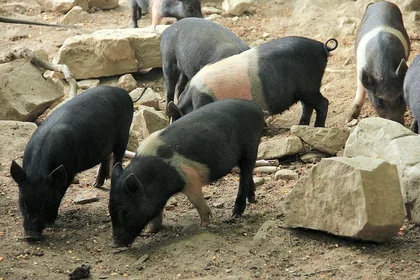 Cured meatsCinta Senese PorkCinta Senese is the black pig with a white belt across its shoulders, raised semi-wild in the oak woods south…
 WineChianti ClassicoChianti Classico is the Black Rooster wine: at least 80 per cent Sangiovese from nine communes between…
 WineBrunello di MontalcinoBrunello di Montalcino is pure Sangiovese aged five years, at least two of them in oak, made only in the…
 Pasta and breadPappardelleRibbons of egg pasta two to three centimetres wide, the widest pasta you still eat twirled on a fork.