What is Soppressata?
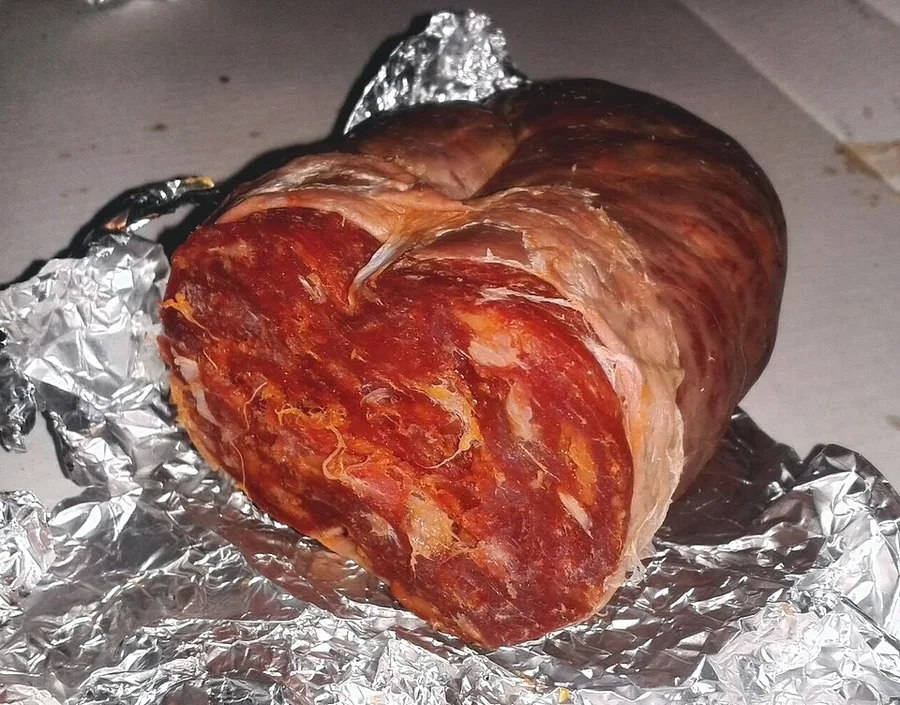
Soppressata is a raw-cured, air-dried pork salami from Calabria and Basilicata, made from premium lean cuts (leg, shoulder, loin) chopped coarsely or by hand rather than finely ground, mixed with cubes of hard fat, salt, whole peppercorns and often chilli, and stuffed into natural casing.
What separates it from any other salami is the pressing. For the first day or two of drying, the sausages are squashed between wooden boards under weights. That drives out residual air pockets, compacts the mixture and produces the characteristic flattened, slightly irregular shape.
The technique is functional, not decorative: removing air reduces the risk of rancidity and unwanted fermentation, and it gives a denser slice with real bite.
One warning about the name. In Tuscany, soppressata means something entirely different: a cooked head cheese made from the pig's head, a cousin of coppa di testa. If you find something jellied and grey-pink labelled soppressata, that is what you have, and it is not this.
What does it taste like?
Firm, dry and emphatically porky. Because the meat is chopped coarsely rather than emulsified, you taste distinct pieces of lean pork and distinct pieces of fat, one after the other, rather than a blended whole. The bite is chewy and resistant in a good way.
The flavour is savoury and deep rather than tangy. Soppressata is fermented less aggressively than most American salami, so it has far less of that sour-lactic note and more clean cured pork. Black peppercorns crack against your teeth; the hot Calabrian version brings a slow, building heat that is genuinely warm without being punishing.
Against Genoa salami, it is leaner, drier, chewier and less sweet. Against soppressata's Lucanian cousin, made with dried Senise peppers, the Calabrian one is more peppery and the Basilicata one is fruitier and sweeter.
How to use it
Cut it with a knife, not a slicer, at about 3 to 4mm and slightly on the diagonal. Deli-thin slices destroy the point of it: the whole appeal is the coarse grain and the chew, and shaving it to translucency erases both.
Let it come to room temperature for twenty minutes. Fat that is fridge-cold tastes of nothing.
On a board, pair it with something fatty and mild to balance the salt: caciocavallo, young pecorino, fresh ricotta, burrata. Bread should be substantial: durum wheat, Matera-style, or a good sourdough. Southern Italians add figs, fresh or dried, and melon, and the sweetness works far better than it sounds.
On a sandwich it holds its own against strong company: provolone piccante, roasted peppers, broccoli rabe. On pizza it goes on before baking and crisps at the edges. Diced into a frittata, folded into bread dough before the second rise, or dropped whole into a slow-cooking southern ragù to season the sauce and then removed: all traditional uses.
The hot Calabrian version wants something rich next to it. Plain, it can be relentless.
How long it keeps
Whole and uncut, soppressata behaves like any dry-cured salami. Hung in a cool ventilated room at 10 to 15°C (50 to 59°F) it keeps drying slowly for months, losing weight, firming up and concentrating in flavour. A fridge slows that drying and tends to leave the casing damper instead. The producer prints a date on the piece, and that is the reference for how long they intend it to be kept.
Once you cut it, the exposed face is what changes: it hardens and darkens over a few days. Wrap the cut end in greaseproof paper or a clean cloth and keep it in the fridge, where the face goes on drying gradually across three or four weeks. A thin smear of lard or oil over that face slows the hardening. Do not press cling film against a whole salami, which traps condensation under the plastic. Vacuum packs hold in the fridge for up to about three months; open them half an hour before serving so the slices regain aroma.
Spot the real thing
Shape is the first tell. A true soppressata is flattened, with two slightly irregular faces, never a clean cylinder. A perfectly round salami sold under the name has not been pressed.
Cut it and the grain should be coarse and readable: separate pieces of ruby lean meat and clearly defined white fat, not blended together. A slice that looks uniformly pink was ground too fine. The fat should be bright white rather than yellow, and a hand-cut slice three or four millimetres thick should stand up on its own instead of flopping. A dry, powdery white bloom on the casing is normal on dry-cured salami; anything damp or differently coloured on the surface is a question for the counter staff or the producer.
Abroad the name travels loosely. Italian-American sopressata from New York and New Jersey producers is usually round, finer-grained and sold as sweet or hot; Veneto sopressa is larger, softer and unpressed. For the Calabrian version look for the DOP mark on the casing and the wording Soppressata di Calabria DOP: the word soppressata on its own guarantees nothing.
How to pronounce Soppressata
so-preh-SAH-tah
Four syllables, stress on the third. The 'e' is short as in 'pet', both 'a' sounds are open 'ah'. Standard Italian doubles the 'p' slightly: 'sop-preh-SAH-tah'. But you will hear something completely different in American delis ('soo-pra-SAHD' or 'soup-ra-SAHD') because southern Italian dialects drop final vowels and Italian-American speech kept that. Neither is wrong; the first is what you say in Italy, the second is what you say in Brooklyn. Note also that the spelling varies: sopressata with one p is common on American labels, and both are accepted.
Soppressata compared
vsGenoa salami
The default American deli salami versus the southern Italian one. Genoa is finely ground, softer, fattier, often made with wine and garlic, and noticeably tangy from fermentation. Soppressata is coarsely chopped from lean premium cuts, pressed flat, drier and chewier, and tastes more of pork and pepper than of ferment. On a board, soppressata is the more interesting of the two; on a sandwich where you want something soft and yielding, Genoa wins.
| This | Genoa salami | |
|---|---|---|
| Grind | Coarse, 6-8mm, or hand-cut | Fine to medium |
| Cuts used | Leg, shoulder, loin: premium lean | Trim and shoulder, more variable |
| Shape | Flattened by pressing | Round cylinder |
| Fat content | Lower: 20-30% | Higher: 30-40% |
| Texture | Firm, dry, chewy | Softer, more yielding |
| Tang | Mild: lightly fermented | Pronounced: wine and lactic tang |
| Heat | Hot version widely available | Rarely hot |
| Price (US) | $18-30 per lb | $10-18 per lb |
vsCapicola (coppa)
Constantly confused with soppressata in American delis, and they are structurally different products. Capicola is a whole muscle (the pork neck and shoulder) salted, seasoned and dried in one piece. Soppressata is chopped meat in a casing. Capicola slices into wide, marbled, silky sheets; soppressata slices into small, dense, coarse rounds. If a sandwich calls for capicola, soppressata will not give you the same drape.
| This | Capicola (coppa) | |
|---|---|---|
| Type | Chopped meat sausage | Whole muscle |
| Cut | Leg, shoulder, loin, chopped | Neck and shoulder, intact |
| Slice | Small, dense round | Wide, marbled, sheet-like |
| Texture | Chewy, coarse | Silky, tender, melting |
| Fat | Cubes distributed through the mix | Natural marbling through the muscle |
| Curing time | 45 days to 4 months | 3-6 months |
| Both DOP in Calabria | Yes: Soppressata di Calabria DOP | Yes: Capocollo di Calabria DOP |
vsPepperoni
Pepperoni is an Italian-American invention with no Italian original, developed in early-twentieth-century New York delis from southern salami traditions, soppressata among them. It is finely ground, softer, made with pork and beef, heavily paprika-spiced and designed to curl and render on a pizza. Soppressata is all pork, coarse, drier and made to be eaten cold. Soppressata on pizza is excellent, but it behaves differently: it crisps rather than cupping.
| This | Pepperoni | |
|---|---|---|
| Origin | Calabria and Basilicata | Italian-American, New York, c. 1900s |
| Meat | Pork only | Pork and beef |
| Grind | Coarse | Fine |
| Spicing | Black pepper, Calabrian chilli | Paprika, cayenne, fennel, anise |
| On pizza | Crisps at the edges, stays flat | Cups and pools fat |
| Texture cold | Firm and chewy | Soft and pliable |
| Price (US) | $18-30 per lb | $8-14 per lb |
Soppressata substitutes
- Any coarse-ground dry salami
Look for the words 'coarse ground' or a visibly chunky cross-section rather than a specific name: Calabrese salami, salame Napoli and hot sopressata from any American producer will all land close. Avoid the very fine-ground supermarket salami.
1:1 - Capicola (coppa)
A different structure but the same flavour family, and often on the same deli counter. Better for sandwiches, where its wide silky slices work; worse for a board, where you lose the textural contrast that makes soppressata interesting.
1:1 by weight - Spanish chorizo (cured, not fresh)
Similar firmness, similar coarse grind, similar role on a board. The flavour swaps black pepper and Calabrian chilli for smoked pimentón, which is a bigger change than it sounds: it makes the dish read Spanish rather than Italian.
1:1 - Finocchiona
Tuscan fennel salami. Softer and much more aromatic, with fennel seed dominating. Works where soppressata is one element among several on an antipasto plate; less good where you want heat or a firm chew.
1:1 - Halal: beef salami or sujuk
Halal-certified beef salami from producers like Midamar and Crescent Foods gives a firm, dry, sliceable cured meat that plays the same role on a board. Turkish sujuk is closer in spice profile (garlicky and cumin-heavy) and needs a milder cheese beside it.
1:1 - Vegetarian: marinated king oyster mushroom or vegan salami
Nothing reproduces cured pork, but thinly sliced king oyster mushrooms marinated in olive oil, smoked paprika, fennel seed and chilli, then dried briefly in a low oven, give a chewy, savoury, peppery slice with real presence. Several plant-based salami brands now also make a passable Calabrese-style version.
1:1 by volume on a board
Where to buy it
Soppressata is one of the best-distributed Italian salumi in the US, because Italian-American communities never stopped eating it. Boar's Head, Volpi, Citterio, Creminelli, Olli and Fra' Mani all make one and are in most supermarkets at $12 to $22 per pound. For better versions, the historic New York delis (Di Palo's in Little Italy, Faicco's in the West Village) and Eataly, Murray's and Formaggio Kitchen carry imports and small-producer American salumi at $22 to $35 per pound.
In the UK it is much harder to find, which the search volumes reflect. Waitrose and Ocado stock it intermittently; specialist importers (Natoora, Vallebona, Delicatezza, Salumeria Napoli) are the reliable route, at £30 to £50 per kilo.
If you want the protected Calabrian version, the label must read Soppressata di Calabria DOP with the consortium mark on the casing. The word soppressata alone guarantees nothing about origin, cuts or curing time. Also check the shape: it should be visibly flattened. A perfect cylinder was never pressed.
Where to eat it in Italy
In Calabria, head for the Sila plateau and its western edge: Decollatura, Serrastretta, Aprigliano, Spezzano della Sila. These are butcher villages with small workshops that sell direct, and the quality gap between them and anything exported is significant.
Cosenza's old town has salumerie working with those producers, and the weekly markets are the easiest place to taste before buying.
In Basilicata, Rivello in the province of Potenza holds a soppressata festival in August and remains the town most identified with the product. Cancellara, Vaglio Basilicata and the Vulture area all have serious production.
Matera is the practical base for a Lucanian trip. In the delis of the Sassi, soppressata comes with caciocavallo podolico and peperoni cruschi: the trio the whole local charcuterie tradition rests on.
In the US, the Italian-American delis of Brooklyn, the Bronx, South Philadelphia and Chicago's Little Italy treat it as a staple rather than a specialty, and the hot version in a sandwich is one of the great cheap meals in either country.
Further reading
Frequently asked questions
What is soppressata?
A coarse-ground dry-cured pork salami from Calabria and Basilicata, made from premium lean cuts and pressed flat between boards while it dries. It is firmer, leaner and chewier than most salami, and often spiced with Calabrian chilli.
How do you pronounce soppressata?
so-preh-SAH-tah in standard Italian, stress on the third syllable. In American delis you will hear 'soo-pra-SAHD', which reflects the southern Italian habit of dropping final vowels and is authentic Italian-American speech rather than a mistake.
What is the difference between soppressata and salami?
Soppressata is a type of salami with three defining features: it uses premium lean cuts like leg and shoulder, the meat is chopped coarsely rather than finely ground, and it is pressed flat during drying. The result is denser, leaner and chewier than standard salami.
Is soppressata spicy?
It comes both ways. The dolce version is seasoned with black peppercorns only; the piccante version uses Calabrian chilli and delivers a genuine building heat. American labels usually mark it 'hot' or 'sweet'.
Is soppressata the same as capicola?
No. Capicola is a whole muscle from the pork neck, cured in one piece and sliced into wide marbled sheets. Soppressata is chopped meat in a casing, sliced into small dense rounds. Both are Calabrian DOP products, which is part of why they get confused.
Sources
Where to check what you just read.
- 1
Il regolamento del 20 gennaio 1998 che registra in blocco i quattro salumi calabresi DOP: Soppressata, Capocollo, Pancetta e Salsiccia di Calabria.
- 2
Le razze suine ammesse, l'esclusione esplicita delle carni di verri e scrofe e il vincolo che lega allevamento e lavorazione al territorio calabrese.
Related foods
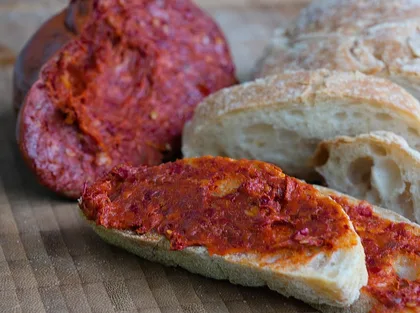 Cured meats'Nduja'Nduja is a soft, spreadable Calabrian pork salume that is up to 40% chilli.
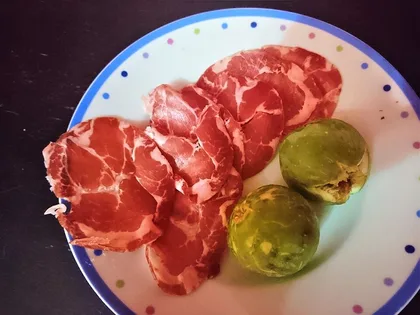 Cured meatsCapocolloCapocollo is the pork neck muscle, salted whole and aged in casing.
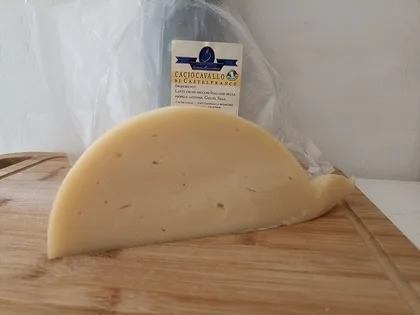 CheeseCaciocavalloCaciocavallo is a stretched-curd cow's milk cheese from southern Italy, aged in a distinctive gourd shape…Cured meatsPodolica BeefPodolica is the grey, lyre-horned cattle breed that lives outdoors year-round in the southern Italian…Cured meatsSalsiccia di FegatoSalsiccia di fegato is Italian pork liver sausage: coarsely chopped liver, pork fat, salt and spices in…Vegetables and fruitBergamotBergamot is the most geographically concentrated citrus on earth: around 90 per cent of world production…
 Vegetables and fruitTropea Red OnionTropea red onions are grown on a narrow strip of sand along Calabria's Tyrrhenian coast, and they are sweet…
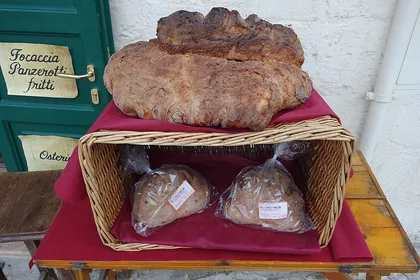 Pasta and breadPane di MateraPane di Matera is a durum-wheat sourdough from Basilicata, IGP since 2008, leavened with a mother culture…