What is Caciocavallo Podolico?
Caciocavallo Podolico is a raw cow's milk pasta filata cheese from the southern Apennines, shaped like a pear with a small neck formed by the tying cord, weighing one and a half to three kilos. Larger formats exist for extreme ageing.
The Podolica is an ancient grey breed that reached southern Italy centuries ago from the steppes of eastern Europe. It is a working and beef animal: hardy, able to live outdoors year-round on very poor pasture and to walk long distances to water. As a dairy animal it is close to useless: five to eight litres a day at peak, against thirty or forty from a Holstein.
And it does not give even that willingly. A Podolica cow will not let her milk down without her calf present; the herdsman milks by hand, after the calf has fed, and takes what is left. Milking is therefore short, manual and strictly seasonal, concentrated in the weeks when the mountain pasture peaks, broadly May to July.
That single fact explains the price, the scarcity, the seasonality and the flavour. Wild pasture at altitude puts an enormous range of aromatic compounds into the milk, and none of it can be reproduced in a shed. The best wheels age from one to five years; a few reach ten.
What does it taste like?
Nothing else in the cow's milk world tastes like this, which is the reason people pay for it. A well-aged wheel opens with browned butter and toasted hazelnut, then moves through candied citrus peel, dried figs and mountain herbs, with something floral underneath that people usually reach for chestnut honey to describe.
The texture is dense and slightly granular, breaking into shards rather than slices, with crunchy crystals in older wheels. The paste is properly yellow, from carotenoids in grazed grass, not the pale cream of a shed-fed cheese.
The kid rennet arrives last: a piquancy that builds slowly and stays, closer to an aged provolone piccante than to anything sharp and immediate. Salt is moderate and never leads. Young wheels of three to six months are a simpler cheese (sweet, milky, springy, good on a grill) at a fraction of the price.
How to use it
A twelve to eighteen month wheel should be eaten and nothing else. Break it into irregular shards with a knife point, bring it to room temperature half an hour beforehand, and serve it with bread, pears and walnuts. Cooking it is usually a waste of money.
Young wheels of three to six months are the ones that belong in the kitchen. Grill thick slices on a dry pan until they crust, or melt them over roasted peppers and potatoes. In Cilento they go into baked pasta and stuffed dishes; in Basilicata the aged version is grated over ferricelli with mutton ragù.
Wheels past three years become luxury grating cheeses. A few grams over a bean soup or a vegetable pasta is enough: the flavour is concentrated and the piquancy long.
As with every stretched-curd cheese, keep it away from a rolling boil: add it off the heat, or the fat separates. And serve it with something plain: this is a cheese that loses an argument with strong flavours.
How long it keeps
In the fridge, on the least cold shelf, wrapped in greaseproof paper inside a container that is not airtight, so the cheese can breathe without drying out. Long-aged wheels lose aroma in cold air, so a piece you will finish within a week sits better in a cool room at 12 to 15°C (54 to 59°F).
The cut face dries and goes glassy within days as moisture leaves it; scrape off a millimetre before serving and the paste behind it is unchanged. Dry white bloom on the rind is normal on aged cheese and comes away with a cloth dipped in vinegar. Anything green, black or damp on the rind is a different kind of surface growth, and a question for whoever sold you the piece.
A whole wheel keeps hanging, the way it hangs in the dairy, drying and concentrating for years; turn it occasionally and look under the cord, where moisture collects. It does not go in the freezer: ice crystals break the stretched-curd structure, and what thaws is a different cheese.
Spot the real thing
With this cheese you check the producer before you check the cheese. Ask the name of the farm, where the cows graze, which months they milk, how many wheels come out in a year. Anyone working true Podolica answers with small, precise numbers.
On the wheel: the rind is thin and smooth when young, hard, cracked and amber with age, the little head sits asymmetrically, and the marks of the cord show. Hand-made wheels are never identical to one another. Cut it and the paste of an aged Podolico is yellow, properly yellow rather than straw, from the carotenoids in pasture grass. A caciocavallo made from indoor milk on silage and feed stays white or barely cream even after two years, and that is the hardest clue to fake without colouring.
The nose runs to cooked butter, dried fruit, citrus, mountain herbs, sometimes something close to chestnut honey. An industrial caciocavallo smells of milk and stops. Price is the blunt filter: below about 30 euro a kilo, or 15 dollars a pound, the farming arithmetic does not work.
How to pronounce Caciocavallo Podolico
kah-choh-kah-VAH-loh poh-DOH-lee-koh
Five syllables in the first word with the stress on the fourth: kah-choh-kah-VAH-loh. The 'cio' is a soft 'cho', as in 'chocolate'; the double 'll' is held slightly longer than an English one. 'Podolico' takes the stress on the second syllable. The name comes from hanging the wheels a cavallo (astride a wooden pole) and has nothing to do with horse milk.
Caciocavallo Podolico compared
vsCaciocavallo Silano DOP
The comparison that matters most, because a DOP mark looks like the stronger guarantee and here it does not tell you what you think. Caciocavallo Silano DOP protects a place and a method across five southern regions, and its rules explicitly permit milk from Bruna, Frisona, Podolica and their crosses. In practice most Silano is made from ordinary high-yield dairy milk. Podolico is a breed claim with no protected designation behind it: stronger in what it promises, weaker in how it is policed.
| This | Caciocavallo Silano DOP | |
|---|---|---|
| Protected | No: the term is unregulated | Yes, DOP since 1993 |
| Breed | Podolica only, by definition | Any breed, including Holstein |
| Milk | Raw, seasonal, 5-8 litres per cow per day | Raw or thermised, year-round |
| Grazing | Semi-wild, upland pasture | Varies, often indoor herds |
| Paste colour when aged | Distinctly yellow | Pale cream to light straw |
| Typical ageing | 1-5 years, some to 10 | 30 days to 12 months |
| Price | EUR 40-80 per kg | EUR 12-20 per kg |
vsCaciocavallo sold as 'podolico'
The honest note this page exists for. Podolica cattle in Italy number in the low tens of thousands of head, the overwhelming majority raised for beef rather than milked; the cows that are milked give a few litres a day for a few weeks a year, and it takes ten to twelve litres to make a kilo of cheese. The arithmetic supports a very small national output. The volume of cheese sold under the name is not consistent with that arithmetic. Since no designation protects the word, most of it is ordinary caciocavallo with a story attached.
| This | Caciocavallo sold as 'podolico' | |
|---|---|---|
| Price per kg | EUR 40-80 and up | EUR 12-25 |
| Paste when aged | Yellow from pasture carotenoids | White or pale cream |
| Season | Made in a few weeks, spring to midsummer | Made year-round |
| Producer answer to 'how many wheels a year?' | A precise, small number | Vague or evasive |
| Aroma | Citrus peel, herbs, honey, browned butter | Milk, and little else |
| Rennet | Kid rennet paste | Often liquid calf or microbial rennet |
vsProvolone
Same family, opposite scale. Provolone is pasta filata made industrially in northern Italy from pasteurised pooled milk, in formats up to a hundred kilos, with piccante versions using kid rennet for sharpness. It is a good cheese and a completely different proposition: consistent, available, cheap by comparison, and made to a specification rather than to a season.
| This | Provolone | |
|---|---|---|
| Origin | Southern Apennines, farm scale | Po valley, industrial scale |
| Milk | Raw, single herd, seasonal | Pasteurised, pooled, year-round |
| Sharpness | Builds slowly from kid rennet | Immediate in the piccante version |
| Ageing | 1-5 years typical | 3-12 months typical |
| Price | EUR 40-80 per kg | EUR 10-18 per kg |
Caciocavallo Podolico substitutes
- Aged Caciocavallo Silano DOP
The most honest everyday substitute: same technique, same shape, a fraction of the price. Buy the oldest wheel the counter has (twelve months or more) and accept a simpler, milkier cheese without the herbal top notes.
1:1 - Ragusano DOP
Sicilian, raw cow's milk from grazing herds, aged in large rectangular blocks. It is the closest thing in Italy to podolico in terms of pasture character, and it is far easier to buy abroad.
1:1 - Provolone Valpadana piccante
Gives you the kid-rennet piquancy of a long-aged podolico without the sweetness or the aromatics. Best where the cheese is being grated into a dish rather than eaten on its own; use slightly less, as the sharpness is more forward.
0.8:1 - Aged Gouda, 3 years or more
An unexpected but effective stand-in on a cheeseboard: the crystalline texture, the browned-butter sweetness and the caramel notes overlap genuinely. It lacks the piquancy and the herbal lift, and it is much sweeter.
1:1 on a board, not in cooking - Vegetarian: aged Lincolnshire Poacher or a microbial-rennet aged Gouda
Podolico is never vegetarian: kid rennet paste is what produces its late piquancy. Long-aged cow's milk cheeses made with microbial rennet give you the crystalline texture and nutty depth; check the label, as most Dutch and English aged cheeses now state the rennet.
1:1
Where to buy it
Assume it is hard to find, and treat easy availability as a warning sign. In Italy, buy from the producers themselves in Basilicata, Cilento or the Gargano, or from a small number of serious cheese shops that name their dairy. Expect EUR 40 to 50 per kilo at twelve months, EUR 55 to 70 at two to three years, over EUR 80 beyond five.
In the US it arrives in tiny quantities through specialist importers, at roughly USD 35 to 70 per pound. In the UK, expect GBP 60 to 110 per kilo from Italian importers and top cheesemongers.
Before paying, ask four questions: which farm, where the cattle graze, which months they milk, and how many wheels a year. A real producer answers with small precise numbers. Then look at the paste (an aged podolico is yellow, because the cows ate grass) and at the price. Below EUR 30 per kilo, it is not podolico, and the arithmetic of the breed makes that a certainty rather than a suspicion.
The Slow Food Presidia covering podolico production in Cilento, the Alburni hills, Basilicata and the Gargano keep named lists of producers, and in the absence of a DOP they are the most reliable check available.
Where to eat it in Italy
In Basilicata: the Pollino massif around Rotonda, Terranova di Pollino and San Severino Lucano; the Val d'Agri around Moliterno, Marsico and Viggiano; the Vulture around Melfi, Rionero and Atella. Buy at the farm, or at the handful of shops in Potenza and Matera that work directly with herdsmen.
In Campania, the inner Cilento (Sacco, Roscigno, Sanza, Piaggine) and the Alburni mountains hold the densest concentration of Presidium producers, with Castel San Lorenzo, the Vallo di Diano and the Laceno plateau in Irpinia completing the picture. On the Gargano, between Monte Sant'Angelo, Vico del Gargano and the Foresta Umbra, a distinct local podolica line produces its own version.
Go in autumn. Wheels made from the May and June milk have had enough cellar time to show what they are, and the cheesemakers still have a choice of ages before the Christmas orders clear them out.
Further reading
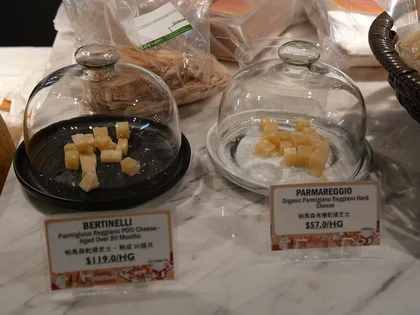 ExplainerParmesan vs Parmigiano Reggiano: the differenceIn Europe «parmesan» evokes a protected designation and cannot be used for anything else.
 GuideHow long food keeps once openedThe date on the label describes the sealed package. After that, four things govern everything: water, salt…
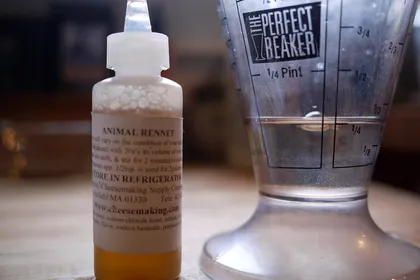 InvestigationWhich Italian cheeses are vegetarianWe counted what rennet the 43 cheeses in our atlas declare: 35 out of 43 say animal, none say otherwise.
Frequently asked questions
Why is Caciocavallo Podolico so expensive?
Because a Podolica cow gives five to eight litres a day, for a few weeks a year, and only with her calf present. It takes ten to twelve litres to make a kilo of cheese, the cattle are raised semi-wild, and every year of ageing costs around a fifth of the weight. The price is arithmetic, not marketing.
Is Caciocavallo Podolico a DOP?
No, and that is the crucial point. No protected designation covers the term, so anyone may print 'podolico' on any caciocavallo. Caciocavallo Silano DOP, the nearest protected name, explicitly allows Bruna, Frisona and Podolica milk and their crosses: so a Silano DOP is not necessarily podolico either.
Is most cheese sold as 'podolico' actually podolico?
Almost certainly not. Podolica cattle number in the low tens of thousands in Italy, the great majority raised for beef; only a small fraction are milked, briefly and seasonally. That supports a very small national output, far below the volume sold under the name. With no designation to police it, the label is a claim, not a fact.
How can I tell a real one?
Aged podolico has a yellow paste from pasture carotenoids, not the pale cream of shed-fed milk. Beyond that, verify the producer: farm name, grazing area, milking months, wheels made per year. The Slow Food Presidia in Cilento, the Alburni, Basilicata and the Gargano publish named producer lists. And a price below EUR 30 per kilo rules it out.
Is it named after horse's milk?
No. The name comes from how the wheels dry: tied in pairs and hung a cavallo, astride a wooden pole. It is a very old misunderstanding with no basis.
Related foods
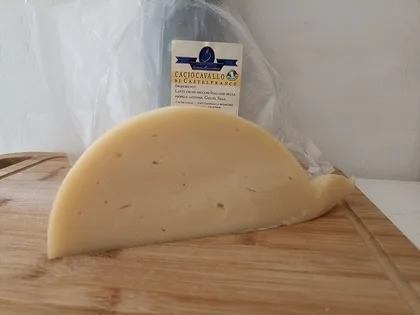 CheeseCaciocavalloCaciocavallo is a stretched-curd cow's milk cheese from southern Italy, aged in a distinctive gourd shape…
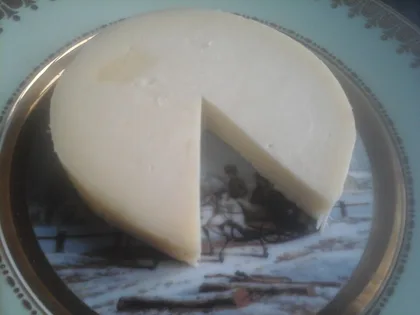 CheeseProvoloneProvolone is a stretched-curd cow's milk cheese from northern Italy, rope-tied and hung to age in shapes from…Vegetables and fruitPeperone CruscoPeperone crusco is a sweet Basilicata pepper, sun-dried on strings and then flash-fried for two or three…
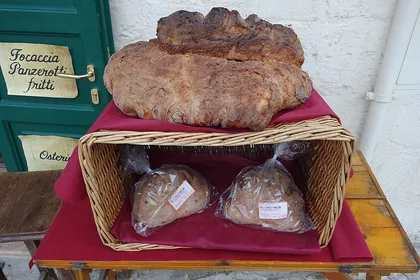 Pasta and breadPane di MateraPane di Matera is a durum-wheat sourdough from Basilicata, IGP since 2008, leavened with a mother culture…
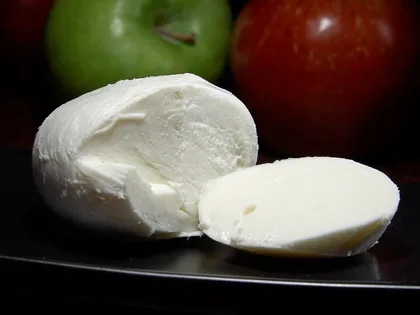 CheeseMozzarellaThe name is a verb before it is a cheese: mozzare means to lop off, which is what the cheesemaker does by…
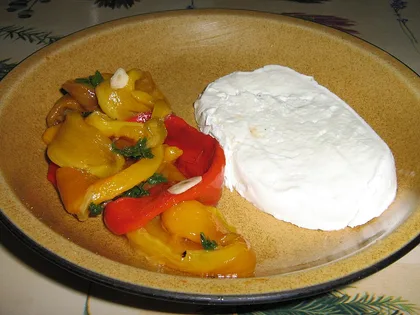 CheeseBuffalo MozzarellaMozzarella di Bufala Campana DOP is made from the whole raw milk of Italian Mediterranean water buffalo…
 Pasta and breadSpaghettiA solid round strand of durum semolina and water, 1.7 to 2.0mm across. It looks like the most neutral pasta…
 Cured meatsSoppressataSoppressata is a coarse-ground dry salami from southern Italy, pressed flat between boards while it dries…