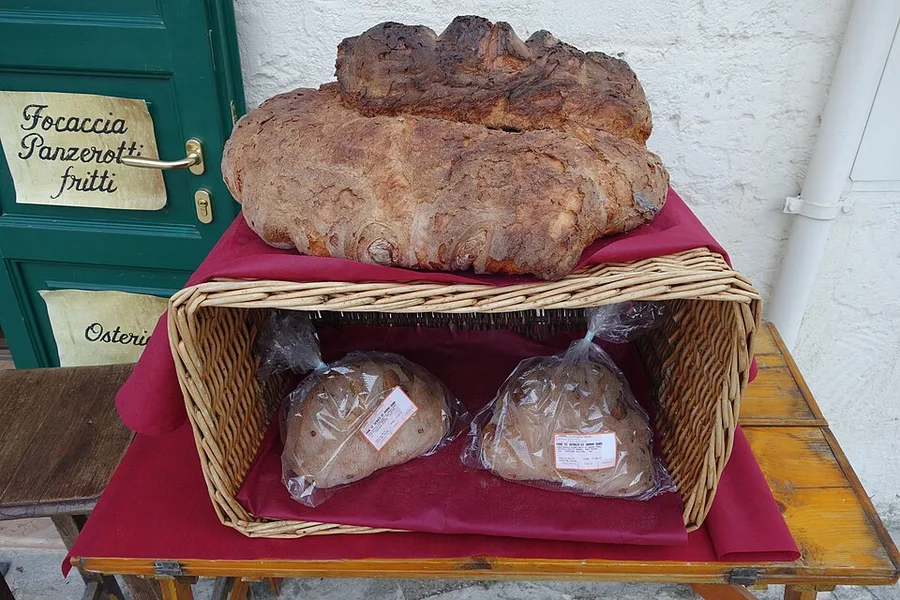
What is Pane di Matera?
Pane di Matera is made from remilled durum wheat semolina grown in the province of Matera, mother yeast, water and salt. It received IGP protection in 2008. The specification requires that at least a fifth of the semolina come from local durum varieties and landraces (Cappelli, Duro Lucano, Capeiti, Appulo), which is the commercial reason those seeds still exist: Senatore Cappelli yields badly and grows tall enough to flatten in wind, and without a bread that demands it nobody would plant it.
Two shapes are allowed: the horn (a cornetto), with one raised point, and the tall crested loaf. Two weights are allowed, one kilo and two. The crust must be at least three millimetres thick, the crumb is straw yellow, and it carries the feature that makes this bread instantly identifiable: huge, irregular holes, some two or three centimetres across, far larger than in any other southern semolina bread.
The city it comes from is carved into a limestone ravine. The Sassi of Matera were emptied by law in 1952 as a national disgrace, restored from the 1980s, made a UNESCO site in 1993 and European Capital of Culture in 2019. Through all of it the bread never stopped being made.
What does it taste like?
Sour, in a way most Italian bread is not. The mother started on fruit gives a clear lactic tang on the finish, sharper than Altamura, though still nowhere near a West Coast sourdough. Underneath it is unmistakably durum: sweet, nutty, with the same flavour family as good dried pasta.
The texture is the surprise. Those big holes mean the crumb is light and chewy rather than dense, with thick, glossy walls between the voids, so a slice has an uneven bite: soft, then air, then soft again. The crust is hard, thick and slightly bitter, blackest at the tip of the horn, which is the piece locals fight over.
After three or four days it dries without going mouldy and turns into something structural: an absorbent, faintly acidic sponge that holds oil, tomato juice and vegetable broth without dissolving. That, not the fresh loaf, is what half the local recipes are built on.
How to use it
Slice it thick, two centimetres, and rest each slice on its crust. Thin slices are mostly air and tear apart, which is a direct consequence of those holes.
Fresh, it takes olive oil, salt, and crumbled peperoni cruschi, the sweet dried peppers of Senise that shatter between your fingers and behave like a spice. That is the local move, and it is better than it has any right to be.
From day three the real repertoire starts. Cialledda fredda: bread torn by hand, barely dampened, then tomato, onion, cucumber, olives, oregano and oil, rested twenty minutes. Cialledda calda: bread in a bowl, boiling water infused with garlic and bay poured over, an egg poached in it. Pane cotto: bread simmered into the water used for turnip tops or potatoes.
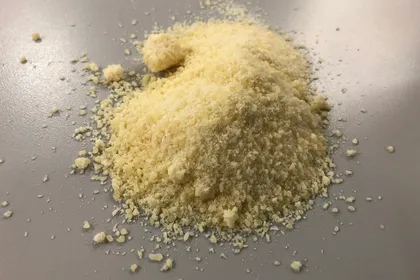
On 1 August the neighbourhoods make crapiata, a pulse-and-grain soup ladled over stale bread. And the last crumbs are fried in oil into mollica fritta and scattered on pasta with anchovies: the poor south's parmesan.
How long it keeps
This loaf was designed to be baked once a week, and the combination of durum semolina, high hydration, sourdough acidity and a thick crust is what makes that work. Keep it at room temperature, cut face down on a board or in a cloth or paper bag, and a whole one to two kilo loaf stays soft in the middle for five to seven days. What is happening across that week is water moving outward: the crumb gives up moisture and firms, while the crust takes it on and gradually loses its crack, so the loaf goes softer outside and drier inside at the same time.
A plastic bag speeds up the second half of that and turns the crust to leather within a day. The fridge is worse still, because the starch firms fastest at temperatures just above freezing, so refrigerated bread goes stiff overnight. For longer keeping, slice it first and freeze the slices for one to three months, toasting them straight from frozen. A whole loaf sprinkled with water and put into a hot oven for five minutes recovers its crust for an hour or so.
Spot the real thing
Two shapes carry the name: the tall horn, the cornetto, and the high dome scored with one to three crests. Loaves are big, a kilo or two, never a small tin loaf. The crust is at least three millimetres thick, dark brown and genuinely hard, and it should crackle rather than yield when you press it. Cut it and the crumb is deep straw yellow, not white, because it is made entirely from durum semolina, with large irregular holes and a clear sour smell from the natural starter.
Outside Italy the pale, soft, white crumbed loaves sold as Italian bread or ciabatta are soft wheat and a different thing altogether. The genuinely close relative is Pane di Altamura from just over the Puglian border, also durum and also sourdough, but a separate DOP with its own shape. Sourdough made from strong white bread flour has the acidity without the yellow crumb. The label to look for is Pane di Matera IGP; Matera style means it is not. In Matera it costs 4 to 6 euro a kilo, and £6 to £10 a loaf in Italian bakeries abroad.
How to pronounce Pane di Matera
PAH-neh dee MAH-teh-rah
The stress in Matera falls on the first syllable, MAH-teh-rah, which trips up almost every visitor, who says ma-TE-ra. Three syllables, all vowels open and clear, final 'a' fully pronounced. Pane is PAH-neh, two syllables. In dialect the bread is simply u pèn.
Pane di Matera compared
vsPane di Altamura
The two great durum breads of the south, made twenty kilometres apart in two different regions, and constantly mistaken for each other. The quickest tell is the shape: Matera is horn-shaped or tall and crested, Altamura is folded over itself or squashed into a priest's hat. The reason lies in the bake. The Matera horn is a shaping decision that gives the loaf a gripping point and more exposed crust in a deep wood-fired oven; Altamura's overlapped fold protects the crumb through a long bake finished with the oven mouth open. Cut them open and the difference is even clearer: Matera has huge holes, Altamura a tighter, more regular crumb.
| This | Pane di Altamura | |
|---|---|---|
| Status | IGP, granted 2008 | DOP, granted 2003 |
| Where | Province of Matera, Basilicata | Alta Murgia, Puglia (5 towns) |
| Shape | Horn (a cornetto) or tall crested | Folded (u sckuanète) or priest's hat |
| Crumb | Very open, holes 2–3 cm | Denser, more regular |
| Starter | Mother traditionally begun with fruit | Mother refreshed three times |
| Sizes | 1 kg and 2 kg only | 500 g minimum, usually 1–2 kg |
| Keeps | 7 days (1 kg), 9 days (2 kg) | About a week |
vsStandard soft-wheat loaf
Everything that makes Matera bread useful comes from choices an ordinary bakery does not make: durum instead of soft wheat, a wild mother instead of packet yeast, ninety minutes in a wood oven instead of twenty-five in an electric one. The result is a bread you buy once a week rather than once a day.
| This | Standard soft-wheat loaf | |
|---|---|---|
| Flour | Remilled durum semolina | Soft wheat, type 0 or 00 |
| Leavening | Fruit-started mother yeast | Commercial yeast |
| Colour | Deep yellow crumb | White crumb |
| Acidity | Noticeable, lactic | None |
| Crust | 3 mm plus, hard | Thin, soft |
| Keeps | A week or more | A day |
vsPane cafone (southern country loaf)
The generic country bread of Campania and much of the south: naturally leavened, dark-crusted, round. It shares the philosophy but not the grain. Pane cafone is a soft-wheat loaf and its crumb is white and elastic, which makes it excellent for mopping and mediocre for the soaked dishes Matera bread was designed to end up in.
| This | Pane cafone (southern country loaf) | |
|---|---|---|
| Grain | Durum semolina | Soft wheat, sometimes blended |
| Crumb | Yellow, huge holes | White, medium holes |
| Protected | IGP | No designation |
| Soaked dishes | Holds shape for hours | Turns to paste quickly |
Pane di Matera substitutes
- Pane di Altamura
The closest possible swap and often easier to find abroad. It is denser and slightly less sour, so in soaked dishes it needs a minute or two longer to take up liquid, and it slices more cleanly for bruschetta.
1:1 by weight - Any durum semolina bread (pane di semola)
Right grain, right colour, wrong scale: most are 400 g loaves with thin crusts that stale in two days. Buy the largest one the bakery makes and treat day three as the deadline rather than day seven.
1:1 by weight - Mature white sourdough, stale
Acceptable for cialledda and pane cotto if you accept a white, softer result. Because it lacks durum's structure it disintegrates fast: tear it into large pieces, dampen rather than soak, and dress it immediately.
1:1 by weight, half the soaking time - Home mix: 80% semola rimacinata, 20% strong bread flour
The workable home approach. Take the hydration to 78 per cent for the open crumb, use a lively starter at a fifth of the flour weight, and bake a one-kilo loaf for a full hour with steam only at the start.
800 g semolina to 200 g bread flour - Friselle or dried durum rusks
For the cold summer dishes these are closer than any fresh bread, because they are already twice-baked durum designed to be splashed with water and dressed. They are denser, so use less.
60 g friselle per 100 g stale bread
Where to buy it
In Matera, from the bakeries in the Piano, the upper town, rather than the souvenir shops in the Sassi. Ask for half a loaf and have it cut for you. Elsewhere in Italy, good delicatessens and some supermarket chains carry vacuum-packed IGP loaves.
In the US and UK it is much rarer than Altamura: a handful of Italian importers ship it, usually the two-kilo size because nothing smaller justifies the freight. Expect roughly 10 to 17 dollars per pound in the US, or 13 to 20 pounds per kilo in the UK.
Check the label for Pane di Matera IGP, the blue-and-yellow EU mark and the producing bakery. Two weights are legal, one kilo and two. A 300 g roll sold as Pane di Matera is not one. 'Tipo Matera' means a loaf shaped like it that does not meet the specification.
Where to eat it in Italy
Matera itself. Buy the bread up in the Piano, buy a piece of Pecorino di Filiano or Canestrato di Moliterno, and walk down into the Sasso Caveoso to eat it looking across the ravine.
Several of the old communal ovens cut into the tufa are still visible in the Sassi, and some have been restored and can be visited. The cave houses, cisterns and rock churches around them (Santa Maria de Idris, Santa Lucia alle Malve) were the economy that produced this bread.
Outside town, the Murgia Materana park on the far side of the gorge has the caves and shepherd tracks, and the Crypt of the Original Sin, frescoed in the ninth century, is about twenty kilometres away.
Go on 1 August if you can, when the neighbourhoods still cook crapiata in the street. And Altamura, with its DOP loaf, is twenty kilometres away: the two-bread day is an easy half-day trip.
Further reading
Frequently asked questions
Why does Pane di Matera have such big holes?
High hydration plus durum semolina. Durum gluten is less elastic than soft-wheat gluten and cannot divide the steam into small bubbles, so you get a few very large ones. A long fermentation with an acidic mother exaggerates the effect.
What is the difference between Pane di Matera and Pane di Altamura?
Matera is IGP (2008), from Basilicata, horn-shaped or tall, sold in one- and two-kilo loaves, with a wildly open crumb and a fruit-started mother. Altamura is DOP (2003), from five towns on the Pugliese Murgia, folded or flattened, from 500 g up, with a denser crumb. Both are durum sourdoughs and they are made twenty kilometres apart.
Is the sourdough starter really made with fruit?
Traditionally yes. The Matera mother is begun with fresh fruit pulp (figs, grapes, sometimes peaches) mixed with water and semolina, relying on the wild yeasts and sugars on the skins, then refreshed until it stabilises.
How long does Pane di Matera keep?
Seven days for the one-kilo loaf and nine for the two-kilo one, as stated in the specification. Keep it at room temperature in a cloth bag with the cut side down. Never in plastic, never in the fridge.
How do you pronounce Matera?
MAH-teh-rah, with the stress on the first syllable. Almost everyone gets this wrong on the first try and says ma-TE-ra.
Sources
Where to check what you just read.
- 1
L'atto del febbraio 2008 che iscrive «Pane di Matera» fra le IGP nella classe dei prodotti da panetteria.
- 2
I vincoli che contano: solo semola di grano duro, almeno il 20% da ecotipi locali (Cappelli, Duro Lucano, Capeiti, Appulo), lievito madre 20-30 kg per quintale, pezzature e marchio «MT» impresso prima della cottura.
- 3
L'elenco ministeriale da cui si scarica il PDF del disciplinare aggiornato del Pane di Matera.
Related foods
 Pasta and breadPane di AltamuraPane di Altamura is a durum-wheat sourdough from the Murgia plateau in Puglia, and in 2003 it became the…Vegetables and fruitPeperone CruscoPeperone crusco is a sweet Basilicata pepper, sun-dried on strings and then flash-fried for two or three…
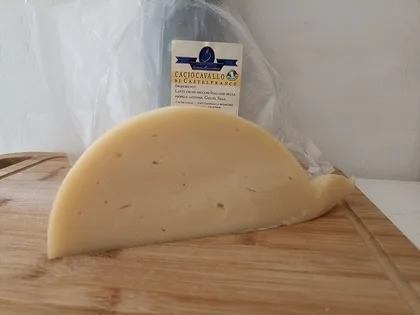 CheeseCaciocavalloCaciocavallo is a stretched-curd cow's milk cheese from southern Italy, aged in a distinctive gourd shape…
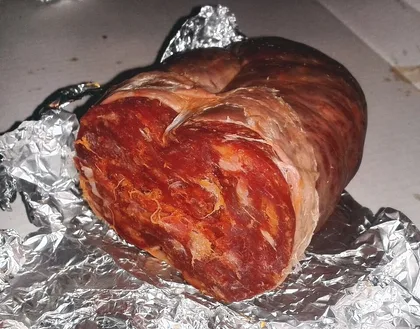 Cured meatsSoppressataSoppressata is a coarse-ground dry salami from southern Italy, pressed flat between boards while it dries…CheeseCaciocavallo PodolicoCaciocavallo Podolico is made from the milk of semi-wild Podolica cattle, a rustic grey breed that yields…Cured meatsPodolica BeefPodolica is the grey, lyre-horned cattle breed that lives outdoors year-round in the southern Italian…Cured meatsSalsiccia di FegatoSalsiccia di fegato is Italian pork liver sausage: coarsely chopped liver, pork fat, salt and spices in…
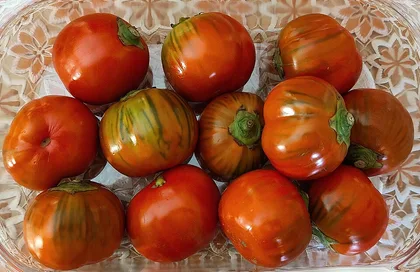 Vegetables and fruitRotonda Red EggplantThe Rotonda red eggplant looks exactly like a ribbed tomato and is not the eggplant you know: it is Solanum…