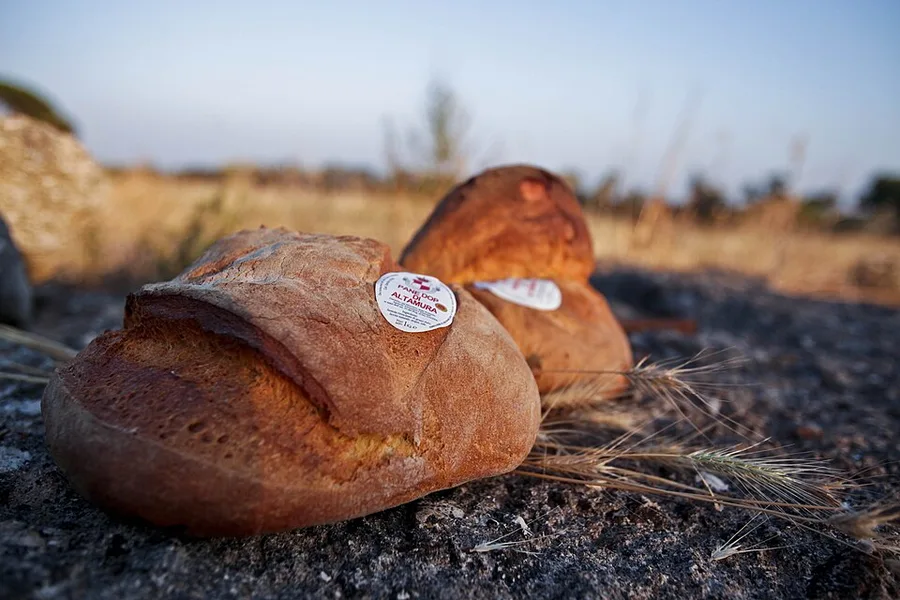
What is Pane di Altamura?
Pane di Altamura is made from remilled durum wheat semolina, mother yeast, water and sea salt. That is the entire ingredient list, and the protected designation of origin granted in 2003 makes it legally binding: no fat, no oil, no commercial yeast, no dough improvers. It was the first bread anywhere in Europe to receive DOP protection.
The wheat has to be grown on the Alta Murgia, the limestone plateau inland from Bari, in five named towns: Altamura, Gravina in Puglia, Poggiorsini, Spinazzola and Minervino Murge. At least eighty per cent must come from four durum varieties: appulo, arcangelo, duilio and simeto. That clause is the reason the crumb is yellow. Durum grown on thin, dry, calcareous soil is high in protein and carries carotenoid pigment; no soft-wheat flour can fake the colour.
Two shapes are permitted, both old. The tall one, folded over on itself and baked with the flap upwards, is called u sckuanète in dialect. The low, wide one is a cappidde de prèvete, the priest's hat. Minimum weight is 500 g, but the loaves that matter start at one kilo and go up to two or three, because mass is what makes the bread keep.
What does it taste like?
Wheat, and very little else, but wheat with a depth that soft-wheat bread does not reach. The crumb is faintly sweet and distinctly nutty, closer to good pasta than to a white loaf, with a mild lactic tang from the mother yeast that never tips into the aggressive sourness of a San Francisco sourdough.
The crust is the other half of the experience: three millimetres thick, dark, brittle at the ridges and slightly bitter where the wood fire caught it. It shatters rather than tears, and the contrast with the dense, moist crumb is why Altamura loaves are cut thick.
By day four it has become something else: a dry, absorbent structure that tastes of almost nothing on its own and of everything you pour over it. That is not decay, it is the intended second life.
How to use it
Cut it thick, a centimetre and a half, with a long smooth-bladed knife. Serrated knives shred the crumb. The traditional grip is to hold the loaf against your chest and pull the blade towards you, which is more controlled than it sounds and is how bread is still cut in Puglia.
On day one, eat it with olive oil and salt. Nothing else improves it. From day two it is bruschetta bread: grill the slice over coals, rub it with a cut clove of garlic, then oil and salt, and only then tomato if you want it.
From day three the Murgia repertoire opens up. Cialledda: stale bread barely dampened with water, then tomato, cucumber, red onion, olives, oregano and oil, left to sit twenty minutes. Hot cialledda: bread in a bowl, boiling water with bay and garlic poured over, an egg poached in it. Pancotto: bread simmered in the water used to boil turnip tops or potatoes, finished with oil and chilli.
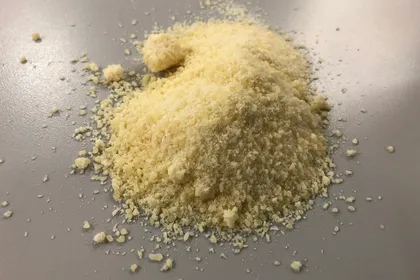
What is left becomes pangrattato, breadcrumbs toasted in olive oil and scattered on pasta across the south where cheese was once a luxury.
How long it keeps
A one kilo loaf holds about a week at room temperature and a two kilo loaf closer to ten days. Nothing special is needed: stand it on its cut face on a wooden board, or keep it in a cotton or paper bag. Cling film and sealed plastic bags are the mistake, because the loaf keeps giving up moisture for days and in plastic that moisture stays against the crust and softens the shell that was protecting the crumb. The fridge is worse for any bread, since chilling speeds up starch retrogradation and the crumb firms faster there than on the counter.
It freezes very well, but slice it first and freeze the slices in closed portions; they toast straight from frozen, while a whole frozen loaf thaws badly in the middle. To bring back a slice three or four days old, flick a few drops of water onto the crust and give it eight minutes at 180 °C. Stale semolina bread is not treated as a problem in Puglia: it is the base of half the local dishes.
Spot the real thing
Start with the crumb colour. It has to be a full straw yellow, never white and never cream: a real semolina loaf does not have a pale interior, and when it does, soft wheat flour went into the mix. The crust runs at least three millimetres thick, hard and dark amber turning brown on the ridges, and it should sound hollow when you knock the base. Inside, the holes are irregular, of different sizes and with thick walls; a fine even crumb is the signature of baker's yeast rather than a semolina starter.
Shape matters too. The accavallata fold should be sharp with the upper flap clearly lifted, and a smooth round loaf simply was not shaped that way. On the label, Pane di Altamura DOP is a protected name and arrives with the red and yellow European logo and the name of an authorised bakery. Altamura-style, or semolina bread alla altamurana, is a different and usually much cheaper product. Pane di Matera, its neighbour in Italian shops, is horn shaped and a separate DOP.
How to pronounce Pane di Altamura
PAH-neh dee ahl-tah-MOO-rah
Five syllables in the place name, stress on the third: ahl-tah-MOO-rah, never AL-ta-mura. The 'u' is the 'oo' of 'moon'. Pane is two syllables with the final 'e' pronounced: PAH-neh, not 'pain'. Locals often just say 'u pène', the bread.
Pane di Altamura compared
vsOrdinary Italian bread (pane comune)
Different grain, different leavening, different oven, different lifespan. Standard Italian table bread is soft-wheat flour raised with commercial yeast and eaten the day it is baked. Altamura is durum semolina raised with a three-times-refreshed mother and baked long enough to survive a week in a shepherd's bag.
| This | Ordinary Italian bread (pane comune) | |
|---|---|---|
| Flour | Remilled durum semolina | Soft wheat, type 0 or 00 |
| Leavening | Mother yeast, refreshed 3 times | Commercial baker's yeast |
| Crumb colour | Deep straw yellow | White to cream |
| Crust | 3 mm minimum, dark, hard | Thin, pale, soft |
| Loaf size | 500 g minimum, usually 1–2 kg | 200–500 g |
| Oven | Wood-fired dome, over an hour | Deck or electric, 20–30 min |
| Keeps | 7–10 days | Same day |
vsPane di Matera
The two great durum breads of southern Italy, twenty kilometres apart, and people confuse them constantly. The visible difference is shape: Matera is horn-shaped or tall and craggy, Altamura is folded over itself or flattened into a priest's hat. The reason is the bake. Matera's high, ridged form maximises crust and lets the loaf be turned and gripped in a deep dome oven; Altamura's overlapped fold shields the crumb through a long, slow bake with the oven mouth open, which is what buys it the extra days.
| This | Pane di Matera | |
|---|---|---|
| Status | DOP, granted 2003 | IGP, granted 2008 |
| Where | Alta Murgia, Puglia (5 towns) | Province of Matera, Basilicata |
| Shape | Folded (u sckuanète) or priest's hat | Horn-shaped (a cornetto) or tall |
| Starter | Mother yeast, three refreshes | Mother yeast traditionally begun with fruit |
| Sizes | 500 g minimum | 1 kg and 2 kg loaves |
| Crumb | Yellow, dense, even-ish | Yellow, wildly open, large holes |
| Keeps | About a week | 7 days (1 kg) to 9 days (2 kg) |
vsArtisan sourdough (US/UK)
Both are naturally leavened, and that is where the similarity stops. A Western artisan sourdough is a high-hydration white or wholemeal loaf whose selling point is sourness and an open, glossy crumb. Altamura is a durum bread whose selling point is keeping quality; the acidity is there to preserve, not to be tasted.
| This | Artisan sourdough (US/UK) | |
|---|---|---|
| Grain | Durum semolina | Bread flour, often with rye or wholemeal |
| Sour note | Mild, lactic, background | Pronounced, often acetic |
| Crumb | Yellow, close to medium open | Cream, very open and glossy |
| Eaten | Thick slices, over a week | Within two days |
Pane di Altamura substitutes
- Semolina bread (pane di semola)
The nearest thing, and the one to look for in any Italian bakery outside Puglia. Same grain, usually smaller loaves and a thinner crust, so it dries out in three days rather than seven. Buy the largest piece available and cut thick.
1:1 by weight - Day-old country sourdough boule
For soaked dishes like cialledda or pancotto it works, with one adjustment: white-flour crumb collapses much faster than durum. Halve the soaking time and use it while it is still in pieces rather than mush.
1:1 by weight, soak half as long - Home mix: 70% semola rimacinata, 30% strong bread flour
If you bake, this is the realistic home version. Pure remilled semolina is hard to handle without practice; the bread flour buys you gluten strength. Use a mature starter at 20% of flour weight and bake a one-kilo loaf for at least 55 minutes.
700 g semolina to 300 g bread flour, 70% hydration - Ciabatta or focaccia
The worst of the plausible options. Both are too open, too oily and too soft; they turn to paste in soaked dishes and give you no crust to speak of. Use only for bruschetta, and toast them harder than you would think.
1:1, toasted - Frisella or dried rusks
For the cold summer dishes this is arguably closer in spirit than fresh bread: Pugliese friselle are twice-baked durum rings designed to be splashed with water and dressed with tomato, which is exactly what stale Altamura is used for.
60 g frisella per 100 g stale bread
Where to buy it
In Italy, buy it in the zone: any bakery in Altamura or Gravina, sold by weight, whole or halved. Elsewhere in Italy the good delicatessens and several supermarket chains stock genuine DOP loaves, usually vacuum-packed, which costs you some crust and no flavour.
In the US and UK the bread travels by air or comes part-baked and frozen, so check what you are buying. Italian importers and specialist online grocers ship whole DOP loaves; Italian delis in cities with a southern Italian community are the better bet. Expect roughly 9 to 16 dollars per pound in the US, or 12 to 20 pounds per kilo in the UK.
The label is the check. Genuine bread carries the words Pane di Altamura DOP, the red-and-yellow EU mark and the authorised bakery's reference. Anything sold as 'Altamura-style' or 'tipo Altamura' is a different product: often good, usually half the price, never the DOP. Buy the biggest piece you can use: half of a two-kilo loaf keeps far better than a whole 500 g one.
Where to eat it in Italy
Altamura itself, in the historic centre, where the medieval claustri, enclosed courtyards opening off the street, still have working bakeries in them and the cathedral commissioned by Frederick II in 1232 stands two hundred metres from the ovens. Buy a half loaf, have it cut, and eat it in the street with a piece of burrata.
Gravina in Puglia, inside the same DOP zone, has its own bakeries and a dramatic old town built above a gorge. All around is the Alta Murgia National Park, with dry-stone walls, sheep pastures and cardoncelli mushrooms in autumn.
Matera is twenty kilometres away, which makes a two-bread day entirely feasible: the DOP loaf in the morning, the IGP loaf of the Sassi in the afternoon.
Further reading
Frequently asked questions
Why does Pane di Altamura last so long?
Three things working together. Durum semolina holds more water than soft-wheat flour, the mother yeast acidifies the dough and suppresses mould, and the long bake with the oven mouth left open drives final moisture below 33 per cent. A two-kilo loaf will be good for ten days.
What is the difference between Pane di Altamura and Pane di Matera?
Both are durum-wheat sourdoughs from neighbouring provinces. Altamura is DOP, made in five Murgia towns, folded or flattened, from 500 g up. Matera is IGP, made in the province of Matera, horn-shaped or tall, sold in one- and two-kilo loaves, with a much more open crumb and a starter traditionally begun with fruit.
Is Pane di Altamura sourdough?
Yes, in the sense that it is leavened only with a mother culture and no commercial yeast. It does not taste like Anglo-American sourdough, though: the acidity is mild and functional, there to preserve the bread rather than to be tasted.
How do you pronounce Pane di Altamura?
PAH-neh dee ahl-tah-MOO-rah, with the stress on the MOO. Both vowels are open and the final 'e' of pane is fully pronounced.
Can I make it at home without durum semolina?
You can make bread, but not this bread: the yellow crumb, the nutty flavour and the keeping quality all come from remilled durum. If you cannot source semola rimacinata, a 70:30 blend with strong bread flour is the workable compromise; pure white flour is not.
Sources
Where to check what you just read.
- 1
Il regolamento del 18 luglio 2003 che registra «Pane di Altamura» come DOP: nell'atto si leggono i cinque comuni ammessi e il vincolo della semola di grano duro rimacinata.
- 2
Il provvedimento del 12 agosto 2003 con cui l'Italia pubblica disciplinare e scheda riepilogativa: varietà di grano duro ammesse, lievito madre e fasi di lavorazione.
- 3Consortium · interested partyConsorzio di tutela del Pane di Altamura DOP
L'elenco dei panificatori aderenti alla filiera controllata e cosa certifica il bollino DOP sulla singola pagnotta.
Related foods
 Pasta and breadOrecchietteOrecchiette are Puglia's handmade pasta: semolina and water, no egg, dragged with a knife and flipped over a…
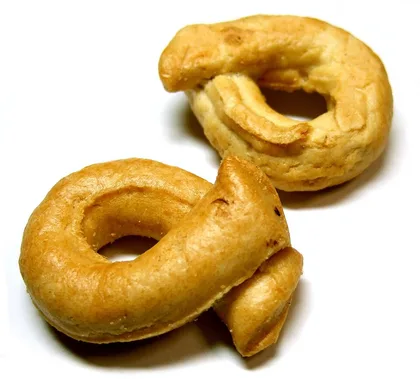 Pasta and breadTaralliTaralli are small, crunchy savoury rings from Puglia in southern Italy, made from just flour, dry white wine…
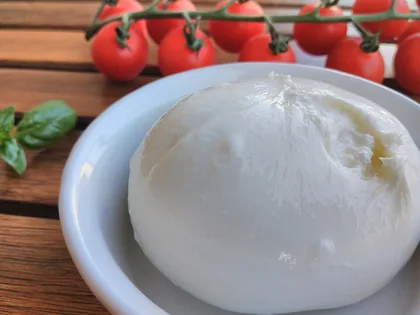 CheeseBurrataIt began as a way of using offcuts: leftover shreds of pasta filata, drowned in cream and sealed inside a…
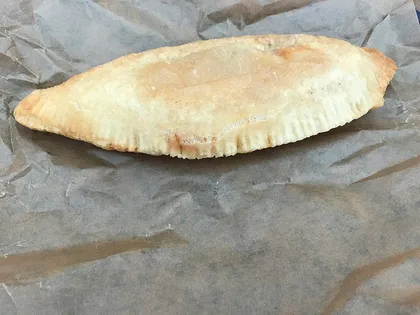 Pasta and breadPanzerottiThe oven never comes into it. A hand-sized half-moon of pizza dough, tomato and mozzarella sealed inside…Pasta and breadPuccia SalentinaPuccia is the round wood-fired bread of Salento, in the heel of Italy: a flat, soft loaf about the size of…
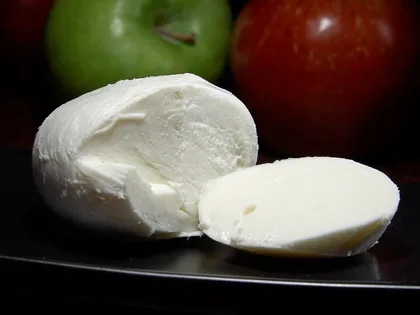 CheeseMozzarellaThe name is a verb before it is a cheese: mozzare means to lop off, which is what the cheesemaker does by…
 Cured meatsCapocolloCapocollo is the pork neck muscle, salted whole and aged in casing.
 Oil and preservesExtra Virgin Olive OilTwo exams have to be passed, and one of them is carried out by people.