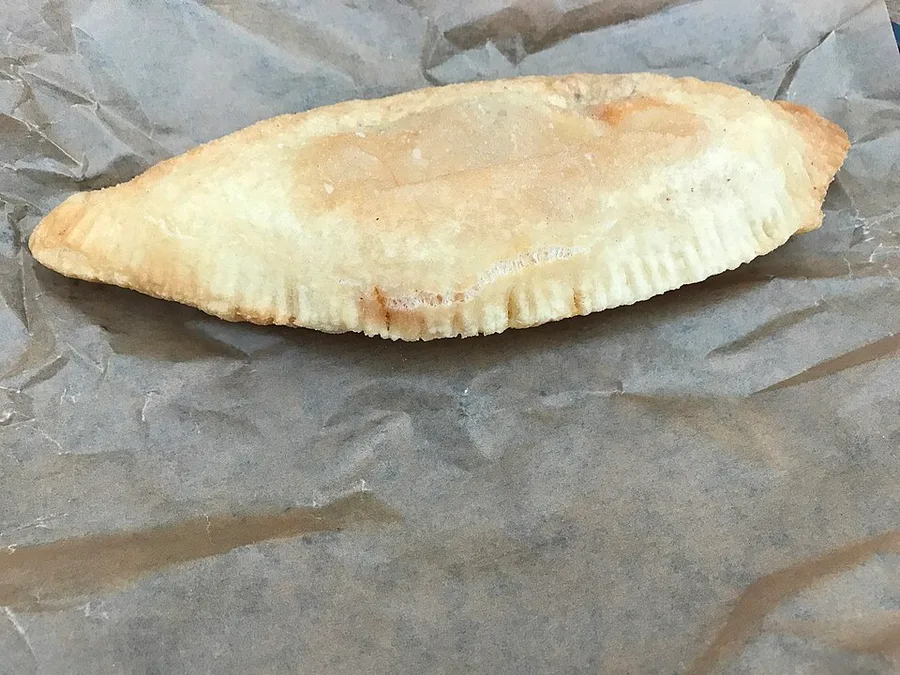
What is Panzerotti?
A panzerotto is a disc of leavened pizza dough rolled to three or four millimetres, filled on one half, folded into a half-moon, sealed by hand and deep-fried for two to three minutes. The standard Puglian filling is tomato and fiordilatte mozzarella with salt and oregano. Everything else is a regional or family variation.
The name comes from panza, dialect for belly. Steam trapped inside during frying inflates the pocket, so a properly made one arrives taut and rounded. A flat panzerotto was either overfilled or badly sealed.
Size is part of the definition. It fits in one hand and is eaten walking: roughly 100 to 120 grams of dough and 60 to 80 grams of filling, twelve to fifteen centimetres across before frying. It is street food and rosticceria food, sold alongside pettole, fried olives and sgagliozze, never a sit-down dish.
Because the base is dough, tomato and cheese, the standard panzerotto is vegetarian, though the cheese is usually made with animal rennet unless the producer says otherwise.
What does it taste like?
The first thing is texture. The crust shatters and gives way immediately, with a thin, open crumb underneath rather than a dense layer of bread. Fried dough at the right temperature does not taste of oil, it tastes toasted, faintly sweet from the flour, with a slight tang from the long rise.
The filling is deliberately plain and hot. Tomato that has been reduced and salted in advance is concentrated and slightly sharp, and the fiordilatte inside is milky and mild rather than salty, pulling into strings as you bite. Oregano is the only aromatic in the classic version.
What it is not is greasy. A panzerotto from a competent friggitoria leaves a light mark on the paper, not a slick. If it feels heavy in the hand and the crust bends instead of cracking, the oil was too cool.
Eat it two or three minutes after it leaves the fryer. Straight out, the cheese is hot enough to burn, which is the most common way visitors to Bari ruin their afternoon.
How to use it
Make the dough the day before. Bread flour cut with ten to thirty per cent fine semola, 55 to 60 per cent water, a small amount of yeast, salt and a spoon of olive oil; rise four to six hours at room temperature or overnight in the fridge. Divide into 100-gram balls and let them relax for thirty minutes before rolling.
Dry the filling first, and take this seriously. Cube the mozzarella and leave it in a sieve in the fridge overnight. Reduce the tomato in a pan with salt until a spoon dragged through leaves a clear track. Wet filling is the reason panzerotti burst.
Roll each ball to three or four millimetres, put the filling on one half leaving a two-centimetre border, fold, press the air out with your palm, seal the edge with your fingertips and then crimp it with a fork. Do not wet the edge; damp dough seals worse, not better.
Fry in peanut oil at 170 to 180 C, two to three minutes per side, two or three at a time in a narrow deep pot rather than a wide pan, which loses heat faster. Let the oil recover between batches. Drain on a rack, not on paper, and wait two minutes before eating.
How long it keeps
A panzerotto is a ten-minute product, and everything about keeping one is damage control. Left a few hours at room temperature under a cloth, the crust softens as steam from the filling works outwards through the dough. The fridge does the same thing faster and stiffens the dough on top of it.
The way to plan ahead is to freeze them raw. Shape them, space them well apart on a tray, freeze for two hours, then move them into bags. They hold about three months, after which the dough surface dries out and the edges take on freezer smells. Fry straight from frozen, dropping the oil to 160 to 165°C (320 to 330°F) and stretching the time to four or five minutes a side.
Already fried ones go back into a conventional oven at 180°C (355°F) for eight to ten minutes, sitting on a rack rather than a tray so the base does not sweat. An air fryer does it in five minutes at the same temperature. A microwave softens the crust and nothing brings it back.
Spot the real thing
A well fried panzerotto is puffed, evenly golden, and lighter in the hand than its size suggests. Small blisters and a few darker patches on the surface are normal and show dough that genuinely rose; flat, uniform colour with no blistering means underproved dough or a sheet rolled too thick.
The crust should crack audibly and give way at once, showing a thin open crumb inside rather than a compact damp layer. Dough that crumples and goes rubbery met cold oil. Look at the paper underneath: fried at the right temperature it leaves a light mark, not a spreading patch. The seal says a lot too, a thick even fold pressed shut, never glued with water or egg. Inside, the mozzarella should pull into strands and hold together instead of collapsing into a watery pool, which is what undrained cheese does.
The lookalike abroad is the calzone: baked, bigger, often plated with sauce. A panzerotto is fried, hand-sized and eaten off paper. Pizzerias in Toronto and New Jersey sell much larger fried versions under the same name.
How to pronounce Panzerotti
pan-tseh-ROT-tee
The z in Italian is a 'ts' sound, not the buzzing English z: pan-TSEH, never pan-ZEE. Stress falls on the third syllable and the double t is held for a beat, which is what separates ROT-tee from a single-t ROH-tee. The singular is panzerotto, pan-tseh-ROT-toh; one panzerotto, two panzerotti. In New Jersey and around Philadelphia the same food is spelled and said panzarotti, pan-zuh-ROT-ee, and that local pronunciation is now its own thing rather than a mistake.
Panzerotti compared
vsCalzone
The single question people ask about panzerotti, and the answer is cooking method. A panzerotto is deep-fried and hand-sized; a calzone is baked and meal-sized. They also part ways on filling: calzone traditionally carries ricotta and cured meat, panzerotto carries tomato and fiordilatte. A further trap: in Puglia itself the word calzone often means a baked savoury pie with sponsale onion, olives and anchovies, which has nothing to do with folded pizza.
| This | Calzone | |
|---|---|---|
| Cooking | Deep-fried, 170-180 C, 2-3 min per side | Baked, 220-280 C, 12-18 min |
| Size | 12-15 cm, 100-120 g dough | 25-30 cm, 250 g dough or more |
| Standard filling | Tomato and fiordilatte | Ricotta, mozzarella, salami or ham |
| Crust | Crisp, blistered, shatters | Soft, bready, chewy |
| Eaten | In the hand, walking, 2-3 min after frying | On a plate, with a knife |
| Price in Italy | 2-3.50 euro | 7-10 euro in a pizzeria |
vsPizza fritta napoletana
Naples fries its dough too, but the result is a bigger, richer object. Pizza fritta is filled with ricotta, provola, ciccioli and black pepper, often with no tomato at all, and it is closer to a meal than to a snack. Panzerotto is the Bari version of the same idea, smaller and tomato-based. Both are fried in a deep pan, but the Neapolitan one is folded around a soft dairy filling that stays creamy, while the Puglian one relies on the cheese melting into strings.
| This | Pizza fritta napoletana | |
|---|---|---|
| City | Bari and Puglia | Naples |
| Diameter | 12-15 cm | 20-25 cm |
| Filling | Tomato, fiordilatte, oregano | Ricotta, provola, ciccioli, pepper |
| Tomato | Always | Often none |
| Weight | About 180-200 g | 350-450 g |
| Role | Snack, street food | Full lunch |
vsPanzarotti (New Jersey and Philadelphia)
Not an error, a descendant. Puglian emigration carried the panzerotto to the Delaware Valley, where the spelling settled as panzarotti and the product grew: thicker dough, more filling, a heavier fry, and a large frozen retail trade that has no equivalent in Italy. Anyone who grew up with panzarotti in Camden or Philadelphia will find the Bari original noticeably smaller, thinner and less sweet.
| This | Panzarotti (New Jersey and Philadelphia) | |
|---|---|---|
| Dough thickness | 3-4 mm | Usually thicker, more bread-like |
| Weight | About 180-200 g | Often 250-350 g |
| Tomato | Reduced, salted, unsweetened | Often sweeter pizza sauce |
| Sold frozen | Rare, mostly supermarket own-brand | Common, a retail category |
| Price | 2-3.50 euro | 4-8 dollars |
Panzerotti substitutes
- Fiordilatte instead of buffalo mozzarella
This is the substitution that matters most, and it runs the opposite way to what people expect. Cow's milk fiordilatte is the correct cheese; buffalo mozzarella holds too much water and will split the pocket in the fryer. If buffalo is all you have, cube it and drain it in the fridge for at least twelve hours.
1:1 by weight, drained overnight - Low-moisture mozzarella (US block)
The American pizza-shop block works well precisely because it is dry, and it is the safest option for a first attempt. It is saltier and less milky than fiordilatte, so cut the added salt in the tomato.
1:1, no draining needed - Scamorza or provola
Both are drier than fresh mozzarella and melt into a firmer string. Provola adds a light smokiness that is common in Puglian variations. Use a shade less than you would of mozzarella, since they are more assertive.
0.8:1 - Baked version instead of fried
Twenty minutes at 220 C on a preheated tray or stone gives an honest product with far less oil. Brush the top with olive oil for colour. The crust will be soft rather than crisp, so accept that you are making something closer to a small calzone.
Same dough and filling - Vegan panzerotti
Easier than most Italian fried food, because the dough is already flour, water, yeast, salt and olive oil with no egg or dairy. Replace the cheese with a firm plant-based mozzarella made for pizza rather than a soft spreadable one, and reduce the tomato hard so the filling stays dry.
1:1 for the cheese - Puglian onion filling (calzone di cipolla)
The regional alternative to tomato and cheese: sponsale spring onions stewed slowly in olive oil with black olives and anchovies. Leave out the anchovies for a vegetarian version. It is drier than the tomato filling, which makes it forgiving for beginners.
About 70 g filling per piece
Where to buy it
Outside Italy, fresh panzerotti are a delicatessen and bakery item rather than a supermarket one. In the US, Italian-American bakeries in the New York and Philadelphia areas sell them at 4 to 8 dollars each, usually under the panzarotti spelling, and frozen boxes are widely stocked in the Delaware Valley. In the UK they are hard to find at all outside a handful of Italian delis, where they run 3.50 to 6 pounds each.
The better route abroad is to make them, since every ingredient is easy: strong flour, fine semola, yeast, tinned tomatoes and a block of low-moisture mozzarella. A kilo of flour makes about twenty pieces.
In Italy, friggitorie in Bari charge 2 to 3.50 euro for the classic and up to 5 for elaborate fillings. Milan's Luini sits at 3.50 to 4.50. Supermarket frozen packs are 6 to 10 euro per kilo and have deliberately dry, thickened tomato fillings.
If you buy them frozen and raw, fry from frozen at 160 to 165 C for four to five minutes per side. Thawing them first guarantees a leak.
Where to eat it in Italy
Bari is the place, and specifically the old town between Piazza Mercantile and the basilica of San Nicola, where friggitorie run continuously from late morning into the evening. The same counters sell sgagliozze, fried polenta squares, and pettole, and a walk through those streets is the fastest way to understand Puglian fried street food as a category rather than a dish.
Milan is the unexpected second address. Luini, in via Santa Radegonda behind the Duomo, has been frying panzerotti since 1949, opened by a family from Puglia, and is the reason most Italians outside the South know the product at all. There is almost always a queue on the pavement.
In the Salento and the Valle d'Itria, rosticcerie sell panzerotti alongside the rest of the local fried repertoire, generally in a smaller format with a drier filling. Lecce is a good base for that version.
The best ones, though, are domestic and seasonal. Puglian households fry panzerotti in quantity at Carnival and on Christmas Eve, and no counter matches a kitchen production line running for twenty people.
Frequently asked questions
What is the difference between a panzerotto and a calzone?
A panzerotto is deep-fried and hand-sized; a calzone is baked and meal-sized. The panzerotto is filled with tomato and mozzarella, the calzone more often with ricotta and cured meat. Confusingly, in Puglia the word calzone can also mean a baked onion and anchovy pie, which is a third thing again.
How do you pronounce panzerotti?
pan-tseh-ROT-tee, with a 'ts' where the z is and the stress on the third syllable. The singular is panzerotto, pan-tseh-ROT-toh. The New Jersey spelling panzarotti is said pan-zuh-ROT-ee, which is a local variant rather than a mistake.
Why did my panzerotti burst in the oil?
Wet filling, too much filling, or trapped air. Drain cubed mozzarella overnight, reduce the tomato until it holds its shape on a spoon, leave a two-centimetre border, and press the air out before sealing. Crimp with a fork rather than wetting the edge.
Are panzerotti vegetarian?
The classic tomato and mozzarella filling is, and the dough contains no egg or dairy. The one thing to check is the cheese: Italian mozzarella is usually made with animal rennet, so look for a producer that states microbial rennet if that matters to you.
Can you air-fry them?
You can, at 180 C for about twelve minutes with a brush of oil, and the result is edible. It is not a panzerotto: without deep oil the dough does not puff the same way and the crust stays soft. A hot oven at 220 C gives a similar outcome.
Related foods
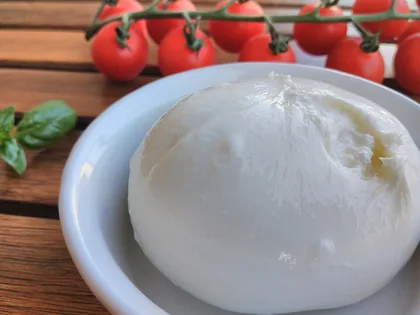 CheeseBurrataIt began as a way of using offcuts: leftover shreds of pasta filata, drowned in cream and sealed inside a…
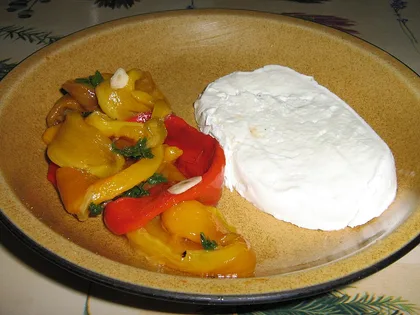 CheeseBuffalo MozzarellaMozzarella di Bufala Campana DOP is made from the whole raw milk of Italian Mediterranean water buffalo…Vegetables and fruitFriarielliAround Naples this turnip never reaches the root stage, because what matters grows above it.
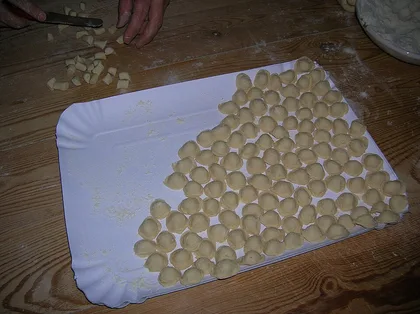 Pasta and breadOrecchietteOrecchiette are Puglia's handmade pasta: semolina and water, no egg, dragged with a knife and flipped over a…
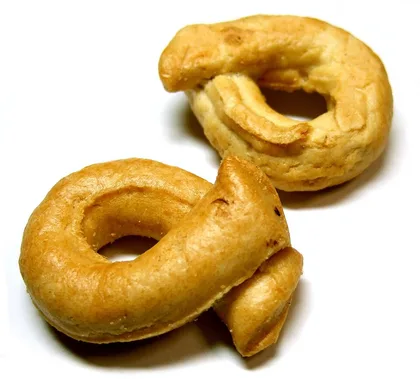 Pasta and breadTaralliTaralli are small, crunchy savoury rings from Puglia in southern Italy, made from just flour, dry white wine…
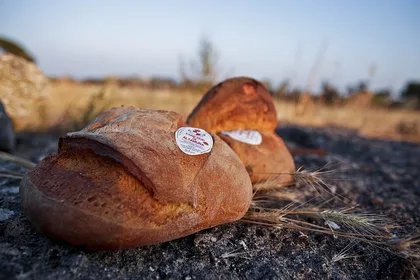 Pasta and breadPane di AltamuraPane di Altamura is a durum-wheat sourdough from the Murgia plateau in Puglia, and in 2003 it became the…Pasta and breadPuccia SalentinaPuccia is the round wood-fired bread of Salento, in the heel of Italy: a flat, soft loaf about the size of…
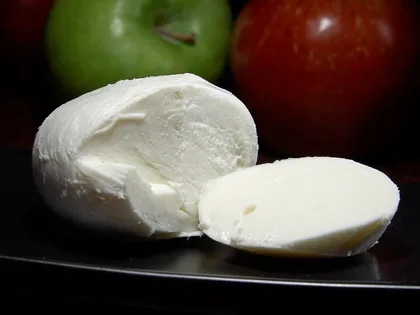 CheeseMozzarellaThe name is a verb before it is a cheese: mozzare means to lop off, which is what the cheesemaker does by…