What is Buffalo Mozzarella?
Buffalo mozzarella is a fresh pasta filata cheese made exclusively from the milk of the Italian Mediterranean water buffalo. The protected name, Mozzarella di Bufala Campana, has held DOP status since 1996 and can only be used for cheese made in a defined area covering much of Caserta and Salerno provinces, parts of Naples and Benevento, a strip of southern Lazio and small zones in Puglia and Molise.
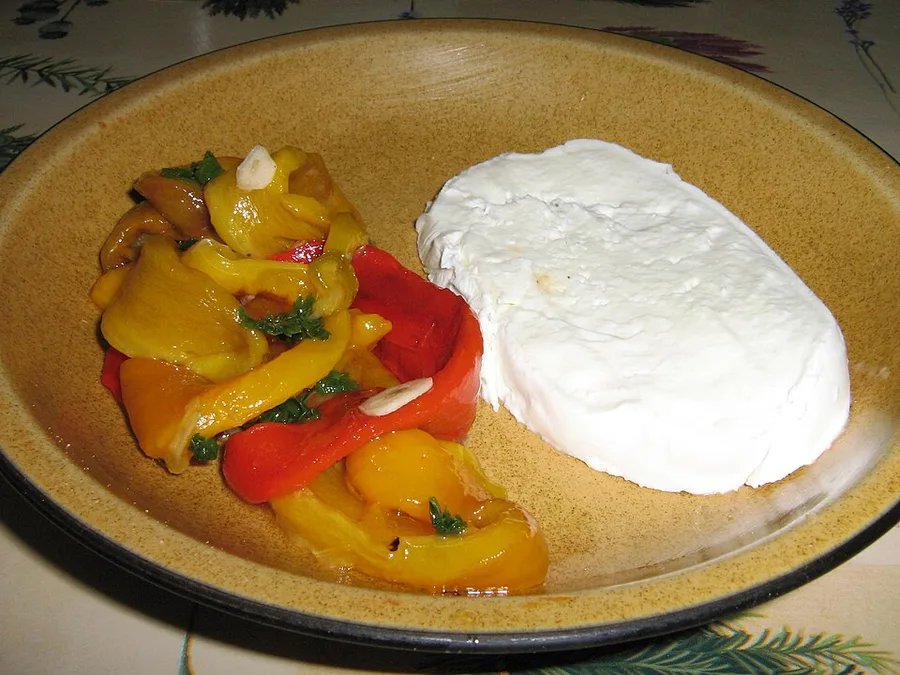
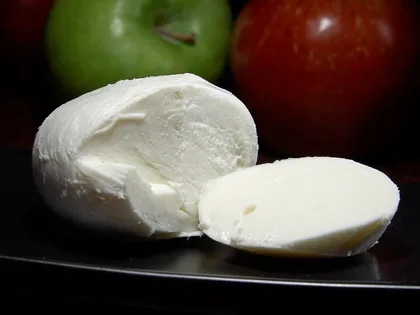
Buffalo milk behaves nothing like cow's milk. It carries around eight per cent fat against three and a half, nearly twice the calcium and, this is the visible part, no beta-carotene at all, because the buffalo converts it entirely into vitamin A. That is why the cheese is a flat, opaque white with none of the ivory tint of cow's-milk mozzarella.
Pasta filata describes a method, not an ingredient. The acidified curd is dropped into water at about ninety degrees and worked until it turns glossy and elastic, then mozzata, pinched off by hand between thumb and forefinger. That pinch gives the cheese its name.
A fresh one holds whey inside it. Cut into a good buffalo mozzarella and milky liquid should run out.
What does it taste like?
Lactic and slightly sour at the front, buttery in the middle, faintly grassy at the finish. There is a tang that cow's-milk mozzarella does not have, coming from the natural whey starter, and a mineral edge that reads almost as salt even in a lightly brined cheese.
The texture carries as much of the identity as the flavour. The outer skin is thin and gives way under slight pressure; inside, the paste separates into layers rather than behaving like a solid block, and it releases whey as you cut it. In the mouth it is springy for a moment and then melts.
Compared with the vacuum-packed mozzarella sold in blocks abroad, the difference is not subtlety versus richness. That product is a low-moisture cheese engineered to be grated and melted; this one is a fresh cheese engineered to be eaten within days, at room temperature, with nothing on it but olive oil.
How to use it
Take it out of the fridge, or better never put it there, at least an hour before eating, and keep it in its whey until the last moment. Cold buffalo mozzarella is a waste of money: below ten degrees the fat crystallises and the paste turns grainy and dull. If it has been chilled, warming the packing liquid to about thirty degrees and letting the cheese sit in it for ten minutes recovers most of the texture.
Tear it rather than slicing it wherever the dish allows. The torn surface holds oil.
Raw is where it belongs: with new-pressed olive oil and black pepper, with anchovies, with confit cherry tomatoes, on bread alongside a sweet young prosciutto, or in a roll with hot bitter greens. Bitter vegetables suit it better than tomato, whose acidity simply adds to the cheese's own.
On pizza it needs managing. High water content means it weeps in the oven, so Neapolitan pizzaioli cut it into strips and squeeze it dry, or add it in the last moments. For a baked margherita, drier fiordilatte is often the better technical choice.
Skip the balsamic glaze. Sweet acidity flattens the lactic tang that you paid for.
How long it keeps
The right place is out of the fridge, sitting in its own governing liquid at room temperature, if it is being eaten that day. Cold makes the fat set and the paste turns grainy and dull. When it does have to be kept, leave it in the liquid, on the least cold shelf, and take it out at least an hour before serving; better still, warm the liquid to around 30 C and let the ball sit in it for ten minutes, which brings most of the structure back.
The pack carries a date and that date belongs to the dairy, but the texture follows its own clock: from roughly the fourth day after production the acidity climbs and the whey turns cloudy. Keep the ball submerged once the bag is open, because one left out of its liquid dries at the surface, forms a skin and goes matt within hours. It does not freeze. The water held inside the leaves crystallises, and what thaws is a rubbery mass that behaves only in a hot dish. Abroad the ball has usually already flown, so the date on arrival is short.
Spot the real thing
Porcelain white, evenly so, with no yellow haloes. The surface is glossy and faintly wet and the skin is under a millimetre thick, continuous, giving under a finger without splitting. Cut one open and the paste shows overlapping leaves rather than a solid rubbery mass, and it should release plenty of milky whey: if nothing runs out, the ball is more than three or four days old, and if the liquid is clear rather than cloudy it was made from frozen curd. The bite resists briefly then gives way, slightly acidic, finishing like fresh butter, and it smells of milk and whey.
The label does the rest. Look for the DOP mark with the buffalo head and the dairy number. Mozzarella di latte di bufala without that mark is a legitimate cheese made outside the rules, often from frozen or imported milk. Be careful with packs that say only mozzarella and carry a photograph of a buffalo: if the ingredients list cow milk, it is fiordilatte with clever artwork. The low-moisture blocks sold abroad for pizza are a different product again, and the DOP ball costs several times as much.
How to pronounce Buffalo Mozzarella
mot-tsah-REL-lah dee BOO-fah-lah
The double Z in mozzarella is a 'ts' sound, not a 'z': 'mot-tsa', not 'moz-a'. Stress falls on REL. In bufala the stress is on the first syllable, BOO-fah-lah, not 'boo-FAH-lah', and there is one L, so never 'buffala'. Campana is kam-PAH-nah, meaning 'from Campania', nothing to do with a bell.
Buffalo Mozzarella compared
vsFiordilatte
The single most useful distinction in Italian fresh cheese. Fiordilatte is mozzarella made from cow's milk; buffalo mozzarella is made from water buffalo milk. Different animal, different fat content, different colour, different job in the kitchen. Neither is a lesser version of the other.
| This | Fiordilatte | |
|---|---|---|
| Milk | Italian Mediterranean water buffalo | Cow |
| Fat in the milk | About 8 per cent | About 3.5 per cent |
| Colour | Porcelain white, no ivory tone | Faintly ivory, from beta-carotene |
| Flavour | Sour, buttery, mineral | Sweeter, milder, milkier |
| Water content | Higher: weeps on a hot pizza | Lower: melts more cleanly |
| Best use | Raw, room temperature, good oil | Pizza, baking, frying |
| Protected name | Mozzarella di Bufala Campana DOP | No protected designation |
vsBurrata
Burrata is a bag made of pasta filata filled with shredded curd and cream. Most burrata is cow's milk, though buffalo-milk versions exist. Where mozzarella is uniform throughout, burrata is a container and a filling, and it is far richer.
| This | Burrata | |
|---|---|---|
| Structure | Uniform layered paste | Outer shell plus stracciatella and cream filling |
| Usual milk | Buffalo | Cow, occasionally buffalo |
| Home region | Campania | Puglia, above all Andria |
| Richness | Rich but clean | Markedly richer, from added cream |
| Shelf life | Three to four days | Two days at best |
| Acidity | Noticeable | Low: the cream rounds it off |
vsLow-moisture mozzarella
The block or shredded cheese sold in American and British supermarkets as mozzarella. It shares the pasta filata method and almost nothing else: it is pressed, salted more heavily and dried to a firm, sliceable, long-keeping cheese built for melting.
| This | Low-moisture mozzarella | |
|---|---|---|
| Moisture | Around 60 per cent | Around 45 per cent |
| Sold | In whey, in a tub or bag | In a vacuum block or shredded |
| Shelf life | Days | Weeks or months |
| Eaten raw | That is the point | Rubbery and salty |
| Melted | Releases water, can go stringy | Melts evenly, browns well |
| Price | High | Low |
Buffalo Mozzarella substitutes
- Fiordilatte, or good fresh cow's-milk mozzarella
The correct substitute for almost every cooked application and a fair one raw. Milder and sweeter, with less whey, so a caprese made with it needs a heavier hand with the olive oil and salt.
1:1 by weight - Burrata
Goes the other way, richer rather than milder. Excellent where the mozzarella was going to be eaten raw with oil and bread, wrong where it needed to hold its shape or go near an oven.
1:1, expect a much richer plate - Buffalo mozzarella made outside the DOP zone
Buffalo herds now exist in Britain, the US, Australia and elsewhere, and several dairies make a genuinely good fresh cheese from that milk. Not DOP, and often gentler in acidity, but the right animal.
1:1 - Stracciatella
The shredded curd and cream that fills a burrata, sold on its own. No structure at all, so it cannot be sliced, but it delivers the same lactic richness spooned over tomatoes or grilled vegetables.
About 0.8:1 by weight, since it goes further - Vegetarian: buffalo or cow mozzarella with microbial rennet
DOP buffalo mozzarella is not vegetarian, since the disciplinare requires calf rennet. Several non-DOP producers, particularly in the UK and the US, use microbial rennet and label it clearly. Check the pack rather than assuming.
1:1 - Fresh ricotta or a young goat's cheese
Not the same category, but if the dish needs a soft, mild, milky counterpoint to tomatoes or greens, either will do the structural job. Add a pinch of salt and a squeeze of lemon to imitate the acidity.
1:1
Where to buy it
In the UK, Ocado, Waitrose and Italian delicatessens carry DOP buffalo mozzarella flown in weekly, at roughly 18 to 30 pounds per kilo. Several British dairies (there are buffalo herds in Hampshire, Devon and Wales) sell a fresh, non-DOP buffalo mozzarella that is often in better condition simply because it has travelled a day rather than four.
In the US, Eataly, Whole Foods and Italian importers stock the imported DOP product at roughly 25 to 40 dollars a pound; domestic buffalo mozzarella from small dairies in California, Vermont and New York is cheaper and fresher.
Check two things on the tub: the DOP mark with the buffalo head and the dairy's identifying number, and the production date rather than the use-by date. Three days from production is the useful window; the printed expiry is more generous than the cheese is.
Be alert to labels that show a picture of a buffalo but list cow's milk in the ingredients. That is fiordilatte with clever photography, and it is legal.
Anything sold as buffalo mozzarella below about 10 euros or 12 dollars a kilo is almost certainly made from frozen curd or non-Italian milk.
Where to eat it in Italy
The dairies themselves, in Caserta province and on the Sele plain south of Salerno. Many sell at the door and several have a small tasting room, and buffalo mozzarella eaten two hours after it was pinched off is a different food from the same cheese three days later. Not a subtlety: a different food.
Paestum, in Salerno province, hosts an annual festival dedicated to Mozzarella di Bufala Campana, with open dairies and tastings; Battipaglia, Eboli and Capaccio run related events at the same time of year.
Around Aversa and the lower Volturno, the tradition is older and the pieces smaller. Several historic dairies open for the morning stretching, which happens early, so arriving at seven is not excessive.
In Naples, the delicatessens of the Vomero and Chiaia take daily deliveries, and pizzerias that finish a pizza with raw buffalo mozzarella after it leaves the oven show exactly what the cooked version loses.
One practical warning for visitors: eat what you buy at the dairy on the day. It does not survive a suitcase, and travel damages it faster than time does.
Further reading
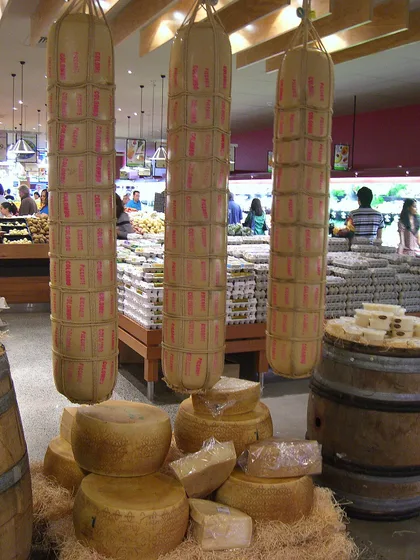 ExplainerWhich Italian cheeses contain no lactoseItaly sets a legal threshold, and long-aged cheeses clear it on their own, with no treatment involved.
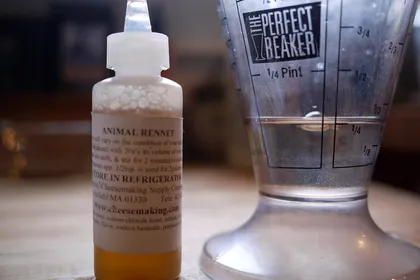 InvestigationWhich Italian cheeses are vegetarianWe counted what rennet the 43 cheeses in our atlas declare: 35 out of 43 say animal, none say otherwise.
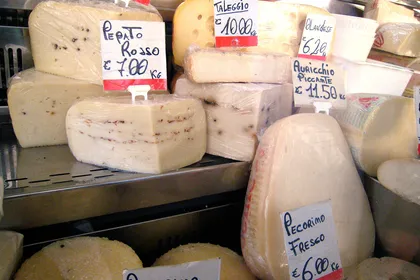 GuideHow long food keeps once openedThe date on the label describes the sealed package. After that, four things govern everything: water, salt…
Frequently asked questions
What is the difference between buffalo mozzarella and regular mozzarella?
The animal. Buffalo mozzarella comes from Italian Mediterranean water buffalo milk, which has more than twice the fat of cow's milk and no beta-carotene, giving a whiter, tangier, richer cheese. Cow's-milk mozzarella, fiordilatte in Italian, is sweeter, drier and better suited to cooking.
Is buffalo mozzarella vegetarian?
DOP Mozzarella di Bufala Campana is not, because the production rules require natural calf rennet. Some producers outside the DOP scheme, including several in Britain and the United States, make buffalo mozzarella with microbial rennet and label it as vegetarian. The DOP mark and vegetarian status are mutually exclusive here.
Should buffalo mozzarella be refrigerated?
Ideally not, if you are eating it the same day: keep it in its whey at room temperature. Refrigeration makes the fat crystallise and the paste grainy. If you must chill it, let it come back to room temperature for an hour, or sit it in its liquid warmed to about thirty degrees for ten minutes.
How long does buffalo mozzarella keep?
Three to four days from production for the full experience, even though the printed date allows longer. From day five the acidity climbs and the whey goes cloudy. It should never be frozen: freezing wrecks the internal water structure and leaves a rubbery cheese fit only for cooking.
How do you pronounce mozzarella di bufala?
mot-tsah-REL-lah dee BOO-fah-lah. The double Z is a 'ts' sound, and the stress in bufala falls on the first syllable, not the second. One L in bufala, two in mozzarella.
Sources
Where to check what you just read.
- 1
La grafia esatta iscritta il 12 giugno 1996 è «Mozzarella di Bufala Campana»: senza «Campana» non si sta parlando della DOP.
- 2
Il disciplinare in PDF: obbligo di solo latte di bufala, province ammesse fra Campania, Lazio, Puglia e Molise, formati e tempi di lavorazione.
- 3Consortium · interested partyConsorzio Tutela Mozzarella di Bufala Campana DOP
Il consorzio con sede alla Reggia di Caserta: tracciabilità del latte, caseifici autorizzati e le quattro regioni della zona DOP.
Related foods
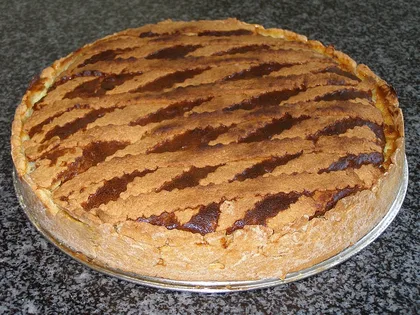 SweetsPastieraPastiera is the Easter tart of Naples: a shortcrust case filled with sheep's-milk ricotta, wheat berries…
 CheeseMozzarellaThe name is a verb before it is a cheese: mozzare means to lop off, which is what the cheesemaker does by…CheeseCaciocavallo PodolicoCaciocavallo Podolico is made from the milk of semi-wild Podolica cattle, a rustic grey breed that yields…
 Pasta and breadSpaghettiA solid round strand of durum semolina and water, 1.7 to 2.0mm across. It looks like the most neutral pasta…
 Vegetables and fruitSan Marzano TomatoesSan Marzano is a long, thin-skinned plum tomato grown in the volcanic plain between Naples and Salerno, and…
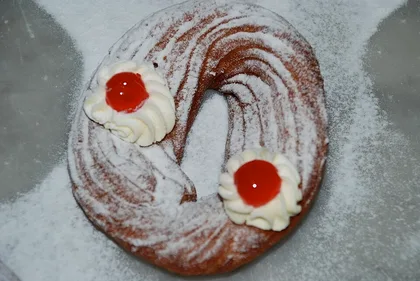 SweetsZeppoleZeppole are Naples' feast-day pastry for Saint Joseph on 19 March: a piped choux ring, fried or baked, filled…
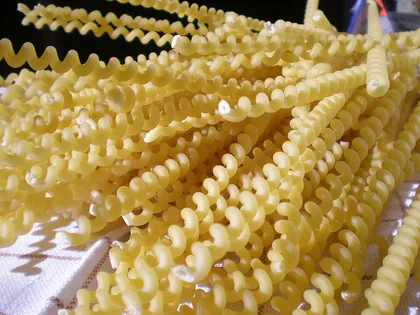 Pasta and breadFusilliTwo different pastas share this name. The industrial spiral is solid and holds sauce on its outside surface…