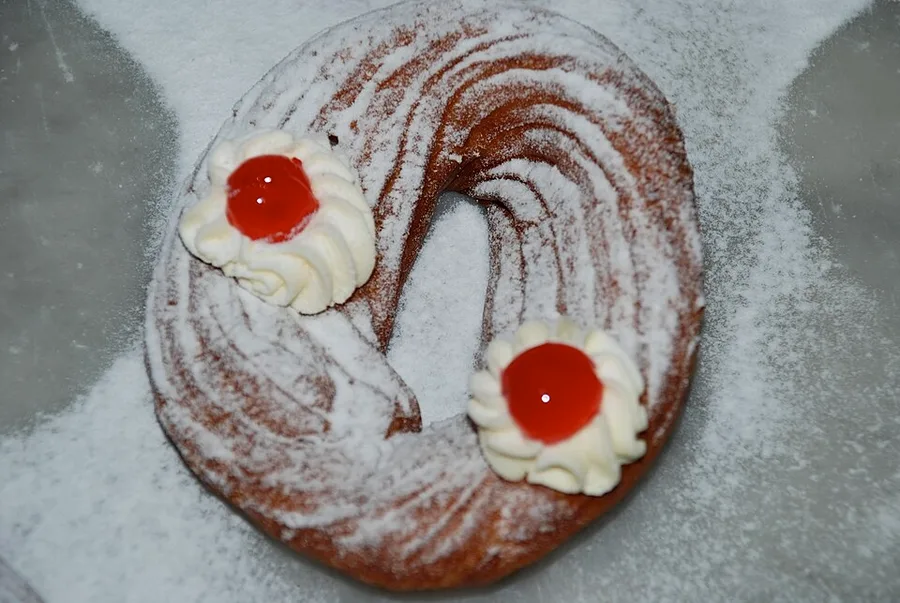
What is Zeppole?
The zeppola di San Giuseppe is made from choux paste (water, butter, flour, eggs) piped through a star nozzle into a double-layered ring with a hollow in the middle. Pastry cream goes in the hollow, a syrupy amarena cherry goes on the cream, and icing sugar goes over everything.
There are two legitimate versions. The fried one is the original: crisp outside, moist inside, deeper in flavour. The baked one appeared in the 1970s as a lighter option and now sells in roughly equal numbers in Naples. Asking for one or the other is completely normal and no test of orthodoxy.
The complication is the word itself. 'Zeppole' names several unrelated fried things across southern Italy: rustic Apulian rings, savoury Neapolitan seaweed fritters, and, in the Italian-American diaspora, plain balls of fried dough dusted with sugar. If someone says zeppole in New Jersey and someone says zeppole in Naples, they are usually not talking about the same object.
What does it taste like?
The shell tastes of eggs and butter with a faint fried sweetness, and it is structurally hollow, so the first bite gives way with almost no resistance and then collapses. The cream is thick, yellow with yolk, scented with lemon zest or real vanilla, and just sweet enough. The cherry is sharp and syrupy and does the job that acid always does in a rich pastry: it stops the whole thing from being one note.
Eaten within an hour of assembly the contrast is the point: crisp against cool and soft. Left for a few hours the cream soaks into the shell and it becomes something else, still pleasant but sodden.
The baked version tastes drier and cleaner, closer to a profiterole. The fried one tastes richer and slightly nutty from the oil, and it is what the pastry was designed to be.
How to use it
Buy them or make them, but fill them at the last possible moment. Cream against choux is a countdown: within an hour the shell has begun to soften, within three it is gone. Neapolitan bakeries fill to order for exactly this reason.
If you are frying at home, fry in two stages. First at 150-160C so the ring inflates and dries through without colouring, then at 180C to brown and crisp. Pipe each ring onto a small square of baking paper and lower the paper into the oil: it detaches after a few seconds and lifts out with tongs, and it is the only way to keep the shape.
Serve them at room temperature, not fridge-cold; twenty minutes out of the refrigerator is about right. Eat them with an espresso rather than with tea, which is what actually happens in Naples.
Unfilled shells freeze raw, already piped onto trays, for two months, and go straight from the freezer into the fryer or the oven with two extra minutes.
How long it keeps
Filled zeppole are a same-day item: eight hours, twelve at the outside, and the first hour after filling is when the pastry is at its crispest. The cream is egg based, so a filled one goes into the fridge, and the fridge is also what softens it: moisture migrates out of the cream into the ring, and the ridges lose their crackle. Take it out twenty minutes before serving. Skip cling film, which holds damp against the surface; a cake dome or a rigid-lidded tray works better. Anything bought boxed carries the bakery date.
Unfilled crowns keep much better. Uncovered at room temperature they hold around twenty-four hours, going steadily drier and firmer, and five minutes in a 160°C (320°F) oven crisps them again. Piped raw onto trays and frozen, they hold about two months. Pastry cream keeps three days in the fridge with film pressed flat to its surface; if water separates on top, the emulsion has broken and stirring will not bring it back.
Spot the real thing
The crown should carry the sharp, even ridges left by the piping nozzle. A smooth surface means the batter was too slack, and the pastry will be chewy instead of crisp. Pick one up: it should feel oddly light for its size, because the inside is hollow.
The fried version crackles under the teeth. One that gives way with no resistance and leaves your fingers greasy either went into oil that was not hot enough or has been sitting for hours. A faint sheen on the surface is normal; an oil stain spreading across the paper tray is not. The cream is the second tell: yellow from yolks rather than from colouring, thick enough to hold the cherry without running, and scented with lemon or real vanilla. Very white, very firm cream comes from a powdered mix.
Abroad the word covers two different things. In American Italian bakeries and at street fairs, zeppole are usually small balls of fried dough rolled in sugar. The Neapolitan zeppola di San Giuseppe is the piped ring topped with cream and one dark amarena cherry.
How to pronounce Zeppole
TSEP-poh-leh
Three syllables, stress on the first, and the initial 'z' is a hard 'ts' as in 'cats', never a soft English 'z'. The double 'p' is held. The final 'e' is pronounced 'eh', so it does not rhyme with 'oh'. Zeppole is already plural; one of them is a zeppola, TSEP-poh-lah. Common mistakes worth avoiding: 'ZEP-oh-lees' (double plural), 'za-POH-lay', and the Italian-American 'zeeps'.
Zeppole compared
vsAmerican zeppole (fried dough)
Same word, different pastry. At Italian-American street feasts, zeppole are balls of yeasted or batter dough deep-fried and rolled in powdered sugar, sold hot by the paper bag. In Naples a zeppola is a piped choux ring filled with cream and eaten on one specific day of the year.
| This | American zeppole (fried dough) | |
|---|---|---|
| Dough | Choux paste, piped | Yeasted or batter dough, dropped by spoon |
| Shape | Ring with a hollow centre | Irregular balls |
| Filling | Pastry cream and an amarena cherry | None |
| Finish | Icing sugar | Powdered sugar, heavily |
| When | Around 19 March | Summer feasts, fairs, year-round bakeries |
| Eaten | From a plate, with a coffee | From a paper bag, walking |
vsGraffe
The other Neapolitan fried ring, and the one tourists most often mistake for a zeppola. A graffa is a yeasted potato-dough doughnut, fried and tossed in granulated sugar, with no filling at all. It belongs to Carnival, not to Saint Joseph's day.
| This | Graffe | |
|---|---|---|
| Dough | Choux, a cooked flour paste with no yeast | Yeasted dough with boiled potato |
| Rising | Steam in the oven or fryer | Two to three hours of proving |
| Filling | Pastry cream | None |
| Texture | Hollow, crisp, then soft | Dense, pillowy, chewy |
| Coating | Icing sugar | Granulated sugar, while still hot |
| Season | Saint Joseph, 19 March | Carnival, and all winter |
vsSfincia di San Giuseppe (Sicily)
The Sicilian answer to the same feast day. Palermo fries a rougher, craggier dough and tops it with sweetened sheep's ricotta, candied orange and chopped pistachio, rather than filling a neat ring with egg custard. Two opposite solutions to one holiday.
| This | Sfincia di San Giuseppe (Sicily) | |
|---|---|---|
| Dough | Choux, piped into a ring | Soft leavened dough, fried in craggy lumps |
| Cream | Egg pastry cream | Sweetened sheep's milk ricotta |
| Decoration | One amarena cherry | Candied orange, pistachio, chocolate |
| Assembly | Filled inside the ring | Piled on top and around |
| Where | Naples and Campania | Palermo and western Sicily |
vsProfiterole / cream puff
Structurally the closest relative anywhere. Identical dough, different geometry and different filling, which is why a cream puff is the most reliable substitute if you cannot get zeppole, and also why it is not the same pastry.
| This | Profiterole / cream puff | |
|---|---|---|
| Dough | Choux | Choux |
| Shape | Open ring, hollow centre | Closed sphere |
| Cooking | Fried or baked | Baked |
| Filling | Pastry cream, piped into the well | Cream or custard, injected |
| Top | Amarena cherry and icing sugar | Chocolate, fondant or sugar |
Zeppole substitutes
- Cream puffs, opened and filled
The nearest ready-made option. Slice the tops off, pipe in good pastry cream, add a dark cherry in syrup and dust heavily with icing sugar. Nobody will mistake it for the real thing, but the flavour is genuinely close.
1:1 by piece - Homemade choux, baked
Easier than it sounds and much easier than frying. Bring 250ml water and 100g butter to the boil, beat in 150g flour off the heat, cool slightly, then work in 4 eggs one at a time. Pipe rings and bake at 200C for 25 minutes with the last five minutes at the door ajar.
Makes 10-12 zeppole - Beignets or bomboloni with pastry cream
For the fried texture rather than the shape. A cream-filled bombolone hits nearly the same register of hot fried dough and cold custard, and Italian bakeries abroad usually have them even when they do not have zeppole.
1:1 by piece - Portuguese malasadas or Berliners
Yeasted rather than choux, so denser and chewier. Closer to a graffa than to a zeppola, but if the point of the exercise is a fried sweet for a family celebration, these do the job with no fuss.
1:1 by piece - Ricotta filling instead of pastry cream
The Sicilian move, and useful if you want to skip a custard or avoid the extra eggs. Beat 250g drained sheep's ricotta with 80g icing sugar and a little candied orange, and pipe it into a baked choux ring.
250g ricotta fills about 8 rings - Dairy-free: choux with olive oil and a citrus cream
Choux works with a good neutral olive oil in place of butter. Fill with a cornflour-thickened orange or lemon cream made on plant milk, which holds its shape better than a dairy pastry cream does anyway.
Replace butter 1:1 by weight with oil
Where to buy it
In the US, Italian-American bakeries in New York, New Jersey, Philadelphia and Boston sell the Neapolitan style around Saint Joseph's day in March, typically 3.50 to 6 dollars each, and the fried-dough style at feasts all summer. Ask specifically for 'zeppole di San Giuseppe' if it is the cream-filled ring you want, because in most of those shops the default meaning is the other one.
In the UK, Italian delicatessens and bakeries in London, Manchester and Bedford make them in March to order, at around 3.50 to 5 pounds each. Outside that window you will not find them, and a bakery offering them in June is selling something frozen.
Wherever you buy them, judge the piping: the star nozzle grooves should be sharp and even, and the shell should feel improbably light. The cream should be yellow from yolks rather than pale from a mix, thick enough to hold the cherry without running, and there should be exactly one cherry. Two or three cherries and a slick of syrup usually means something is being covered up.
Where to eat it in Italy
Naples, in the week around 19 March. The historic pasticcerie on via Toledo, around piazza San Domenico Maggiore and in the Rione Sanità put out trays from seven in the morning, and by midday you take what is left. From the 17th onwards most shops work to pre-order.
The distinction to make on the ground is between a pasticceria and a friggitoria. Neapolitan fry shops make the fried version to order and fill it in front of you; eaten standing up, thirty seconds out of the oil, it is the best version of this pastry that exists.
In Bari and the Salento the same day brings Apulian zeppole: a rougher dough, often with boiled potato, smaller, and sold in bakeries as much as in pastry shops. In Palermo, 19 March means sfincia, with sheep's ricotta instead of custard. Doing Naples and Palermo in consecutive years is the best way to understand how differently one feast day is read across the south.
Frequently asked questions
What is the difference between Italian and American zeppole?
Neapolitan zeppole di San Giuseppe are choux rings filled with pastry cream and topped with an amarena cherry, eaten around 19 March. Italian-American zeppole are balls of fried dough dusted with powdered sugar, sold hot at street feasts. Same word, different pastry, different occasion.
Are zeppole fried or baked?
Both, legitimately. Frying is original and gives a crisper, richer result; baking arrived in the 1970s and gives a drier, lighter one. Naples sells roughly equal quantities of each. If they will sit for a few hours before eating, the baked version holds up better.
Why are zeppole eaten on Saint Joseph's Day?
In Neapolitan popular devotion Saint Joseph is the patron of fritter sellers, and his feast on 19 March was traditionally marked by frying in the street. Since 1968 the same date has been Father's Day in Italy, which reinforced the custom rather than replacing it.
Can I make zeppole ahead of time?
The shells yes, the filling no. Unfilled shells keep 24 hours uncovered at room temperature and refresh in a 160C oven for five minutes; piped raw, they freeze for two months. Add the cream no more than an hour before serving or the pastry goes soft.
How do you pronounce zeppole?
TSEP-poh-leh, where the 'z' is a hard 'ts' as in 'cats', the stress is on the first syllable, and the final 'e' is sounded. It is already plural; one is a zeppola, TSEP-poh-lah.
Related foods
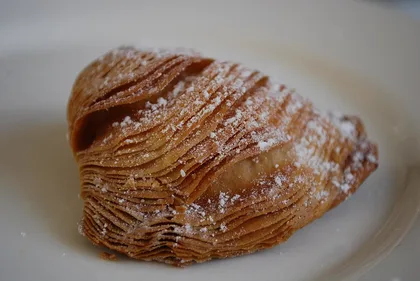 SweetsSfogliatellaThe sfogliatella is Naples' hardest pastry to make and its easiest to recognise: a shatteringly crisp fan of…
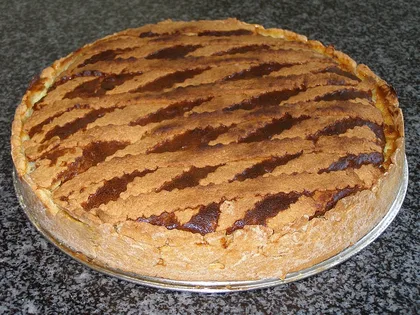 SweetsPastieraPastiera is the Easter tart of Naples: a shortcrust case filled with sheep's-milk ricotta, wheat berries…
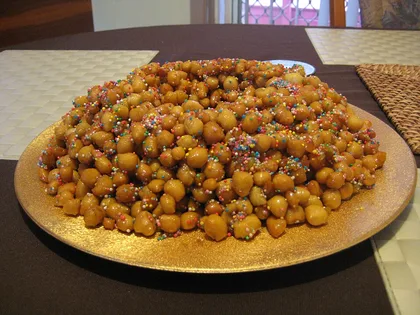 SweetsStruffoliStruffoli are tiny balls of fried dough tumbled in warm honey, heaped into a ring and scattered with candied…SweetsTorroneHoney and sugar go over a water bath and stay there for hours, sometimes twelve, while someone keeps stirring.
 SweetsBabàBabà is a yeasted, egg-and-butter-rich cake baked in a mushroom shape, dried out, then soaked in warm rum…SweetsMostaccioliDiamond-shaped spiced biscuits under a shell of dark chocolate, soft inside and heavy with cinnamon, cloves…
 Pasta and breadSpaghettiA solid round strand of durum semolina and water, 1.7 to 2.0mm across. It looks like the most neutral pasta…
 CheeseMozzarellaThe name is a verb before it is a cheese: mozzare means to lop off, which is what the cheesemaker does by…