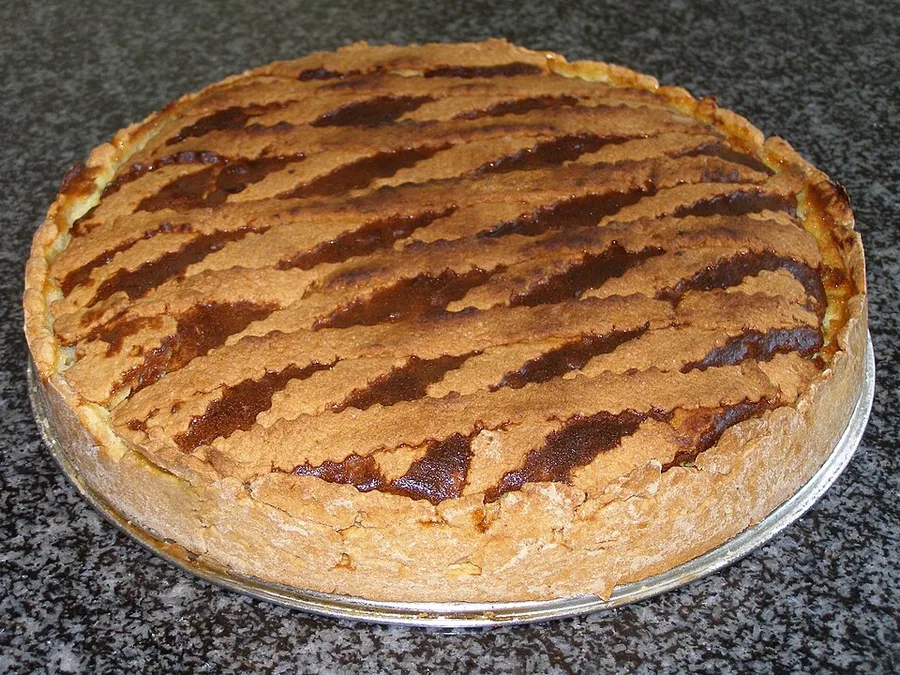
What is Pastiera?
Pastiera is a baked ricotta and wheat tart from Naples, eaten at Easter. The filling combines sieved sheep's-milk ricotta, whole wheat berries slow-cooked in milk with lemon zest, egg yolks, sugar, candied citron and orange, cinnamon and orange blossom water. It sits in a pastry case enriched with lard, and seven strips of pastry cross the top in a diamond lattice.
Everything about it is slow. The wheat takes forty minutes of low heat before it collapses into a cream. The bake runs an hour and a quarter at moderate heat. And then the tart must rest for at least two days before it is cut, so that the aromas distribute and the filling firms up. Neapolitans say the pastiera has to assettare, to settle itself.
It is baked and often sold in a ruoto, the low flared aluminium tin that gives it its shape, and the tart usually stays in it.
The wheat is not a garnish or a texture trick. Along with the eggs, it is the point: grain and eggs at the start of spring make a symbolic vocabulary of rebirth that long predates the Christian calendar the tart now belongs to.
What does it taste like?
Orange blossom arrives first: floral, slightly soapy if the baker was heavy-handed, beautifully perfumed if not. Then ricotta, which in the sheep's-milk version is faintly savoury and a little tangy rather than sweet. Cinnamon and candied citron come through in the background, and the wheat berries give small, soft, chewy interruptions in an otherwise dense filling.
The texture is what surprises people. It is not creamy like a cheesecake and not custardy like a flan: it is dense, grainy in a pleasant way, and slightly dry at the edges where the filling meets the pastry. The pastry itself is short and crumbly because of the lard, and it stays crisp under the wet filling for days.
It is markedly less sweet than an American ricotta pie and much less sweet than a New York cheesecake. Eaten with bitter espresso for breakfast (which is the correct way, whatever the pastry shop says), the balance makes complete sense.
How to use it
Bake it at least two days before you plan to eat it. This is not a suggestion to be worked around: on the day it comes out of the oven the orange blossom is dominant and the filling is wet, and by day two everything has come together.
Serve it at room temperature: never chilled, never warm. Cold sets the lard in the pastry and mutes the aromatics; warm makes the filling soggy.
Cut it in squares or wedges with a smooth-bladed knife, dipping the blade in hot water between cuts. If you use icing sugar, dust it at the moment of serving, because it dissolves on the damp surface within minutes.
Eat what is left for breakfast with a bitter espresso. This is what Neapolitans actually do with it, and it is better than eating it as a dessert.
Avoid whipped cream, ice cream and sauces. The structure of the filling is the entire attraction and anything poured over it hides the thing you made.
How long it keeps
A pastiera lives at room temperature, covered with a tea towel or left in its own paper, for four or five days. Keep it out of the fridge, where the cold sets the fats in the pastry hard and flattens the aromatics. It improves over the first two or three days: on baking day it is still unresolved, the orange flower water sitting on top of everything and the filling wet, and from the second day the parts come together. This is the reason Neapolitan households bake it on Maundy Thursday and cut it on Sunday.
Past the fifth day the pastry keeps drawing moisture out of the filling and loses its crispness, going soft under the fork; for anything beyond that, the date given by the bakery is the reference. It freezes well once baked, whole or in slices, wrapped first in cling film and then in foil, for about two months, and it thaws slowly at room temperature rather than in an oven or a microwave. If the surface has dried, two minutes at 150 °C brings it back, though it does nothing for pastry edges that have already gone damp.
Spot the real thing
The top of a good pastiera is dark amber, nearly scorched along the edges of the lattice strips, and flat rather than domed. A pale tart was baked too cool; one risen in the middle carried too much whipped egg white. Cut it open and the filling should be compact but moist, ivory coloured, dotted with candied peel and with whole wheat grains still visible as little islands. Smooth and uniform like a custard means the wheat was blended, a workshop shortcut. The pastry base should stay dry and lift cleanly from the tin; a wet one means the filling was too loose or the bake stopped early.
Orange flower water should arrive first without tipping into soap, and it is the ingredient most often overdone: a few millilitres too many change the whole tart. In Italian American bakeries it is sold as Easter grain pie, and it sits beside ricotta pie, which has no wheat berries, and pizza rustica, which is savoury. One sign of a serious bakery: the pastiera was made several days before it was sold, and anyone selling it warm that morning is not making it properly.
How to pronounce Pastiera
pah-STYEH-rah
Three syllables, stress on the second. 'Stie' is one sound, STYEH, not 'stee-air'. The final A is short and open. Full name pastiera napoletana, pah-STYEH-rah nah-poh-leh-TAH-nah. Common errors: 'pasty-era', 'pas-tee-AIR-a' and stressing the first syllable.
Pastiera compared
vsItalian-American ricotta pie
The pie that Neapolitan emigration turned into an Easter fixture in New York and New Jersey. It shares the ricotta base and the season but drops the two ingredients that define the original: the cooked wheat and the orange blossom water.
| This | Italian-American ricotta pie | |
|---|---|---|
| Grain in the filling | Cooked wheat berries, essential | None |
| Aromatics | Orange blossom water and cinnamon | Vanilla, sometimes lemon zest |
| Ricotta | Sheep's milk, drained and sieved | Cow's milk, often whipped smooth |
| Sweetness | Restrained | Higher |
| Top | Seven-strip lattice | Often open or fully covered |
| Resting | Two days before cutting | Served the day it is baked |
vsNew York cheesecake
Both are baked cheese tarts and there the resemblance ends. Cheesecake is built on cream cheese, sugar and a biscuit base and aims for smooth richness; pastiera is built on drained ricotta and whole grains and aims for a dense, perfumed, slightly grainy filling in a pastry shell.
| This | New York cheesecake | |
|---|---|---|
| Cheese | Sheep's-milk ricotta, drained | Cream cheese |
| Base | Lard shortcrust | Crushed biscuit and butter |
| Texture | Dense and grainy | Smooth and creamy |
| Perfume | Orange blossom, cinnamon, candied peel | Vanilla |
| Served | Room temperature, days after baking | Chilled |
| Sweetness | Moderate | High |
vsColomba pasquale
Italy's other Easter cake, and the northern counterpart. Colomba is a leavened, dove-shaped sweet bread with candied orange and an almond crust, industrially dominant and sold nationwide; pastiera is an unleavened tart made in a tin, and remains stubbornly Neapolitan.
| This | Colomba pasquale | |
|---|---|---|
| Type | Baked tart | Leavened sweet bread |
| Region | Campania | Lombardy in origin, now nationwide |
| Leavening | None | Natural yeast, long rise |
| Shelf life | Four or five days | Weeks, wrapped |
| Key flavour | Ricotta and orange blossom | Candied orange and almond |
| Best eaten | Two days after baking | As fresh as possible |
Pastiera substitutes
- Tinned cooked wheat (grano cotto)
Not a substitute so much as the standard shortcut, used in most Neapolitan households. Italian delis stock it from February. Drain it and still cook it in milk with lemon zest: that step is what turns berries into filling.
One 580 g tin per 1 kg tart - Pearl barley or spelt berries
The best swap where wheat berries are unavailable. Both hold their shape and soften into a similar creaminess. Cook them fully in water first, then finish in milk.
1:1 by cooked weight - Short-grain rice
Legitimate rather than improvised: pastiera di riso is a real variant made in some Neapolitan families. Cook the rice in milk until it collapses. The result is smoother and milder.
About 150 g dry rice per kilo of tart - Cow's-milk ricotta
Widely available where sheep's ricotta is not. It carries less fat and more water, so drain it a full twenty-four hours in a sieve and expect a gentler, less savoury filling.
1:1, drained longer - Orange blossom water, and what to do without it
There is no real substitute for the defining aroma. If you cannot find it, use finely grated orange zest plus a drop of neroli-free orange extract, and accept that the tart will read as citrus rather than floral. Do not increase vanilla to compensate.
Zest of 2 oranges per 15 ml of blossom water - Butter shortcrust instead of lard
For vegetarians and anyone without lard. Butter pastry is less crumbly and absorbs more moisture from the filling, so blind-bake the case for ten minutes before filling it.
1:1 by weight
Where to buy it
In Naples, every pasticceria and most bakeries make it from Holy Thursday onward, and many produce it year round. Expect 18 to 28 euros a kilo, with historic pastry shops above 30 for versions using sheep's ricotta and their own candied peel, and neighbourhood bakeries at 15 to 18. Order two or three days ahead in Easter week; the good ones sell out.
Abroad, Italian delicatessens in the US and the UK import packaged pastiere around Easter at roughly 30 to 45 dollars or pounds for a 900-gram tart, with variable quality: many use cow's ricotta and heavy vanilla.
The ingredients travel better than the tart. Tinned grano cotto, candied citron and orange, and orange blossom water are all stocked by Italian grocers and online specialists, and none of them is expensive. A homemade one and a half kilo tart costs about 12 to 15 euros in ingredients.
Buy sheep's-milk ricotta if you can find it. Greek and Middle Eastern shops often carry a sheep's-milk fresh cheese that works. Drain whatever ricotta you use overnight in a sieve, without exception.
Where to eat it in Italy
Naples between Holy Thursday and the week after Easter, when tins line up in every shop window in the city. The historic pasticcerie of the centro storico, the Vomero and Chiaia are the obvious choice, but the neighbourhood bakeries of the Sanità and the Quartieri Spagnoli often bake from a family recipe at half the price.
Via San Gregorio Armeno, the street of the nativity-figure workshops, holds the convent that tradition credits with perfecting the recipe. At Easter the quarter is the right place to see how deep the tart runs in the city's calendar.
On the Sorrento peninsula and the Amalfi coast, local versions use orange blossom water distilled on the spot from the area's own citrus groves, and the difference is audible. Vico Equense, Sorrento and Massa Lubrense all have pastry shops doing this.
Inland, in the wheat and sheep country of Caserta and Benevento provinces, village pastiere are more rustic: less sugar, more visible grain, a coarser filling.
You can buy one in Naples in October. It will be perfectly good and it will not be the same tart, because spring ricotta is not a marketing claim.
Frequently asked questions
What is pastiera made of?
Sheep's-milk ricotta, wheat berries cooked slowly in milk with lemon zest, egg yolks, sugar, candied citron and orange, cinnamon and orange blossom water, all baked in a lard shortcrust case with a seven-strip lattice on top.
Why does pastiera need to rest for two days?
Because the filling changes. Over forty-eight hours the orange blossom, cinnamon and candied peel distribute through the ricotta and the texture goes from wet to firm. This is why it is baked on Holy Thursday or Good Friday and eaten on Easter Sunday.
Can I use tinned cooked wheat?
Yes, and most Neapolitan home cooks do. Dried wheat berries need three days of soaking and ninety minutes of boiling. Either way, the crucial step is simmering the wheat in milk with lemon zest until it breaks down into a cream.
Does pastiera need to be refrigerated?
No. Keep it at room temperature under a cloth for four or five days. Refrigeration sets the lard in the pastry and mutes the orange blossom. It freezes well once baked, whole or in slices, for up to two months.
How do you pronounce pastiera?
pah-STYEH-rah, three syllables with the stress on the second, and the middle syllable spoken as one sound rather than 'tee-air'. The full name, pastiera napoletana, is pah-STYEH-rah nah-poh-leh-TAH-nah.
Related foods
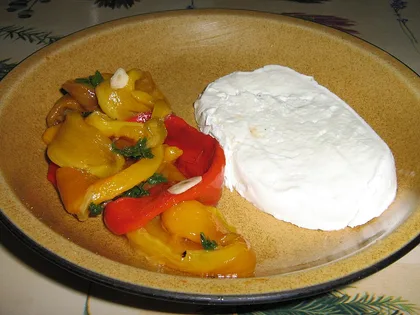 CheeseBuffalo MozzarellaMozzarella di Bufala Campana DOP is made from the whole raw milk of Italian Mediterranean water buffalo…Vegetables and fruitFriarielliAround Naples this turnip never reaches the root stage, because what matters grows above it.
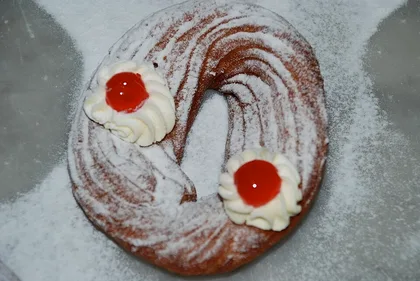 SweetsZeppoleZeppole are Naples' feast-day pastry for Saint Joseph on 19 March: a piped choux ring, fried or baked, filled…
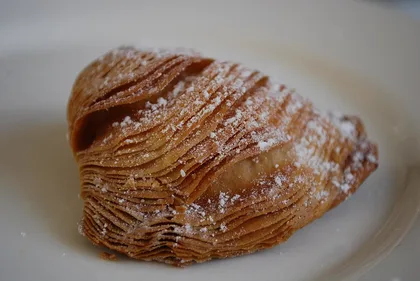 SweetsSfogliatellaThe sfogliatella is Naples' hardest pastry to make and its easiest to recognise: a shatteringly crisp fan of…SweetsTorroneHoney and sugar go over a water bath and stay there for hours, sometimes twelve, while someone keeps stirring.
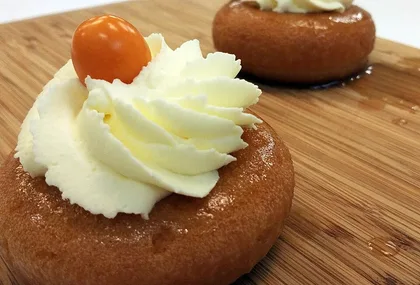 SweetsBabàBabà is a yeasted, egg-and-butter-rich cake baked in a mushroom shape, dried out, then soaked in warm rum…
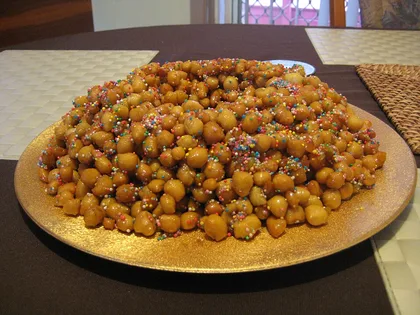 SweetsStruffoliStruffoli are tiny balls of fried dough tumbled in warm honey, heaped into a ring and scattered with candied…SweetsMostaccioliDiamond-shaped spiced biscuits under a shell of dark chocolate, soft inside and heavy with cinnamon, cloves…