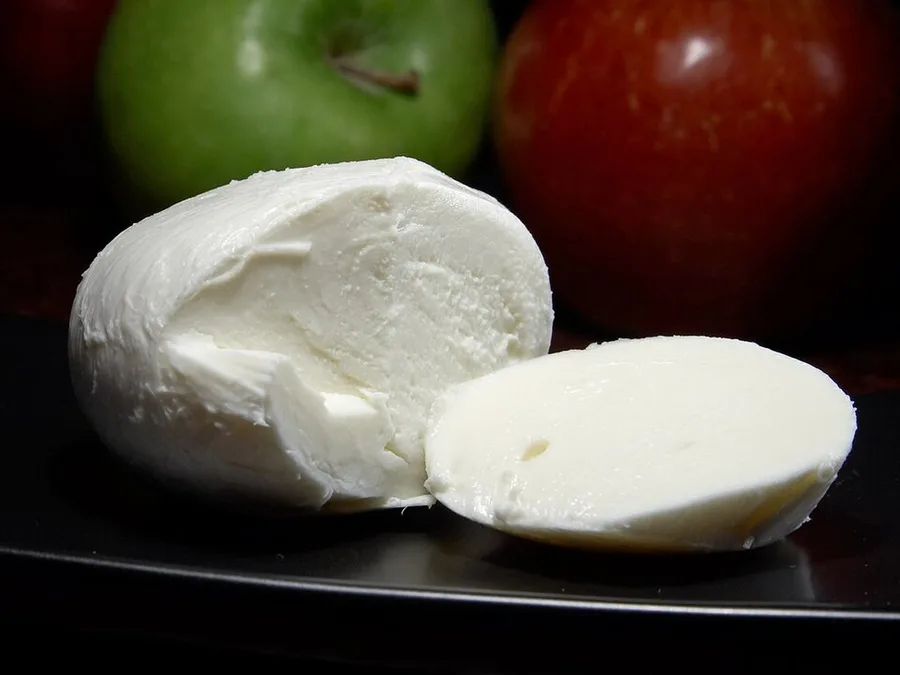
What is Mozzarella?
Mozzarella is made by ripening cow's or buffalo curd until it reaches a precise acidity, then plunging it into water at around 90C and working it until it turns glossy and stretches without tearing. Portions are pinched off by hand, a gesture called mozzatura, and it is where the name comes from. There is no ageing at any point.
Two Italian products share the name. Fiordilatte is cow's milk: sweeter, drier, cleaner. Mozzarella di Bufala Campana DOP is made from the milk of the Italian Mediterranean water buffalo, which carries roughly twice the fat and far more protein than cow's milk. It gives a whiter, wetter, tangier cheese with a faintly mineral edge.
The third product is the one most Americans mean by the word: low-moisture mozzarella, a briefly aged, saltier, firmer block engineered to melt and brown in an oven. It is a good cheese doing a different job. Sold shredded or in a plastic-wrapped brick, it is not what you put in a caprese, and fresh Italian mozzarella is not what you shred over a pepperoni pizza.
What does it taste like?
Fresh mozzarella tastes of warm milk with a light lactic tang, faintly salty, more sweet than savoury. The pleasure is as much textural as anything: a slight resistance, then a squeak, then the milky liquid that comes out when you bite.
Buffalo mozzarella pushes every dial further. It is tangier, richer, wetter, with a grassy, almost mineral finish and a mouth-coating creaminess that cow's milk cannot reach. Fiordilatte is rounder and gentler, and better when something else on the plate is meant to be the star.
Low-moisture mozzarella tastes mildly salty and slightly cooked, with almost no tang. Cold, it is bland and rubbery. Hot, it does the thing nothing else does as well: stretches, browns and stays put.
How to use it
Take it out of the fridge half an hour before serving, in its liquid. Cold mozzarella tastes of nothing. If you are in a hurry, sit the unopened tub in warm water for five minutes.
Raw, it needs very little: ripe tomato, basil, good olive oil, flaky salt. Anchovies, capers or a slice of prosciutto work because they bring salt and acid, not more fat.
For anything baked, the enemy is water. Tear or slice it, spread it on a rack or in a colander and let it drain for 30 to 60 minutes, longer for buffalo. On a Neapolitan pizza, that draining is the difference between a cheese that melts and a soup. On a New York-style pizza, use low-moisture instead and stop fighting the ingredient.
Day-old mozzarella has one perfect use: mozzarella in carrozza. Sandwich it between two slices of white bread, dip in milk, then flour, then beaten egg, and shallow fry until the outside is gold and the inside is molten.
How long it keeps
Fresh mozzarella is a short life product and the date on the tub is the only authority on it. Keep it refrigerated in its own liquid, sealed, and never pour that liquid away to save space: it is what stops the ball drying. Once open the clock speeds up, and Italian shops sell it to be eaten that day or the next. If it has left its brine, sitting it in lightly salted water or a little milk slows the surface drying, though flavour leaches into whatever it sits in.
What changes is measurable. The outer skin toughens and turns rubbery, the interior loses the wet layered structure and compacts, acidity climbs so the taste sharpens, and the liquid around it goes from clear whey to cloudy. Buffalo balls move through all this faster than cow milk. Freezing is possible but not free: ice crystals cut the fibrous curd, and it thaws grainy, releasing water, which rules out raw use and leaves it only for baking. Low moisture mozzarella in a block is the opposite case, keeping several weeks sealed and drying gradually at the cut face once opened.
Spot the real thing
In a non-Italian shop the word mozzarella covers two unrelated things. Fresh mozzarella sits in its own cloudy liquid, in a tub or sealed pouch, soft enough to tear. Low moisture mozzarella is the shrink wrapped block or the bag of shreds, drier and built for pizza. A good fresh ball is porcelain white with a thin, faintly glossy skin, yields under a finger and springs back, and tears into wet layers rather than crumbling. Cut it and a few drops of milky liquid run out.
The second confusion is buffalo against cow. Mozzarella di Bufala Campana DOP is 100 percent water buffalo milk, brilliant chalk white, softer and more lactic; the pack carries the consortium seal and that exact wording. Anything labelled simply fresh mozzarella, or fior di latte, is cow milk: ivory rather than white, firmer, milder. Both are legitimate, but only one carries the DOP price, roughly $12 to $20 for a 250 gram ball in the US against $5 to $8 for domestic cow milk. A ball priced like the cow version but sold as buffalo deserves a second look at the label.
How to pronounce Mozzarella
mohts-tsah-REL-lah
Four syllables, stress on the third. The double 'z' is a 'ts' sound, held slightly long, never a buzzing English 'z'. The final 'a' is a full open vowel, not a swallowed 'uh'. The commonest English error is 'mozza-RELL-uh'. The Italian-American 'mootza-RELL' is a different case: it comes from the Neapolitan muzzarella, which genuinely drops the final vowel, so it is a real dialect form rather than a mistake, just not standard Italian.
Mozzarella compared
vsMozzarella di bufala campana DOP
Same technique, different animal. Buffalo milk carries around 8 percent fat against cow's 3.5, and no beta-carotene at all, which is why buffalo mozzarella is porcelain white while fiordilatte leans cream. Buffalo is the more interesting cheese to eat on its own and the more troublesome one to cook with, because it holds far more water.
| This | Mozzarella di bufala campana DOP | |
|---|---|---|
| Milk | Cow (fiordilatte) | Italian Mediterranean water buffalo |
| Where | All over Italy; Agerola, Gioia del Colle | Caserta, Salerno, south Lazio, Foggia |
| Protection | DOP only for Gioia del Colle (2020) | DOP since 1996, consortium mark on pack |
| Colour | Faintly cream | Porcelain white, no carotene in the milk |
| Flavour | Sweet, clean, mild | Tangy, rich, grassy, mineral finish |
| Water content | High | Higher, drain longer before baking |
| Best for | Pizza, parmigiana, cooking | Eaten raw, at room temperature |
| Price (US) | $6-10 per lb | $9-16 per 8 oz imported |
vsLow-moisture mozzarella (American pizza mozzarella)
This is the big one, and it is not a quality argument: they are two different cheeses that share a name. Low-moisture mozzarella is cow's-milk pasta filata drained and aged briefly to around 45-52 percent moisture, salted harder, and sold in blocks or shreds. It melts evenly, browns, and holds for weeks. Fresh mozzarella is 55-60 percent water, unaged, and lasts days. Using fresh mozzarella on a New York-style pizza floods it; using low-moisture in a caprese makes a rubbery salad.
| This | Low-moisture mozzarella (American pizza mozzarella) | |
|---|---|---|
| Moisture | 55-60%, sold in liquid | 45-52%, sold dry in a block |
| Ageing | None; eaten within days | Days to weeks; keeps 3-4 weeks sealed |
| Salt | Light brine | Noticeably saltier |
| Melt | Softens, then weeps water | Melts evenly, stretches, browns |
| Eaten cold | Yes, the point of it | Not really; bland and rubbery |
| Form sold | Balls in whey, bocconcini, ciliegine | Brick, log, pre-shredded with starch |
| Price (US) | $6-12 per lb | $4-7 per lb |
| Best for | Caprese, pizza napoletana, raw plates | New York pizza, baked pasta, grilled cheese |
vsBurrata
Burrata is built out of mozzarella: a thin pouch of the same stretched curd, filled with stracciatella and cream. Roughly twice as rich, impossible to slice, and far more fragile. Mozzarella is the versatile one that also cooks; burrata is a centrepiece that never goes in the oven.
| This | Burrata | |
|---|---|---|
| Structure | Solid and uniform | Shell with a liquid cream centre |
| Region | Campania, Puglia and beyond | Andria, Puglia |
| Fat | 16-18% | 20-25% |
| Cooking | Melts well | Never, heat splits the filling |
| Shelf life | 3-5 days (fiordilatte) | 24-48 hours |
| Price (US) | $6-12 per lb | $8-14 per 8 oz ball |
Mozzarella substitutes
- Fiordilatte in place of buffalo mozzarella
The everyday swap in Italy itself. You lose the tang and the mineral edge, you gain a cheese that is easier to cook with because it holds less water. On a baked dish almost nobody will notice.
1:1 by weight - Whole-milk low-moisture mozzarella for baking
For anything that goes in an oven (baked ziti, lasagne, a home pizza that needs browning) this is not a compromise but the better tool. Buy the block and shred it yourself: bagged shreds are dusted with starch and melt greasier.
1:1, and cut any other liquid in the recipe slightly - Queso Oaxaca (quesillo)
Genuinely the closest thing outside Italy, because it is the same technique: Mexican cow's-milk pasta filata, stretched into a rope and wound into a ball. Milder and saltier than fiordilatte, excellent melted, decent raw. Widely available in the US and cheap.
1:1 - Scamorza bianca or young provola
Same family, a step drier and firmer because they have been hung to dry. Perfect where fresh mozzarella would waterlog the dish. Do not use the smoked versions unless you want the smoke to run the plate.
1:1 for cooking, use about 20% less by weight - Vegan mozzarella (cashew or coconut-and-starch)
Two families that behave differently. Cashew-based versions from Miyoko's and similar makers taste closer raw; coconut-oil-and-tapioca versions melt and stretch far better but taste of very little. For pizza, pick a melting one and add salt and a squeeze of lemon to fake the lactic tang.
1:1 - Vegetarian and halal note: check the rennet
The DOP rules for buffalo mozzarella specify natural calf rennet, so certified bufala is never vegetarian. Plenty of fiordilatte and almost all industrial low-moisture mozzarella in the US and UK are made with microbial rennet, so look for 'caglio microbico', 'vegetarian rennet' or a halal mark on the pack rather than assuming either way.
Where to buy it
In the US, DOP buffalo mozzarella is flown in weekly and sold by Eataly, Murray's Cheese, DiPalo's in New York and shippers such as Gustiamo: expect $9 to $16 for a 250g ball, and check for the consortium mark with the buffalo head and a lot number rather than the word 'buffalo' on a label. For fresh cow's-milk mozzarella, Lioni, Calabro, BelGioioso and Di Stefano are all reliable and sold nationally at $6 to $12 per pound. Low-moisture blocks run $4 to $7 per pound in any supermarket.
In the UK, Waitrose, Ocado, Sainsbury's and M&S all carry DOP bufala at roughly £2.50 to £4 for 125g, which works out to £20 to £30 per kilo; Natoora and Italian importers supply restaurant-grade product, and La Latteria in London makes fresh mozzarella in the city. Cow's-milk fresh mozzarella is around £12 to £18 per kilo.
Wherever you buy it, look at the production date rather than the expiry date, and reject anything sitting in cloudy, stringy liquid.
Where to eat it in Italy
The Sele plain south of Salerno (Battipaglia, Capaccio, Paestum) is the single best place on earth to eat buffalo mozzarella, because the dairies sell over the counter from six in the morning and many have the herd on site. A mozzarella two hours old is a different food from a refrigerated one, and it is worth building a morning around.
The other production heartland is the Volturno plain north of Naples, around Aversa and Mondragone. In Naples itself the good delis take delivery twice a day, and the classic pizzerias will tell you whether the pizza is made with fiordilatte or bufala.
For cow's-milk mozzarella, climb to Agerola in the Monti Lattari above the Amalfi Coast, or go to Gioia del Colle on the Murgia plateau in Puglia, which has its own DOP and almost no tourism.
Further reading
 ExplainerWhich Italian cheeses contain no lactoseItaly sets a legal threshold, and long-aged cheeses clear it on their own, with no treatment involved.
 GuideHow long food keeps once openedThe date on the label describes the sealed package. After that, four things govern everything: water, salt…
 InvestigationItalian sounding: what is it really worth?Sixty billion, then a hundred, then a hundred and twenty, then forty-two.
Frequently asked questions
What is the difference between buffalo mozzarella and regular mozzarella?
The milk. Buffalo mozzarella is made from Italian water buffalo milk, roughly twice the fat of cow's milk and no beta-carotene, which makes it whiter, wetter, tangier and more mineral. Fiordilatte, the cow's-milk version, is sweeter and milder. Buffalo is better eaten raw; cow's milk behaves better in the oven.
Why is American mozzarella so different from Italian mozzarella?
Because it is a different cheese with the same name. The standard American product is low-moisture mozzarella: drained to about 45-52 percent water, briefly aged, saltier, sold as a block or shreds and built to melt and brown. Italian fresh mozzarella is unaged, sits in liquid at 55-60 percent water and is meant to be eaten cold within days.
How do you pronounce mozzarella?
mohts-tsah-REL-lah, with the stress on the third syllable. The double z is a 'ts' sound, and the final a is fully pronounced. The Italian-American 'mootza-rell' comes from the Neapolitan dialect form, which really does drop the last vowel.
Can you freeze mozzarella?
Not the fresh kind: freezing wrecks the layered structure and it thaws spongy and weeping. Low-moisture mozzarella freezes perfectly well for two to three months, and cow's-milk fresh mozzarella destined for a baked dish is acceptable frozen in cubes.
Why does fresh mozzarella make my pizza watery?
Because it is well over half water. Tear or slice it, drain it in a colander for 30 to 60 minutes before it goes on the pizza, or add it partway through the bake. For high-hydration Neapolitan dough the draining is essential; for a New York-style pie, use low-moisture instead.
Related foods
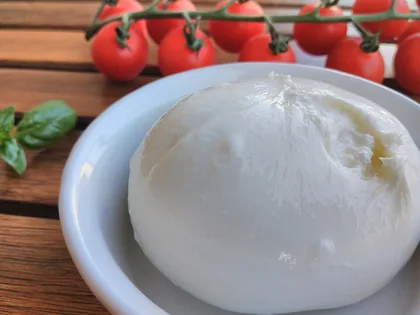 CheeseBurrataIt began as a way of using offcuts: leftover shreds of pasta filata, drowned in cream and sealed inside a…
 CheeseScamorzaScamorza is cow's-milk pasta filata that has been tied off into a pear shape and hung to dry for one to two…
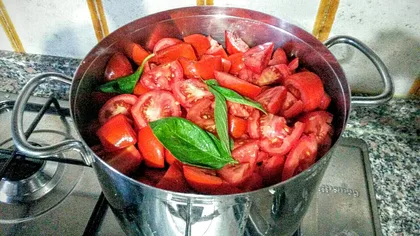 Vegetables and fruitSan Marzano TomatoesSan Marzano is a long, thin-skinned plum tomato grown in the volcanic plain between Naples and Salerno, and…
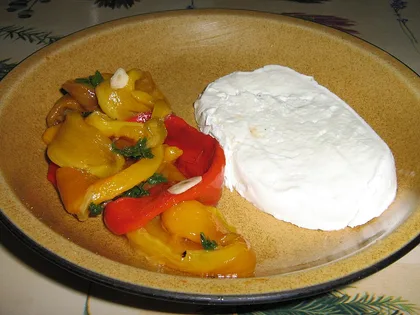 CheeseBuffalo MozzarellaMozzarella di Bufala Campana DOP is made from the whole raw milk of Italian Mediterranean water buffalo…CheeseCaciocavallo PodolicoCaciocavallo Podolico is made from the milk of semi-wild Podolica cattle, a rustic grey breed that yields…
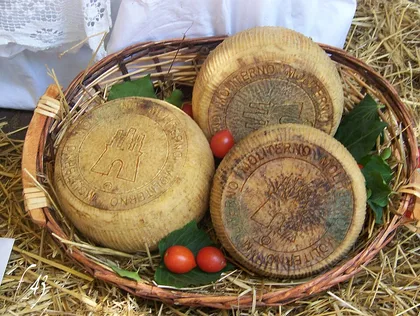 CheeseCanestrato PuglieseCanestrato Pugliese DOP is a hard sheep's milk cheese from the Tavoliere plain of northern Puglia, pressed…
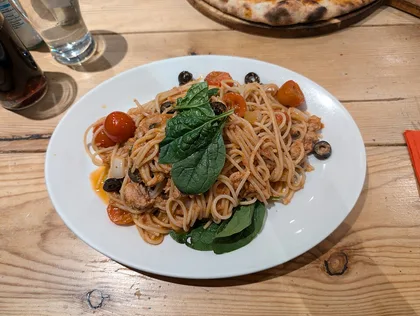 Pasta and breadSpaghettiA solid round strand of durum semolina and water, 1.7 to 2.0mm across. It looks like the most neutral pasta…
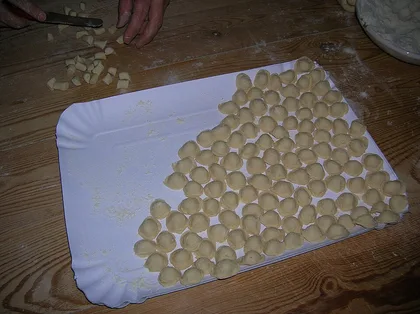 Pasta and breadOrecchietteOrecchiette are Puglia's handmade pasta: semolina and water, no egg, dragged with a knife and flipped over a…