What is Canestrato Pugliese?
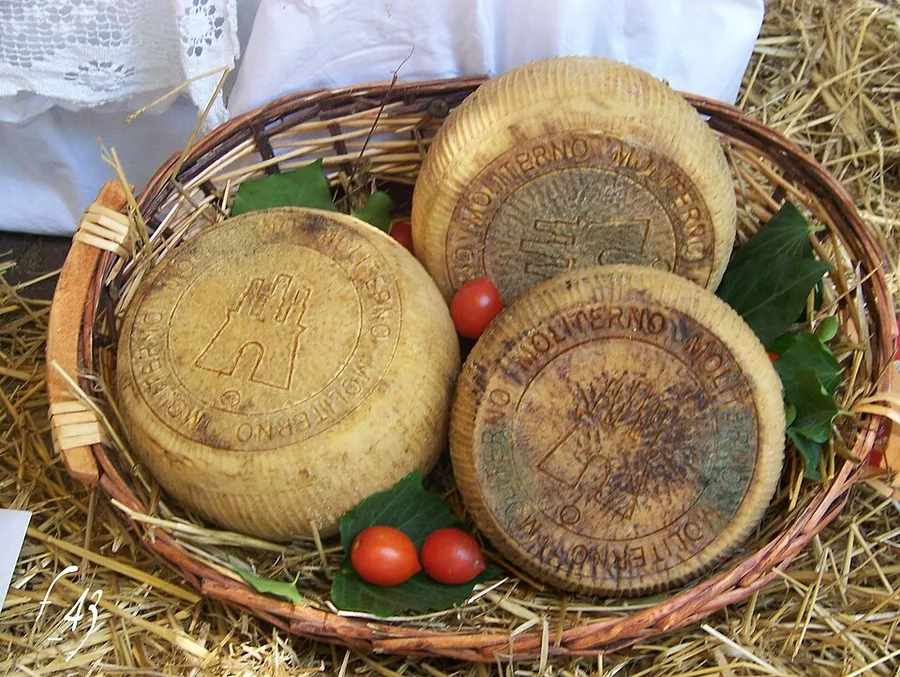
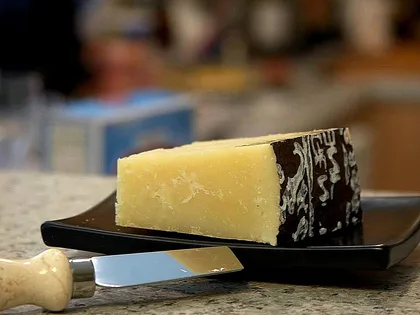
Canestrato Pugliese is a hard, cooked-curd cheese made from whole sheep's milk and coagulated with lamb rennet paste. The wheels are cylinders with flat faces, weighing between seven and fourteen kilos, and the rind, dark yellow to brown and usually rubbed with olive oil, carries the imprint of the basket it was pressed in: irregular lines that shift and cross, because every canestro is woven by hand.
DOP status came in 1996. The protected zone is the whole province of Foggia plus part of the province of Bari, and the rules restrict production to the months from December to May. That is not an arbitrary window: it is the transhumance calendar, written into European law.
Minimum ageing is two months, but the cheese peaks between six and ten. Past a year it turns hard and grainy and the lamb rennet dominates; those wheels are for grating. The milk comes mostly from Gentile di Puglia ewes, the local merino cross, along with Altamurana and Leccese sheep.
It is genuinely rare. The dairies making certified DOP wheels number under a dozen, and annual certified output is measured in tens of tonnes. Most cheese sold as 'canestrato' in Italian markets is generic pecorino pressed in a ridged plastic mould.
What does it taste like?
Clean sheep's milk, dry hay and warm wool, with a lanolin edge that is characteristic of merino-type flocks. The first impression is savoury rather than salty, which surprises anyone who arrives expecting Pecorino Romano: the salt is roughly half.
At four to six months the paste is firm and sliceable, tasting of butter, toasted nuts and dry grass, with a faint bitterness at the finish that comes from the oiled rind. By ten months it is drier and starts to flake, and the lamb rennet delivers a slow piquancy that builds over several seconds instead of hitting at once.
The most useful way to place it: it sits between a mature Pecorino Toscano and a Pecorino Romano, with the eating quality of the first and the ageing capacity of the second. Old wheels develop crunchy tyrosine crystals and a long, faintly peppery finish that lingers well after the cheese is gone.
How to use it
Young wheels, two to four months, belong on a board with Altamura bread, new olive oil and raw broad beans. This is also the cheese for 'ncapriata, the Pugliese purée of dried fava beans served with wild chicory, where a grating on top and a thread of oil finish the dish.
Aged, it grates with real character. On orecchiette with cime di rapa it does what generic pecorino does but with more depth and less salt. It works in baked pasta, in bread-and-cheese meatballs, and inside the filling of braciole simmered in tomato.
Shave it with a peeler over raw artichokes, fennel or spring broad beans. On chickpea, cicerchia and bean soups it holds its own against any Apennine pecorino.
Like all cooked-curd sheep cheeses it does not melt gracefully: it strings, then splits. Add it off the heat, or use it in the oven where it gratinates. When you substitute it into a recipe written for Pecorino Romano, remember to salt the dish: this cheese will not do it for you.
How long it keeps
A hard sheep cheese wants cold and a little air, which a fridge does not naturally provide. Wrap the wedge in waxed cheese paper or parchment, then sit it loosely in a box in the salad drawer, and let it breathe: cling film pressed against the paste traps moisture and makes the surface slick and damp within a day. A young wedge holds two to three weeks that way; an aged one, a month or more, because there is less water in it to move.
The cheese keeps ageing in your fridge, only unevenly. The cut face dries and hardens into a pale rim, the paste behind it firms and the flavour concentrates and sharpens, and white tyrosine crystals appear through an older wheel as proteins break down, which is a marker of age rather than a fault. Vacuum sealed wedges hold longer and carry a date; once the seal is broken the clock restarts. Grated cheese dries within days; freezing works only in that grated form. For a wedge whose history you do not know, the date and the shop that cut it are the reference.
Spot the real thing
The rind gives it away: the wheel is drained in a woven reed basket, and the basket leaves a deep, regular pattern of ridges and diamonds pressed into the surface. A smooth rind means it was not made this way. Colour goes from straw gold on a young wheel to dark tobacco brown on an aged one, sometimes rubbed with oil. Cut, the paste is compact and straw to amber, close textured with a few small eyes, slightly granular under the knife, and it smells of lanolin and hay rather than of salt.
Several cheeses share the word canestrato, so read the label for Canestrato Pugliese DOP. Canestrato di Moliterno IGP is Basilicata, Canestrato Siciliano is often studded with black peppercorns, and basket cheese in an American Italian shop is usually a fresh, soft Easter cheese with nothing in common. The real comparison customers make is Pecorino Romano, which is bone white, far saltier and made for grating; the Pugliese is sweeter, nuttier and works on a board. Expect $22 to $34 a pound at a US counter, sold as a wedge from a large wheel.
How to pronounce Canestrato Pugliese
kah-neh-STRAH-toh poo-LYEH-zeh
Four syllables in the first word, stress on the third: kah-neh-STRAH-toh. In 'Pugliese' the 'gli' is a single liquid sound made with the tongue against the palate, close to the 'lli' in 'million': poo-LYEH-zeh, never 'pug-lee-ese'. The final 'e' is always pronounced. The name means 'basketed', from canestro, a rush basket.
Canestrato Pugliese compared
vsPecorino Romano
Both are hard sheep's milk cheeses made with lamb rennet, and abroad the second is the one people know. The gap is salt and purpose. Pecorino Romano is dry-salted by hand for eighty to a hundred days and lands near 5% salt: it was engineered as a seasoning that survives shipping. Canestrato Pugliese is brined or dry-salted for days, not months, and was made to be eaten in slices. Swap one for the other and you must adjust the salt in the whole dish.
| This | Pecorino Romano | |
|---|---|---|
| Zone | Province of Foggia, part of Bari | Lazio, Sardinia, province of Grosseto |
| Wheel | 7-14 kg | 20-35 kg |
| Salting | Days, dry salt or brine | 80-100 days of hand-applied dry salt |
| Salt content | Roughly 2.5-3% | Roughly 5% |
| Rind | Basket-woven imprint, oiled | Smooth, often black-coated |
| Ageing | 2 months minimum, best at 6-10 | 5 months minimum, often 8-12 |
| Role | Table cheese that also grates | Grating cheese and seasoning |
| Annual output | Tens of tonnes | Around 300,000 wheels |
vsCanestrato Siciliano (Pecorino Siciliano DOP)
Same basket, different island and different cheese. Sicilian canestrato, the local name for Pecorino Siciliano DOP, is made year-round from raw milk, pressed in rush baskets, and frequently studded with whole black peppercorns, in which case it is called pepato. It runs riper, saltier and more pungent. The Pugliese version has no pepper, a shorter production season and a milder, hay-driven profile.
| This | Canestrato Siciliano (Pecorino Siciliano DOP) | |
|---|---|---|
| Region | Puglia: Tavoliere and Alta Murgia | Sicily, island-wide |
| Season | December to May only | October to June, broadly |
| Peppercorns | Never | Common (pepato) |
| Milk | Whole sheep's milk, Gentile di Puglia | Whole raw sheep's milk, Valle del Belice |
| Curd | Cooked with hot whey to about 45C | Cooked with hot whey to about 45C |
| Flavour | Hay, wool, slow piquancy | Sharper, riper, often peppery |
vsCanestrato di Moliterno IGP
The third famous canestrato, from Basilicata, and the one most likely to be confused with the Pugliese in a shop. Moliterno is a blend of sheep's and goat's milk, and it is defined by its ageing: wheels finish in the fondaci, the ventilated stone cellars of the town of Moliterno, for at least sixty days. Canestrato Pugliese is pure sheep and ages in the dairy.
| This | Canestrato di Moliterno IGP | |
|---|---|---|
| Milk | 100% sheep | 70-90% sheep, 10-30% goat |
| Protection | DOP since 1996 | IGP since 2010 |
| Ageing place | The producing dairy | The fondaci of Moliterno, by rule |
| Rind treatment | Olive oil | Olive oil, sometimes with vinegar |
| Flavour | Sheep-forward, hay, mellow | Sharper and more angular from the goat |
Canestrato Pugliese substitutes
- Pecorino Toscano DOP stagionato
The closest widely available match in eating quality: same species, similar salt level, similar firm sliceable paste. It is a little sweeter and less piquant because it is usually made with calf rennet rather than lamb paste.
1:1 - Pecorino Siciliano or Sicilian canestrato
Structurally almost identical and often easier to find abroad. Buy the version without peppercorns. Expect a riper, sharper cheese and check the salt before seasoning the dish.
1:1 - Pecorino Romano, with adjustment
Available everywhere and roughly twice as salty, so it cannot go in one for one. Cut the quantity, then salt the dish separately. It also lacks the hay-and-wool sweetness that makes the Pugliese worth eating on its own.
0.6:1, and re-salt the recipe - Manchego curado
Spanish sheep's milk, firm paste, comparable salt. The flavour runs nuttier and less barnyard, and the texture is denser. Good for shaving over raw vegetables, less convincing grated into a hot dish.
1:1 - Pecorino Sardo Maturo
A mild, sliceable sheep's cheese that fills the same slot on a board. It is made with calf rennet, so it will never build the late piquancy of a ten-month canestrato.
1:1 - Vegetarian: Berkswell or Spenwood
Canestrato Pugliese cannot be vegetarian: the DOP requires lamb rennet, and those enzymes are the source of its character. These two English sheep's milk cheeses use microbial rennet, age hard, grate cleanly and are the honest substitute rather than a compromise.
1:1
Where to buy it
Outside Puglia this is a specialist purchase, and the word 'canestrato' on its own is not a guarantee: it names a technique used from Sicily to Sardinia. Look for the full wording, Canestrato Pugliese DOP, plus the consortium mark.
In Italy, buy from cheese counters in Foggia, Bari and the Alta Murgia towns, or directly from the small dairies of the Subappennino Dauno. Expect EUR 14 to 22 per kilo at four to eight months, EUR 24 to 30 for wheels held to ten or twelve.
In the US, importers of southern Italian cheese carry it intermittently; ask at Italian specialists rather than expecting to find it in a supermarket, at roughly USD 16 to 26 per pound. Several cheeses labelled canestrato on American shelves are Sicilian or domestically made, so read the origin and not the name.
In the UK, Italian delicatessens and online importers list it at GBP 22 to 34 per kilo. Buy a piece cut from the wheel rather than a pre-packed vacuum wedge: the paste dries out and turns waxy under plastic.
At the counter, check the rind. Hand-woven rush leaves an uneven, shifting pattern; a plastic mould leaves a perfect grid.
Where to eat it in Italy
Foggia is the historical centre, the city of the Dogana delle Pecore, the sheep customs office founded in 1447, which taxed every animal that came down the tratturo. Around it, the Subappennino Dauno towns of Lucera, Troia, Bovino and Sant'Agata di Puglia are where the small dairies and the farm shops are.
On the Gargano peninsula, between Monte Sant'Angelo, Vico del Gargano and the Foresta Umbra, sheep farming is still alive and cheese is sold at the farm.
Further south, the Alta Murgia between Altamura, Gravina in Puglia, Minervino Murge, Spinazzola and Poggiorsini is the landscape that explains this cheese best: stone steppe, dry-stone jazzi where the flocks were penned overnight, and Castel del Monte on the horizon. Altamura bread and canestrato come from the same ground and belong on the same table.
Go in spring. Wheels made in December and January hit four to six months around Easter, and the dairies still have a choice of ages to sell.
Further reading
 GuideCan you eat cheese rind?On some wheels the rind is the same paste, dried out. On others it is paraffin.
 ExplainerWhich Italian cheeses contain no lactoseItaly sets a legal threshold, and long-aged cheeses clear it on their own, with no treatment involved.
 InvestigationItalian raw milk cheeses: the full listWe counted: 19 of 43 declare raw milk, and 16 of those 19 carry a protected designation.
Frequently asked questions
Why is it called canestrato?
Because the curd is drained and pressed inside canestri, hand-woven rush baskets, which stamp their weave onto the rind. The name describes a method rather than a place, which is why Sicily, Basilicata and Sardinia all have canestrati of their own, and why the word alone guarantees nothing.
How is it different from Pecorino Romano?
Mainly salt and scale. Pecorino Romano is dry-salted for eighty to a hundred days and reaches about 5% salt; it was designed as a seasoning. Canestrato Pugliese is salted for days, comes in smaller wheels and is meant to be eaten in slices. If you swap it into a Roman recipe, salt the dish separately.
Is it vegetarian?
No. The DOP requires lamb rennet paste, an animal product whose enzymes create the aged cheese's piquancy. Berkswell and Spenwood, both English microbial-rennet sheep's milk cheeses, are the practical alternatives.
Why is it only made from December to May?
Because that was the window in which transhumant flocks wintered on the Tavoliere and gave milk. The DOP rules preserved a calendar that geography imposed: lambing and lactation, winter grazing on the plain, and the walk back to Abruzzo in late spring.
How do you pronounce Canestrato Pugliese?
kah-neh-STRAH-toh poo-LYEH-zeh. Stress the third syllable of the first word, and treat 'gli' as one liquid sound, like the 'lli' in 'million'.
Sources
Where to check what you just read.
- 1
Il regolamento del 12 giugno 1996 che iscrive Canestrato Pugliese fra le DOP casearie europee.
- 2
Il riconoscimento nazionale che precede la DOP: pasta dura non cotta di solo latte di pecora intero, di una o due mungiture, con l'obbligo del pascolo naturale nell'alimentazione delle greggi.
Related foods
 CheesePecorino RomanoPecorino Romano DOP is a hard, dry-salted sheep's milk cheese aged at least five months, made in Sardinia…
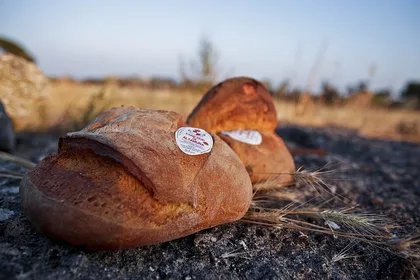 Pasta and breadPane di AltamuraPane di Altamura is a durum-wheat sourdough from the Murgia plateau in Puglia, and in 2003 it became the…
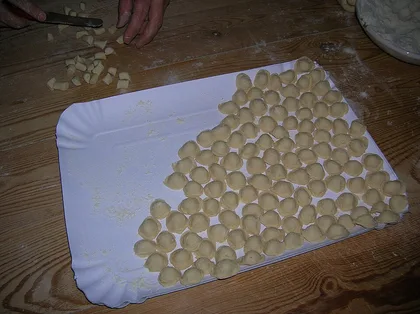 Pasta and breadOrecchietteOrecchiette are Puglia's handmade pasta: semolina and water, no egg, dragged with a knife and flipped over a…
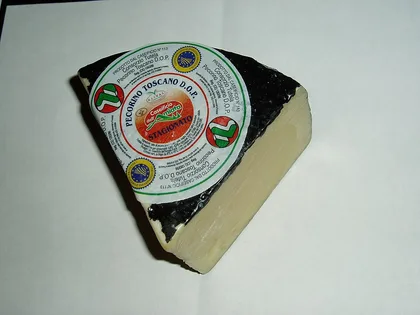 CheesePecorino ToscanoPecorino Toscano DOP is the mild one. Whole sheep's milk, calf rennet, a brief salting: soft-paste wheels…
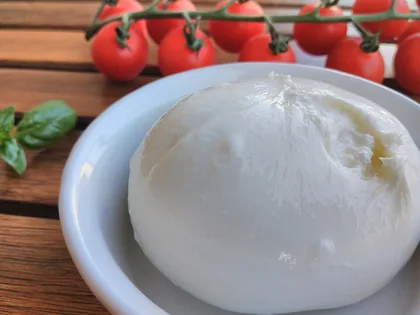 CheeseBurrataIt began as a way of using offcuts: leftover shreds of pasta filata, drowned in cream and sealed inside a…
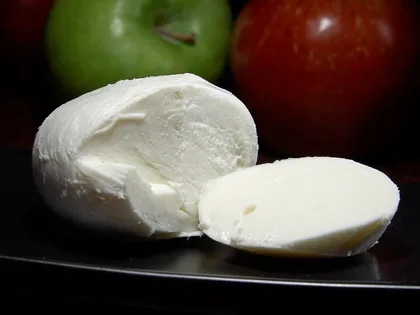 CheeseMozzarellaThe name is a verb before it is a cheese: mozzare means to lop off, which is what the cheesemaker does by…
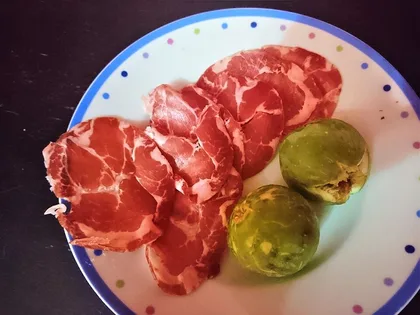 Cured meatsCapocolloCapocollo is the pork neck muscle, salted whole and aged in casing.
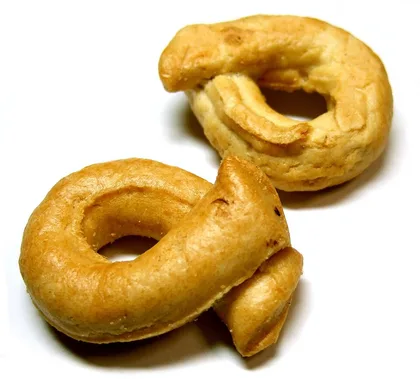 Pasta and breadTaralliTaralli are small, crunchy savoury rings from Puglia in southern Italy, made from just flour, dry white wine…