What is Cicerchia (Grass Pea)?
Cicerchia is the seed of Lathyrus sativus, called grass pea or chickling vetch in English, khesari in India, almorta in Spain, guaya in Ethiopia. It was domesticated in the Near East and the Balkans around 8000 BC, which makes it older than the chickpea and one of the first plants humans farmed at all. In central Italy it was eaten continuously from the Neolithic until the 1960s.
The seed looks like nothing else in the legume aisle: angular, flattened, wedge-shaped or almost cubic, eight to fifteen millimetres across, ivory to hazel to grey, often marbled brown. It resembles a small stone, and across central Italy the people who cleaned it by hand called it exactly that.
What makes it remarkable agronomically is toughness. It grows on stony, poor, heavy clay soil, through severe drought and through flooding, needs no irrigation and no fertiliser, and produces a crop when everything else has failed.
That same quality is the source of its problem. The seed contains ODAP, a non-protein neurotoxic amino acid, and the plant makes more of it under drought stress: precisely in the famine years when it becomes the only food available. Populations who lived almost exclusively on it for months developed neurolathyrism, an irreversible spastic paralysis of the legs. This is why the crop was abandoned across Europe in the twentieth century and why Spain banned almorta flour for human consumption after post-war cases.
The modern picture is different, and worth stating precisely. The Italian ecotypes are low in ODAP, the compound is water-soluble and a long soak with changed water removes most of it, and no case of lathyrism has ever been linked to modern Italian consumption. The how-to-use section below sets out the method.
What does it taste like?
Between a chickpea and a broad bean, with a clean earthiness and a faint bitter edge that neither of them has. It is more savoury than a lentil and less sweet than a pea, and it holds up to garlic, rosemary and salt cod without disappearing.
Texture is where it separates itself. The cooked seed is floury and dense rather than creamy, and it breaks down into a thick purée that needs no potato or bread for body. Whole in a soup it stays intact and slightly chalky in a way that is pleasant, closer to a big broad bean than to anything in the lentil family.
The skin, left on, is noticeably tougher than any other Italian legume. Long soaking softens it; rubbing the soaked seeds between your palms removes it if you want a silkier purée.
How to use it
Soaking is not optional, and it is what makes grass pea safe as well as edible. ODAP is water-soluble: it leaves the seed into the water, and the water is thrown away.
Cover the seeds with at least three times their volume of cold water and leave them 12 to 24 hours: the full 24 if the crop is more than a year old. Change the water two or three times during that period and discard it every time. A pinch of bicarbonate of soda in the first soak softens the skin and speeds everything up.
Rinse the soaked seeds under running water and cook them in fresh water, never in the soaking liquid. Cooks in Umbria and the Marche often go one step further: bring to the boil for five minutes, throw that first water away too, and start again in clean water. It costs nothing and reduces residual ODAP further.
Cooking is long: 90 minutes to two hours at a gentle simmer, well beyond lentils or chickpeas. Salt goes in at the end, and so do tomato and anything acidic, which will otherwise toughen the skins.
The classic dish is soup: grass peas, garlic, rosemary, a tomato, raw olive oil poured over at the table, ladled onto toasted stale bread. Through a food mill it becomes a thick purée that carries salt cod, bitter greens or a poached egg. Two rules to keep: never eat it raw in any form, and do not make it a near-exclusive staple for weeks. In a varied diet, a plate now and then, there is no documented risk.
How long it keeps
In a closed glass jar, dark and dry, dried cicerchia holds about two years. The harvest year matters far more than the date: as the seed loses water the skin toughens and the cooking time stretches out of all proportion. From the latest crop it is ready in about an hour and a half, while the same pulse three years on may never soften at all. Keep the jar out of the fridge, since damp is what starts mould in dried pulses. In a very hot summer, two days in the freezer at minus eighteen is the standard way to deal with weevil eggs before the jar goes back, completely dry.
Once soaked, cook within about twenty four hours, and if you must delay, keep the bowl in the fridge in clean water, because soaking pushed further starts fermenting and the water turns cloudy and sour. Traditional practice is to throw the soaking water away and start again. Cooked, it keeps three or four days in the fridge under its own liquid and freezes in portions for three months, and like every pulse soup it is better on the second day.
Spot the real thing
Shape settles it before anything else. A cicerchia is irregular and angular, flattened on two faces, wedge shaped in profile, and never round: a smooth round pulse sold under the name is a chickpea or a vetch. The colour runs ivory to grey and is never uniform, so pale and marbled seeds in the same handful are normal. Tip a handful onto a white plate to judge the sorting: grit, pod fragments and pierced seeds mean rushed cleaning, and a round millimetre hole is the mark of the weevil.
In English the same pulse is sold as grass pea, chickling vetch, khesari dal in South Asian shops and guaya in Ethiopian ones, at a fraction of the price. What separates the Italian bags is the ecotype: labels naming Colfiorito, Serra de' Conti or Campodimele along with the farm come from populations selected over generations for low ODAP, and producers say so on the pack. A generic EU or non EU origin line almost always means an imported crop from unselected ecotypes. Where a harvest year is printed, read it: it says more about how the pulse will behave than the date does.
How to pronounce Cicerchia (Grass Pea)
chee-CHER-kyah
Three syllables, stress on the second. Both 'c' letters before an 'i' or 'e' are soft, like the 'ch' in 'church': chee-CHER. The 'chi' at the end is the opposite: a hard 'k' plus a 'ya' glide, so 'kyah', never 'chee-CHER-chee-ah'. The plural cicerchie ends chee-CHER-kyeh.
Cicerchia (Grass Pea) compared
vsChickpea
The closest relative in the kitchen and the substitute most people reach for. Both are floury, both take a long soak, both end up in soup with rosemary. The chickpea is round, sweeter and a fifth of the price; the grass pea is angular, more savoury, faintly bitter, and requires the soaking water to be discarded rather than merely drained.
| This | Chickpea | |
|---|---|---|
| Species | Lathyrus sativus | Cicer arietinum |
| Shape | Angular, flattened, wedge-like | Round with a beak |
| Soak | 12-24 h, water changed and discarded | 8-12 h, one change |
| Cooking time | 90-120 minutes | 60-90 minutes |
| Flavour | Earthy, savoury, faintly bitter | Nutty, sweeter, rounder |
| ODAP | Present, removed by soaking | None |
| Price | 8-20 euro per kilo | 3-6 euro per kilo |
vsBroad bean (fava)
The closer match on flavour. Dried favas and grass peas both cook down to a dense purée, and in Puglia and Umbria the two dishes are near-identical. The fava is much larger and needs peeling; the grass pea keeps its shape better. One serious note: dried favas are dangerous for people with G6PD deficiency, grass pea is not.
| This | Broad bean (fava) | |
|---|---|---|
| Seed size | 8-15 mm | 15-25 mm |
| Purée | Dense, holds together | Softer, looser |
| Risk group | None at normal intake | Favism (G6PD deficiency) |
| Cooking time | 90-120 minutes | 60-90 minutes, peeled |
vsKhesari dal (Indian grass pea)
The identical species, sold cheaply in South Asian groceries, and the reason the plant has a reputation at all, since every documented lathyrism outbreak happened in India, Bangladesh and Ethiopia during famines. Indian landraces have not been selected for low ODAP and are usually sold split and hulled.
| This | Khesari dal (Indian grass pea) | |
|---|---|---|
| Selection | Italian ecotypes, low ODAP | Local landraces, variable |
| Form sold | Whole seed | Often split and hulled |
| Soak | 12-24 h, discard water | Same, and do not skip it |
| Price | 8-20 euro per kilo | 2-4 euro per kilo |
Cicerchia (Grass Pea) substitutes
- Chickpeas
The default stand-in for any grass pea soup or purée. Sweeter and creamier, so add a strip of lemon peel to push it back towards savoury, and take twenty minutes off the cooking time.
1:1 dried weight, cook 60-90 minutes - Khesari dal from an Indian grocer
The same species at a fifth of the price, usually split and hulled, so it cooks faster and gives a looser purée. Soak it exactly as you would the Italian seed and throw the water away.
1:1, cook 40-50 minutes if split - Dried broad beans, peeled
The closest on flavour and the traditional alternative in the same regions. Larger and softer, so you get a purée rather than a soup with whole seeds. Not for anyone with G6PD deficiency.
1:1, cook 60-90 minutes - Whole brown lentils
The swap when you need dinner tonight rather than tomorrow: no soaking, half an hour. The texture is completely different, so use it for soup, never for purée.
1:1, cook 30-40 minutes, no soak
Where to buy it
In the US and the UK, Italian specialist importers and online grocers carry Umbrian and Marche grass peas in 400 or 500 gram packs: expect 10 to 18 dollars per pound in the US and 15 to 28 pounds per kilo in the UK. In Italy it runs 8 to 14 euro per kilo from the grower.
The cheaper route is an Indian, Bangladeshi or Ethiopian grocer, where the same species is sold as khesari dal or guaya for two to four euro a kilo. South Asian landraces have not been bred for low ODAP and the seed is usually split and hulled, so it cooks faster and gives a looser purée. The soaking procedure is identical and matters more, not less.
On an Italian pack, look for a named origin (Colfiorito, Serra de' Conti, Campodimele) and a harvest year if given: it tells you more than the best-before date, because seed older than two years may never soften. Pour a handful onto a white plate first: pinholes are weevil damage, and stones are the same colour and shape as the seed.
Where to eat it in Italy
Serra de' Conti, a walled hill town in the province of Ancona, holds its grass pea festival at the end of November and serves the legume in soup, as a purée, with hand-cut pasta and alongside salt cod. It is the single best place to understand what the crop can do.
In Umbria, the Colfiorito plateau between Foligno and the Valnerina is the growing heartland: 900 metres of karst upland where grass peas share the fields with Castelluccio lentils and red potatoes, and where trattorie serve the soup all winter. Gubbio, Trevi and Spoleto are the other stops.
Campodimele, on the Aurunci mountains south of Rome, grows its own ecotype and holds a summer festival. Winter is the season everywhere, November to February: the July harvest has been cleaned and packed by then, and soup is what the region is cooking anyway.
Frequently asked questions
Is grass pea toxic?
The seed contains ODAP, a neurotoxic amino acid that can cause neurolathyrism (an irreversible spastic paralysis of the legs) when eaten in quantity as an almost exclusive food over months. Every documented outbreak occurred during famine in India, Bangladesh or Ethiopia among already malnourished people. Italian ecotypes are low in ODAP, the compound is water-soluble, and a long soak with changed water removes most of it. At normal culinary intake there is no documented risk.
How long do I soak it, and does the water matter?
Twelve to twenty-four hours in plenty of cold water, changing it two or three times and discarding it every time. Then cook in fresh water, never in the soaking liquid. Throwing that water away is the whole point: it is where the ODAP goes.
Why does it take so long to cook?
The skin is far tougher than a chickpea's: expect 90 minutes to two hours of gentle simmering after soaking. If it is still hard after two hours, the seed is old: grass peas more than two or three harvests old may never soften. Keep salt, tomato and vinegar for the final minutes.
Is khesari dal the same thing?
Yes, the same species. Khesari is usually split and hulled and has not been selected for low ODAP, so it cooks faster and the soaking discipline matters more. It costs a fraction of the Italian product and works in the same dishes.
How much do I need per person?
Eighty grams dry, about three ounces, makes a generous bowl of soup: the seeds nearly triple in weight once soaked and cooked.
Related foods
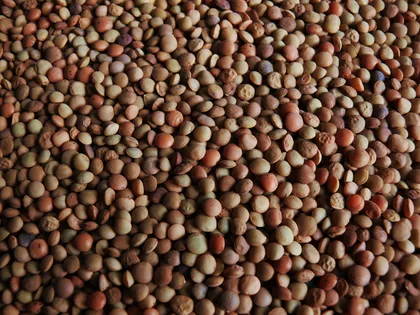 Vegetables and fruitCastelluccio LentilsCastelluccio lentils grow at 1,400 metres on the Pian Grande, a treeless karst plateau inside the Sibillini…
 Vegetables and fruitGarfagnana FarroFarro della Garfagnana IGP is emmer wheat, Triticum dicoccum: the grain the Romans called far, still sown in…
 Vegetables and fruitWhite truffleThe Italian white truffle, Tuber magnatum Pico, is the most expensive of Italy's truffles: in 2025 the Alba…Vegetables and fruitTrevi Black CeleryTrevi black celery is not black: it is a dark, almost blue-green.
 Cured meatsGuancialeGuanciale is cured pork jowl: unsmoked, rubbed with salt and pepper, aged for one to three months.
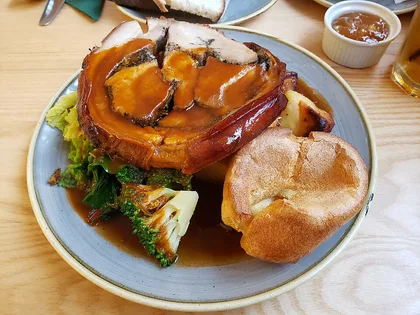 Cured meatsPorchettaSix to eight hours in a wood oven to reach two opposite textures in one piece of meat: skin that shatters…
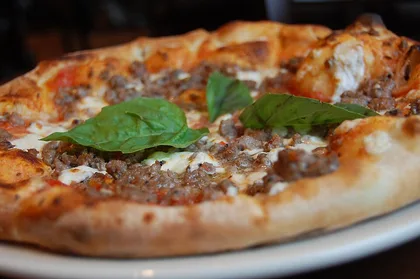 Cured meatsSalsicciaCoarsely ground pork, salt, pepper, wine and usually garlic, packed into natural hog casing and sold raw.
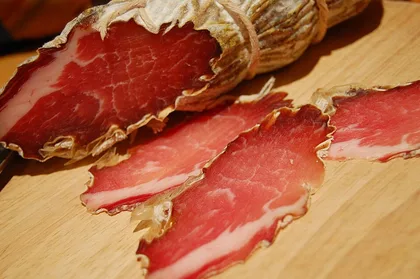 Cured meatsLonzinoLonzino is whole pork loin, dry-salted and air-cured for two to four months: the leanest cut on the animal…