What is Garfagnana Farro?
Farro della Garfagnana is a protected geographical indication, registered in 1996 (the first ever granted to a farro) covering emmer grown in the upper valley of the river Serchio, in the province of Lucca in northern Tuscany.
Start with the word, because it causes more confusion than anything else on the shelf. In Italy farro covers three distinct botanical species. Farro piccolo, or monococco, is Triticum monococcum, known in English as einkorn. Farro medio, or dicocco, is Triticum dicoccum, which English calls emmer: this is the Garfagnana grain. Farro grande, or spelta, is Triticum spelta, sold across northern Europe as spelt or Dinkel, and very often sold in Italian supermarkets simply as farro.
They are three different grains in flavour, in the size and shape of the kernel, in how they behave in a pot and in what they cost. Emmer has a long amber kernel with a deep crease; it cooks up separate and chewy without breaking down, which is exactly why it survives in soups and salads.
Farro is a hulled cereal: the glumes stay welded to the grain after threshing and must be removed in a separate step. The Garfagnana rules require the grain to be sold hulled but whole, with bran and germ intact, and expressly not pearled.
What does it taste like?
Nutty, faintly sweet and distinctly wheaty, with a mineral edge that modern wheat has lost. Close to a wheat berry but softer in flavour, and much less bland than pearled spelt.
The texture is the reason cooks buy it. Whole emmer cooks to a firm, separate, slightly springy grain that keeps its shape in a broth for hours and never turns to porridge. It releases little starch, so a soup thickened with farro thickens from the beans and vegetables, not from the grain.
The flour is darker and more aromatic than wheat flour, with a gluten that is present but weak. Bread made with it is denser, sweeter and better the second day.
How to use it
Soak whole hulled farro for eight to twelve hours in cold water, then cook it in plenty of unsalted water for forty to sixty minutes. Salt at the end. Pearled farro skips the soak and takes twenty-five minutes, but you can taste what is missing.
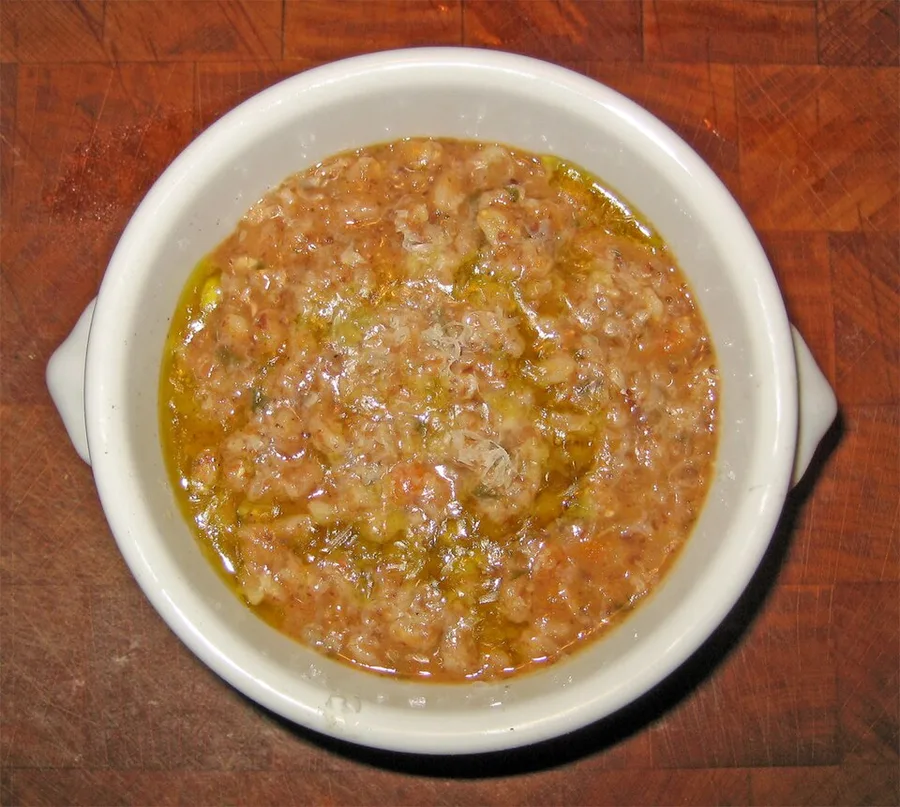
Zuppa di farro alla garfagnina is the valley's dish: borlotti beans, a base of onion, carrot, celery, garlic and rosemary, tomato, a piece of pork rind or a ham bone, and long slow cooking. Half the beans are puréed, and the farro goes in for the final forty minutes to absorb everything.
Cold, it makes the best of all grain salads, because emmer stays separate: cooked kernels with tomatoes, olives, capers, basil and mozzarella or tuna.
Farrotto is made like risotto (toast the grain, add stock in stages, finish off the heat) but it takes longer and never gets as creamy, since farro releases little starch. A spoon of ricotta or grated pecorino at the end solves it.
Farro flour makes darker, sweeter bread and pasta. Its gluten is weak, so cut it with 50 to 70 per cent bread flour for anything that needs a long rise.
How long it keeps
Hulled emmer is a wholegrain, germ and bran included, and the oils in the germ are what set the clock. Kept in an airtight jar in a dark, dry, cool cupboard it runs twelve to eighteen months; pearled grain lasts longer simply because the abrasion removed the part that changes. Wholegrain farro flour is the fragile version of the same problem: about six months in a cupboard, roughly a year refrigerated. What you notice is the smell moving from sweet and nutty towards cardboard, and the milling date on the bag is the thing to go by. As with any cereal, forty-eight hours in the freezer on purchase deals with insect eggs and changes nothing else.
Cooked farro holds three or four days in the refrigerator, and a spoonful of oil stirred through stops the grains welding into a block. It freezes in portions for six months and reheats straight from frozen in a pan or in broth, the practical way to eat it midweek, since soaking starts the night before. Farro soup keeps thickening overnight, because the grain goes on drinking, so reheating almost always calls for more broth.
Spot the real thing
In English the word farro covers three different wheats, which is the root of most of the confusion: emmer (Triticum dicoccum), spelt (Triticum spelta) and einkorn (Triticum monococcum). Only emmer is the Garfagnana grain, so the species must appear on the bag; a pack that says farro and nothing else has told you nothing. The second line is the processing: decorticato or semiperlato is what the IGP covers, perlato is not. The full wording Farro della Garfagnana IGP, the EU logo and the Consortium reference should all be there, and farro toscano or farro della Lucchesia are not the denomination.
The grain itself is long with pointed ends, amber to light brown, matte, with a deep groove down one side. Pearled grain is paler, rounder and shiny, because abrasion has taken the bran off. Cooking settles the argument: hulled emmer stays separate, keeps a firm centre and leaves the water clear, whereas anything soft and gluey at twenty-five minutes is pearled and most likely spelt. Farro is a wheat and contains gluten. Bags of the IGP grain run 6 to 10 dollars a pound, several times generic farro.
How to pronounce Garfagnana Farro
FAR-roh DEL-lah gar-fah-NYAH-nah
Roll or at least hold the double 'r' in farro. In Garfagnana the 'gn' is one sound, as in 'canyon' or the Spanish ñ: gar-fah-NYAH-nah, with the stress on the third syllable. Dicocco is dee-KOK-koh.
Garfagnana Farro compared
vsSpelt and einkorn: the three farro species
The single most useful thing to know about farro is that the word names three grains. Emmer (dicoccum) is the Garfagnana one and the historic Mediterranean grain. Spelt (spelta) is the northern European grain sold as spelt or Dinkel, softer and cheaper. Einkorn (monococcum) is the ancient, tiny-grained, low-yielding one. All three contain gluten.
| This | Spelt and einkorn: the three farro species | |
|---|---|---|
| Species | Triticum dicoccum, emmer | T. spelta, spelt; T. monococcum, einkorn |
| Italian name | Farro medio, dicocco | Farro grande / farro piccolo |
| Kernel | Long, amber, deep crease | Spelt: plumper and paler. Einkorn: very small |
| Texture cooked | Firm, separate, holds for hours | Spelt: softer, breaks down sooner |
| Flavour | Nutty, sweet, mineral | Spelt: milder. Einkorn: intense, almost buttery |
| Typical price | EUR 4-8 per kg (IGP) | Spelt EUR 2.50-4; einkorn EUR 6-12 |
vsPearled farro (farro perlato)
Pearling is an abrasion step that grinds off the bran and part of the germ so the grain cooks in twenty minutes without soaking. It is the commonest form on supermarket shelves and it is genuinely convenient. It is also a different food: less fibre, less flavour, and a grain that goes soft and sticky if you look away.
| This | Pearled farro (farro perlato) | |
|---|---|---|
| What is removed | Only the outer glumes (hulling) | Glumes plus bran and part of the germ |
| Whole grain? | Yes: bran and germ intact | No |
| Soaking | 8 to 12 hours | None |
| Cooking | 40 to 60 minutes | 20 to 25 minutes |
| Behaviour | Stays separate and chewy | Softens quickly, can turn sticky |
| Keeps | 12-18 months: the germ can go rancid | Longer, having lost the germ |
| Covered by the IGP | Yes | No |
vsPearl barley (orzo perlato)
The nearest everyday grain and a frequent stand-in, especially in soups. Barley is a different species entirely, cheaper, starchier and creamier: it thickens a broth the way risotto rice does. Farro keeps its edges and leaves the broth clear. Choose according to which you want.
| This | Pearl barley (orzo perlato) | |
|---|---|---|
| Species | Triticum dicoccum, a wheat | Hordeum vulgare, barley |
| Starch release | Low: broth stays clear | High: broth turns creamy |
| Texture | Firm and separate | Soft, plump, slightly slippery |
| Flavour | Nutty and sweet | Milder, faintly earthy |
| Gluten | Yes | Yes (barley gluten proteins) |
| Price | EUR 4-8 per kg | EUR 2-3 per kg |
Garfagnana Farro substitutes
- Wheat berries (grano duro or soft wheat berries)
The closest substitute in texture and behaviour. Slightly firmer and blander; soak and cook exactly as you would emmer.
1:1 - Whole spelt berries
Easy to find in health-food shops. Softer and milder, and they break down faster, so start checking them fifteen minutes early and keep them out of very long soups.
1:1, cooking 10-15 minutes less - Pearl or pot barley
The workhorse alternative in soups. It will thicken the broth noticeably, so use a little less liquid or accept a creamier result.
1:1, with 10% less liquid - Freekeh (cracked green wheat)
Smoky and firm, excellent in salads where farro would be used cold. Cooks faster and brings a flavour of its own, so simplify the dressing.
1:1, cooking about 20 minutes - Short-grain brown rice
The gluten-free option, though not an equivalent: no wheat flavour and a softer bite. Best for cold salads rather than soups.
1:1
Where to buy it
Italian specialists and grain importers are the reliable route. In the US, Gustiamo, Eataly and Anson Mills-style whole-grain retailers carry Italian emmer; in the UK, Sous Chef, Bristol-based whole-grain suppliers and Italian delicatessens stock it. Expect 9 to 16 dollars for 500 g in the US (roughly 8 to 15 dollars a pound) and 6 to 12 pounds for the same weight in the UK.
Read the packet for two things. The species must say Triticum dicoccum or emmer; if it says only 'farro', or says spelta, you are buying something else. And the processing must say hulled, decorticato or semiperlato: pearled farro is not covered by the designation.
The full wording Farro della Garfagnana IGP with the EU mark is what you are paying for. Tuscan farro and farro from Lucca are not the same claim.
One warning that matters more than any of this: farro contains gluten. It is a wheat, and it is not suitable for coeliacs.
Where to eat it in Italy
Castelnuovo di Garfagnana is the centre of the valley and the place to start: trattorie serve the farro soup all year and pair it with porcini and chestnuts in autumn, and the Thursday market is where producers sell direct.
Barga, the handsomest town in the valley, and the villages of Pieve Fosciana, Camporgiano and Piazza al Serchio have farms that sell at the gate and agriturismi that cook what they grow. Summer brings farro festivals; by October the calendar has moved to chestnuts, mushrooms and neccio flour, which is the other half of the same cuisine.
The Garfagnana is also a mountain destination in its own right (the Apuan Alps park, the Orecchiella, the Grotta del Vento) and Lucca is an hour away, which makes the drive up the Serchio the obvious approach.
Further reading
Frequently asked questions
Is farro the same as spelt?
No, though the words are used interchangeably in shops. Farro names three species: emmer (Triticum dicoccum), spelt (T. spelta) and einkorn (T. monococcum). Garfagnana farro is emmer, a firmer, nuttier grain that holds its shape far better than spelt in soups and salads.
What is the difference between hulled and pearled farro?
Hulled farro has had only the outer glumes removed and keeps its bran and germ, so it is a whole grain: soak it for eight to twelve hours and cook for forty to sixty minutes. Pearled farro has been abraded to strip the bran, so it cooks in twenty-five minutes without soaking but loses fibre, flavour and bite. The IGP applies to the hulled grain.
Does farro contain gluten?
Yes. It is a wheat species and is not safe for coeliacs. Its gluten is weaker than that of modern bread wheat, which changes how it behaves in baking, but that is not the same as being gluten-free.
Do I have to soak it?
For whole hulled farro, yes: eight to twelve hours brings the cooking time down to forty to sixty minutes and gives an even result. Without soaking expect ninety minutes and unevenly cooked grains. Pearled farro needs no soaking.
Why does Garfagnana farro cost twice as much as supermarket farro?
Yields are 1.5 to 2.5 tonnes per hectare against six or seven for modern wheat, the fields are small and steep, no herbicides or pesticides are used, and hulling costs another 25 to 30 per cent of the weight. Cheap shelf farro is usually pearled, often spelt, and frequently imported.
Sources
Where to check what you just read.
- 1
Il regolamento del 1º luglio 1996: «Farro della Garfagnana» è iscritto come IGP fra ortofrutticoli e cereali, non come DOP.
- 2
Il disciplinare in PDF: la specie ammessa è il Triticum dicoccum, con i comuni della Garfagnana, le quote di coltivazione e le rese massime consentite.
Related foods
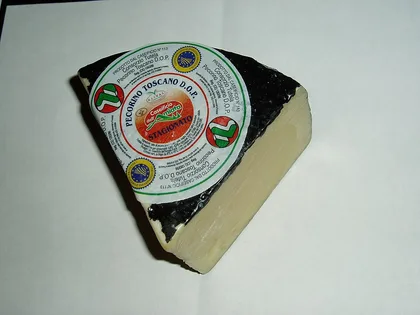 CheesePecorino ToscanoPecorino Toscano DOP is the mild one. Whole sheep's milk, calf rennet, a brief salting: soft-paste wheels…Vegetables and fruitChestnutsFor a thousand years the Apennines made bread from them rather than dessert: Castanea sativa was the tree…Vegetables and fruitZolfino BeanThe zolfino is a small, round, sulphur-yellow bean with a skin so thin it dissolves as it cooks.
 WineChianti ClassicoChianti Classico is the Black Rooster wine: at least 80 per cent Sangiovese from nine communes between…
 WineBrunello di MontalcinoBrunello di Montalcino is pure Sangiovese aged five years, at least two of them in oak, made only in the…
 Pasta and breadPappardelleRibbons of egg pasta two to three centimetres wide, the widest pasta you still eat twirled on a fork.
 SweetsCantucciCantucci are hard, twice-baked Tuscan almond biscuits. A log of dough is baked, sliced on the diagonal while…
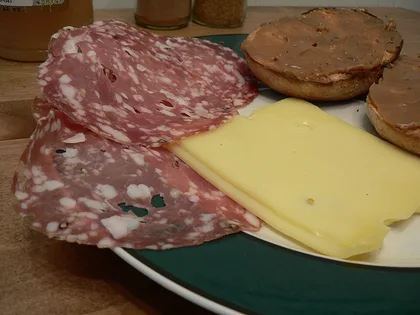 Cured meatsFinocchionaFinocchiona is Tuscany's fennel salami: coarsely ground pork seasoned with wild fennel seeds and flowers…